For the better part of a decade, cloud gaming has existed in that awkward limbo between “the future” and “not quite ready.” The pitch has always been seductive: play cutting-edge games without dropping a small fortune on hardware. The reality? Laggy inputs, compressed visuals, and the nagging feeling that you’re getting a watered-down experience.
NVIDIA’s GeForce NOW has spent years trying to prove that compromise wrong. Across North America, Europe, and parts of Asia, the service has quietly built a reputation as the most technically competent cloud gaming platform available, one that doesn’t ask you to rebuy your library, supports thousands of titles across Steam, Epic, GOG, and Xbox, and leverages genuine RTX hardware to deliver ray tracing and DLSS without local muscle.
Now, after years of watching from the sidelines, India is finally getting its turn.
NVIDIA invited us to a hands-on media preview event in Mumbai, where the company laid out its pitch for a market that’s equal parts promising and perplexing. On paper, India checks every box: PC and laptop sales have surged 150% in five years, broadband speeds are climbing, and there’s a growing appetite for AAA gaming.
But there’s a catch: this is also a market conditioned to squeeze value out of every rupee, where mid-range hardware reigns and splurging on a high-end GPU feels like an existential decision.
GeForce NOW’s answer? Stop buying GPUs altogether.
GeForce NOW Promises Big AAA Games, Tiny Specs, Zero Upgrade Tantrums
NVIDIA explains that the platform bases its foundation on three essential elements, which begin with games. The service now receives support from more than 300 publishers who enable the library to access their collection of over a thousand titles, which includes popular franchises together with recent AAA game releases. The service receives new content through regular updates, which bring fresh games to the platform every week. The titles preserve their original visual elements, which players experience by using contemporary gaming controllers.
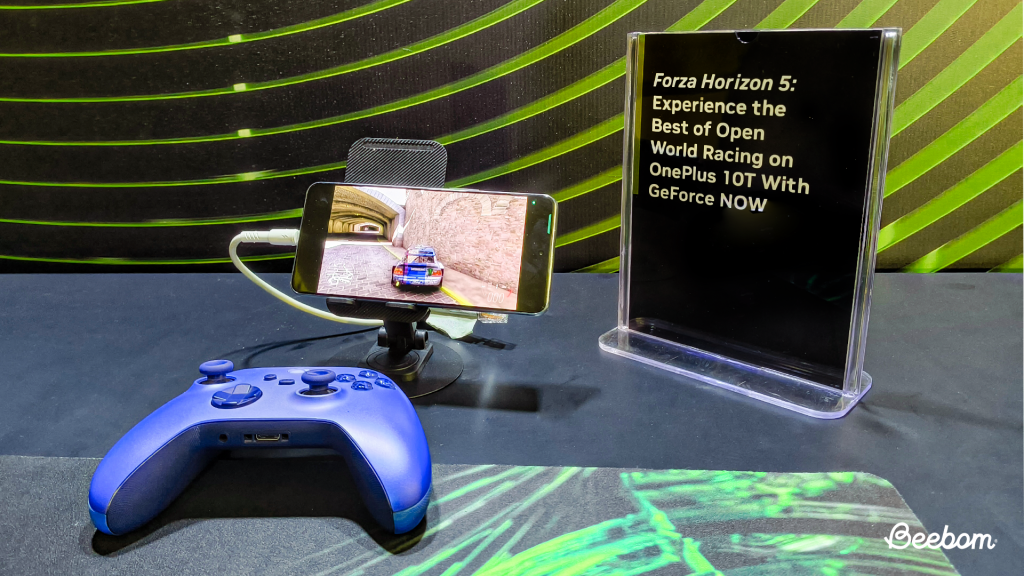
Picture this – ray tracing, sleek RTX visuals, even DLSS – normally locked to powerful PCs. Access splits into two main types across the system. Some games just start up right away, flowing straight from the cloud without delay. Others need local setup first: titles copy over from your connected storage, only later streaming through GeForce NOW’s network. Still, the thought stays clear – your titles, your profiles – yet backed by distant machines strong enough for RTX.
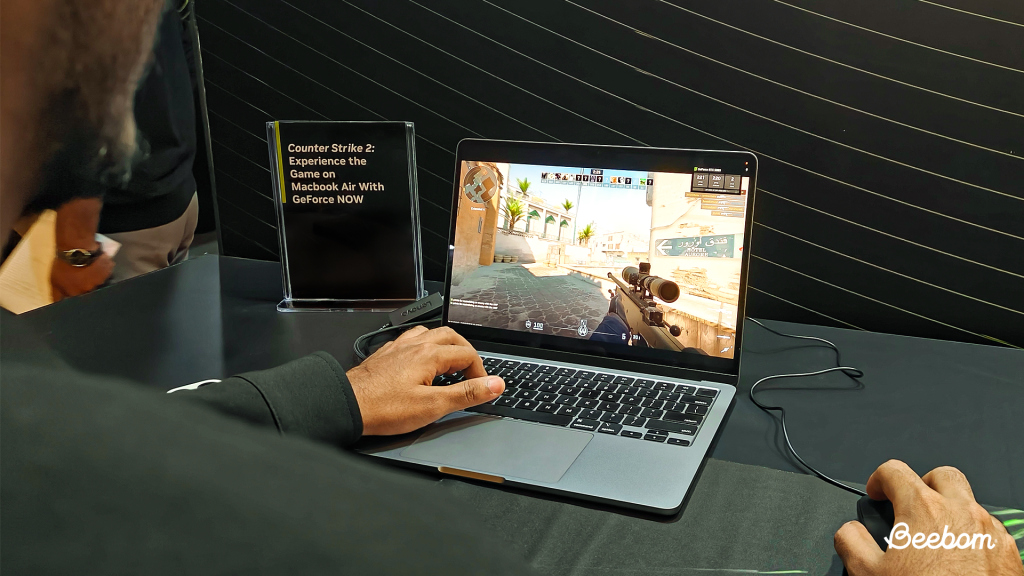
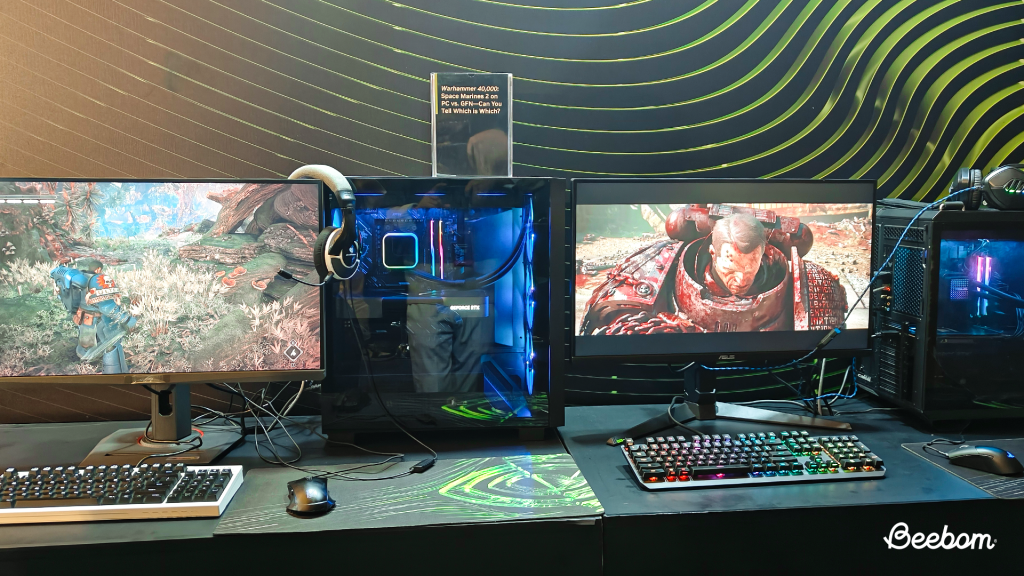
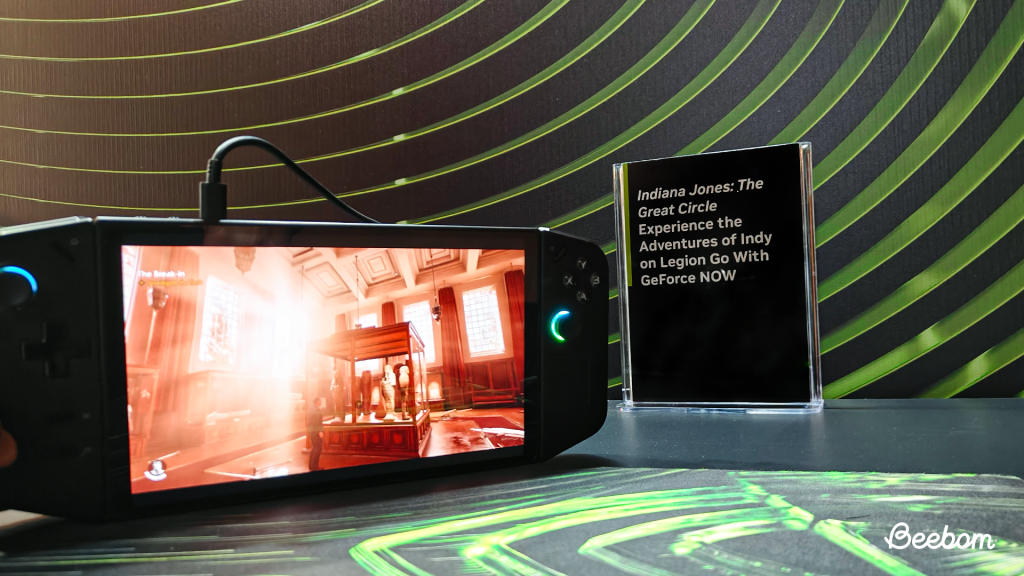
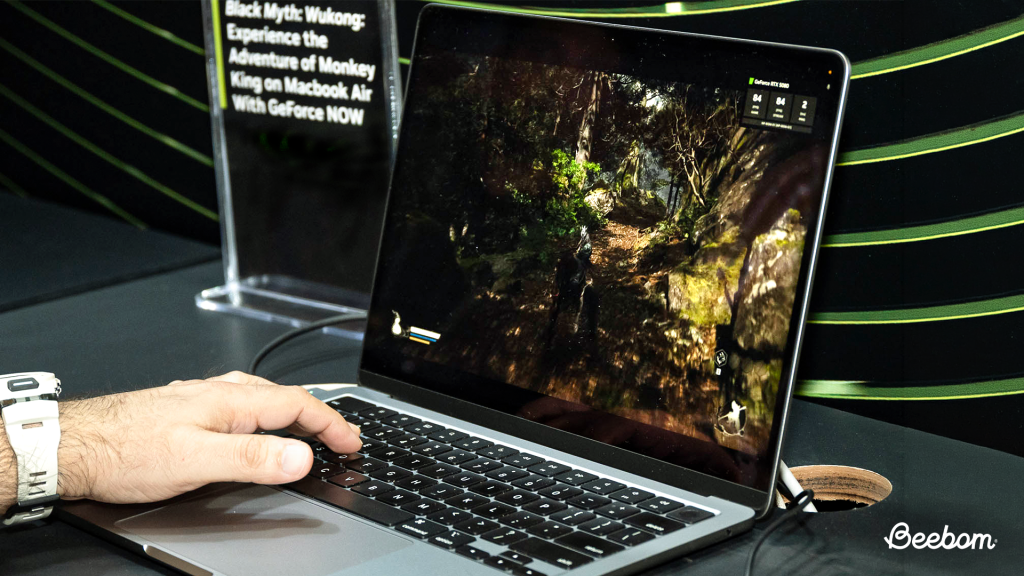
The demo area felt mixed. Not planned that way, maybe, yet it landed odd. Lightweights – thin laptops – sat beside expensive desktops. Smartphones popped up, too, along with older handheld devices. One laptop ran Cyberpunk 2077, full ray tracing enabled. Even Forza Horizon ran smoothly on a basic OnePlus handset. It showed who really handled the workload. The hardware in phones took care of just the surface tasks.
Somewhere in a Mumbai data center, NVIDIA’s Blackwell-based server GPUs were the ones running the show. Unlike global rollouts that rely on third-party hosting, NVIDIA is running its own data center in India for GeForce NOW. This move directly addresses latency, the perennial Achilles’ heel of cloud gaming that has haunted XCloud for a year now.
How close servers are shapes how quickly players react to inputs, something NVIDIA now recognizes, especially since doubt already runs high among gamers – what matters is how it’s seen. Much like approaches taken in other regions, the new service copies a pattern proven before. Buying games via NVIDIA isn’t part of the plan; instead, users connect current accounts like Steam, Epic, or Xbox, accessing titles they’ve owned before. More than 300 publishers now participate, while fresh games appear every week.
Performance-wise, the promise is RTX-level visuals: ray tracing, DLSS, the works, without needing a ₹1.5 lakh GPU sitting under your desk. It’s an appealing proposition, especially for players tired of upgrade cycles or those who never built a gaming rig in the first place. But as with any cloud service, there’s a catch: your performance will vary wildly depending on your internet connection. And in India, that’s rarely a given.
Streaming Games in India Will No Longer Test Your Patience
Cloud gaming lives or dies on your connection, and in India, that’s a moving target. On paper, the numbers look promising. Fiber broadband in urban homes regularly hits 50 – 100 Mbps. At the same time, 5G rollout is expanding across cities as telecom providers love flashing speed test screenshots. But anyone who’s actually gamed online here knows the truth: consistency matters more than peak speeds, and consistency is exactly what Indian networks struggle with.
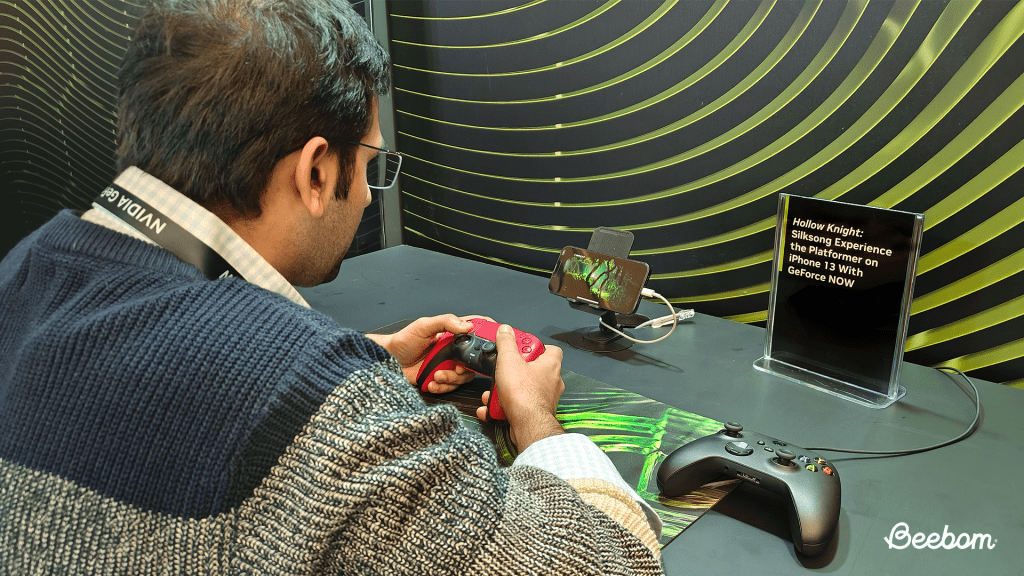
Here to game on the go, mobile data is the wild card. Even in metro areas, 5G can swing between 60 Mbps on a good day and a borderline 4G crawl with crappy 5 Mbps during peak hours. That variability is fine for YouTube or casual browsing, but cloud gaming? It’s a different beast. Every dropped packet, every brief congestion spike translates directly into lag, stuttering, or that dreaded moment when your character freezes mid-gunfight.
This is why lighter titles like BGMI run smoothly on mobile networks while anything heavier exposes the cracks immediately. And it’s precisely why cloud gaming has never taken root here, as most players assume their connection simply isn’t cut out for it.
What came before didn’t work out well either. Xbox’s move into cloud gaming ran into issues – weak infrastructure played a role, yet another reason lies in how sparse Xbox is here in India, while PlayStation keeps gaining momentum year after year. So, really, the hurdle wasn’t only about data and networks – it wore the face of trust. Instead of depending on far-off server clusters, a data center now runs inside Mumbai, cutting down delays seen before in cloud gaming tests across India, and that’s the ace NVIDIA is smartly playing.
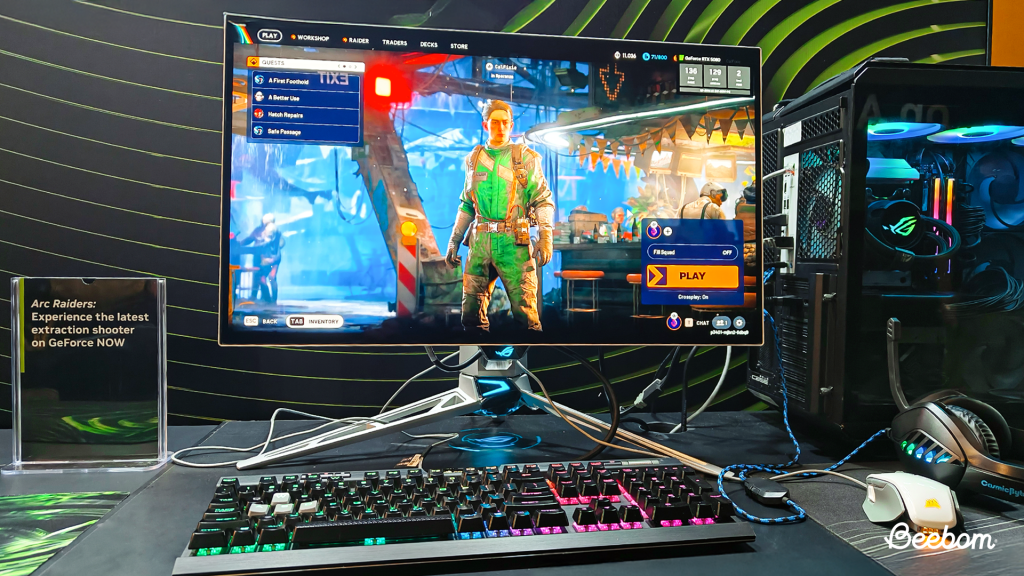
During the preview, we saw ping times as low as 2 ms in controlled conditions, not representative of real-world home usage, obviously, but proof that proximity matters. Performance was harder to dismiss. A basic office laptop, no discrete GPU, nothing special, was running Cyberpunk 2077 at 120 FPS with ray tracing enabled. Another setup pushed ARC Raiders to 360 FPS. These weren’t promotional renders. We watched it happen in real time, streamed from NVIDIA’s Blackwell-based server GPUs.
The pitch is straightforward: skip the GPU shortage, skip the ₹80,000 graphics card, skip the anxiety around whether your rig can handle next year’s releases. Just stream it. If NVIDIA can deliver even 70% of that demo experience over actual home broadband, GeForce NOW could finally make cloud gaming feel less like a compromise and more like a legitimate option for Indian players who want high-end experiences without high-end budgets.
We Asked for Dates and Prices, NVIDIA Smiled and Said “Soon”
About ten minutes into the presentation, NVIDIA’s Technical Product Marketing Manager John Gillooly confirmed that a closed press beta is coming media will get early access to test GeForce NOW from their own homes across different cities and network conditions. That’s when the real test begins. Controlled demo floors are one thing. Real-world Indian broadband at 9 PM on a weekday? That’s the crucible.
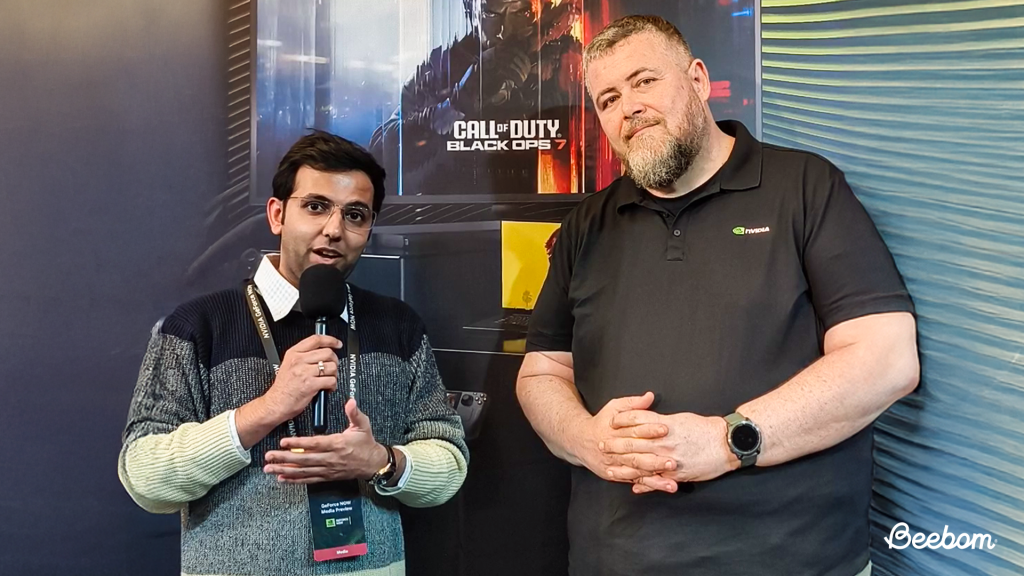
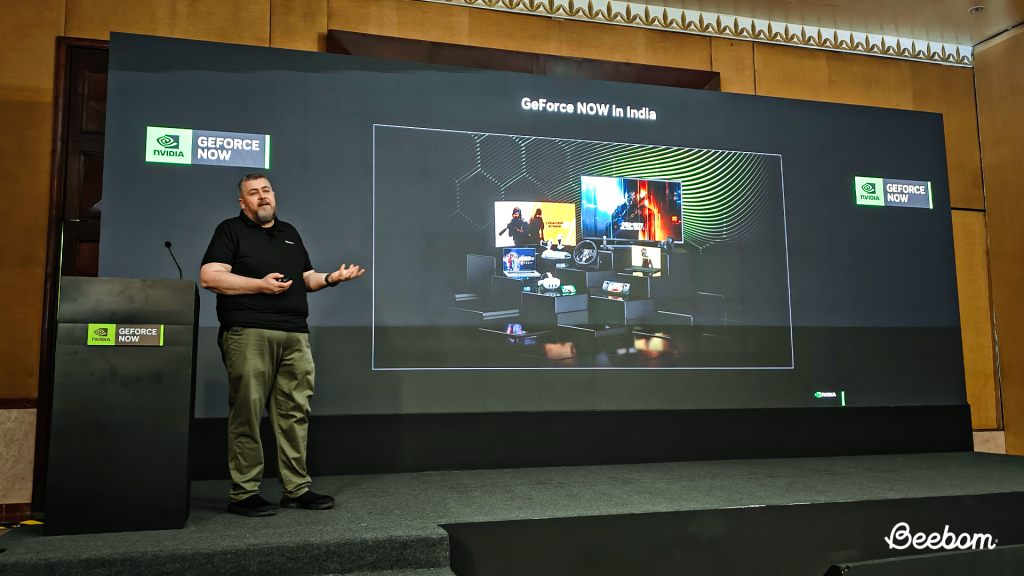
Following the press beta, there’ll be an open beta for players across India, a national stress test before the official launch. NVIDIA made it clear this isn’t vaporware or a delayed overseas experiment. The service is coming. The infrastructure is live. They just won’t say when.
We asked about launch dates. “Can’t comment yet.” Pricing tiers? “Coming soon.” Subscription models? Same answer, delivered with a polite smile and zero additional information. What NVIDIA did specify is positioning.
GeForce NOW in India is aimed squarely at players curious about PC gaming but unwilling or unable to drop ₹1.5 – 2 lakh on a proper rig. It’s an onboarding tool, not a replacement for enthusiast builds. Globally, GeForce NOW offers a free tier with limitations and multiple paid tiers that unlock higher performance, better queue priority, longer session times, and potentially 4K streaming.
India will likely mirror that structure, though how aggressively NVIDIA prices those tiers will determine whether this becomes a mainstream option or just another premium service most players skip. For now, “soon” is all we’ve got. And given how carefully NVIDIA is staging this rollout, local servers, tiered betas, and media access, it’s clear they’re not rushing. They’re testing whether India’s infrastructure can actually support the promise they’re selling.
NVIDIA Is Teaming up with ISPs so Your Bandwidth Doesn’t Cry
In India, cloud gaming faces trouble not just from weak speeds but from shaky stability online. A speed of 100 Mbps feels fine – until background tasks like Netflix or an updating system OS step in. Then what arrives on the screen is laggy graphics and latency issues. NVIDIA takes a different path here: bypassing competing demands altogether. Instead of sharing space, they want players to experience a network that holds firm under pressure.
During the briefing, the company revealed they’re working with Indian ISPs to implement L4S (Low Latency, Low Loss, Scalable Throughput) networking, a framework that lets providers prioritize GeForce NOW traffic over less time-sensitive data. Think of it as a fast lane for your game stream while YouTube buffers and app updates wait their turn.
The concept is straightforward: instead of your gameplay competing with every other device on your home network, the ISP intelligently routes latency-sensitive packets first. It’s network-level optimization designed to keep input delay low and streams stable, even when your connection is under load. NVIDIA didn’t name specific partners, but the implication is clear that this will require deep collaboration with Airtel, Jio, and Vodafone to work at scale. If implemented properly, it could be transformative. While we’re skeptical they’ll partner with Jio, given they have their own cloud gaming service, which let’s be honest, is a disaster, Airtel at this point looks like a safe bet for NVIDIA.
Cloud gaming doesn’t just need fast speeds. Rather, it needs consistent speeds with minimal jitter. Priority routing could make streamed gameplay feel significantly closer to native performance, especially in a country where network quality varies block by block. No timeline was given for L4S rollout, but the fact that NVIDIA is already in talks with ISPs suggests they understand this is the critical lynchpin. Infrastructure matters, but so does the last mile, and if Indian providers can deliver on traffic prioritization, GeForce NOW’s India launch could actually live up to its promises and cater to audiences with the slowest of network speeds.
2026 Might Be Cloud Gaming’s Glow-up Year
If the last few years were cloud gaming’s proof-of-concept phase, 2026 might be when it becomes financially unavoidable for a lot of players. Hardware costs are the catalyst. Memory supply pressures and ongoing component shortages are keeping RAM prices volatile, which cascades into the total cost of building or upgrading a gaming PC.
Out there, GPUs still lead in price compared to other hardware. Throw in higher memory expenses, and suddenly getting into PC gaming feels heavier than before. People are shifting without waiting. New players often pick consoles these days – the starting cost hits way lower than building a strong gaming machine. That gap? It’s growing. Right now, a modern gaming console costs between ₹ 40k and ₹ 50k. When it comes to a computer setup for playing games, adding a decent graphics card pushes prices even higher – sometimes two or three times that amount. If luxury features are part of the plan, differences grow even steeper.
That’s where cloud gaming shifts from “interesting alternative” to “why would I not do this?” GeForce NOW’s pitch is brutally practical: stream RTX-level performance to hardware you already own, aging laptops, budget desktops, even devices with no discrete GPU. Let the server handle the expensive part.
For players who’ve been priced out of upgrades or can’t justify the cost of a full build, that’s not a fallback anymore, it’s a genuine solution. There’s also a broader industry shift working in cloud gaming’s favor. Major upcoming titles continue launching on consoles before PC, creating a window for players who want immediate access without buying new hardware. If those games hit cloud platforms day one, the value proposition becomes obvious: play the latest releases without waiting for ports or upgrading your rig. NVIDIA is leaning hard into that momentum.
The company confirmed it’s pursuing day-one availability for major titles, with big upcoming releases like Crimson Desert, 007 First Light, and Resident Evil Requiem expected on GeForce NOW alongside other AAA launches. These partnerships matter because content availability determines whether players subscribe and stick around.
If you can log in and immediately play the newest blockbuster with RTX features enabled, the service stops being “cloud gaming” and starts being “how I play new games.” For India specifically, where component prices keep climbing, and most players rely on mid-range hardware, this could trigger a behavioral shift. Instead of saving for months to upgrade, many may opt for a subscription that unlocks high-end performance instantly across devices they already use daily: laptops, TVs, phones, tablets. That’s the long game NVIDIA is playing.
Cloud gaming isn’t about convenience anymore; it’s about democratizing access. And if infrastructure, ISP partnerships, and local data centers align, 2026 could be the year cloud gaming stops being an experiment and becomes a default option for a significant chunk of players. For India, with its rapidly growing gaming audience and cost-conscious market, that shift could reshape how people discover and play AAA titles. The gaming landscape wouldn’t just evolve, it would fundamentally change, with powerful hardware living in data centers instead of under desks.
For now, GeForce NOW’s India debut feels like the first serious attempt to make that future real. We’re looking forward to spending more time with the service once the wider beta rolls out. Stay tuned for our full hands-on to see whether cloud gaming in India is finally ready to move beyond the hype and into actual, everyday use.