Cloud gaming is one of those things nobody really talks about and has a special talent for making people roll their eyes or laugh at. For years, big tech, like Nvidia’s GeForce Now, has promised us a future where your budget laptop with an aging CPU and your dad’s mid-range Android phone can run the latest AAA games at silky smooth framerates. No beefy GPU needed, no ₹80,000 PC build needed. Just a decent internet connection and you’re set.
But reality hits hard when you test it firsthand, and the illusion breaks — it shows how that future is still distant. Google Stadia went through the same discourse, and so did Xbox Cloud Gaming. However, the only one left in this jungle is the GeForce Now, which boasts its supremacy over other cloud gaming services and claims to deliver a PC gaming experience like no other, backed by its top-of-the-line RTX 5080 GPU SuperPods.
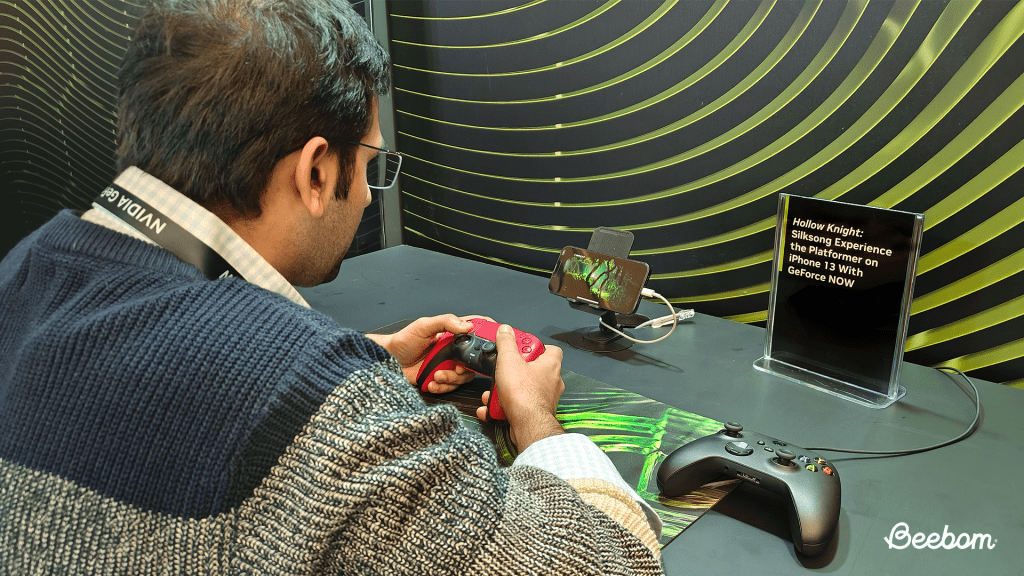
So when I was invited to a hands-on demo for Nvidia GeForce Now in India, I was genuinely surprised at how well it ran across a wide range of devices — you can read more about that in my first impressions. But testing it in a controlled environment with bandwidth over 100 Mbps is one thing, and testing it in a cab on your phone using mobile data is another.
And finally, when Nvidia sent me early access to GeForce Now to test from the comfort of my home here in Delhi, it surprised me yet again with how well it ran in a country like India. And to top it all, my dad’s mid-range Android phone suddenly became a gaming PC, running AAA games at 60 FPS. Here are my thoughts on Nvidia GeForce Now after over 10 hours of rigorous testing across a variety of network types and devices.
Nvidia GeForce Now in India Delivers On Every Buck
When I heard GeForce Now was launching in India, the first doubt I had was how the company would price it for the Indian market. Even Netflix and Disney+ (JioHotstar) have introduced budget pricing for their subscriptions to keep them pocket-friendly for the average Indian consumer.
So when Nvidia representatives asked me what an “ideal” price for the Ultimate GeForce Now membership would be, I estimated ₹1299 per month, thinking such a premium subscription would demand a premium price tag. To my surprise, Nvidia launched GeForce Now at ₹1999 for a 90-day period for its Ultimate membership. That means consumers are effectively paying just ₹666 per month to get 5080-level graphics and up to 8 hours of session time for their favorite games.
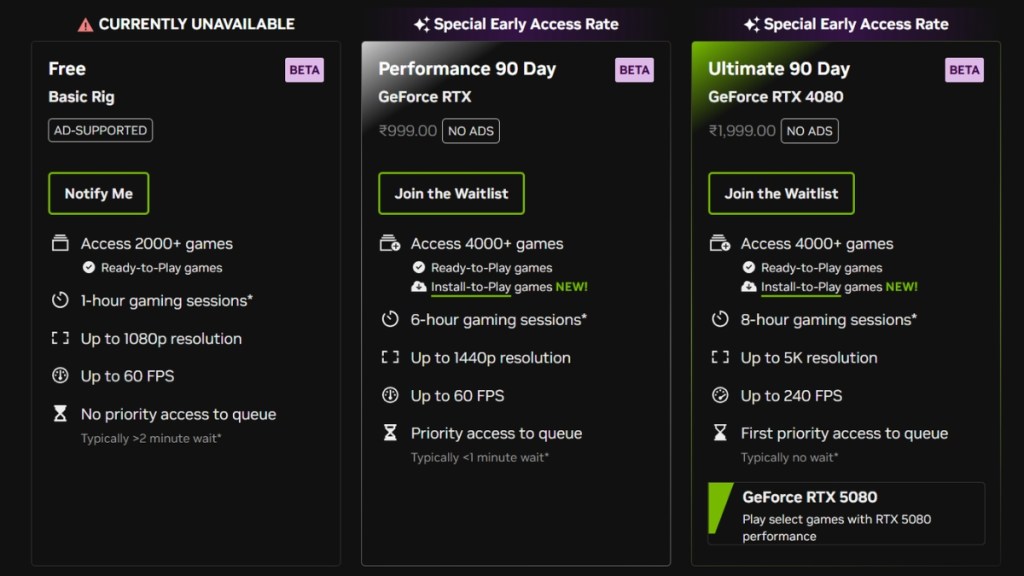
On top of that, if you’re not focused on maximum quality and prefer performance, you can opt for a cheaper tier called Performance for ₹999 for 90 days, which comes down to ₹333 per month. This pricing fits perfectly into the budget of an Indian gamer who might spend hundreds weekly on CP in BGMI or credits in Free Fire.
And boy, does it deliver. In the Ultimate tier, you get 5080 graphics in full 240 FPS glory (I even hit 360 FPS in Arc Raiders), DLSS 3 Frame Generation, 5K resolution, and HDR10 support. Surprisingly, at this price, I could access almost a quarter of my 200-game Steam library and my entire Epic Games library, with a maximum session time of 8 hours.
When it comes to comparison, a PlayStation Plus Deluxe subscription in India costs ₹849 per month, and ₹2299 for 90 days. However, it can only be used on a PlayStation 5 or PS Portal. Similarly, Xbox Game Pass Ultimate costs ₹1389 per month in India (with no 90-day or yearly plan) and requires a PC or console, though it does offer cloud gaming support.
But Nvidia GeForce Now lets you play on virtually any device with a browser and an internet connection — something neither of these services fully offers in India. So, for me, as an Indian gamer, ₹1999 for 3 months? That’s a steal and absolute value for money.
Made For Gamers in India – Budget Phones and Laptops Run It Surprisingly Well
When it comes to accessibility across devices, I tested Nvidia GeForce Now on everything I had at home: a Lenovo IdeaPad laptop, my high-end PC, my dad’s mid-range phone (Nothing Phone 2a), my LG TV, and even my MacBook. The results were shocking.
I never considered most of these devices as “gaming screens” — except my PC and TV. But my budget work laptop? My MacBook? My dad’s phone? Absolutely not. Yet running everyday games like Fortnite and Arc Raiders on all these devices made me realize — GeForce Now is the real deal.
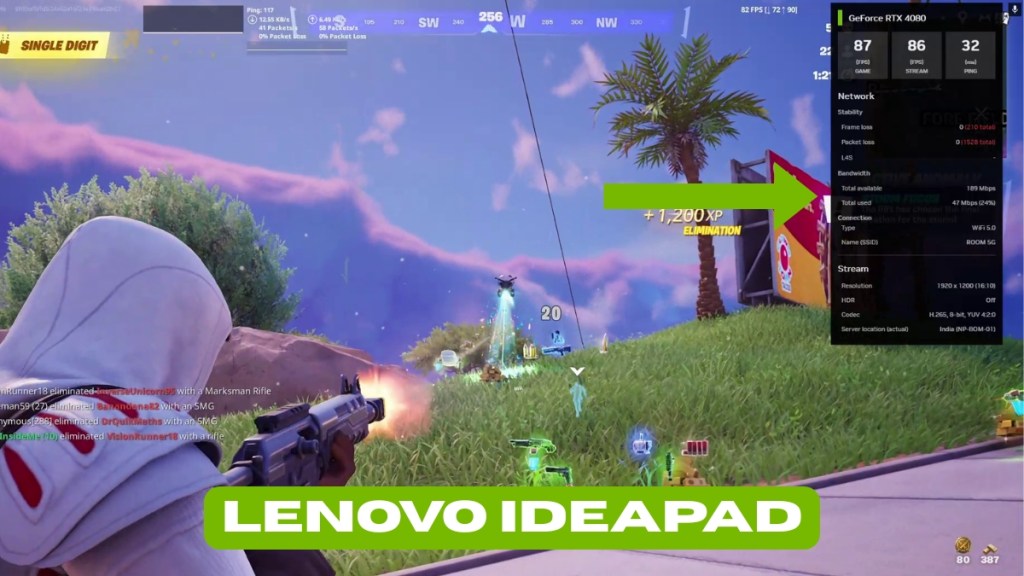
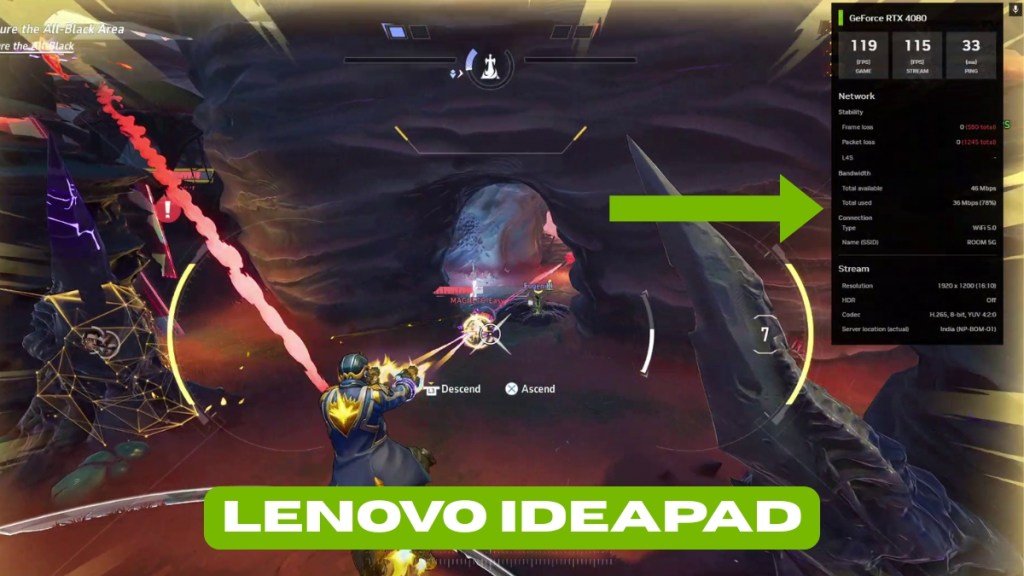
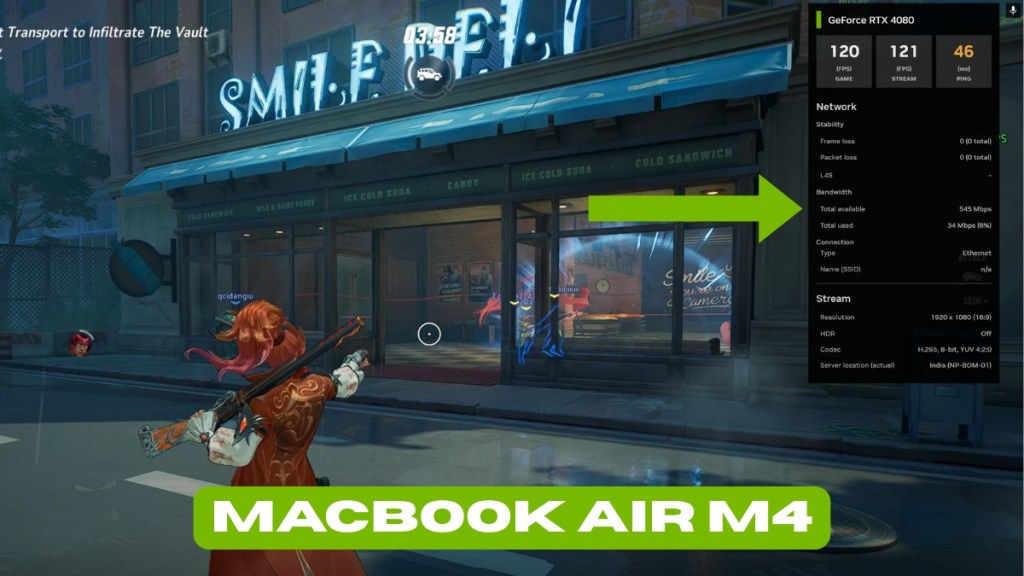
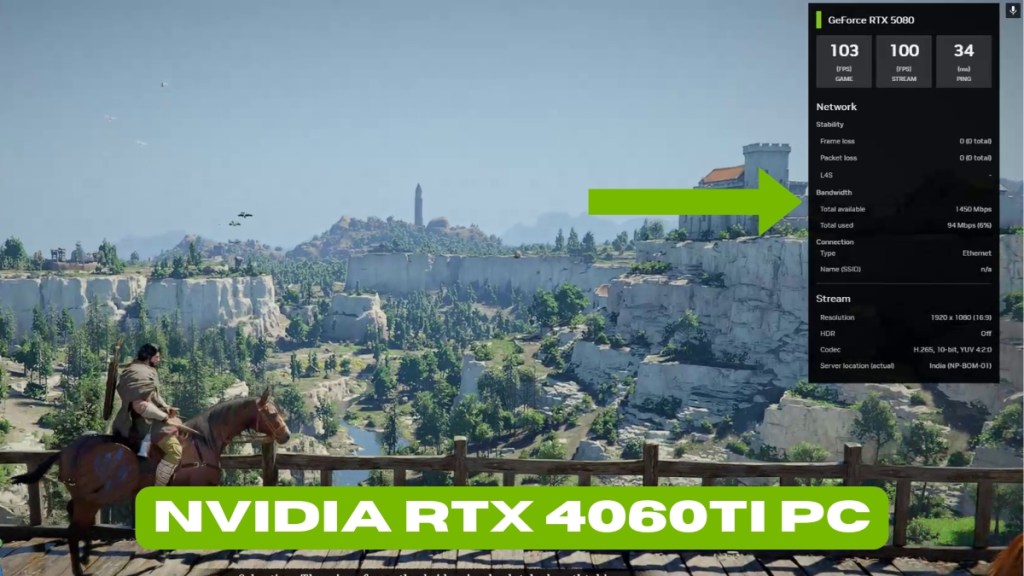
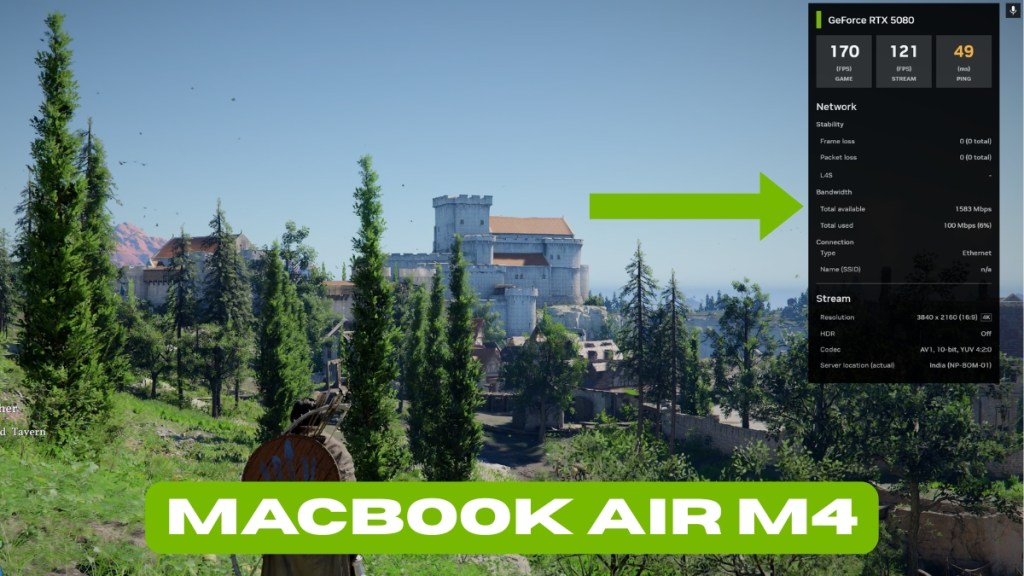
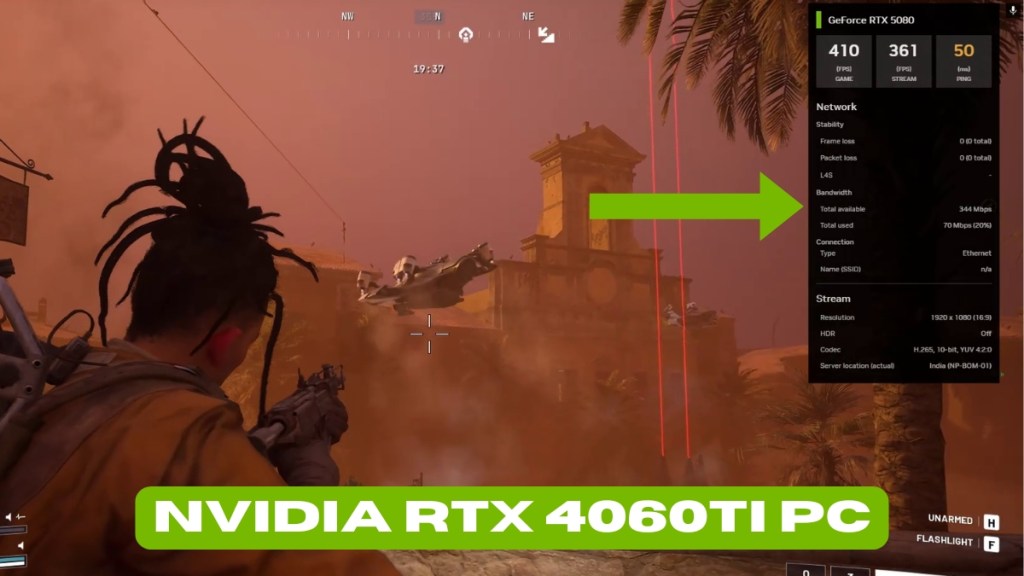
I started with Fortnite on my Lenovo laptop. It ran smoothly at 90 FPS, even on a 60Hz screen. I saw occasional dips to 85 FPS, but the graphics were set to Ultra with ray tracing, DLSS, and Reflex enabled. The service handled an entire battle royale match at 1080p with ease, powered by a cloud RTX 4080 GPU.
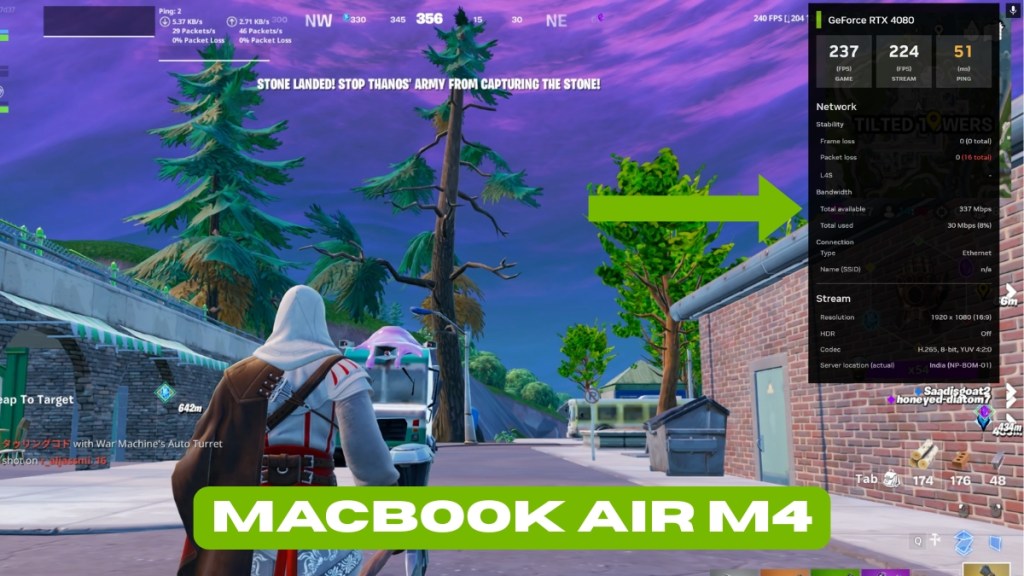
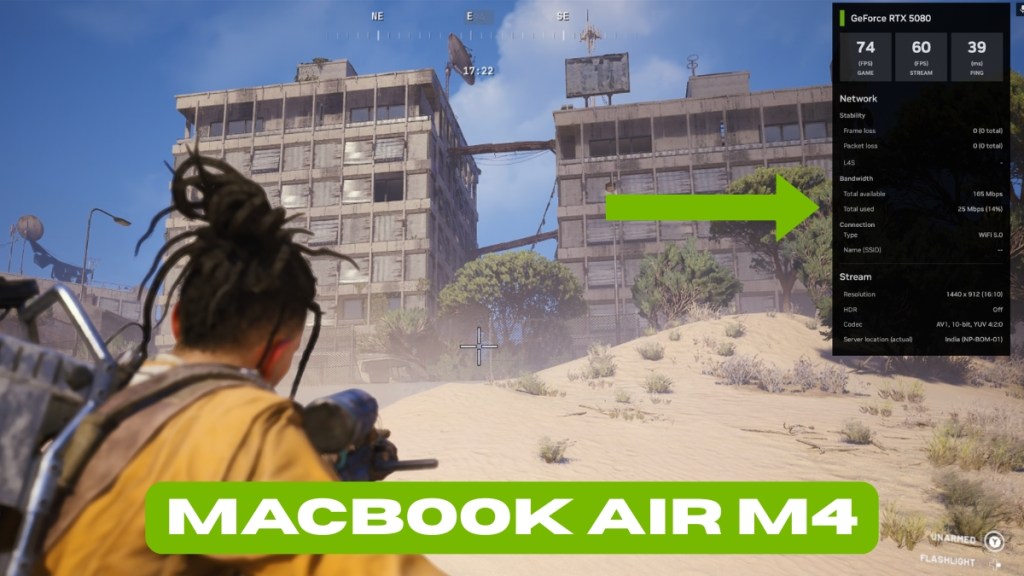
The same game ran at over 200 FPS on my MacBook M4 Air at 1440p, which was surprising. Marvel Rivals also ran on a 4080, delivering 115 FPS on the Lenovo laptop and 121 FPS on the MacBook at 1440p with max settings and Lumen enabled.
However, when I played using a PS5 controller connected via USB or Bluetooth, I experienced around 250 ms input latency. While network latency stayed around 35 ms on Wi-Fi (80 Mbps in Delhi), the controller latency negatively affected the experience.
This issue persisted across multiplayer games like Marvel Rivals, Arc Raiders, and Fortnite, with input latency problems and fluctuating network latency between 30 ms and 50 ms.
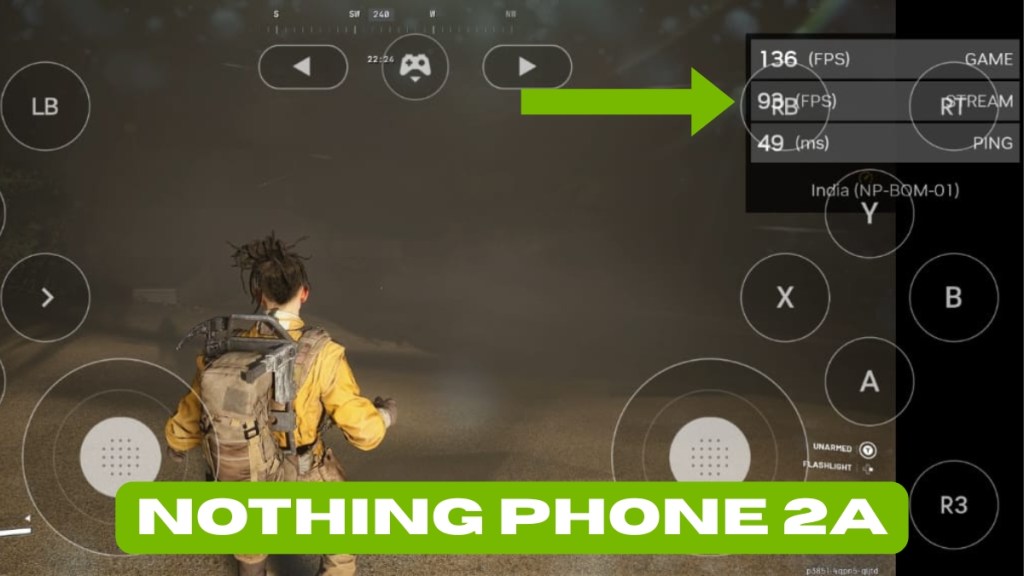
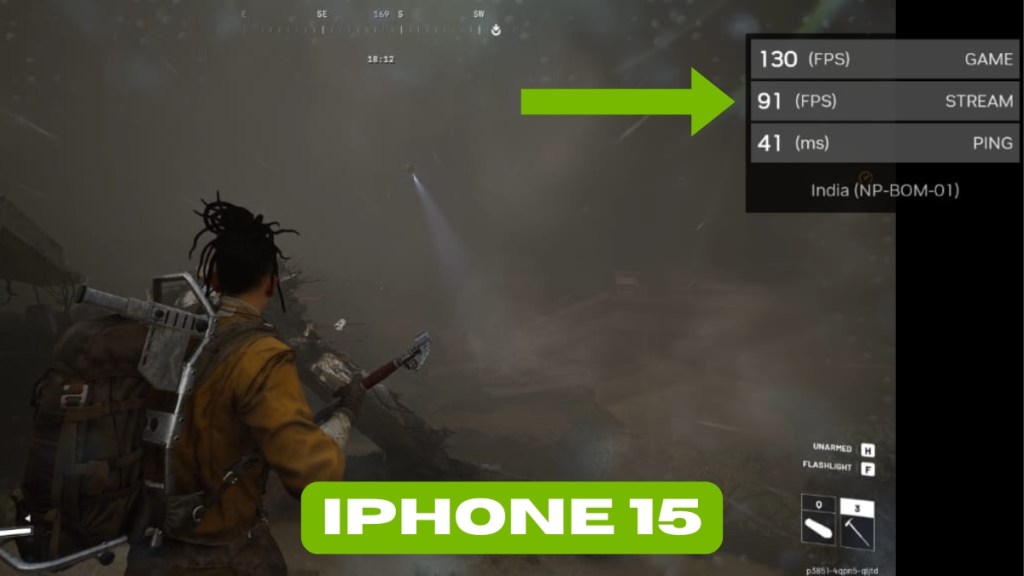
Arc Raiders, however, delivered 360 FPS on my PC using a Cloud RTX 5080 GPU at max settings in 1080p. On my Android phone, it averaged 90 FPS, which was impressive. The ping fluctuated between 30 and 50 ms, but the visuals remained sharp and clean. Even on a MacBook, it delivered a consistent 60 FPS at 1440p using 5080-level graphics.
| DEVICE | FORTNITE | MARVEL RIVALS | ARC RAIDERS | RESIDENT EVIL REQUIEM | CRIMSON DESERT |
|---|---|---|---|---|---|
| NVIDIA RTX 4060Ti Enabled PC | 200 FPS | 220 FPS | 360 FPS | 120 FPS | 102 FPS |
| Lenovo IdeaPad i5 Laptop | 90 FPS | 115 FPS | 121 FPS | 61 FPS | 120 FPS |
| Macbook Air M4 | 200 FPS | 120 FPS | 61 FPS | 61 FPS | 121 FPS |
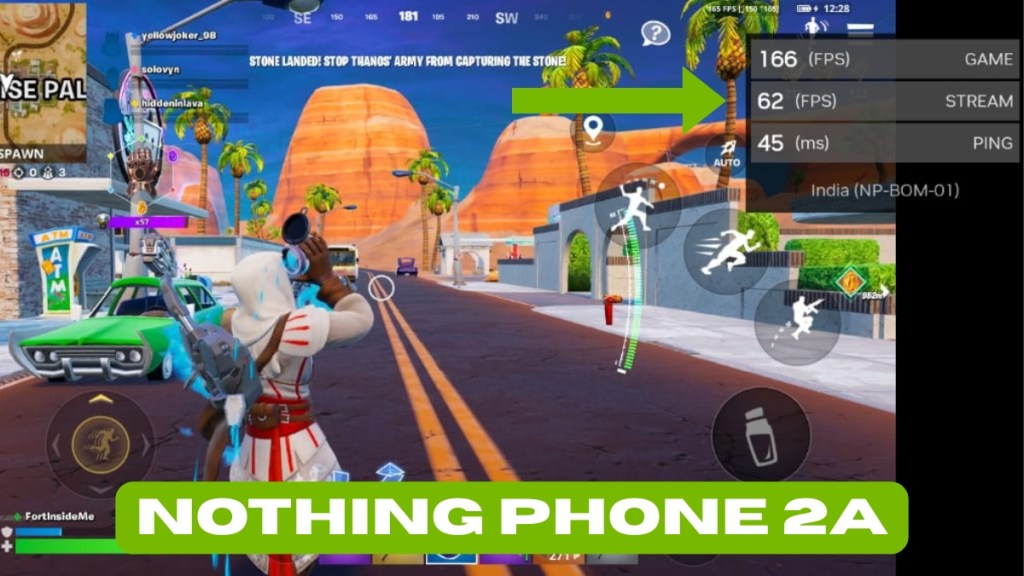
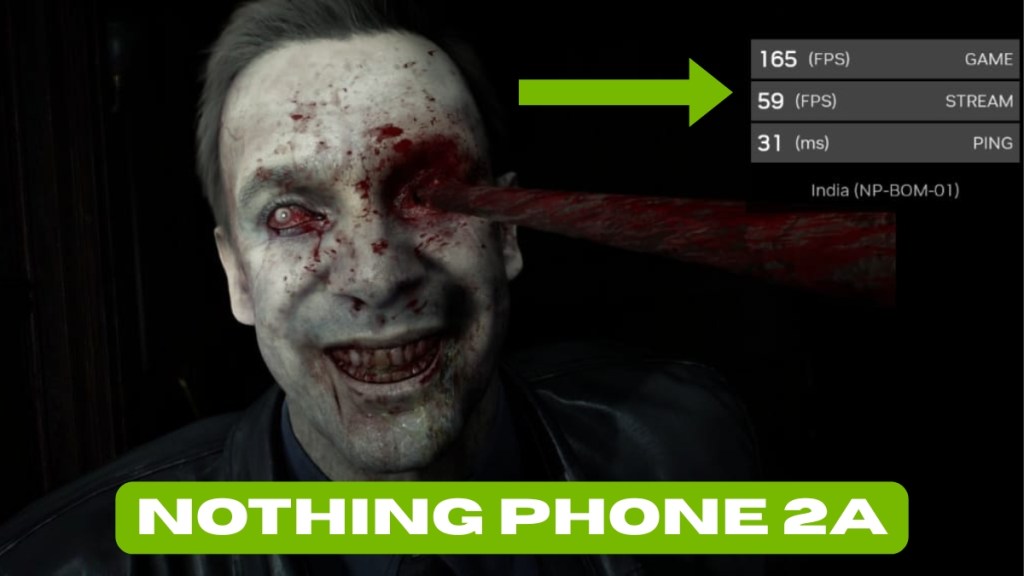
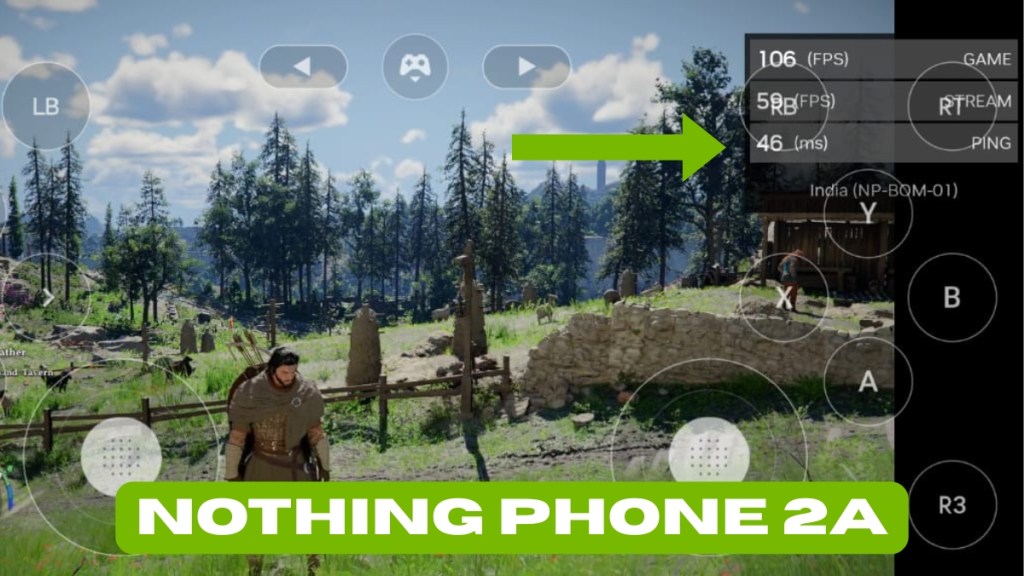
| Nothing Phone 2a | 69 FPS | 75 FPS | 111 FPS | 60 FPS | 50 FPS |
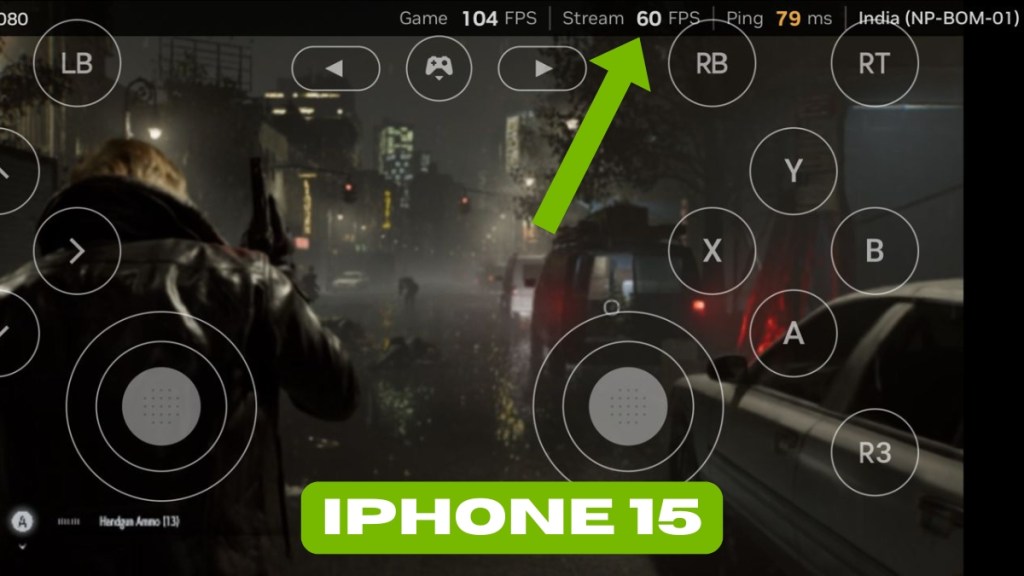
| iPhone 15 | 60 FPS | 61 FPS | 91 FPS | 60 FPS | 50 FPS |
For other AAA games like Resident Evil Requiem and Crimson Desert, performance remained consistent across devices. Resident Evil Requiem ran at a steady 60 FPS on both Android and iPhone with Ultra settings, DLSS, and ray tracing enabled. On a MacBook, it maintained the same 60 FPS at 1440p using a 5080 GPU.
Crimson Desert also performed well. It ran at around 50 FPS on my phone and 60 FPS on both the laptop and MacBook. On my PC, it reached 100 FPS with max settings using 5080 graphics.
Overall, the consistency of performance and visual quality with Nvidia GeForce Now was incredible— far beyond what I expected. It even convinced me to uninstall Fortnite from my Android device and rely entirely on cloud streaming for my matches.
A True AAA Gaming Experience on Cloud is Still Years Away
Now, coming to a “true AAA” cloud gaming experience — it’s still far from reality.
While a 30 ms ping is acceptable for online gaming, cloud gaming is a different ballpark. Here, you’re not just dealing with game server latency but also the latency of the cloud server streaming the game.
With Nvidia GeForce Now India servers located in Mumbai, users there enjoy around 5 ms latency. But in New Delhi, I experienced 30 – 50 ms. In Kolkata, one of our testers saw latency ranging from 49 ms to 75 ms in a single session. In South India, testing in Madurai, a location significantly closer to Mumbai, even there, the latency fluctuated between 39 ms and 49 ms, that too on Wi-Fi.
| NETWORK REGION | NETWORK PING |
|---|---|
| New Delhi | 30 ms – 50 ms |
| Mumbai | 5 ms – 10 ms |
| Kolkata | 49 ms – 75 ms |
| Madurai | 39 ms – 49 ms |
Taking it further, I tested the service on 5G mobile data during a cab ride. I maxed out the streaming settings and played a full Fortnite match streamed from a 4080 GPU. I got around 45 ms latency, but using on-screen touch controls resulted in a massive 500 ms input latency. And within just 15 minutes, the session consumed 2 GB of my mobile data.
So imagine playing Arc Raiders in a cab, switching between 4G and 5G, burning through your daily 2 GB data limit mid-match — you’re f**cked. Add to that a 50 ms ping and 500 ms input latency on touch controls, and it’s a total disaster.
Using a Bluetooth controller improved input latency to around 100 ms, but it still wasn’t good enough for competitive multiplayer sessions. For story-driven games, however, the experience was much better. Crimson Desert and Resident Evil Requiem ran smoothly on my dad’s phone, with mobile data latency peaking at 46 ms.
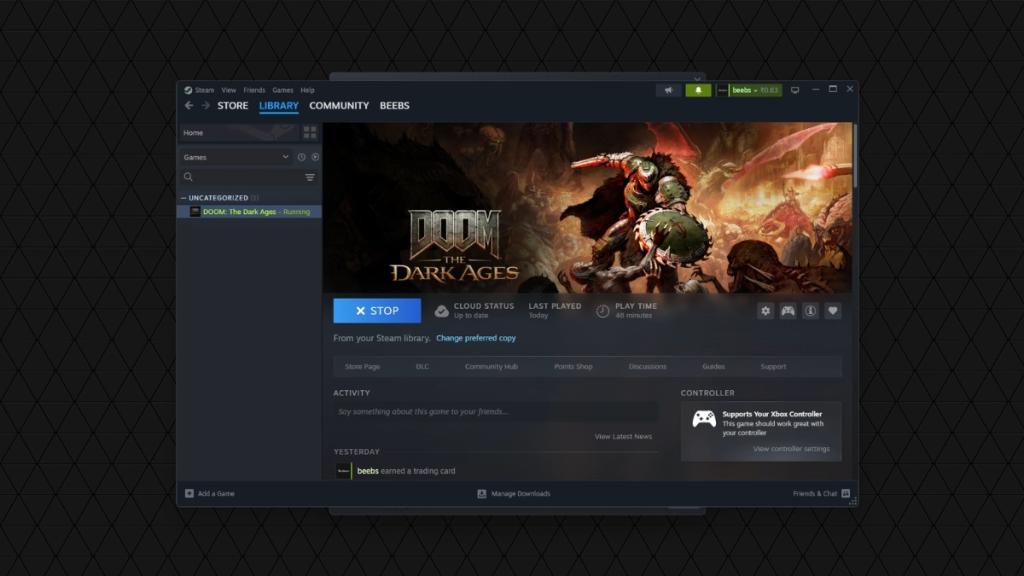
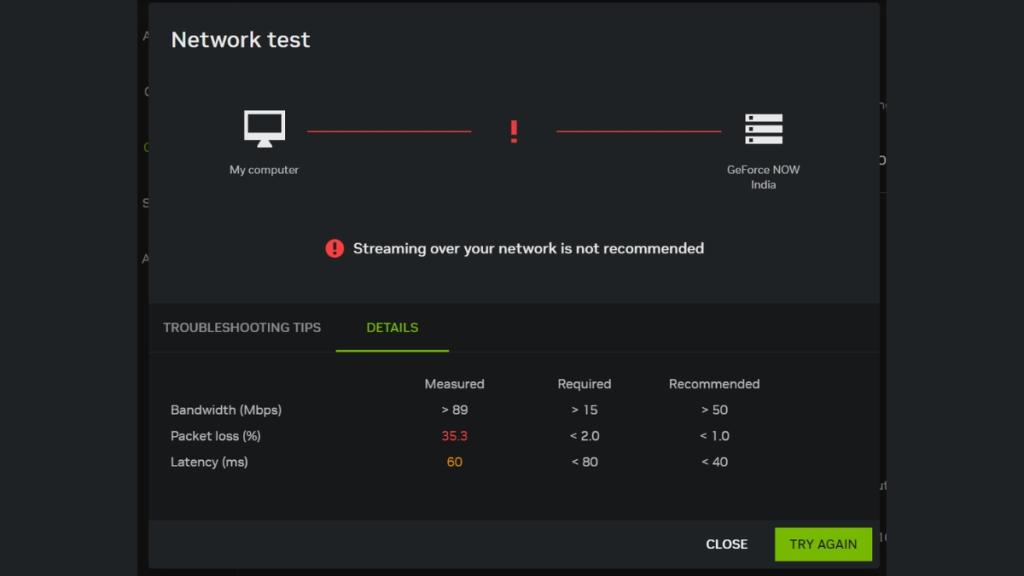
Another inconvenience I faced with certain games from time to time was that I had to manually click play on a Steam launcher window even after launching the game session from Nvidia GeForce Now. This felt like an added step to an otherwise seamless experience.
Look, cloud gaming isn’t perfect. There’s still infrastructure to be built — better ISP bandwidth, faster speeds, widespread 5G, and stronger server networks. But Nvidia pushing GeForce Now in India this early is a strong signal. It shows that an Indian gamer with an old GTX GPU can still experience RTX-level gaming without upgrading to an expensive PC.
This ties back to what John Gillooly (Technical Product Marketing Manager, Asia Pacific South at NVIDIA) told me during the hands-on demo — that the service is an entry point to PC gaming. You can simply open a browser, log into Steam, buy a game, and start playing instantly via GeForce Now.
For a beginner, spending ₹80,000 on a gaming PC is a big decision. But ₹1999 for 90 days of access to high-end GPU performance? That’s far easier to justify. If you’re still not convinced about Nvidia GeForce Now, I’d say give it a shot — you might be surprised.