

- To use AI, you can start with AI chatbots like ChatGPT and Gemini. You can ask questions in natural language and it responds right away.
- You can also use AI to generate images, videos, and music. For image generation, I recommend Gemini, for video generation, pick Veo, and for music, opt for Suno.
- Finally, you can use AI for code generation and bug fixes. In this regard, you can use the Cursor AI editor.
AI or Artificial Intelligence is not just a sci-fi term anymore; it has become a part of our everyday lives, and understanding how to use it is a crucial skill to have nowadays. But many beginners find it quite overwhelming to learn how to use AI, and where to even start. That’s what I am here to show you how to use AI and get the most out of this transformative technology.
What is AI & Why Should You Care?
Artificial Intelligence (AI) is an emerging technology that can simulate human cognitive abilities such as learning, reasoning, problem-solving and language understanding. As we discussed in our What is AI explainer, it’s a broad technology and it’s used beyond AI chatbots like ChatGPT and Gemini. AI is used in healthcare diagnosis, news feeds, your Netflix algorithm, hiring decisions, and in many other fields.
So yes, you should learn about AI to understand how this technology is going to impact the future. According to the World Economic Forum’s Future of Jobs Report 2025, AI is going to disrupt nearly every industry, and it may require new kind of skills across various labor markets. In tandem, whether you are a student, professional, or a beginner, you should take a keen interest in AI and how it works.
AI Literacy: The New Baseline Skill
In 2026, AI literacy has become crucial to understand the potential of AI systems, their shortcomings, why AI systems hallucinate, and how to leverage these AI tools effectively. And it’s not just about typing prompts into ChatGPT, but learning how these tools work and critically examining their output. The WEF has, in fact, classified AI literacy as a civic skill that will allow people to participate in democratic processes.
Without AI literacy, users can fall for misinformation in the form of AI-generated text or videos, and can be vulnerable to biased AI systems. Basically, under AI literacy, you should know how to evaluate an AI system and find out what it can do and where it fails. Next, you should question its output and verify the results instead of accepting them at face value.
Getting Started: The Art of Natural Language Prompting
Prompting is how you communicate with an AI system like ChatGPT and Claude. You don’t need to learn programming or special syntax to interact with AI systems, you can simply write or speak in natural language, and AI understands your query and intent. That said, there are some factors that you should keep in mind for getting the best results.
- Always provide the context: While writing a prompt, always define the prompt with clear and rich context. According to a new paper, AI models work best when there is a well-framed context around the subject. For example, instead of saying “Teach me quantum mechanics,” you should write “I am a Grade 10 student with basic knowledge of algebra and physics. Explain the core ideas of quantum mechanics”.
- Avoid “You are an expert” prompt template: Early on, we learnt that role prompting enhances the result from AI models. However, new research shows that instead of saying “You are an expert at coding,” you should specify the audience level to get better answers. You should frame your prompt like, “You are a senior Python backend engineer with 10+ years of experience optimizing high-throughput APIs. Assume the audience is experienced developers.”
- Show examples: Instead of refining the prompt, you should show examples of exactly what you want. You can upload images or give references to other work. Few-shot prompting allows the AI model to improve accuracy by many folds.
The Anatomy of a Perfect Prompt
Along with the above key points, there are three things you should keep in mind to create a perfect prompt. Broadly, there are three components to a prompt: context, task, and persona or format. When they are defined and added together, the prompt has less ambiguity, which is great for AI models.
Remember that AI models or systems hallucinate when they are unsure about a topic or fact. So, write your prompt in such a way that there is no uncertainty. Take this for an example:
Context:
“I am writing a policy brief for a climate summit audience.”
Task:
“Write a 3oo-word summary on the economic cost of inaction on climate change. Use data from 2023 to 2025.”
Persona / Format:
“Respond as a skeptical economist and don’t add jargon.”
And you don’t have to worry about context window in 2026. Modern AI chatbots have large context windows and they can remember each detail from the same session. No need to create new chats for iterative workflow.
Top 5 Ways to Use AI in Your Daily Life
While there are several ways to use AI, here, we have added the five most important use cases for consumers and general users. You can use AI for writing, generating AI images and videos, to summarize large swathes of content, and for personalized learning. Let’s start with writing and brainstorming first.
1. Revolutionizing Your Writing & Brainstorming
The most common use of AI is for writing, changing the tone of the sentence, proofreading, and brainstorming. If you have ever stuck in writer’s block, need help to complete an assignment before the deadline, or want some fresh ideas, then AI chatbots can surely help you with that.
AI chatbots like ChatGPT, Google Gemini, Claude, and Microsoft Copilot, which come pre-installed on your phone or computer, excel at generating quick outlines, full drafts, or just help redraft the tone of that email. All you need to do is just the chatbot and follow the below steps.
- Launch ChatGPT, or your preferred AI chatbot like Gemini, Claude, or Copilot.
- In the text box, write a prompt in natural language such as, “Write a 200-word short story about industry revolution”.
- You can also follow our above guidelines for writing a perfect prompt.
- Wait for it to come up with a response.
- If you need to tweak it further, write,“Make it more casual,” or “Add bullet-points”.
- Once you are done, just copy the result and paste it wherever required.

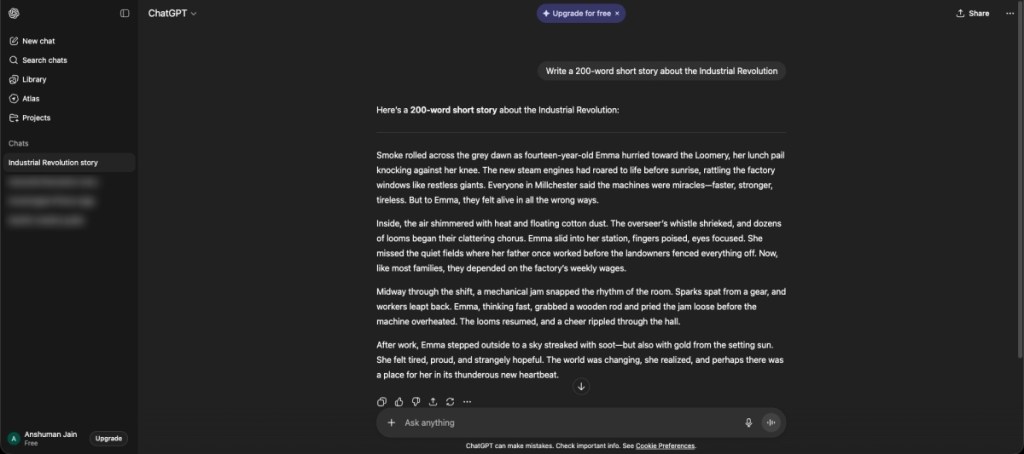
Best AI chatbots to use for writing: ChatGPT, Google Gemini, Claude, and Microsoft Copilot.
2. Generating Professional Visuals & Illustrations
You might have seen plenty of AI-generated images floating around on Facebook, Instagram or other social media platforms. Well, this is another field where AI is taking the world by storm and it’s only because AI models can not only generate text, but can also produce images and videos.
Using AI image generators like ChatGPT, Gemini (Nano Banana), or Midjourney, you can generate an incredibly photorealistic image or produce an image with a celebrity. It can even generate posters, logos, artworks, and illustrations without you ever needing to learn Photoshop or other image editing tools. So here’s how it works.
- Open your preferred AI app or website.
- Type a prompt, something like, “Create an image of a realistic cat flying a modern aeroplane”.
- Wait as the AI turns your text prompt into an image, which you can download and share.
- For more accurate results, you can add more details like “cartoonish, realistic style, pastel tones, wide camera angle, and more”.
- The more descriptive you are, the better results you will get.
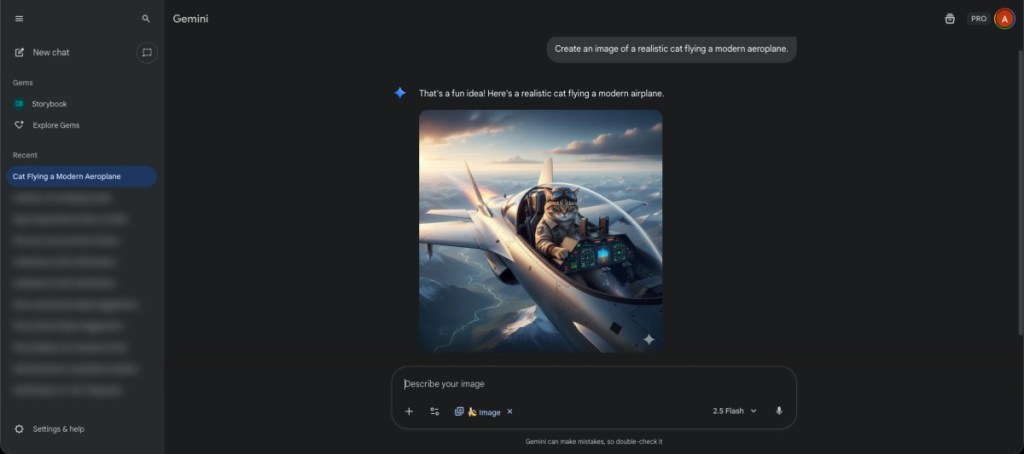
Best AI Image Generation Tools to Use: Gemini Nano Banana, ChatGPT, Midjourney, and Seedream.
3. Video Creation for Social Media & Work
Many people have also started using AI for video generation nowadays. Those videos are going viral on TikTok, Instagram, X, and Facebook. There are AI video generation models from Google Veo, and OpenAI Sora, which offer the best results. In fact, now, videos are being generated with audio, and they look quite authentic.
To use AI for video generation, all you need to do is share a descriptive text prompt for the video, just like how you do for creating an image, and the AI will bring your ideas to life, creating an 8-second clip. The more descriptive you are, the better the results will be. You can also add your own dialogues for the characters to speak, and describe the overall scene as well. Let me show you how to use AI for making videos.
- Open Google Gemini and tap on the Tools option.
- Select Create videos with Veo.


- Enter your prompt, such as “a drone shot over a beach during sunset with relaxing music”.
- AI will create a video from scratch, based on your prompt, which you can download later.
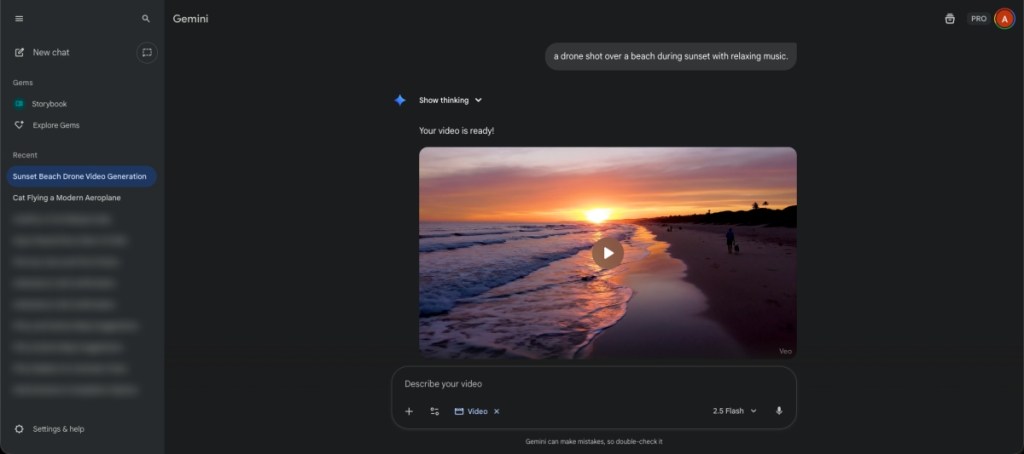
- You can further set the mood, style, and add characters too. Then hit Generate.
- You can also tweak the result if you don’t want it by asking AI to create another one.
- Finally, you can generate videos from still images using the top AI image-to-video generators.
Best AI Tools for Video Generation: Google Gemini Veo, Google Flow AI, OpenAI Sora, Meta AI App
4. Hyper-Productivity: Summaries & Organization
AI is not just for creating images or videos; it can even help you with your everyday work. Whether you want to summarize a report, create a pie chart, produce a presentation, etc., you can use AI for all these things.
I personally use AI to help me break down documents by uploading them to apps like ChatGPT or NotebookLM, and then ask it to explain the document in simple language and highlight key points. But it can also be used to do repetitive tasks like organizing your Notion calendar or drafting an email in Gmail. Google’s Workspace and Microsoft’s Office suite already feature AI integration.
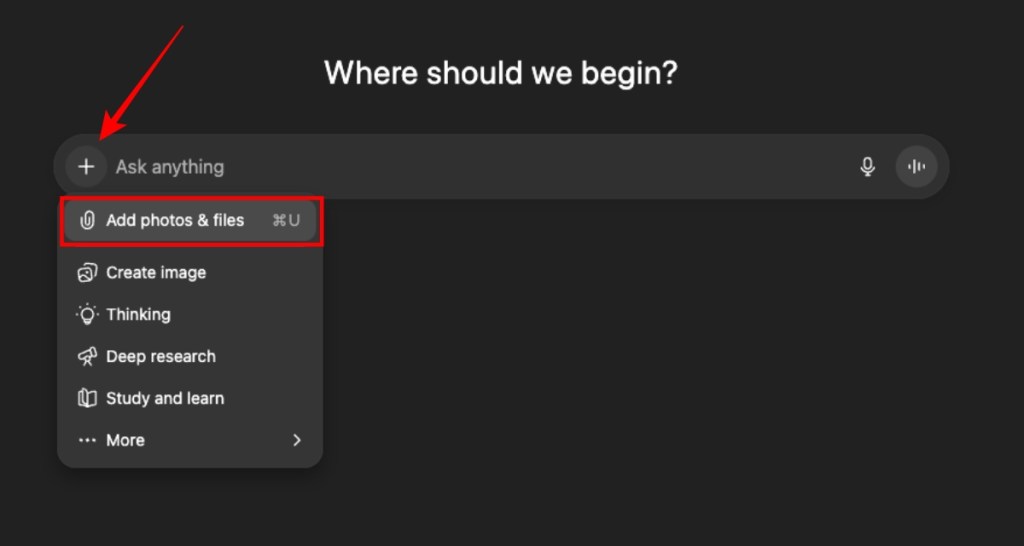
- Open ChatGPT, and tap on the + icon next to the text box.
- Select Files attachment and upload your document.

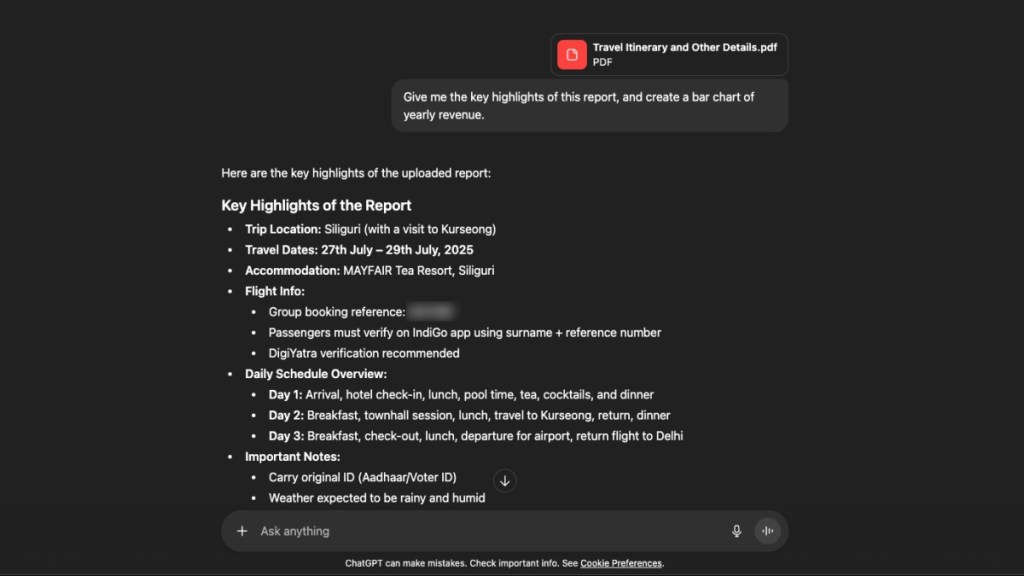
- Now, you can ask AI anything related to it, for example, “Give me the key highlights of this report”.
- Once you get the results, you can copy or save them to share them with the team.

Best AI tools to improve productivity: NotebookLM, ChatGPT, Google Gemini, Microsoft Copilot.
5. Personalized Learning & Student Support
If you are a student, you need to use AI as it simplifies learning and makes complex topics easier to understand. You can learn with AI at your own pace. For example, you can ask it to “explain nuclear fission like I am a 5-year-old.”
It can also summarize notes or give you important pointers about a topic. You can also use AI to quiz you, or turn your notes into bite-sized flashcards. I would suggest using ChatGPT’s Study mode to learn about concepts and solve hard problems. If you prefer Gemini, you can use its Guided Learning feature to grasp a concept.
Even if you have a toddler, you can use Google Gemini’s Storybook feature to create a custom bedtime story to help them start learning early. But don’t use it as a shortcut to write your assignments or homework. Let me show you a quick example of how to use AI to help with your studies.
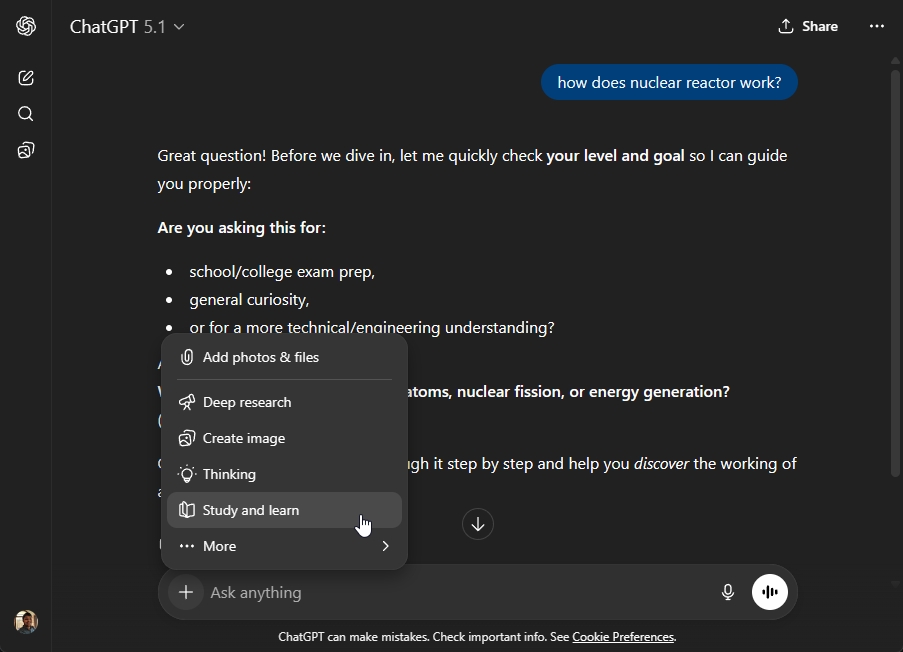
- Open ChatGPT and choose Study and learn after clicking the + button.
- Now, type your question, and it will start asking you questions instead of generating the answer in one go.
- This way, you can learn about a complex topic in no time.
- By the way, you can also ask, “Make me three flashcards based on the topic”.
- Next, you can upload your school notes or PDFs, and the AI will summarize them for you.

Best Tools: ChatGPT, Gemini, NotebookLM, Claude.
Advanced Applications: AI for Coding & Automation
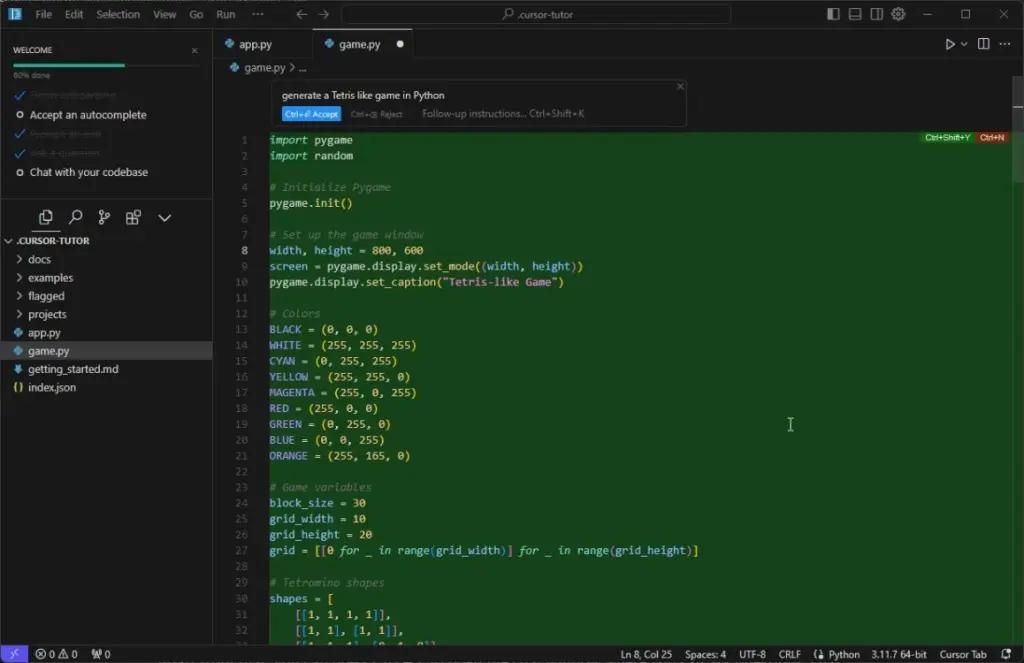
AI is increasingly being used for coding, and there are many AI code editors like Claude Code, OpenAI Codex, Cursor, Devin, and GitHub Copilot that can make development much faster and easier.
So if you are a developer, you can use AI for coding, bug fixing, building new features, and more. In this realm, Anthropic’s Claude Opus 4.6 and OpenAI’s GPT-5.3 Codex are two great AI models for coding. You can use them on Cursor effortlessly or any other IDE.

Ethics and Safety: How to Use AI Responsibly
To use AI responsibly, you need to understand where AI fails and what are its weak points. Current AI models, despite the rapid progress, still hallucinate and generates entirely false information. On niche topics, AI systems generate even more. So always double-check information generated by AI models, especially if you are working in legal, medical, or financial fields.
Next, you should be mindful about bias amplification. AI systems, just like hallucination, tend to be sycophantic and hardly disagrees with the user. It may amplify your existing bias, so talk to different AI models to get a 360-degree view on any subject.
Besides that, do not upload your confidential data on AI chatbots. AI companies use those chats and files to train their next LLMs. Inadvertently, you might be leaking your personal information or sharing trade secrets.
Finally, users should be responsible and avoid sharing AI-generated deepfakes including images and videos. As AI systems are gaining more capabilities, it’s getting harder to distinguish between what is real and what is fake. You can use C2PA’s tool to detect AI-generated images and Gemini to verify images generated using SynthID watermark.
This brings us to the end of this article, and we have only managed to cover the tip of the iceberg. But it should be enough to help you understand all the ways you can use AI.
Once you get the hang of it, you can bring it to use even more regularly in your everyday life. Whether it is for budgeting, coding, helping with emotional needs, or coming up with random solutions. Just be specific about what you want it to do, and it will take care of the rest.
You can start using AI with chatbots like ChatGPT, Gemini, or Claude. You can chat with them in natural language, and learn about new topics.
Yes, nearly all AI chatbots and services are free to use. You can use ChatGPT for general use, and Gemini for AI image generation without paying any fee.
While most AI chatbots are free, they come with some message capping. If you want to truly use a free AI, you will have to host it yourself by running a local LLM. However, it requires powerful hardware to run local AI on your computer.
Currently, Google AI which is Gemini is nearly as good as ChatGPT. In fact, in image and video generation, Gemini is much better than ChatGPT.