- ChatGPT is an AI chatbot developed by OpenAI and it uses a large language model (LLM) to generate human-like responses.
- It can also generate images, videos, interact in real-time using audio, and perform actions as well to complete tasks.
- ChatGPT was launched in November 2022 and hit 100 million users in just two months. It's the fastest growing product in consumer history.
ChatGPT has currently more than 900 million weekly active users, but there are still people who don’t know what ChatGPT is and how it works. To give you a brief introduction, ChatGPT is an AI chatbot built by OpenAI and it can understand your query and respond in natural language with incredible nuance. So, to learn about ChatGPT in greater detail, follow along.
What Is ChatGPT?
ChatGPT is a conversational Artificial Intelligence (AI) chatbot developed by OpenAI. ChatGPT allows users to type a question in natural language and it responds with proper context and nuance. It was launched in November 2022 and practically overnight, the AI industry skyrocketed and never looked back. It became the fastest company to hit 1 million users in just 5 days. Currently, ChatGPT has over 900 million weekly active users.

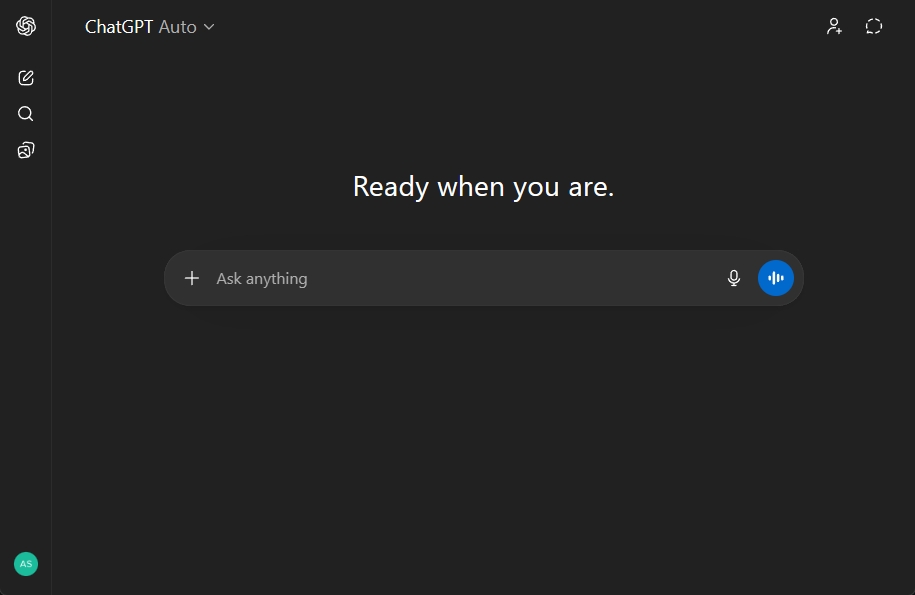
When it was first launched, ChatGPT was powered by an AI model called GPT-3.5 and today, it’s powered by the latest GPT-5.4 AI model. If you are wondering what ‘ChatGPT’ means, well, Chat refers to its conversational interface and GPT stands for Generative Pre-trained Transformer, the type of large language model (LLM) that powers it. It uses a neural network architecture called the Transformer to process and understand language.
OpenAI, the AI research company that launched ChatGPT, was co-founded in December 2015 by Sam Altman, Elon Musk, Ilya Sutskever, Greg Brockman, and others. The company was initially structured like a nonprofit, but later in 2019, OpenAI moved to a “capped-profit” model to attract investment. And in 2025, OpenAI created a Public Benefit Corporation (PBC) arm for easier recapitalization.
ChatGPT is available on the web, and has dedicated apps on Android, iOS, Windows, and macOS. Developers can also access ChatGPT models through the API.
How Does ChatGPT Work? (The Technology Explained)
At its core, ChatGPT works by predicting what word comes next in a sequence. It generates the next word over and over again until it builds a complete, coherent response. But how exactly does it predict the next word correctly? There lies the magic of the Transformer architecture. Now, let’s learn about it in detail.
Step 1: When you type a query, your message is broken into something called tokens. ChatGPT doesn’t read queries word by word, instead, it breaks text or other media into tokens. This step is called tokenization.

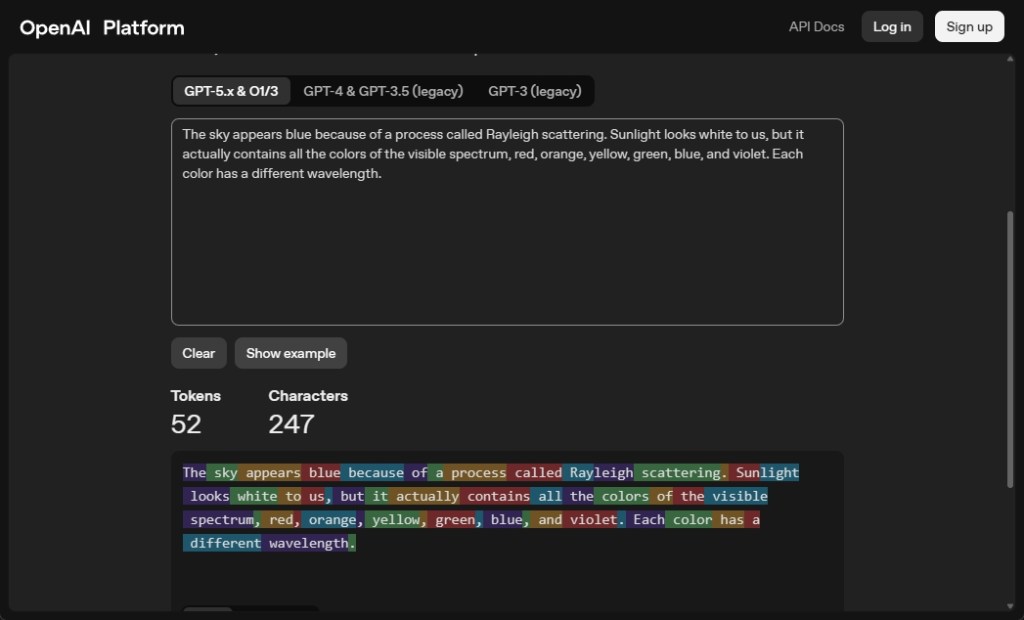
Step 2: Each token becomes a number and then a vector (also called embedding). These tokens are mapped to a dense numerical representation, which basically captures its meaning and context.
Step 3: Next, the Transformer architecture (by the way, it was invented by Google in 2017 ) processes these vectors through hundreds of transformer layers using a mechanism called “self-attention”. During this process, every word look at other words and figures out the context as to what word is most likely to come next.
Step 4: Finally, ChatGPT generates the response one token at a time. After going through all the layers, the model generates the complete response in natural language that you understand.
To give you some context, modern ChatGPT models like GPT-5.4 can handle context windows of up to 1 million tokens. It means that ChatGPT can handle roughly 750,000 words within a single conversation.
How Is ChatGPT Trained?
As to how ChatGPT is trained, or how AI works, well, there is mainly a three-stage training process. It includes Pre-training, Supervised Fine-tuning and RLHF (Reinforcement Learning from Human Feedback).
- Pre-training: The base model like GPT-3.5 is trained on hundreds of billions of words from books, Wikipedia, internet archives, code, websites, academic papers, and more. During the process, it learns grammar, syntax, facts, reasoning patterns, and basically, the structure of human language by simply predicting the next token.
- Supervised Fine-tuning: Once the base model is trained, human trainers write example conversations, showing good prompts and ideal responses. The model is fine-tuned on this data to learn how to be helpful, follow instructions, and behave like an AI assistant rather than a raw text predictor.
- RLHF: After the fine-tuning process, human reviewers rank and prefer model responses. Basically, a “reward model” learns which responses are preferred by humans. So with the reinforcement learning, the AI model consistently generates responses that humans prefer.
That said, ChatGPT often makes things up and generates entirely false information, so why does this happen? Well, it’s called AI hallucination and it occurs when the model doesn’t “know” something with confidence. Basically, when the AI model is unsure about a subject, it hallucinates.
That being said, GPT-3.5’s hallucinate rate stood at 39.6% in 2022 and now the latest GPT-5.4 has reduced it to 7%. While hallucination is still a challenging issue and has not been eliminated entirely, ChatGPT is getting better at generating truthful responses.
ChatGPT Models in 2026: GPT-5, GPT-5.4, o3, and More
In 2022, ChatGPT was powered by a single GPT-3.5 model, but in 2026, ChatGPT is built on a family of specialized AI models, each designed for different tasks. Besides these language models, ChatGPT currently uses GPT-Image-1.5 for image generation and Sora 2 for video generation. Here are the top ChatGPT models released in recent years.
| ChatGPT Model | Launch Date | Best For |
|---|---|---|
| GPT-5.4 | March 2026 | Agentic tasks, computer use, complex reasoning, coding |
| GPT-5.2 | December 2025 | Math, coding, multi-step logic, research |
| GPT-5 | August 2025 | Flagship series of models, integrated traditional LLM and reasoning models |
| OpenAI o3 | April 2025 | OpenAI’s most powerful reasoning model, best for scientific reasoning and math |
| GPT-4.5 | February 2025 | OpenAI’s largest traditional AI model, no reasoning support, but great for writing |
| OpenAI o1 | December 2024 | OpenAI’s first reasoning model that showed the power of RL |
| GPT-4o | May 2024 | OpenAI’s first multimodal model that could process text, image, audio and video |
| GPT-4 | March 2023 | GPT-4 was a huge upgrade over the last-gen model. It was slow, but an inflection point for OpenAI. |
| GPT-3.5 | November 2022 | First model to power ChatGPT. The instruct version of text-davinci. |
ChatGPT Features: What Can It Do in 2026?
ChatGPT is no longer a simple AI chatbot, and that’s why I would call it an AI assistant that can not only generate text, but also perform tasks and produce other forms of media like images and videos. So to understand all the features ChatGPT offers in 2026, let’s go through them by categories.
Search and Research
- ChatGPT Search: ChatGPT can search the web in real time to fetch current information instead of relying on its training data.
- Deep Research: An AI agent designed to perform multi-step research that gathers information from multiple sources and creates structured reports with citations.
- ChatGPT Prism: A collaborative tool inside ChatGPT that allows you to create a workspace for research and writing.
- ChatGPT Pulse: A proactive feed that brings personalized updates and insights based on topics you follow or show interest in.
Media and File Generation
- Image Generation (GPT Image 1.5): OpenAI’s advanced image generation model that can produce high-quality images from text prompts and images.


- Image Editing: You can upload images on ChatGPT and edit them using natural prompts without changing the overall image.
- Video Generation (Sora 2): The Sora 2 AI model can generate coherent AI videos, up to FHD with synchronized audio.
- Excel, PowerPoint, PDF and Document Generation: ChatGPT can generate and edit spreadsheets, presentations, PDFs, and other documents. It can also handle tables and charts.
File and Data Analysis
- Document Analysis: You can upload PDFs, Word files, Excel sheets, etc. and ask ChatGPT to summarize, extract, or edit the document.
- Data Interpreter/Code Interpreter: A built-in Python interpreter that can run code in its sandbox and do calculations, generate chats, process files, and more.
- Connectors: It’s a built-in tool that integrates third-party services like Google Drive, Slack, Notion, etc. with ChatGPT.
Agentic Features
- ChatGPT Agent: An autonomous AI agent that can plan and execute multi-step tasks on the web. It can analyze the screen and book tickets, schedule your appointments, and automate your workflow.

- Shopping Agent: An AI assistant that can discover products, check prices, read reviews, and make purchasing easier on ChatGPT.
- Codex: OpenAI’s coding-focused AI agent to write, run, debug and explain code. It integrates with GitHub and various developer tools.
- Scheduled Tasks: Automate recurring tasks by setting scheduled tasks inside ChatGPT.
- Connect Apps: You can now connect third-party apps with ChatGPT such as Canva, Adobe Photoshop, Figma, Apple Music, etc.
Productivity
- Canvas: A visual editing workspace for generating and refining images, layouts, and documents.
- ChatGPT Projects: A separate folder where you can store files, chats, and context isolated from regular chats.
- Group Chats: It allows multiple users to collaborate with ChatGPT in a shared conversation.
- ChatGPT Atlas: An OpenAI browser designed from the ground-up with ChatGPT at the center. It supports many agentic AI features.
- GPT Store: A marketplace where you can find custom GPTs for specific tasks. You can also create and deploy one.
Voice and Conversation
- Advanced Voice Mode: Interact with ChatGPT in real-time using voice. You will get a more natural experience with expressive speech, emotion detection, and faster response.
- ChatGPT Voice Mode with Live Video: Share your screen or camera with ChatGPT and interact in real-time. ChatGPT can analyze the visuals around you and interact with you naturally.
Lifestyle and Personalization
- Memory: ChatGPT can remember user preferences, interests, and past context to offer a personalized response.
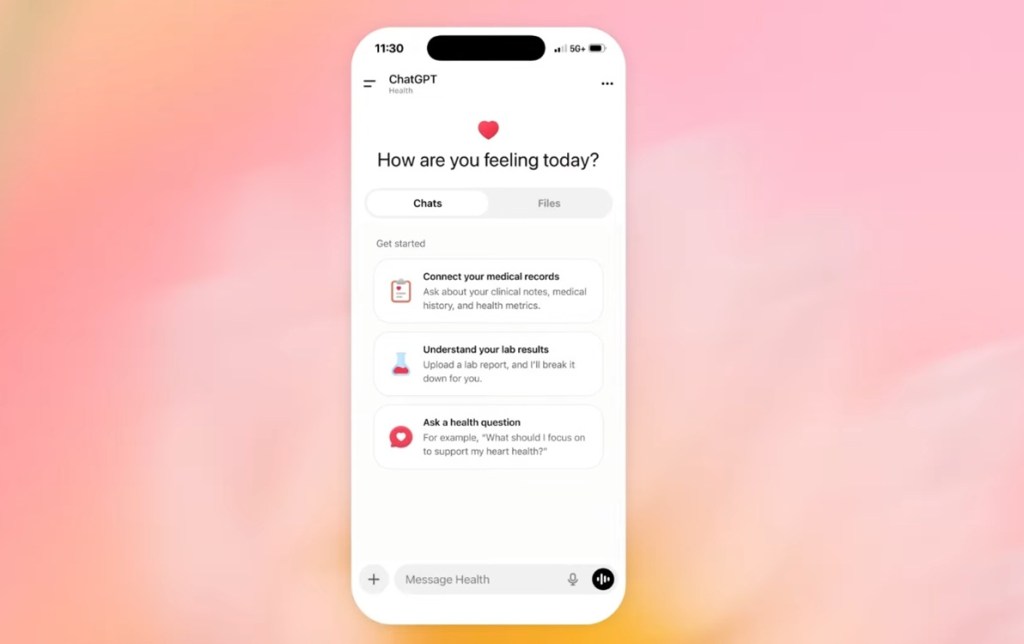
- ChatGPT Health: A health-focused experience inside ChatGPT where you can connect Apple Health, and other such apps to understand all your health metrics in one place.

- Study Mode: A learning-focused mode that instead of giving direct answers, asks questions to raise curiosity and guide students.
- Privacy and safety features: Disable ChatGPT features for users under 18 under parental controls. You can disable memory, image generation, etc.
ChatGPT Pricing: Free vs Go vs Plus vs Pro
For consumers, ChatGPT offers four different plans including a free tier. You can check out the difference between various subscriptions plans right below.
Tier ChatGPT Free ChatGPT Go ChatGPT Plus ChatGPT Pro Pricing Free $8 per month $20 per month $200 per month Model Access ChatGPT Auto router, GPT-5.3, GPT-5.3 mini Free + GPT-5.4 Thinking GPT-5.4 Thinking GPT-5.4 Pro Key features Web search, image generation, file uploads, projects, basic voice mode, custom GPTs Free + Expanded usage limits, Longer memory ChatGPT Agent, Sora 2, Advanced Voice Mode, Codex agent Access to compute-heavy models, Sora 2 FHD video, maximum ChatGPT agent tasks, ChatGPT Pulse, early access to features Usage Limits 10 messages with GPT-5.3 every 5 hours, 3 image generations per day 160 messages with GPT-5.3 every 3 hours, 10 messages every 5 hours with GPT-5.4 Thinking 160 messages with GPT-5.3 every 3 hours, 3,000 messages per week with GPT-5.4 Thinking Effectively unlimited usage Context window 16K tokens 32K tokens / 256K tokens 32K tokens / 256K tokens 128K tokens / 400K tokens
How to Use ChatGPT (Step-by-Step Guide)
You can easily get started and use ChatGPT on any device for free. ChatGPT is officially available on Windows, macOS, Android, and iOS. And if you are on any other platform, you can simply use the web version. Here is how to get started.
- Head to chatgpt.com in a web browser and create a free account.
- You can also download the ChatGPT app on Android (Play Store), iOS (App Store), Windows (Microsoft Store), and macOS (Mac App Store).
- After signing in, you can simply enter your query or prompt in natural language inside the “Ask anything” text box to get a response from ChatGPT.

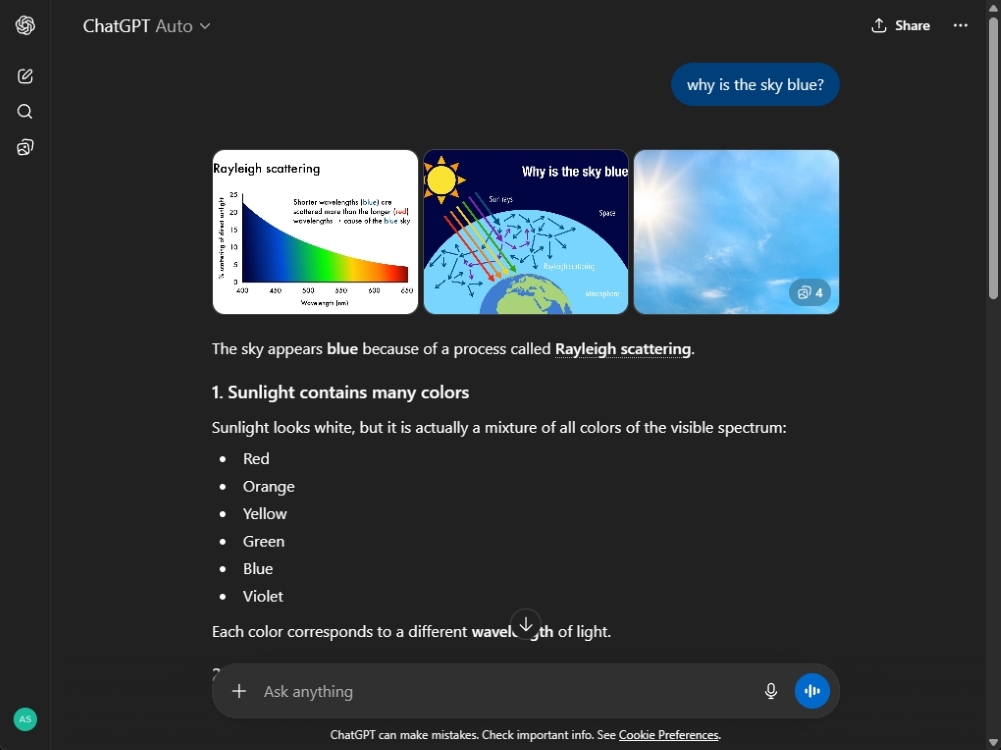
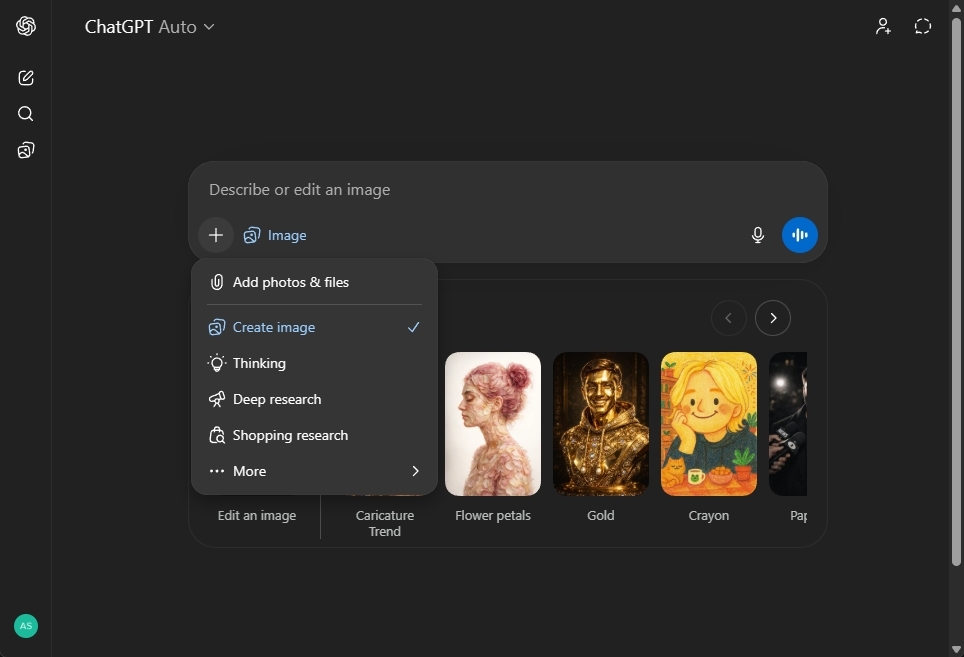
- If you want to upload files, create images, or use any of the ChatGPT features, click on the + button.

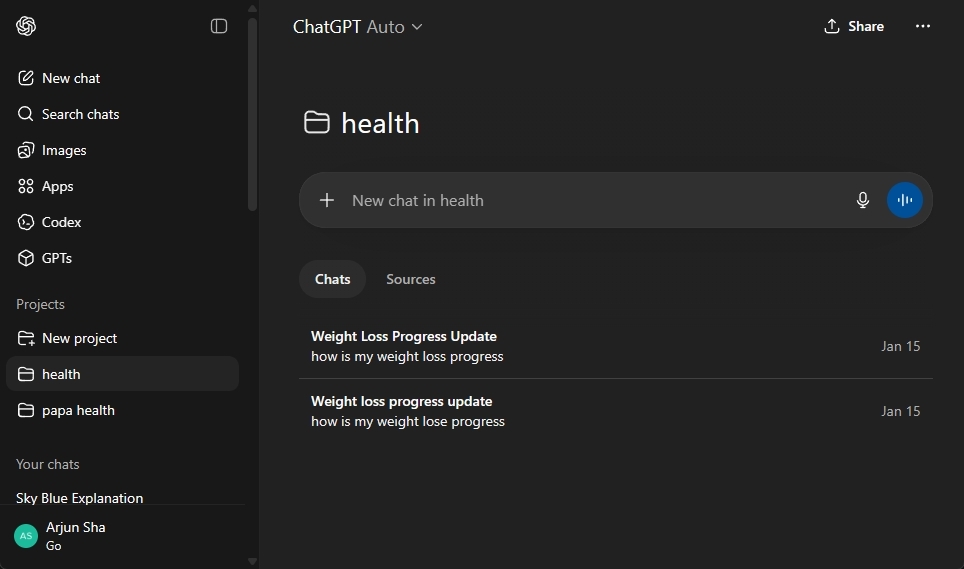
- You can also create Projects by clicking on New project under “Projects” from the left sidebar where you can upload custom files for specific chats.

ChatGPT Limitations and Risks
ChatGPT is indeed powerful, but it has many limitations and risks that you should be aware of. Understanding these shortcomings will help you leverage the tool in the most effective ways.
- Hallucinations: As I mentioned above, hallucination is still a challenging problem in the AI field and it doesn’t just apply to ChatGPT, but all AI chatbots. At times, ChatGPT confidently generates false information and invents citations and fake names. It occurs when ChatGPT is unsure about a topic. So you should always double-check the information generated by ChatGPT, especially if you work in sensitive fields like health, finance, law, etc.
- Sycophancy: ChatGPT has been criticized for being too sycophantic to users. OpenAI’s GPT-4o model was too agreeable, displayed people pleasing behavior, and fed into users’ delusion. After reports of ChatGPT-induced psychosis and some tragic loss of lives, OpenAI pulled back GPT-4o from ChatGPT. While the model is no longer available, you should always be cautious when ChatGPT is overly flattering and agrees to all your assertions.
- Knowledge Cutoff: ChatGPT models have a knowledge cutoff date, which shows till when the model has been trained. While OpenAI frequently updates the model with up-to-date knowledge, there is still a gap of around six months. For instance, the GPT-5.4 was trained till August 31, 2025. So, if you ask a question after the cutoff date, it won’t know the answer. That’s why it’s recommended to use the Web Search tool if you want the latest information on ChatGPT.
- No true understanding: ChatGPT doesn’t truly understand the real world as humans do. It generates statistically likely sequences of text. So, you should not be over-reliant on ChatGPT for emotional or other needs.
- Environmental cost: OpenAI CEO Sam Altman revealed ChatGPT’s energy bill and said it uses 0.34 watt-hours for each query and roughly one fifteenth of a teaspoon of water. While on paper, it may appear insignificant, critics argue that collectively ChatGPT is consuming too much power and water, driving the environmental cost. The new data centers are using gigawatt of electricity and it’s expected to increase over time.
- Legal and copyright issues: To train ChatGPT, OpenAI has used books, images, articles, and materials from various sources without taking prior permission from the creators. As a result, many publishers have sued OpenAI for copyright infringement. The legal battle is ongoing in many cases, and in some areas, OpenAI has settled the case by paying and partnering with the creators.
ChatGPT vs Google Gemini vs Claude: How Do They Compare?
ChatGPT is currently the market leader, but Google Gemini is catching up and now has more than 750 million monthly active users. Claude, one of the capable ChatGPT alternatives, targets the enterprise segment, but of late, it’s starting to focus on general consumers too.
| Category | ChatGPT | Google Gemini | Claude |
|---|---|---|---|
| Developer | OpenAI | Anthropic | |
| Best for | Versatile everyday use, coding, creativity | Google ecosystem, search, multimodal, powerful image and video generation | Reliable, minimum hallucination, best for coding, enterprise use cases |
| Context Window | 128K to 1M tokens | 1M tokens | 200K tokens |
| Free Tier | Yes | Yes | Yes |
| Standard Price | Starts at $8 per month | Starts at $8 per month | Starts at $20 per month |
| Image Generation | Yes via GPT-Image-1.5 | Yes via Nano Banana 2 and Pro | No |
| Video Generation | Yes via Sora 2 | Yes via Veo 3.1 | No |
| Web Search | Yes | Yes | Yes |
The History of ChatGPT: From GPT-1 to GPT-5
In June 2018, OpenAI released its first GPT-1 AI model with only 117 million parameters. It was a proof of concept for generative pre-training and showcased the power of the Transformer architecture. Now, in February 2019, OpenAI unveiled its next-gen GPT-2 LLM which was trained on 1.5 billion parameters. For the first time, we saw a large language model of this size.
It was capable of generating realistic text, and in fact, OpenAI initially refused to release it fully due to misuse concerns. Next, the major milestone came in June 2020 with the release of GPT-3 which had a whopping 175 billion parameters. But then InstructGPT was announced in January 2022 which was a fine-tuned version of GPT-3 to follow human instructions.
This model introduced RLHF (Reinforcement Learning through Human Feedback) and set the stage for the launch of ChatGPT. Come November 2022, ChatGPT was launched which was powered by GPT-3.5 and it created history. It became the fastest growing consumer application in history, overshadowing even the internet’s adoption.
After the initial success of GPT-3.5, GPT-4 was launched in March 2023 which was a major upgrade over GPT-3.5. It was a multimodal model that could understand both text and images and had stronger reasoning support. While OpenAI was riding the success wave, a board crisis unfolded within the company. Sam Altman was briefly fired and rehired within 5 days in a chaotic coup by the then OpenAI board.


After the major upheaval, Altman was back and fired those who led the coup against him. He also restructured the OpenAI board. Following that, OpenAI launched GPT-4o in May 2024, an “omni” multimodal model that could process text, voice, images, and videos in real-time. Then came the revolution of reasoning models with the launch of OpenAI o1 in September 2024. It delivered incredible performance in math, coding, and scientific domains.
OpenAI kept working on o-series reasoning/thinking models and launched another powerful o3 model in April 2025. It showed dramatic performance jump in all categories. Finally, OpenAI came up with GPT-5 series models in August 2025 which integrated traditional LLMs and reasoning models into one package.
OpenAI was finally back to its GPT-series models. Now, the company is releasing incremental versions of GPT-5 models, and currently GPT-5.4 is the default model on ChatGPT.
ChatGPT Privacy and Safety
While ChatGPT is a helpful AI tool and can do a lot more in 2026, is it safe to use? For most purposes, yes, ChatGPT can be an incredible AI companion for online tasks. However, there are some privacy and safety issues that you should know.
- By default, ChatGPT trains its AI models on user conversations. If you don’t opt-out of model training, your private chats could be used for training future ChatGPT models. You can follow our tutorial and disable model training in ChatGPT to protect your privacy.
- Over time, OpenAI has added safety filters on ChatGPT to refuse harmful requests. However, due to political reasons, OpenAI has now loosened some of its safety guardrails. While adult mode in ChatGPT is delayed, it can still engage in conversations “no matter how challenging or controversial a topic may be.”
- Since October 2025, OpenAI has added parental controls on ChatGPT for users under 18, following a number of self-harm cases linked to ChatGPT usage. Parents can now customize age-appropriate settings for their teens and set quiet hours, disable image generation, and memory feature.
Lastly, I would recommend users to not share passwords, financial accounts numbers, or sensitive legal or medical information with ChatGPT. You should treat every conversation as if it could be checked by a human reviewer. And business users should always use Team or Enterprise plans to ensure your data remains private.
ChatGPT is an AI chatbot developed by OpenAI that can write, generate images, research, perform tasks, write code, and do so much more. It can converse in natural language and currently, it’s powered by the GPT-5 series of models.
Yes, ChatGPT has a free tier and you don’t need any subscription to use it. While it’s free, there are some usage limits. You can send 10 messages every 5 hours to the advanced GPT-5.3 model and generate 3 images in a day.
ChatGPT is built by OpenAI, an AI research company based in California. It was founded in 2015 by Sam Altman, Elon Musk, and others.
ChatGPT works by predicting the next word in a sequence using a Transformer-based neural network. It’s trained on a vast amount of text and media files.
GPT-5 was the first model by OpenAI that clubbed the traditional non-thinking LLM with the reasoning model. It delivered powerful performance in math, science, coding, and other areas, however, it was cold in response. GPT-5.1 improved upon it and made ChatGPT a bit more warmer and conversational, similar to the earlier GPT-4o model.
Generally, yes, ChatGPT is absolutely safe to use. However, you should avoid sharing personal information, be it financial or medical information. And you should double-check ChatGPT’s response as it can hallucinate and generate false information too.
Yes, ChatGPT can access the internet in real time and fetch current information beyond its training data.
ChatGPT can hallucinate and confidently generate false information at times. It’s limited by its training data (although web search fixes this limitation) and may have underlining bias, produced from its training corpus.
ChatGPT is a standalone AI assistant with support for various tasks. However, Google Gemini is directly integrated into the Google ecosystem. You can use Gemini in Gmail, Search, Google Docs, etc. In addition, Gemini excels at image and video generation.
Yes, ChatGPT saves your conversations and you can access it from the left sidebar. If you are wondering whether ChatGPT uses your conversation to review and train its next AI model, the answer is again, yes, it’s turned on by default. You can tun off model training from ChatGPT settings.