
If you’ve ever searched for games like Wordle, you probably would have come across Globle. While both are daily games and even sound alike, they couldn’t be more different once you start playing. One has you guessing words, while the other tests how well you know the world map. So, if you’re someone trying to get into Globle but want to know how it compares to the classic Wordle, let me help you out.
Here’s a detailed Wordle vs Globle comparison guide that you should check out before diving into the game.
Wordle vs Globle: Differences at a Glance
At first, Wordle and Globle might look like variations of the same idea. After all, Globle is inspired by Wordle. But just because you know how Wordle works doesn’t automatically mean you’ll understand Globle. While Wordle focuses on letters and word patterns, Globle turns the entire world map into your puzzle.
So, let’s take a quick look at how the two games compare.
| Feature | Wordle | Globle |
|---|---|---|
| Objective | Guess the hidden five-letter word | Guess the mystery country |
| Attempts | 6 | Unlimited |
| Feedback | Green, Yellow, and Gray tiles | Color-based proximity clues |
| Difficulty | Depends on the word and your vocabulary | Depends on your geography knowledge |
| Core Skill | Vocabulary, spelling, and deduction | Geography, spatial awareness, and deduction |
| Puzzle Frequency | One puzzle every day | One mystery country every day |
As you can see, these two games take the daily-puzzle formula in completely different directions. But the table only tells you what is different. To really understand how Wordle and Globle compare, let’s break down each part of the gameplay.
Objective
| Aspect | Wordle | Globle |
|---|---|---|
| Goal | Find the hidden five-letter word | Find the mystery country |
| Starting point | A blank grid | A world map |
| Main clue | Letters | Geographic proximity |
The biggest difference between Wordle and Globle becomes obvious as soon as you start the game. When you play Wordle, it gives you a blank grid and asks you to find a five-letter word. There is no theme or opening clue to guide you. Your first guess is what starts the process, and every letter you uncover gives you another piece of the puzzle. You then use those clues to figure out the hidden word.
Globle takes that same basic idea and puts it on the world map. So, instead of guessing letters, you have to guess countries. Your first guess can practically be any country, and the game then tells you how close you are to the mystery country. The closer you get, the warmer the color becomes, giving you a rough idea of where you should look next.
Attempts
| Aspect | Wordle | Globle |
|---|---|---|
| Total Attempts | Six | Unlimited |
| Goal | Find the hidden word within the guess limit | Find the mystery country more efficiently |
| Guessing style | More calculated | More experimental |
This is probably the biggest difference you’ll notice while switching from Wordle to Globle. In Wordle, you get six attempts to guess today’s Wordle answer. These six attempts can, however, disappear surprisingly quickly. Your guesses matter, so you should open with one of the best Wordle starting words. A strong opener can help you optimize your attempts and reach the answer in the fewest required guesses.
Globle, on the other hand, does not have the same pressure as Wordle due to its unlimited attempts. You can test a country, see that it is cold, try another region, and keep moving toward the warmer colors. Of course, finding the answer in fewer guesses is still satisfying, but making bad guesses doesn’t cost you the game.
Feedback
| Aspect | Wordle | Globle |
|---|---|---|
| Feedback system | Green, yellow, and gray tiles | Hot and Cold color system |
| Feedback shows | Whether letters are present and correctly placed | How close your guessed country is to the answer |
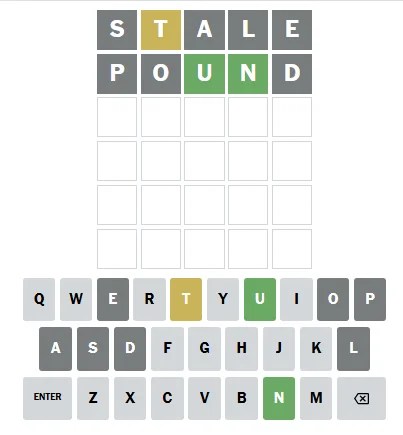
Wordle’s feedback system is what turns a very simple word game into an actual deduction puzzle. As you enter a word, you get color-coded feedback. The letter tiles can turn into green, yellow, or gray. A green tile means that the letter is in the correct place. A yellow tile means that the letter belongs in the word but in some other position. Lastly, a gray tile means that the letter isn’t in the hidden word. You have to use these clues to narrow down the possibilities and reach the answer.
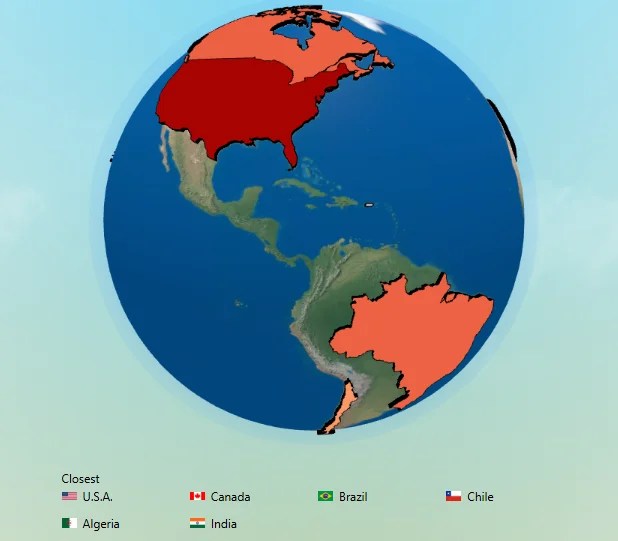
Globle also has color-coded feedback, but it isn’t as direct. The game shows you how close your guessed country is to the mystery country using the hot and cold system. So, as you guess a country, it will be highlighted on the globe with a color indicating how close it is to the mystery country. A colder color means you’re further away, while a warmer color indicates that you’re getting closer to the mystery country.
Difficulty
| Aspect | Wordle | Globle |
|---|---|---|
| Main Challenge | Find the hidden word in six guesses | Find the mystery country |
| Difficulty factors | Uncommon words, repeated letters, similar word patterns | Lesser-known countries and unfamiliar locations |
| Key advantage | Vocabulary and deduction | Geography knowledge and deduction |
It is difficult to say that one of these games is harder than the other because they test completely different things.
Wordle can be incredibly straightforward one day and surprisingly annoying the next. Having a good vocabulary and the ability to spot patterns is good, but it won’t always save you. And since you can’t remember all the five-letter words in the English language, you need a better approach to win the game. One way is to look at the past Wordle answers and compare them with the unused Wordle words. This will help you narrow down the possible answers.
Globle also has a similar problem, except the knowledge gap is geographical. So, its difficulty depends on how comfortable you are with geography. If you can look at a map and immediately recognize most countries, you already have an advantage. But if smaller or less familiar countries tend to blur together, you could be making quite a few guesses before the map finally starts pointing in the right direction.
Skills Required
| Aspect | Wordle | Globle |
|---|---|---|
| Primary Skill | Vocabulary | Geography |
| Other useful skills | Spelling, deduction, pattern recognition | Spatial awareness, deduction, map knowledge |
| Player advantage | Knowing words and recognizing patterns | Knowing countries and their exact locations |
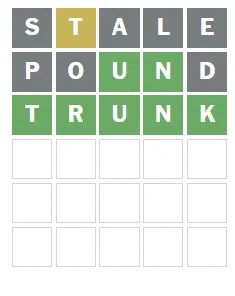
Wordle is primarily a vocabulary and deduction game. You need to know enough five-letter words so that you can come up with useful guesses. However, thinking that having a good vocabulary gives you an upper hand is one of the common Wordle mistakes players make. Remember that knowing the dictionary cover to cover doesn’t guarantee a win. You also need to be able to recognize letter patterns and understand what the colored tiles are telling you.
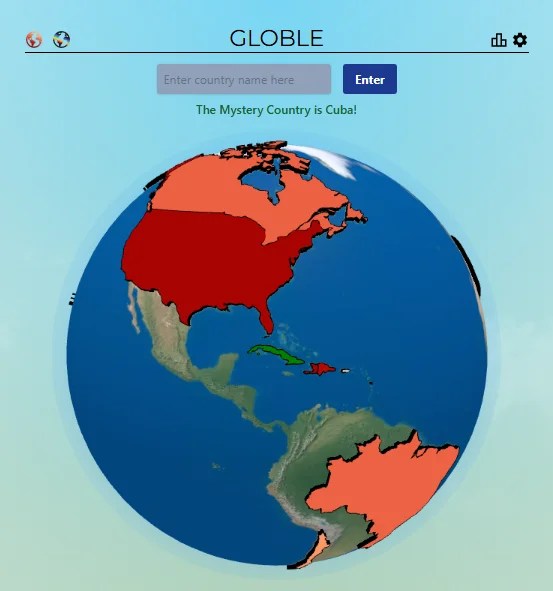
Globle, meanwhile, is naturally better suited for people who enjoy geography. Knowing where countries are located can get you surprisingly far, especially when the game gives you warmer and colder clues. But just like Wordle, raw knowledge isn’t everything. You still need to connect the clues and work out where the mystery country could be.
Wordle vs Globle: Which One Should You Play?
After thoroughly comparing Wordle vs Globle, one thing is pretty clear: these games aren’t competing for the same audience. They may both be daily games, but the kind of puzzle-solving experience they offer is completely different.
If you like word games and want a puzzle that you can finish in just a few minutes, Wordle is the natural choice. Wordle resets every day, giving you a new daily puzzle. You get six attempts to guess the hidden five-letter word. The six-guess limit and the color-coded clues add a little extra thrill, especially when you get close to the answer but still have several possibilities left.
On the other hand, if you like geography or want to explore more geography-based puzzles, give Globle a shot. You don’t need to be a geography expert to enjoy it, either. The color clues gradually point you in the right direction, and you might end up learning where a few countries are along the way.
Honestly, though, you don’t really have to choose between the two. Try both at least once. They take only a few minutes and test completely different skills, so playing Globle after a game of Wordle won’t feel like playing the same puzzle twice. And who knows, you might end up adding both to your daily puzzle routine.
Globle and Wordle are difficult in different ways. Wordle relies on vocabulary, spelling, and deduction, while Globle depends more on geography and spatial awareness. Your familiarity with words or world geography can make either game feel easier.
Globle is inspired by Wordle’s daily guessing format, but the gameplay is quite different. Instead of guessing a five-letter word using letter clues, you guess a mystery country and use geogrpahic proximity to narrow it down.
You can play Globle without being great at geography. The hot and cold color clues help you narrow doen the mystery country with each guess, However, knowing where the countries are located can make solving the puzzle easier.
7 Best Globle Tips and Tricks to Find the Mystery Country Easily
 Daksha Gupta
When Does Globle Reset? Find the Reset Time Here
Daksha Gupta
How Many Countries Are in Globle? A Full Globle Country List
Daksha Gupta
Globle Answer Today for October 19, 2026 - Hints and Full Solution
Daksha Gupta
How to Play Globle: A Step-by-Step Guide for Beginners
Daksha Gupta
Wordle Hint Today - October 19, 2026 (Puzzle #1948)
 Rishabh Sabarwal
Connections Hints Today & Answers for October 19
 Sanmay Chakrabarti
What Does 'One Away' Mean in NYT Connections and How to Avoid It?
Daksha Gupta
Wordle Bot: What It Is, How It Works, and How to Use the Tool to Get Better at Wordle
Daksha Gupta
NYT Games Reset Time Guide: When Do Wordle, Strands, Connections and Other Games Reset?
Daksha Gupta