
For puzzle enthusiasts who eat, sleep, and breathe Wordle, one puzzle a day is never enough. They find the five-letter word, sometimes go for an unlimited run, and then get bored with how easy the puzzles become. That’s when they start looking for games like Wordle. Whether you want a harder daily word puzzle game or something with a completely different twist, there are plenty of great alternatives out there.
People want games that bring similar excitement (sometimes even more) and present challenges beyond what players expect. So, if you are looking for such intense puzzles, here are the best NYT Wordle alternatives you should try out.
Quordle
Quordle features the same mechanics as NYT Wordle but splits your attention across four boards at once. It is a multi-board word puzzle where one guess applies to four different five-letter grids at the same time. If you are already checking the today’s Wordle answer before playing, Quordle will quickly change how you approach the game.
Each board returns Wordle-style feedback with green, yellow, and gray tiles, so you must track four solutions in parallel. You have nine total attempts to solve all four words, which is slightly more forgiving than Wordle’s six attempts. There is no points system, and the game shows a timer at the top to help you time yourself.
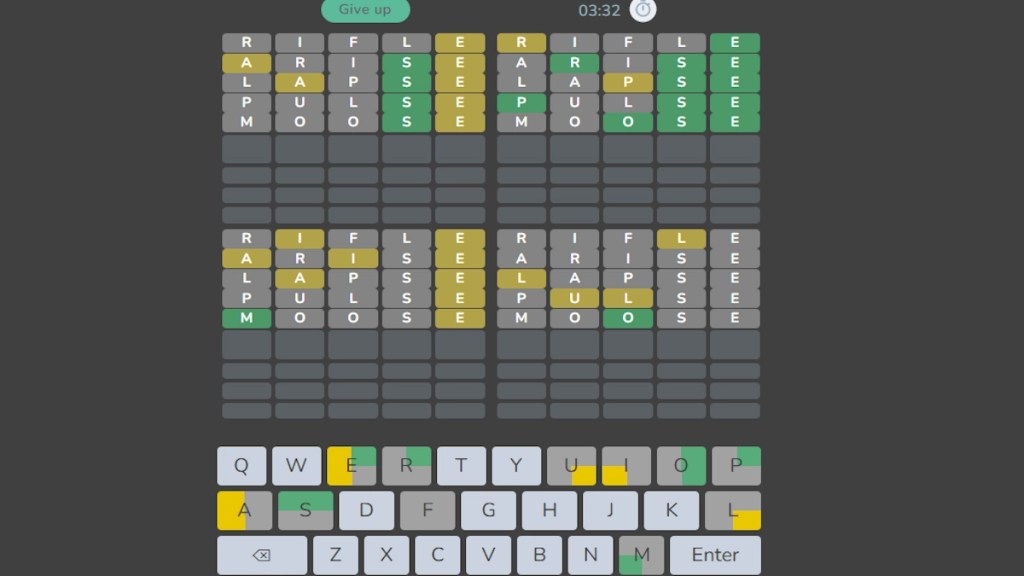
However, with four secret words to guess in nine attempts, your go-to Wordle starting words won’t guarantee a win here. While you get extra attempts to offset the difficulty spike, it rewards players who can track multiple patterns without losing control of the board. It also helps to keep a tab on past Wordle answers to avoid reusing solved words as guesses.
Squeezy
Squeezy looks like it starts you halfway through a game like Wordle, with every word already visible on the screen. The game shows yellow letters to the left of the word grid. Your goal is to squeeze the letters inside each word and rearrange them.
In simple words, you reposition the letters to rebuild correct words in each row, while also making sure the yellow words spell the secret word: the answer. This can be seen as being similar to how Spelling Bee Pangram works, where you must make the perfect word by using the given letters.
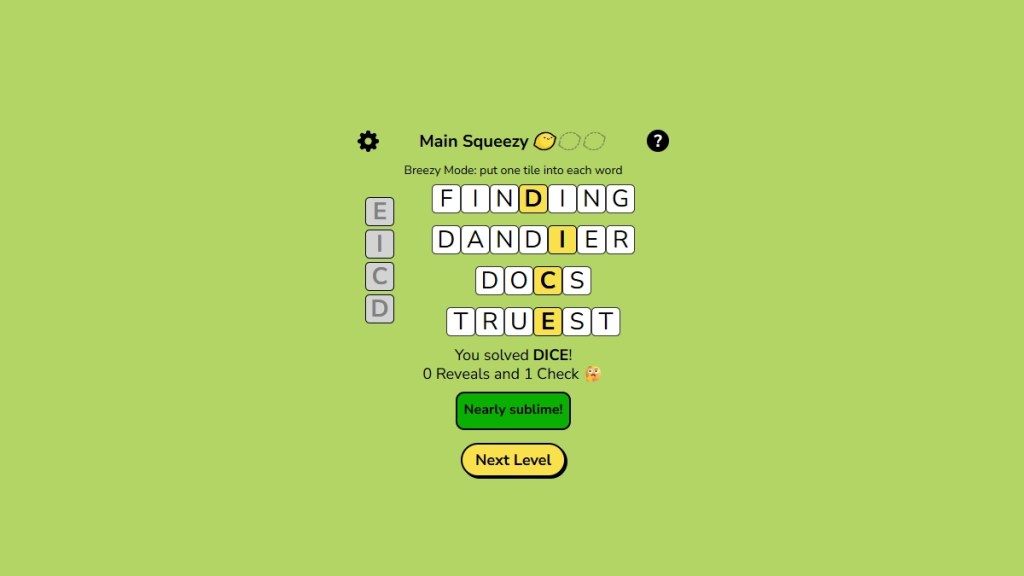
This might not feel familiar to Wordle fans. But this game is slightly easier than NYT Wordle, as the solution relies on how you use the letters on the side. As for the scoring, Squeezy usually tracks how many moves or swaps you make. However, there is no cap on attempts like Wordle.
Dordle
Dordle is a game exactly like Wordle until the second board starts interfering with your guesses. Each guess feeds you color-based clues about correct letters and placements. The rhythm feels natural if you already play Wordle daily. It keeps that quick, satisfying “one more guess” tension intact.
Dordle features the same mechanics as Wordle, but you need to guess two five-letter words at once. You receive independent color feedback for each board, which means each guess can help or hurt both solutions.
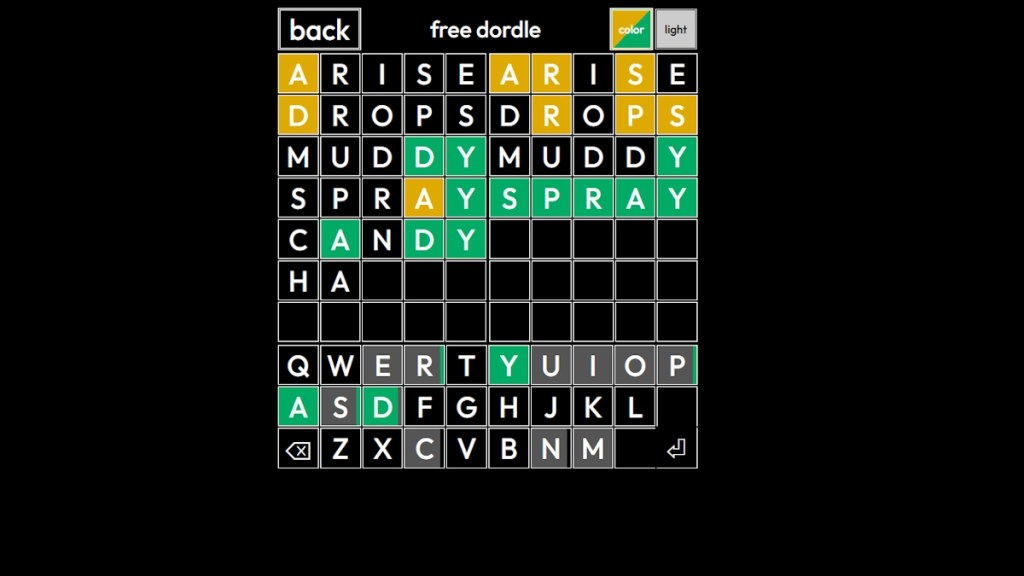
You get a total of seven attempts to solve both words correctly. There is no score system, only whether you complete both within the limit. While trying out Dordle myself, I often decoded one word while accidentally complicating the other.
This game works best for players who can balance progress without overcommitting to one word. Especially when you already solve puzzles without today’s Wordle hint.
Letroso
Letroso feels familiar to Wordle at first glance but quickly deviates from it. The visual three-color feedback stays, but you also have additional positional hints and edge letter reveals with rounded corners. Look for letters on both edges, find out if letters are adjacent, or if they are out of position to solve the puzzle.
Unlike Wordle’s five-letter answer, the word length is not fixed here. The secret words in Letroso can be anywhere from 3 to 10 letters, which keeps you guessing longer than usual. If you’re stuck, you can always use today’s Letroso answers and move on to different puzzles.
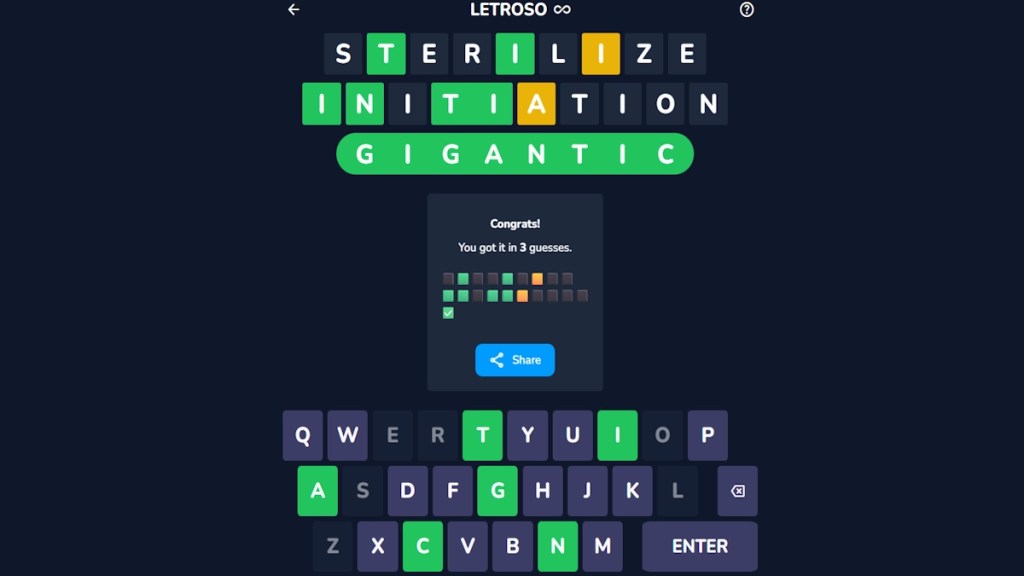
Letroso is a puzzle game that comes with a logic unique from Wordle. It moves away from Wordle’s clean color system into something more abstract, but it’s quite enjoyable. If you know how to play Letroso, you will notice the differences between these similar-looking puzzles. For a detailed breakdown, check out our Letroso vs Wordle comparison.
Octordle
Octordle builds directly on Wordle’s structure, keeping the same guessing rules and color feedback system. But what makes it special is the scale. In Octordle, you are solving eight words at once, all reacting to the same guesses. The foundation is identical, so there is no learning curve. It simply assumes you are ready for more.
Every board provides separate color feedback, forcing you to track multiple solutions together. You get thirteen attempts to solve all eight words. There is no points system here.
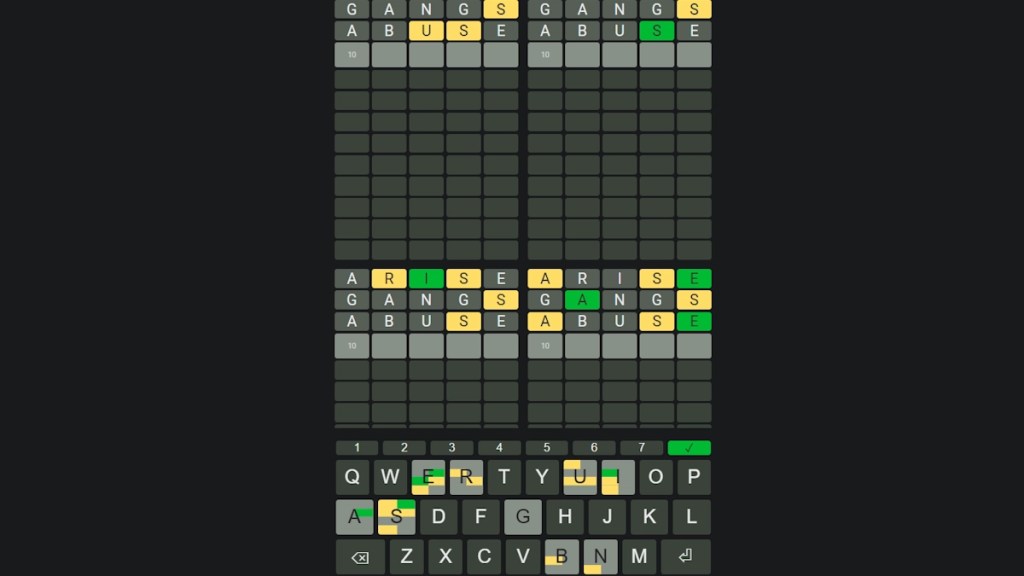
The whole puzzle quickly turns into a memory and planning exercise rather than a simple deduction game. If Wordle hard mode doesn’t feel challenging enough for your liking, this one stretches that daily puzzle into a full brain workout session.
Nerdle
Nerdle is a popular game like Wordle, and it mirrors it almost perfectly. The only major difference is that it’s Wordle for mathematicians. The structure and pacing feel instantly recognizable, but Nerdle doesn’t test your vocabulary and spelling.
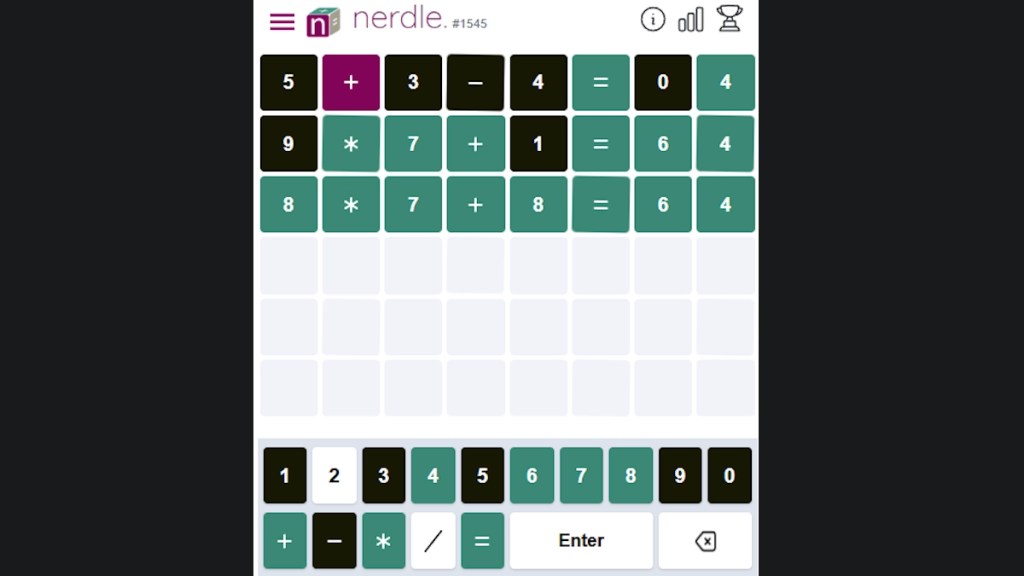
It is a math-based puzzle where you guess equations instead of words. Each guess must be a valid calculation that includes numbers, operators, and an equal sign.
You have six attempts, and success depends on forming the correct equation. So, despite having a similar grid pattern and color system, Nerdle and Wordle share major differences that puzzle lovers will appreciate.
As we mentioned, every guess must have a ‘=’ and you must make a perfect calculation. Even if math is not your thing, there is a quiet satisfaction in landing the right equation.
Waffle
Know how to play Wordle and are in love with its color feedback? Then, Waffle can quickly become your next addiction. The goal remains the same: forming correct words through letter arrangement.
The puzzle offers green and yellow clues to guide your thinking process. However, instead of typing guesses, you rearrange letters already placed in a waffle-shaped grid. Your task is to swap letters to form valid words both horizontally and vertically.
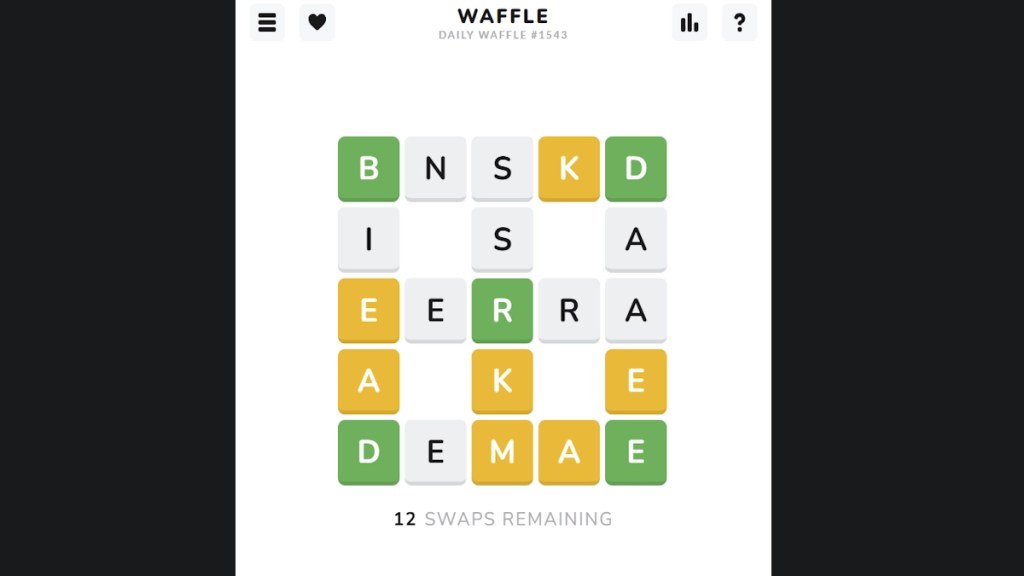
You are given a limited number of swaps (15), and fewer moves result in a better score. Waffle feels closer to fixing a broken Wordle solution than discovering something new. That small change makes it surprisingly addictive, especially when everything clicks into place.
Squaredle
If you are tired of only playing Wordle alternatives that give the same color pattern, Squaredle shifts away from guessing and leans into word discovery. Squaredle shares Wordle’s focus on vocabulary and pattern spotting, but you scan a grid and connect letters to form as many words as possible, like NYT Strands. If you enjoy both, you might also want to read our Strands vs Wordle breakdown to understand how they differ.
In this puzzle game, words can be formed in multiple directions as long as letters are connected. The scoring is based on word length and discovery, similar to Spelling Bee. The goal is to find all possible words or reach a high score.
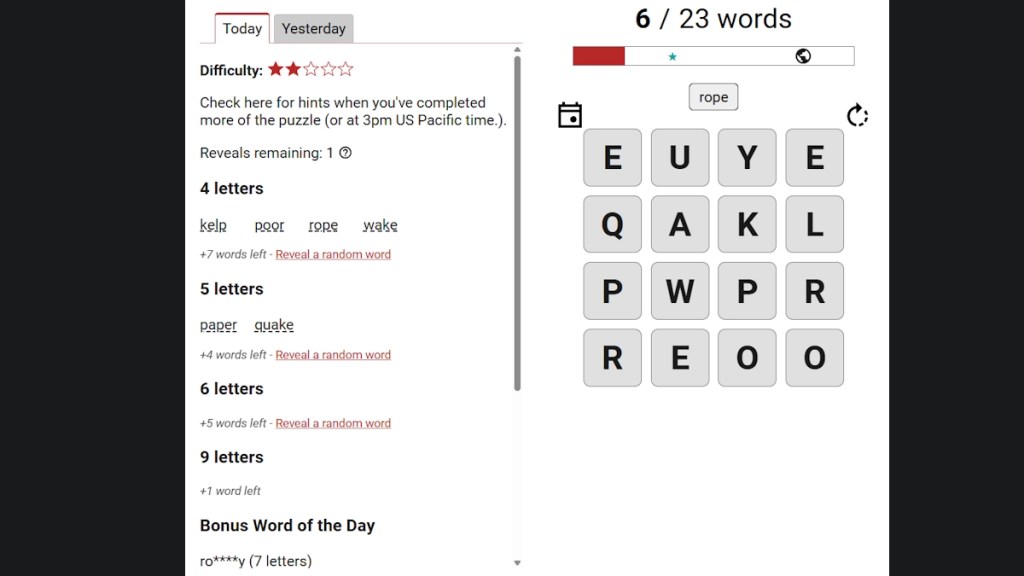
You have specific letters you must arrange by connecting them. So, while the game gives you the scope of testing vocabulary knowledge, the puzzle works through quick recognition over step-by-step deduction.
Pair Down
Pair Down flips the script by asking you to remove letters instead of adding them. You start with full rows and click to take away letters while keeping each word valid. The challenge is deciding what to cut without breaking the word. It is a test of control and planning.
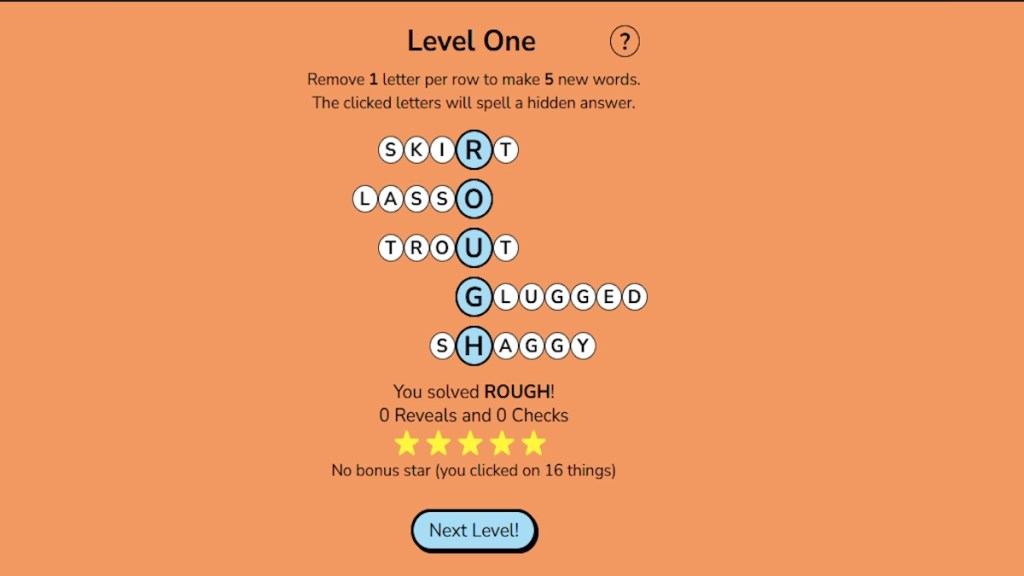
It still reflects Wordle through pattern reading and elimination. You study what remains and adjust each step to reach the answer. So, if you are a Wordle pro, try out this puzzle game for a challenge.
Crosswordle
Crosswordle blends Wordle’s mechanics with a crossword-style layout. The visual color feedback and vocabulary pattern are almost similar here. You click on letters to swap them with misplaced ones and make sure every word is green at the end.
However, in this game, you solve multiple connected words using shared letters and color-based hints. Crosswordle also limits your number of moves or swaps, depending on the version – 7×7 or 9×9. Guessing all the words correctly and completing the grid within those constraints determines success.
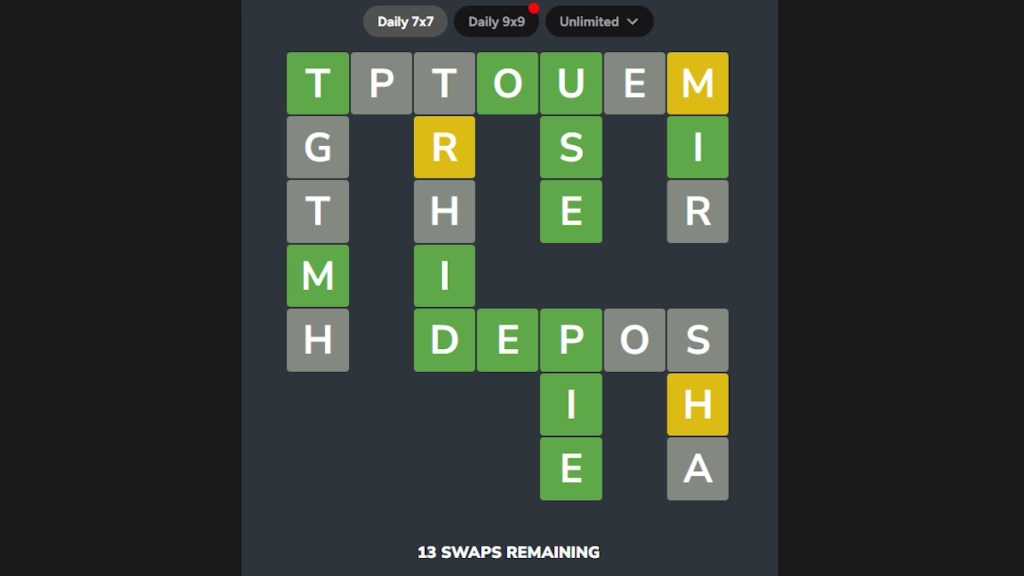
This puzzle is ideal for fans of both Crosswords and Wordle who enjoy solving intersecting answers under tight limits. It keeps that steady, puzzle-solving rhythm intact, while challenging you with a new logic. Just like Wordle Unlimited sites, you can keep playing this game in the unlimited mode.
Scrabble
Scrabble is a turn-based word game where players form words on a board using letter tiles with assigned point values. Words must connect to existing ones in a straight line, and board multipliers affect scoring. The goal is to accumulate the highest score across multiple turns.
It is a game that taps into the same instinct to build the best possible word from limited letters, just like Wordle. You look at letters, sense there is a better word hiding there, and keep working until you find the answer. Both puzzles reward players who like squeezing the most out of every move.
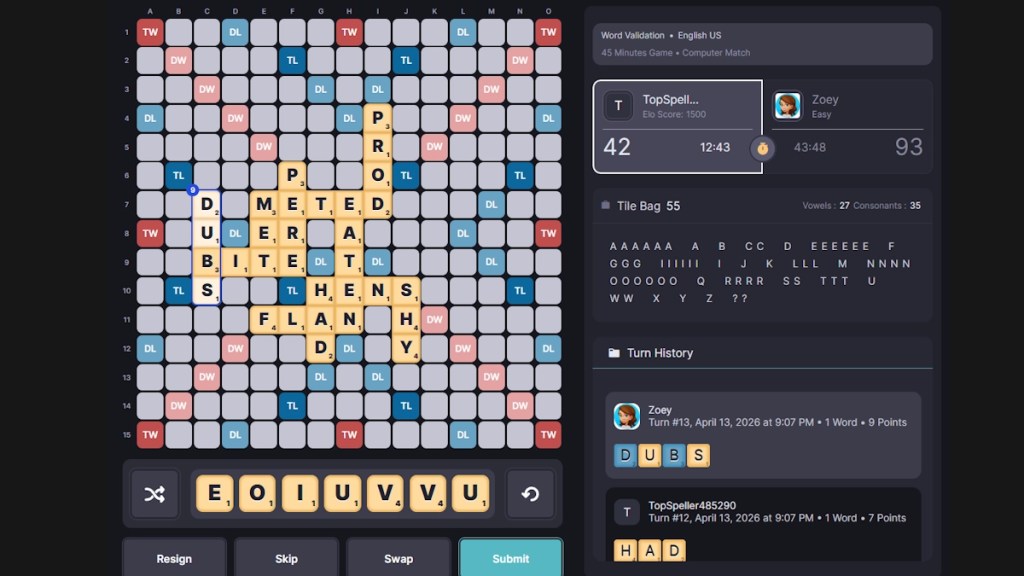
What makes Scrabble worth playing is how it carries that mindset across an entire match. One strong word is only the start, as you keep adjusting for score, space, and future turns. The board builds on every decision you make, so nothing really goes to waste. It is a must-try word game if you like finding unique words from given letters.
Phrazle
Phrazle is a phrase-based puzzle game like Wordle where you guess full phrases instead of single words. Each guess reveals which words or letters are correctly placed. You have limited attempts to solve the phrase. There is no scoring system beyond completing the puzzle within the six allowed guesses.
As you see, Phrazle expands the challenge from a single five-letter word to full phrases. Beyond just filling letters, you must understand how words fit together. The scale makes each attempt broader, and it demands both vocabulary and contextual awareness, not just correct spelling.
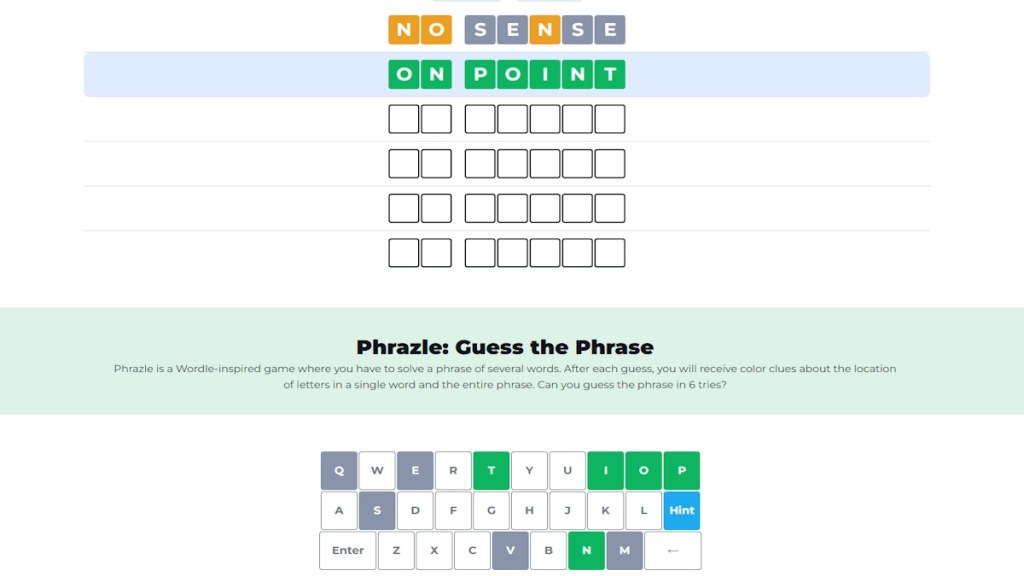
That said, if you read about common Wordle mistakes and learn to avoid them, your chances of repeating them here are slim. Make sure you give your guesses some thought to avoid losing the game.
Letter Boxed
To solve a Letter Boxed puzzle, you must connect letters placed on the sides of a square to build words. Your ultimate goal is to use every single letter provided in the puzzle to make words. The puzzle rewards efficiency, as the goal is to clear all letters in as few words as possible.
If you are a fan of the word construction part of Wordle, Letter Boxed is another great NYT puzzle you can consider. The core format of looking for words from linking letters is present in this fun puzzle. Before you start, it helps to go through some Letter Boxed strategies and tips to solve it efficiently.
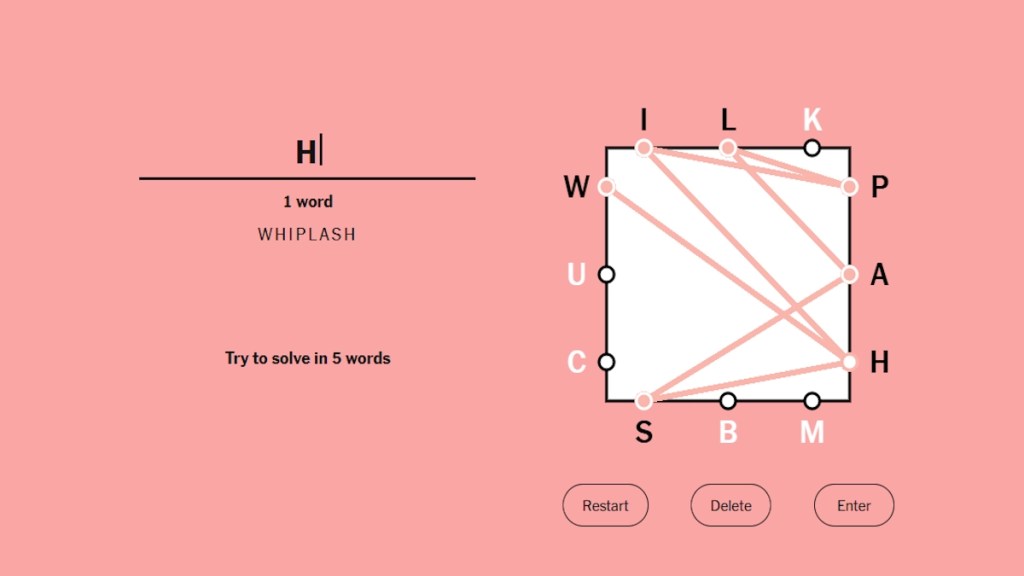
The game sits behind a subscription, unlike most Wordle-style puzzles. You can still play Letter Boxed alternatives, where you can get free options. Despite that, the urge to fit in all letters within two words is absolutely undeniable.
Phoodle
If you want to keep the same ingredients as Wordle but a different taste, Phoodle should be your next pick. This game is exactly like Wordle. You guess letters, arrange the letters if they’re placed incorrectly, and find the answer. There are no shenanigans.
Phoodle is a food-themed version of Wordle, where all answers are related to food. The guesses are still five-letter words, and the color-coded feedback remains the same. You have six attempts to find the correct answer.
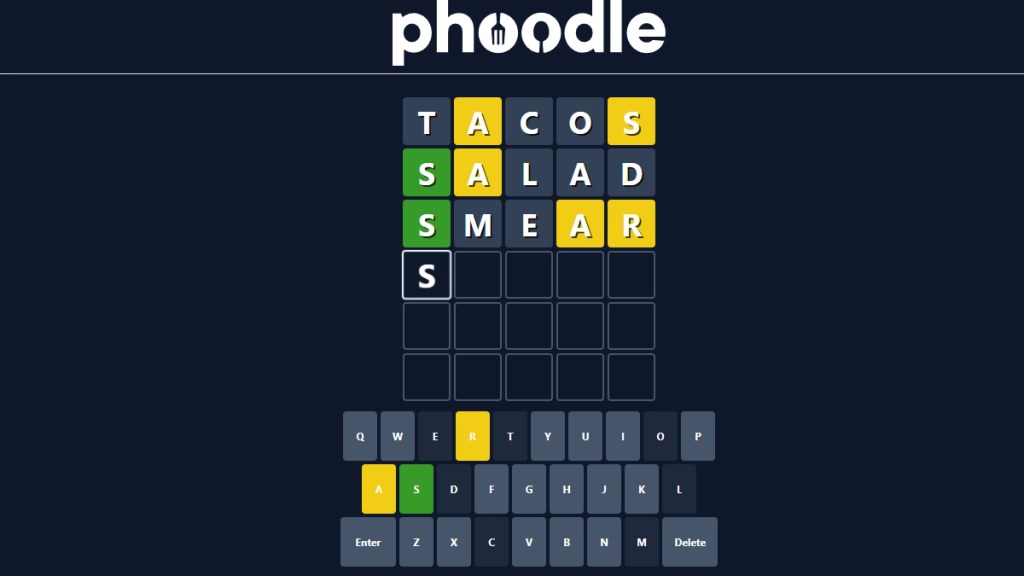
As the answer can only be related to food items, that niche theme makes guessing more focused. If you think of food all the time and think you know everything related to it, then Phoodle is a game like Wordle that you can cook easily.
Semantle
In Semantle, which inspired Contexto, you get similarity scores based on meaning and not letter placements. There are no visual hints, just a score for how close your guess is to the secret word. You start by guessing random words and looking for the answer that is the closest in terms of context. If you want to understand how the two differ, our Contexto vs Wordle guide is a good place to start, and you can also explore more games like Contexto if Semantle clicks with you.
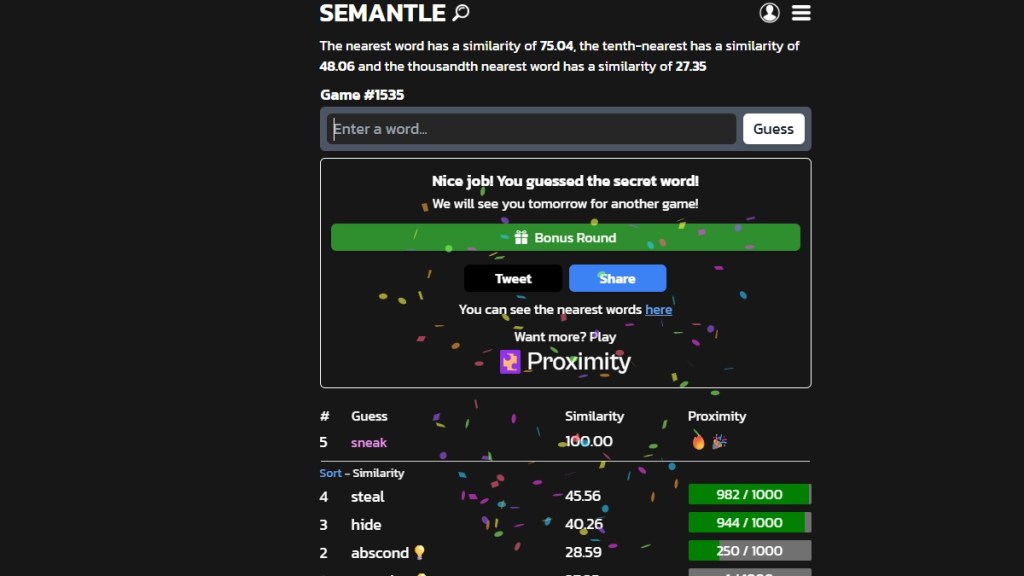
Much like Contexto, it suits players who like word associations rather than spellings, and it does not stay in the waters of Wordle in terms of the concept.
Semantle clearly drops letter placement and focuses entirely on meaning. However, each attempt brings you closer to the answer, much like Wordle. There is still that slow build toward the answer, and it similarly rewards persistence.
There are even more theme-specific Wordle games out there, but these are all the best games like Wordle. If you enjoy word puzzle games in general, you might also like Wordle vs Connections to see which daily game suits you better. Do check out NYT Pips for a quick change in your puzzle journey.
Quordle is the Wordle alternative with four boards. It forces you to split your attention across four different five-letter grids simultaneously.
Yes, Octordle takes the multi-board concept to the extreme. You are tasked with solving eight words at once using thirteen attempts.
Nerdle is the perfect game for mathematicians and number enthusiasts. Instead of letters, you guess mathematical equations.
Yes, while Wordle strictly caps you at six guesses, games like Squeezy have no attempt cap, focusing instead on how many moves or swaps you make. Crosswordle also features an unlimited mode so you can keep the puzzles rolling all day long.
If you want a direct escalation in difficulty, multi-board games like Quordle and Octordle are top-tier. If you prefer shifting and rearranging over blind guessing, Waffle and Squeezy are fantastic choices. If you want a completely different theme, Nerdle offers math puzzles.
Yes, Dordle is harder than Wordle because you must solve two five-letter words at the same time using only seven attempts. While the extra attempt helps, managing two independent boards simultaneously makes it significantly more challenging than Wordle’s single-board format.
Yes, most games like Wordle are completely free to play daily. Quordle, Dordle, Octordle, Nerdle, Waffle, Squaredle, Phrazle, Phoodle, Squeezy, and Semantle are all free. Letter Boxed is the main exception, as it sits behind an NYT subscription, though free alternatives exist.
Octordle is widely considered the hardest game like Wordle, as it requires you to solve eight five-letter words simultaneously using only thirteen attempts. Every guess affects all eight boards at once, making it an extreme test of pattern tracking and vocabulary.
Wordle Hint Today - October 22, 2026 (Puzzle #1951)
 Rishabh Sabarwal
Wordle Bot: What It Is, How It Works, and How to Use the Tool to Get Better at Wordle
 Daksha Gupta
NYT Games Reset Time Guide: When Do Wordle, Strands, Connections and Other Games Reset?
Daksha Gupta
An X User Claims to Have 'Cracked Wordle,' So We Put His Three Opening Word Trick to the Test
Daksha Gupta
How Does Wordle Work? Explained
 Sanmay Chakrabarti
NYT Midi Crossword vs Crossword: Key Similarities and Differences
Daksha Gupta
Connections Hints Today & Answers for October 22
Sanmay Chakrabarti
 Rishabh Sabarwal
What Is NYT Connections Bot, How It Works, and How to Read Its Analysis
Daksha Gupta
Wordle vs Globle: Key Similarities and Differences Explained
Daksha Gupta