It’s nothing but facts that 2025 has been an amazing year for cinema in general, with some of the most interesting releases. While the highlight of this year has been superhero movies filled with capes, color, and a massive dose of hope, other releases were no less breathtaking when it came to delivering exceptional content. However, as much as the heroes or central characters were responsible for making it great, the villains we saw in these projects were what made them memorable. So, let’s take a look back and talk about how 2025 gave us some of the best villains, without whom the cinematic excellence of this year would be jeopardised.
Villains as Ideological Opposition, Not End-of-the-World Threats

One of the major differences we saw this year was that most villains were not driven by the idea of destroying the world or taking over it; instead, this time, we get to see that the majority of opposition the villains offered the heroes was rather ideological. They were not trying to take control of the world or the universe, but instead, had gone to extreme lengths to prove a point.
The shining example of this was Lex Luthor, who was not a mad tyrant but was deeply offended by Superman’s mere existence. His conflict with Superman was not based on physical combat, but instead was brewing on a philosophical level, which led him to cause an event that could have brought about the destruction of the planet.
Similarly, if we look at The Void in Thunderbolts, he was a massive threat, sure, but he was more than just a shadowy entity; he was an embodiment of emptiness, absence, all hope hollowed out, and identity stolen through trauma. The villain was challenged by a group of heroes, or anti-heroes, who suffered from moral dilemmas and self-doubt. The beauty of it was that the Void was not beaten by brute strength, but by compassion and making their friend realise he was not alone, that his emptiness no longer needed to dictate to him.
The Human Villain Is Scarier than a Superpowered One
While superhero movies before 2025 delved into more of a spectacle-like approach, this year, villains felt unsettling because of the realism some of them brought to the screen. Some villains that we got to see this year rose in circumstances that felt real, giving us a sense that something like this could be happening in the real world, and we would never know.
This realism was brought to light in some of the best ways by Wilson Fisk in Daredevil: Born Again, where he was not a deadly villain lurking in the shadows, but was a man who felt and believed that he belonged in every room of power.
The threat he posed came not from causing havoc but from restraint, knowing when to speak, what to say to whom, and deep manipulation of everything he had power over. In a show that was more grounded and street-level, Fisk was not exactly a villain but a manifestation of institutional rot, something that a hero might defeat momentarily, but can never truly eradicate.
The same factor was brought to light by Leon Prater in Dexter: Resurrection. He was memorable not because he was more dangerous or menacing in comparison to previous villains Dexter has faced, but because of his attempts at rationalising evil by covering it up in a shroud of elitist passions.
This twisted take on morality brings us to the question of how much evil can be rationalised before it becomes identity? These villains stuck with the audience, not because they were distant, but because they felt like the outcome of the same world as that of our heroes, shaped by the same rules, just reaching different conclusions.
Villains Worked as the Emotional Core of The Stories
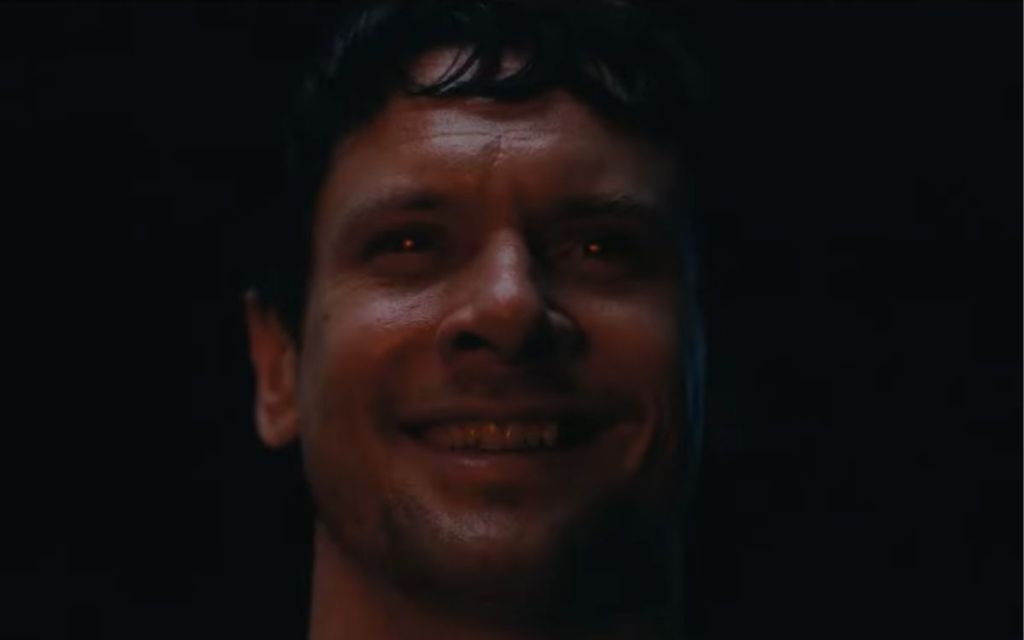
One of the best things we got to see with the villains in 2025 was that the villains did not remain just adversaries, but became integral to the emotional engine of the project. In some cases, they were not just a problem the lead characters had to get through, but characters through whom the themes of the movie were displayed.
Taking the example of Remmick in Sinners, he was not painted as a traditional villain, but was the embodiment of almost everything that can be considered a “sin,” be it temptation, decay, or moral erosion. His character truly tested the lead characters and how far they were willing to go to protect their skin from losing themselves entirely.
Remmick, while being a powerful entity, had his power not vested in his supernatural abilities but in his presence and the atmosphere he created for the protagonists. Scenes featuring Remmick felt unsettling, not because he was really scary or anything of that sort, but because of what he truly represented.
The same emotional heaviness followed Gladys in Weapons. If you look at the character, she was not exactly villainous in the traditional sense, but her darkness was rooted in how she made cruelty feel normal in her context. She was an antagonist who did not have a grand plan, per se, but only the willingness to let the harm continue.
Her presence in the movie reframed the film’s dynamic, making the horror feel rather psychological rather than the effect a project like IT would have on the audience. The beauty of it is that these villains did not demand attention from the audience through spectacle or showmanship, but commanded it through implications, forcing the audience to sit with discomfort rather than letting them escape with a few spooks here and there.
Yes, Villains Were the Real Heroes of 2025
What makes these villains truly menacing is that they did not scare you with jumpscares or disfigured features; what binds these antagonists together is not darkness, it’s clarity. They knew what they were and stood by their beliefs exactly like they stood firmly against heroes and protagonists who were chasing sincerity, hope, and purpose.
2025 proved that hopeful storytelling and strong protagonists do not weaken villainy but instead, sharpen it because when heroes start believing in something, villains need to up their game and challenge it with unshakeable conviction and presence, and this is why in a year where superheroes remembered who they were and protagonists became stronger, villains became unforgettable because without them, hope would have nothing to push against.

 Aparna Ukil