
Have you ever wondered, while solving a Sudoku or a crossword, who’s the mind behind it and how they come up with a new puzzle every day? I’ve always been fascinated by the craft of puzzlemaking, and in October this year, I got the chance to be in the front seat to witness the best puzzlers going at it.
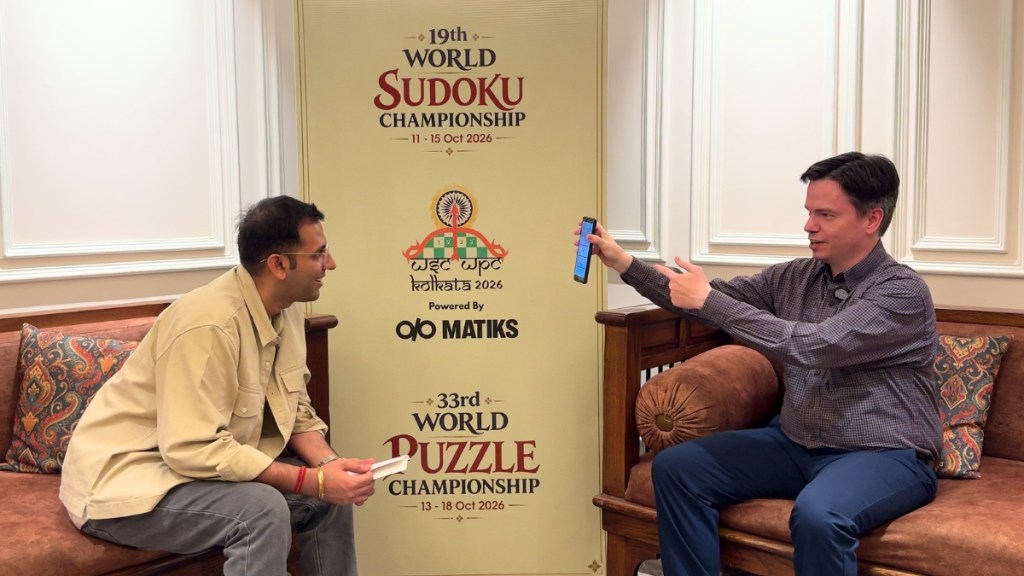
I was at the World Sudoku and Puzzle Championship 2026 in Kolkata from 11-18 October. While I should’ve gone there for food, I went for the puzzles, and so did LinkedIn’s Principal Puzzlemaster, “Dr. Sudoku” himself, Thomas Snyder.
Thomas Snyder is a three-time Sudoku world champion and the 2018 World Puzzle Champion. I had the privilege of sitting down with Thomas to chat about his career, how he got into solving Sudoku professionally, winning championships, his unique job as the Puzzlemaster of LinkedIn Games, his love for video games, and a lot more.
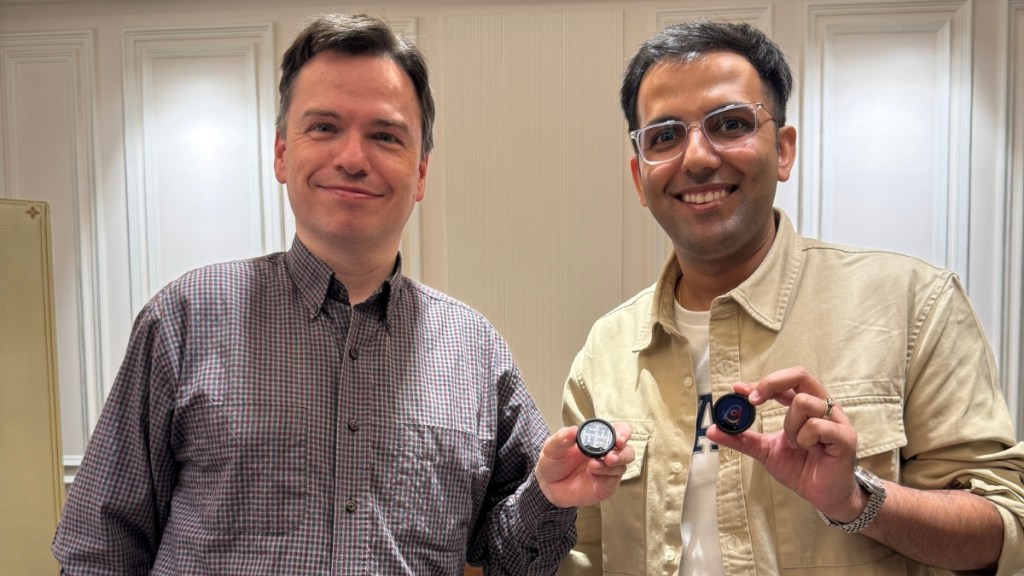
It was Synder’s third trip to India, after Goa in 2008 and Bangalore in 2017. So naturally, when I recalled an anecdote with him from the same morning when I came across a puzzle in Bengali script, Thomas said, “It’s amazing to think that we share one language of puzzles, even if we have many languages in this room.”
Then the conversation went on for more than an hour, where we talked about his PhD in chemistry, from a blindfolded Sudoku round to a grid that no AI has fully cracked, and why logic puzzles work better at LinkedIn Games.
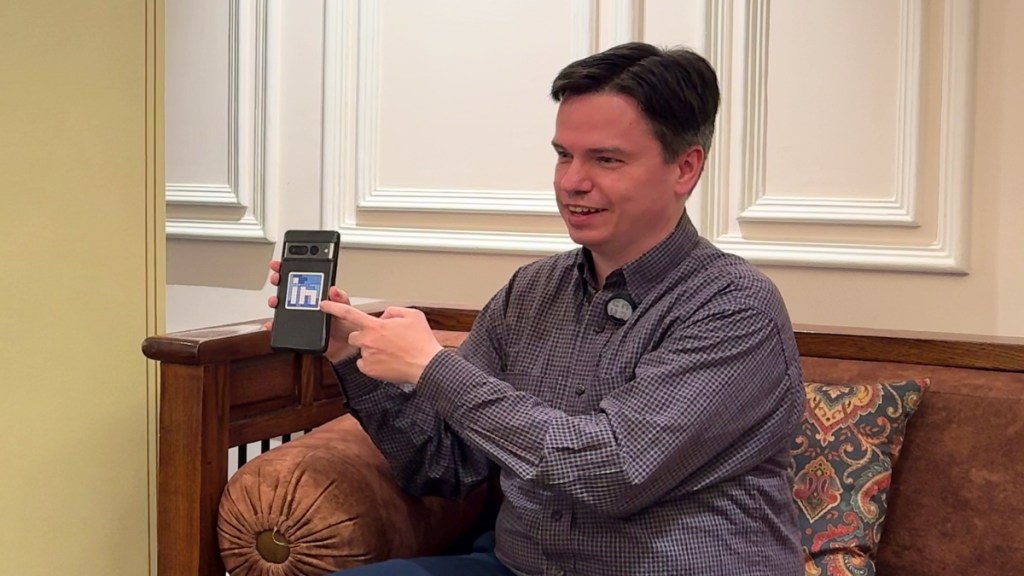
Of course I had to bring an ice-breaker along to begin things with, so I handed him a microphone with an e-ink display that had his infamous 4C’s Sudoku grid on it, which he appreciated. And then he started his story behind…
Thomas Snyder: Becoming “Dr. Sudoku”
Thomas’ route to the top was not the usual one. Today’s best solvers “started playing Sudoku when they were five or six.” He first came across Sudoku at 25 or 26 in Harvard graduate school, when his parents began mailing him puzzles.
“I wasn’t learning when I was a child, and so I don’t think there’s any way I can compete with today’s generation of top solvers.” An online qualifier and a nudge from the US captain (“You might consider going”) took him to the first-ever World Sudoku Championship in Italy in 2006, where he finished second.
You have a PhD in chemistry. Right? How did “Dr. Sudoku” come about?
“Yes, I have a PhD in chemistry. What I was doing at Harvard when Sudoku came out, and that’s how I got even the nickname of Dr. Sudoku. It was like, I was earning… becoming Dr. Snyder in chemistry, but at the same stage, the amount of work I was putting into being the best Sudoku player in the world.“
“It felt like I was writing a PhD thesis in Sudoku as well… I, sort of, became internet famous for a little bit of time during the fad phase of the Sudoku boom.“
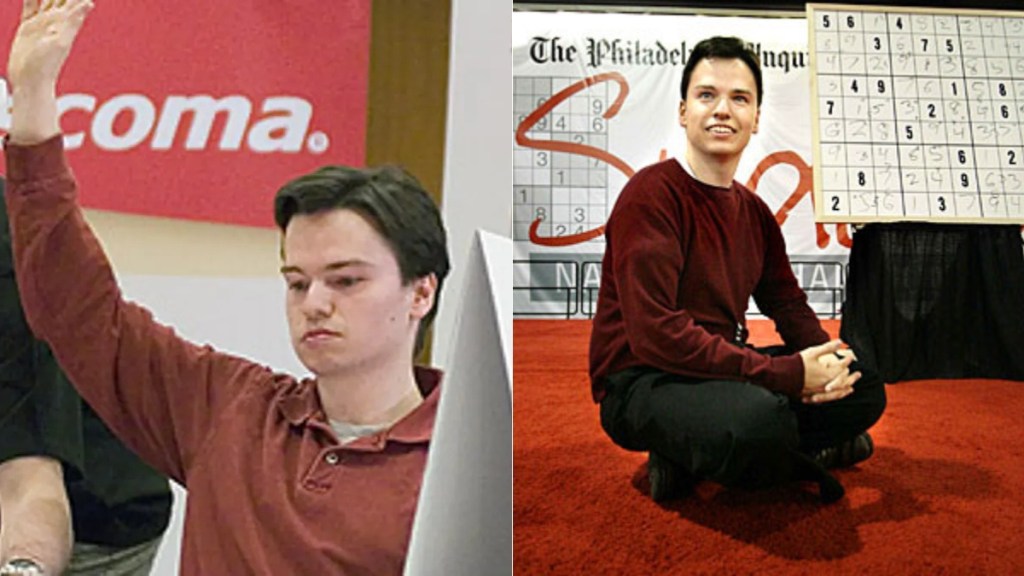
That second place in Italy was the spark for Thomas. But one lesson stuck: “When route A isn’t working, you need to go to route B or C or D.”
“I got about 30% better between year one and year two,” said Snyder, and the world championship titles followed in 2007, 2008 (in Goa), and 2011. “I say I retired from Sudoku,” and then he pointed to the same training at the World Puzzle Championship’s “50 plus different puzzle styles,” winning it in Prague in 2018.
“And so I have both kinds of titles,” says Snyder. And truth be told, only Japan’s Ken Endo can say the same, who is also the winner of the 2026 World Puzzle Championship.
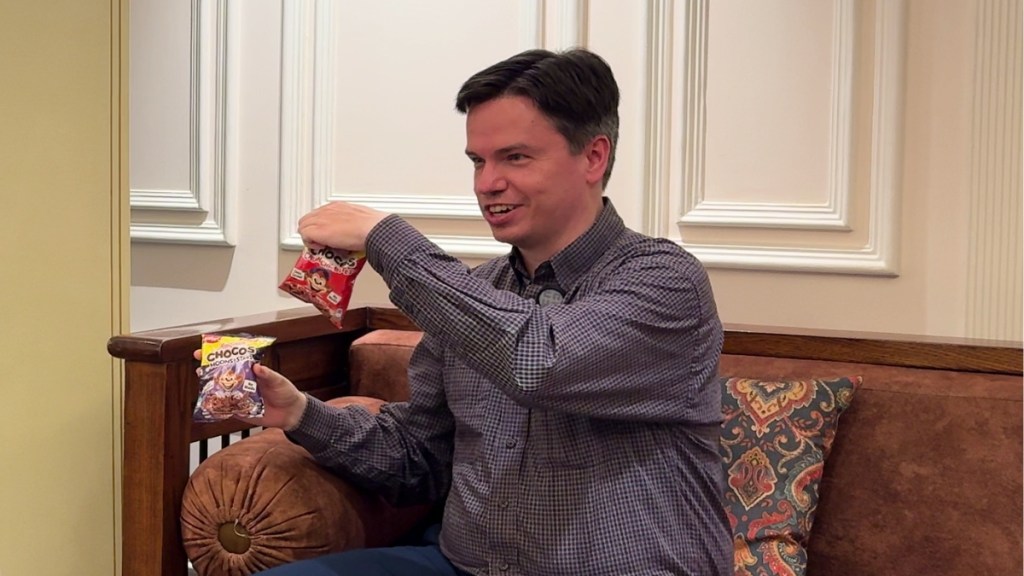
Just to make Thomas remember a fond memory, I took a few packets of Kellogg’s Chocos, which are India’s version of Choco Champs, a European cereal Dr. Sudoku used to have during his WSPCs in Europe. He went on to laugh about it and said he only had it because it had the word “champ” in it – pretty subtle for a multi-time champ like him!
Science stayed in the picture for two decades for Dr. Sudoku, though. “I used to say, science is my weekday job, puzzles are my weekend hobby, and now I sort of flip that where I actually have a job in puzzles.”
After his postdoc at Stanford, a blood-test idea by Snyder became a transplant diagnostic, now at CareDx, taken by “hundreds of thousands of patients a year.” He counts it among his proudest work: “It’s not on Wikipedia. Wikipedia talks about the World’s Sudoku Championships,” says Thomas.
Beebom: On your LinkedIn profile, you call yourself a problem solver first. Why?
Thomas: I say I’m a scientist, I’m a team builder, and I’m a creative problem solver… Like, how do you observe a puzzle and say, oh, that looks different, that looks different? So being a scientist maybe is also part of my identity of thinking like a problem solver… There are so many ways I don’t know how to think myself, but by watching others, I can see how other people think.
He skips the word chemist on purpose: “I don’t just say chemistry because then people are gonna think I’m just gonna be trying to mix molecules and make a reaction happen.” The label is about “how I think and how I connect,” and “we’re gonna think the strongest with a lot more than just me around a problem.”
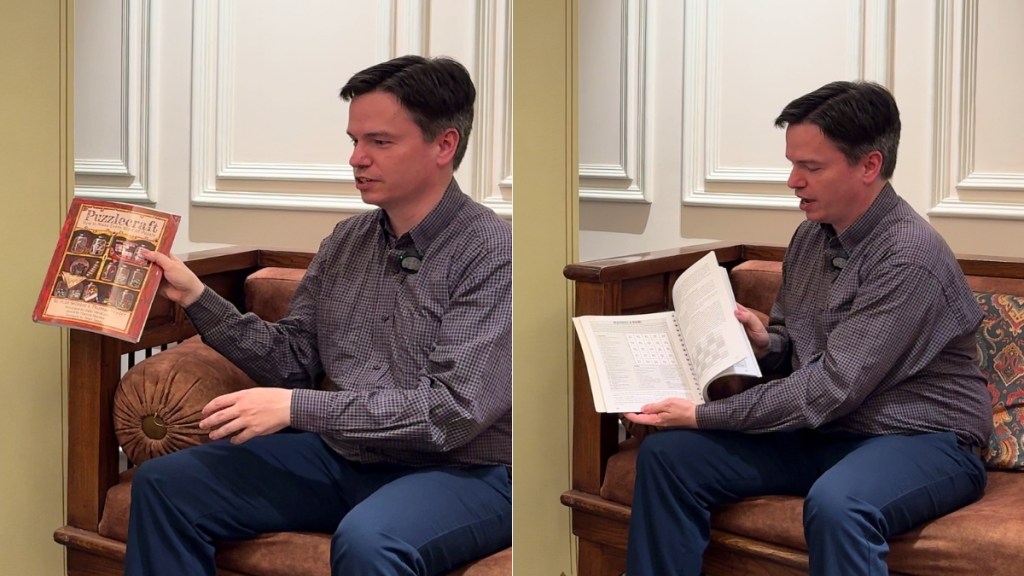
Then came the books Thomas wrote on puzzles, and fortunately, he brought three along. “Here’s a book called Mutant Sudoku,” he said. “It’s actually where the origin story of Dr. Sudoku is told because this is an absent-minded scientist who’s over-boiling the Sudoku solution. So he’s dried out the water, and so the grid shrank.”
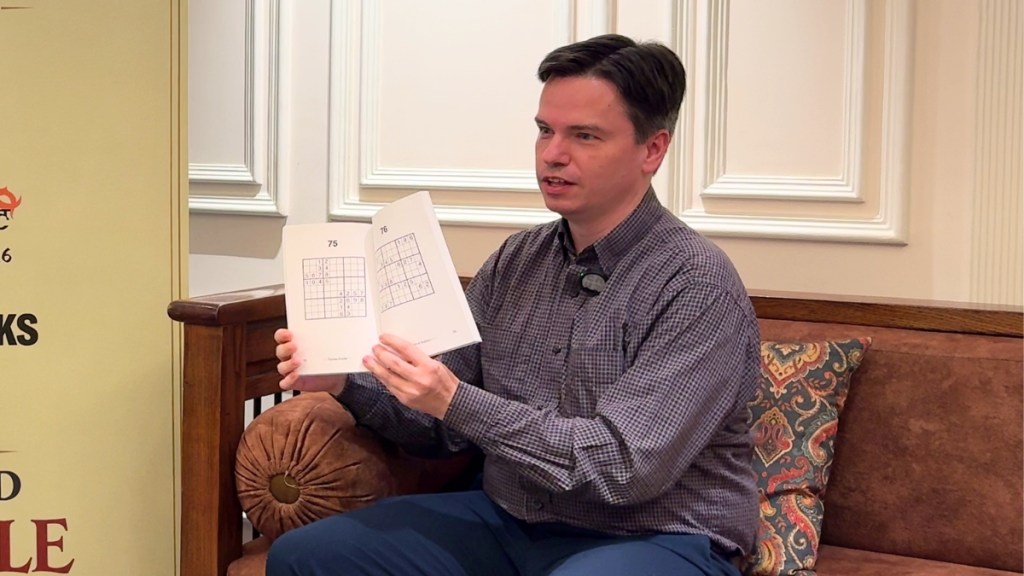
Written with a co-author around 2008, “kind of like Alice in Wonderland,” it was “one of my first paid projects,” and “it did something to get me a puzzle job,” said Thomas. It is out of print, “but we’re trying to bring it back in print.”
The Art of Sudoku, from around 2012, is “a quaint example” of how Snyder used to write puzzles. Puzzlecraft, written around 2012 with Mike Selinker (“You’ll call me a logic puzzle maker”), is a guide to making any kind of puzzle. His invitation to readers: “Share the things you learned. Share the things we got wrong.”
Un-Puzzling Behind the Scenes of WSPC 2026
When I arrived at WSPC 2026, the Sudoku Championship had just concluded the previous day, but fortunately I was able to glance through the grids that solvers from around the world attempted, and I was stumped by their design.
This year’s puzzles were themed after popular Indian mythology epics — Mahabharata (for Sudoku Championship) and Ramayana (for Puzzle Championship).
So naturally, I asked Thomas how he felt about the fast-paced World Sudoku Championship rounds in 2026.
Beebom: The WSC concluded yesterday, and the World Puzzle Championship begins tomorrow. What was the mood like this year?
“I mean, there are some things that are true every year, which is that this is just a gathering of friends on one side, but also a gathering of competitors at the same time. There’s a clock in the front of the room. It’s ticking down… And so for us, it’s like we’re running a marathon together. But there was something uniformly experienced, which was an incredible story these Indian hosts put together with the mythological themes.”
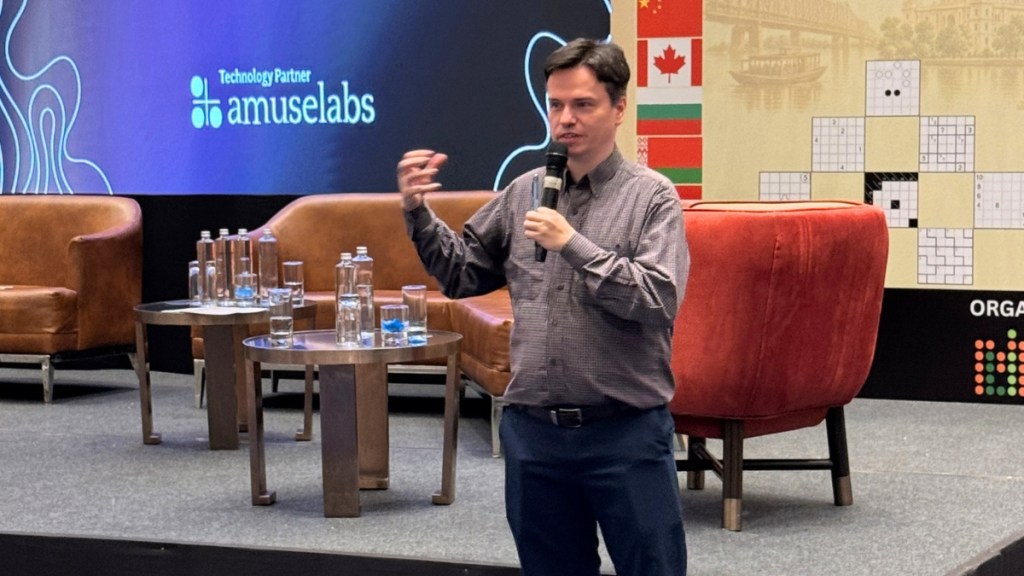
That story ran through the whole championship. The hosts themed rounds around Mahabharata, including a blindfolded team Sudoku round played by touch, with numbers swapped for dice-style dots made by bindis. “I don’t think that’s a very commercial idea,” Thomas said, but it was “as if you were closing your eyes and opening your mind and just experiencing the game in a new way.”
Even the grids carried stories. Some hid the championship number in their givens: “a 19 everywhere for this 19th World’s Sudoku Championship”, exclaimed Thomas.
Beebom: I was told this year’s Sudokus were made more accessible so everyone gets the fulfilment of solving. Is that how it felt?
“I would probably state it slightly differently, but I think the spirit of what he was saying is absolutely how I experience the grids… And so when I run events, and I’ve seen this year when the Indians organized this event, the goal was to have the top players mostly finish rounds, so everyone played the same tournament, with the time they took being the most important.“
Thomas competed too, alongside the solvers. “I finished like 80, 90% of the rounds. And again, I don’t practice for speed anymore. Like I’m 46.” His philosophy: “Puzzles should be fun. The competition is stressful in a different way, but sort of have fun with stress.”
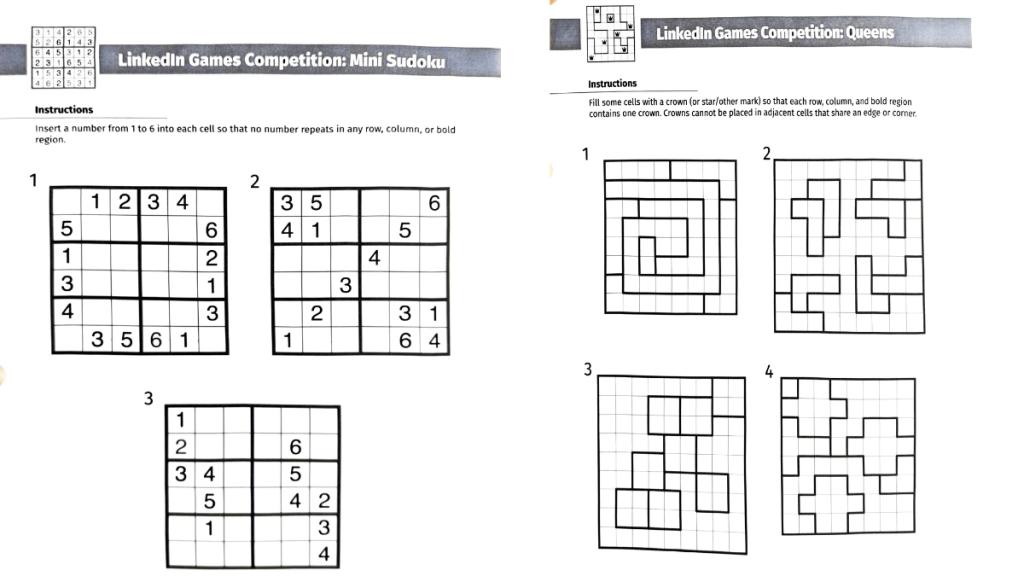
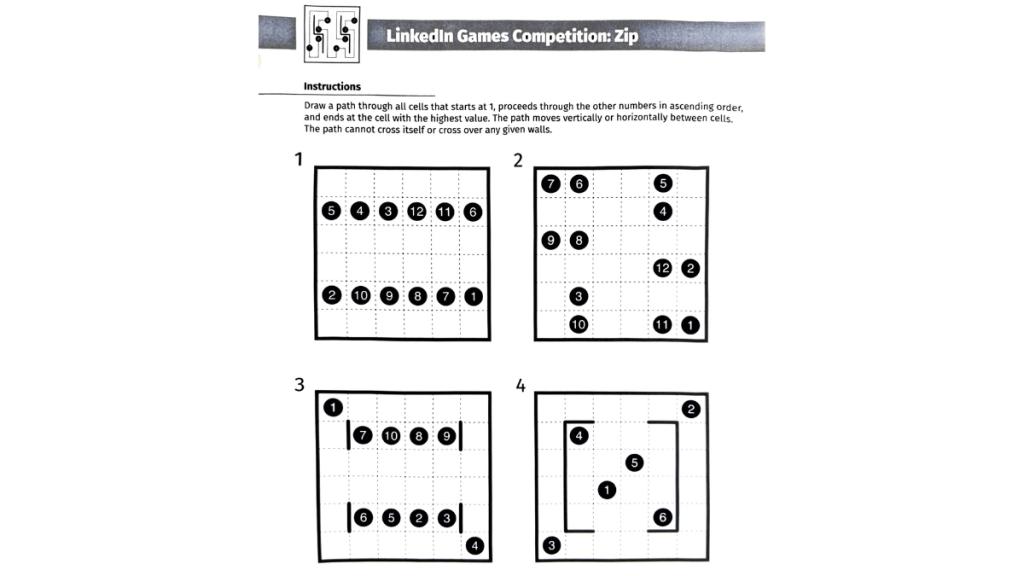
Later that day, Thomas hosted Puzzle Palooza, where he challenged attendees to three LinkedIn puzzles: Mini Sudoku, Queens, and Zip. The fastest solvers were later given certificates by WSPC 2026 and Thomas Snyder himself.
Principal Puzzlemaster: How LinkedIn Builds Its Viral Logic Puzzles
Coming to the big one, just as I was going to pivot to the story of LinkedIn games, I had told him before the interview that my wife and I play the puzzles almost every evening together. So before I could ask my question, Thomas asked his: “Dare I ask your longest streak?” to which I replied, “54, but my wife keeps one at 125.”
Yeah, I suck at maintaining streaks! But what had me intrigued was how easy the Monday puzzles were and just how tough the weekend puzzles are at LinkedIn Games.
Thomas then revealed how, on Mondays, they want new users to come on board and experience the puzzles themselves and give them sort of an easy start, and since weekends are a bit relaxed in the mind, they pose a challenge that requires more time from the solver.
And thus I popped the next burning question…
Beebom: Why are logic puzzles so central to LinkedIn Games (compared to word puzzles)?
“The original product team – the moonshot product team came up with this, and the idea was to bring back the sense of what we call an icebreaker or water cooler moment at the office, or other things remotely.”
The deeper answer is that logic travels. “It is truly the case that our games which use English don’t have as many players because they don’t work in non-English-speaking countries.” For logic games, “they may still be able to think through those properties”, said Thomas.
They also reward practice: “if you solve it for a week or two or a month, you’ll see yourself improving at it.” That fits LinkedIn: “You’re not going to put Sudoku on your resume, but being able to think through and learn skills is a key part of the LinkedIn story.”
So when I asked him about the kind of skills LinkedIn Games are built to test, Thomas explained how each game exercises its own skill: “We also don’t have games that are overlapping in what
they’re testing.”
Thomas explained each of them as follows: “Patches is spatial reasoning, like when you’re packing for a trip, and you’re filling your suitcase, you think about how these shapes are going to fit in. Pinpoint is lateral thinking, like blue and great white are both types of whales.
Word games lean on what you already know, so you can’t really practice and improve at pinpoint, and it is about the culture you start from and how you think.”
Thomas got the job the eager way. LinkedIn sent a request for proposals to puzzle authors. “They told me I was at least the first to respond. So I was ready to respond”, he said. His packet included a new Queens grid that draws the LinkedIn logo, now “like a logo sticker for our team.”
The series launched with Pinpoint, a lateral-thinking game; Crossclimb, a word-clue ladder; and Queens, “a variation of a puzzle that had debuted long ago at the World Puzzle Championships,” said Snyder.
Nobody knew how it would land: “It was a very new thing in a very new place.” Tango came next, “an improvement of grids that existed before that I found had issues.” Then “Zip was our breakout hit as the fifth game launched on the platform,” Thomas said, going on to explain how Mini Sudoku, Patches, and Wend followed, for eight in all.
LinkedIn told him, “We don’t want you as just a contractor giving us puzzles,” and he now works three days a week as LinkedIn’s Principal Puzzle Master.
“I made the first many,” he said, but other authors now write puzzles while he edits, alongside “a team of engineers, with a team of communications and product managers and other people.”
Beebom: Wend is one of the newest word puzzles, but logic puzzles outnumber them. Should players expect more word games?
Thomas: Let me just tell the story of Wend a bit. And so I will claim Wend is a word logic puzzle. But I call it actually a word discovery game… maybe 80% words and 20% logic, but it’s something you haven’t seen.
Wend shows how the LinkedIn Games get built. “It was started around the time I was making Queens early on. It could have been a launch game,” and “it took another year and a half to perfect.”
His summary: “It’s iterate, trial, read the feedback, improve.”
More are coming. “In a few months, we’re going to have our thousandth edition of Queens and PinPoint and Crossclimb.” He is thinking about “observational games or memory games,” and people “playing together as opposed to just comparing scores afterwards.”
As for what the next LinkedIn game will be, he offered only a hint: “Sudoku uses numbers. It does not use arithmetic or ideas like that.”
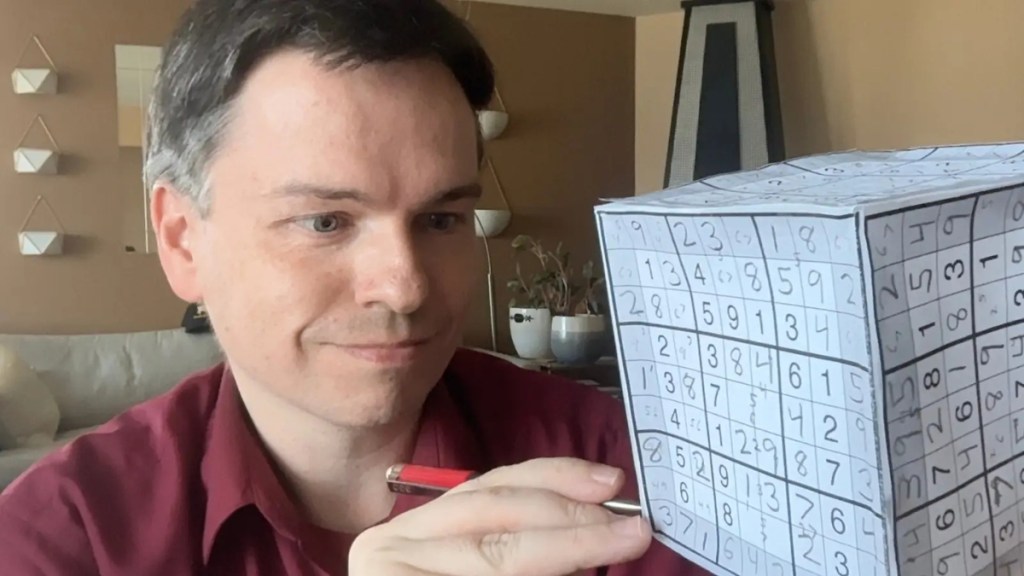
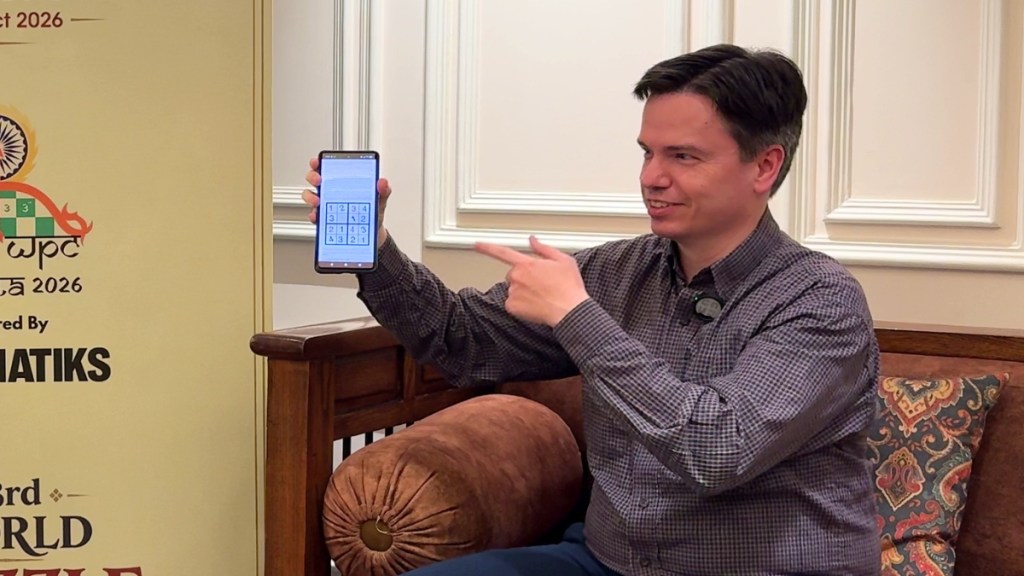
Then I asked him about how AI is affecting puzzle-making and if it’s any better than human-made puzzles. “I see AI as not something I avoid as a tool,” Thomas said, “but I know it’s not gonna replace how I’m trying to do intuitive, innovative, and new things.” His test is a grid of his own. When he asked AI for “the most interesting Sudoku puzzle with one cell missing,” it ended up “changing what I meant by having a Sudoku.”
He held the result up to the camera and asked me to fill the empty cell. I said four. “One out of five, that’s a good start,” he said. “Not a number, but maybe something else about the number.” I noticed the colors. “It should be a blue four.” The scoreboard: “I have tested AIs with that puzzle; three and a half out of five is their top score. I’ve met many humans who are five out of five.”
According to Thomas, not every grid should be a test. For a co-founder, he built “Keep Smiling”: “Like, give me the most comforting Sudoku you can write. And maybe that’s me starting with a smiley face, but then the smiley face solves where you put in all the ones, you put in all the twos.” How such grids come together is best left to the video, but “this eraser gets used a ton.”
His standing challenge to AI: “Give me a puzzle Dr. Sudoku would be shocked by.” He is open to being beaten: “Let me be shocked by an AI puzzle in the future.” For now, of LinkedIn’s own games, “the answer is still a very talented set of humans.”
Dr. Sudoku’s Video Game Ambitions to Create a New Genre
I’ll be honest that I knew very little about Thomas’ personal life until I was preparing to interview him at WSPC 2026. While going through the info about his life, I found out that his childhood dream was to make video games. So, being a gamer myself, I dared to ask him whether that dream is still alive somewhere.
Beebom: I’ve heard that as a kid you wanted to make video games. Is that true?
Thomas: I wanted to make games because I loved games as a kid. Like, I wasn’t trying to be a firefighter or a police officer. I wanted to make a puzzle action game. I still do. And maybe the next project is do something that has Sudoku elements, but also plays completely differently because a lot of people have seen Sudoku. They haven’t seen Dr. Sudoku make a video game yet. I want to show that to the world.
His teaser is a “Sudokuvania,” like the Metroidvanias based on his book Mutant Sudoku: “Where could you have a set of Sudoku puzzles, where you slowly gain sort of skills or abilities to play or different challenges, where you’re revisiting things.” He has no interest in more of the same: “There are 10,000 apps of people – probably more now – that are giving out just regular old Sudoku.”
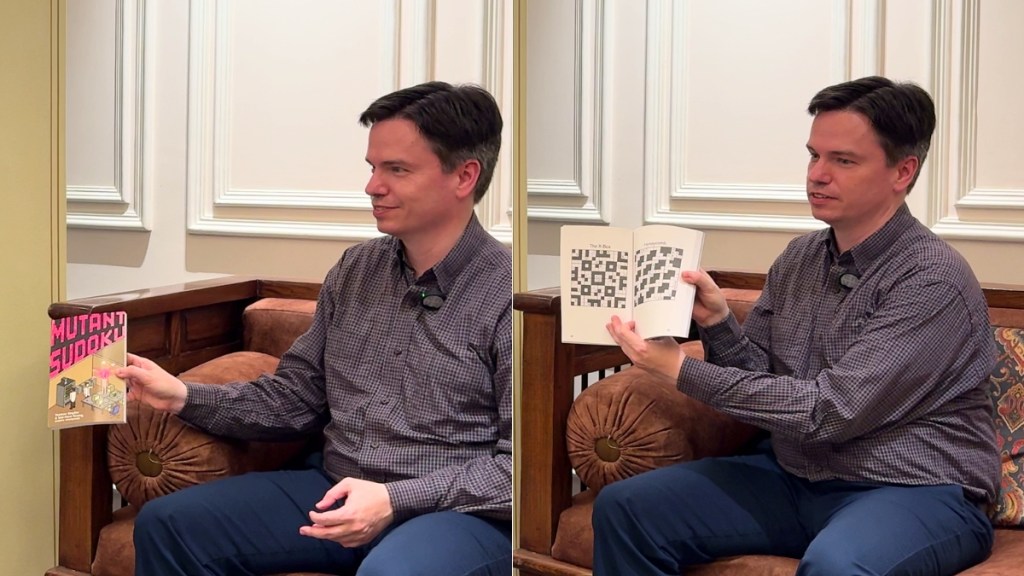
His own beginnings were small, as Thomas said, “The first puzzles I wrote were like gifts for my parents, gifts for my friends.” His advice for would-be puzzle makers is humility, because a puzzle can be “Almost like love letters for the brain.” Concluding this, Dr. Sudoku said, “So do it because you love it. Don’t do it because you think it’s an easy job to have.”
His home base remains Grandmaster Puzzles, the site I first followed for his Sudoku videos. He has published work there by Indian puzzle makers, as Thomas says, “I’ve even published some of them on Grandmaster Puzzles,” and by this year’s organizers: “Even some of the organizers at WPC, I published their puzzles on my own company site.”
He is modest about it: “Grandmaster Puzzles has never been a hugely successful business, but it’s been a place to at least get handcrafted puzzles.” The ambition: “My dream is to actually sort of have a larger community of authors.”
Thomas continues to work alongside LinkedIn Games and Nikoli to publish Mini-Sudokus, Pinpoint, and other games on LinkedIn on the daily. He encourages aspiring puzzlemakers to keep solving puzzles and read his books like PuzzleCraft and The Art of Sudoku, both of which are available on the Grandmaster Puzzles website shop, to understand handcrafted puzzles.
LinkedIn Pinpoint Tips and Tricks to Solve Puzzles Quickly
 Daksha Gupta

When Does LinkedIn Pinpoint Reset?
Daksha Gupta
All LinkedIn Games Explained (Updated October 2026)
Daksha Gupta
LinkedIn Pinpoint Answer Today (November 4, 2026)
Daksha Gupta
How to Play Pinpoint on LinkedIn: A Step-by-Step Guide for Beginners
Daksha Gupta
Why Is the NYT Mini Crossword Locked? Here's What You Should Know
Daksha Gupta
Wordle Hints and Answer Today - November 5, 2026 (#1965)
 Rishabh Sabarwal
NYT Connections Hints and Answers Today - November 5, 2026 (#1243)
 Sanmay Chakrabarti
How to Get Halloween Hat 2026 Badge in NYT Spelling Bee
Daksha Gupta
NYT Letter Boxed vs Spelling Bee – Key Similarities and Differences Explained
 Ajith Kumar