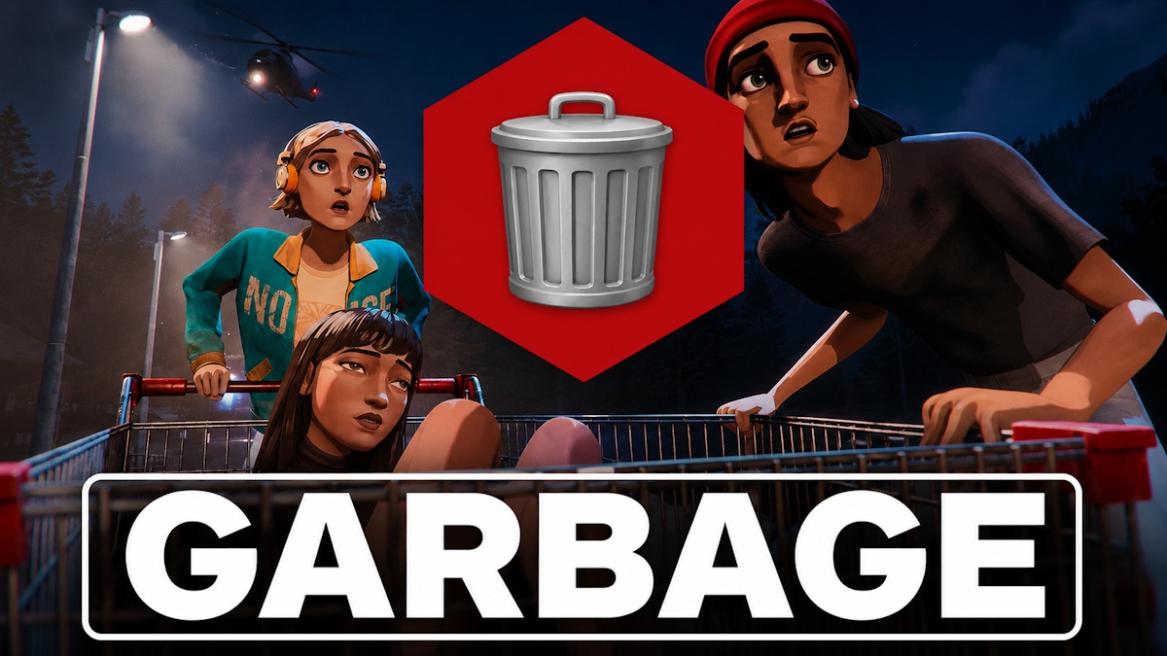
On May 7th, 2026, a big-budget publisher released their latest ‘Indie’ experience with the video game sticker called Mixtape. Unlike any other good indie games, critics immediately crowned it the best coming-of-age masterpiece. So, I tried the game, went through player experiences, and honestly, I don’t know about Mixtape, but it left me with mixed feelings. So, why is the internet tearing apart 2026’s ‘Highest-Rated’ indie game Mixtape? Here’s why.
Critics Call Mixtape a Masterpiece, Players Call It a Bad Movie
See, over the years, many indie games have received 10 out of 10 ratings, and it shows why. Be it Hades or Hollow Knight: Silksong, both the community and critics were in sync with the praises. But even in those high praises, critics and players talked about issues that bar the games from being a flawless masterpiece.
However, that is not the case with Mixtape. Now, ‘imagine’, to my surprise, popular ‘gaming networks’ or publications rated the game a 10 out of 10. After all, they rate Crimson Desert lower than Dragon Age: The Veilguard. But that is not the big problem.
Right after a couple of days post-release, Annapurna, the publishers of Mixtape, shared a social media post boasting the flawless critic ratings for the game. A game team of journalists who spot games praised its emotional storytelling. Some other critics described it as a moving tribute to adolescence powered by tracks from bands like The Cure and The Smashing Pumpkins. This is where the skepticism comes in.

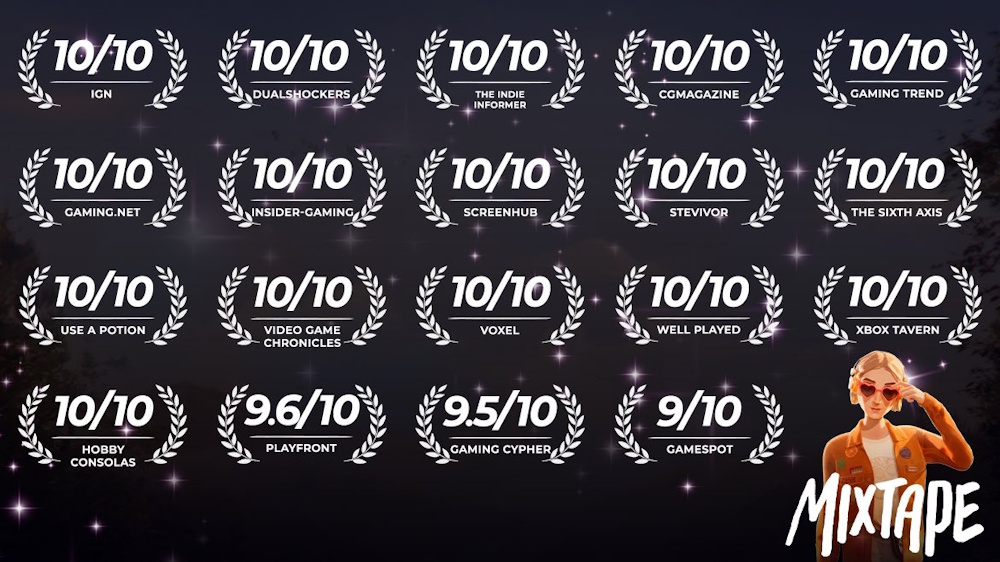
Then clips started spreading online from everyone who spent their hard-earned $20 on this so-called ‘masterpiece.’ Yes, the actual players who don’t get the free keys to write about the product. And justifiably, it became the entire conversation overnight.
Content creator Christina Tasty posted nearly three minutes of uninterrupted gameplay where the player barely interacts with anything. This perfectly demonstrated that “interactivity can make a midstory better, but this game doesn’t understand that because it does not want to be a game.”
We are being asked to applaud a title where the most complex input involves holding a directional stick while a licensed Devo track tries to distract us from the fact that we are effectively doing nothing. As another gamer accurately noted on X, “I like story games! This isn’t a story game. It’s a movie, and it’s a BAD movie.”

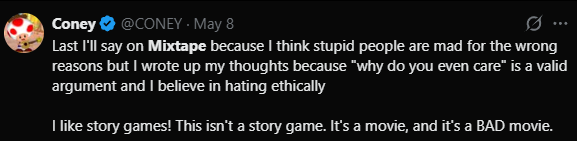
This emotion reflects on the awful player count (if there is any). One Reddit user explained the frustration better than most critics have:
“Mixtape just lets you watch someone else’s story. That’s the problem. It’s not your story.”
That is exactly the issue. The game constantly mistakes passive observation for emotional immersion. Watching teenagers skateboard slowly through suburbia while indie music blasts in the background is not meaningful gameplay. It is a Spotify playlist with controller support.
Even Netflix’s Bandersnatch as a show was more interactive than whatever this is or whatever that Bear Grylls show was, where you get him to eat a bug, and he throws up. Now, before you ask why the internet feels this way about Mixtape, let me take you through what happens in this cartoon simulation.
Astroturfed Nostalgia Slop Screams of an Industry Plant
Everything in Mixtape feels assembled from a checklist of “cool 90s things.” Shopping carts. Skateboards. Slushies. Awkward parties. Slow-motion makeout scenes. Mixtapes themselves. None of it feels natural. It feels algorithmically assembled to trigger the same emotional reaction critics had to films like Lady Bird or Mid90s.
One social media post mocked the game as “cringe nostalgia p**n for perpetual adolescents.” Brutal wording, sure, but not entirely wrong. Another Reddit comment cuts even deeper:
“It feels like the Wendy’s meme commercial of indie music nerd millennial culture.”
Every scene in Mixtape screams, “Remember this feeling?” instead of earning it naturally. The weirdest part is that the developers are Australian, yet the game tries to recreate a very specific romanticized version of suburban American teenage life. It is empty and vapid because it feels like developers are recreating an experience they never actually lived.
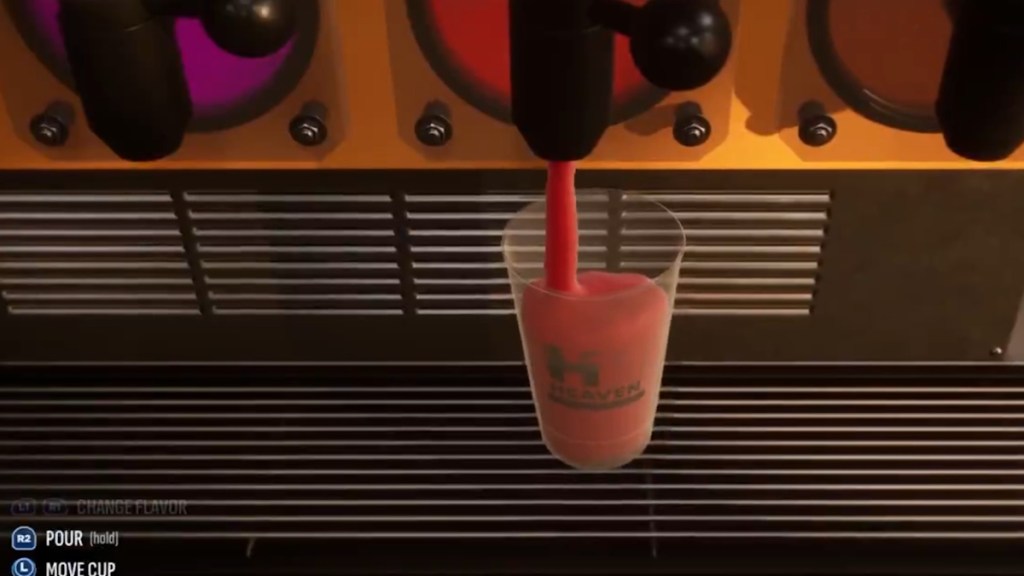
Oh, and let us not even take you to the millions of moments where you make slushies, or paint something, bop the roof of a car, and it literally doesn’t mean anything. How is it even called an interactive story when it ends with only one ending? Being a fan of Telltale games, Life Is Strange, and Dispatch, it felt embarrassing to call it even an experience.

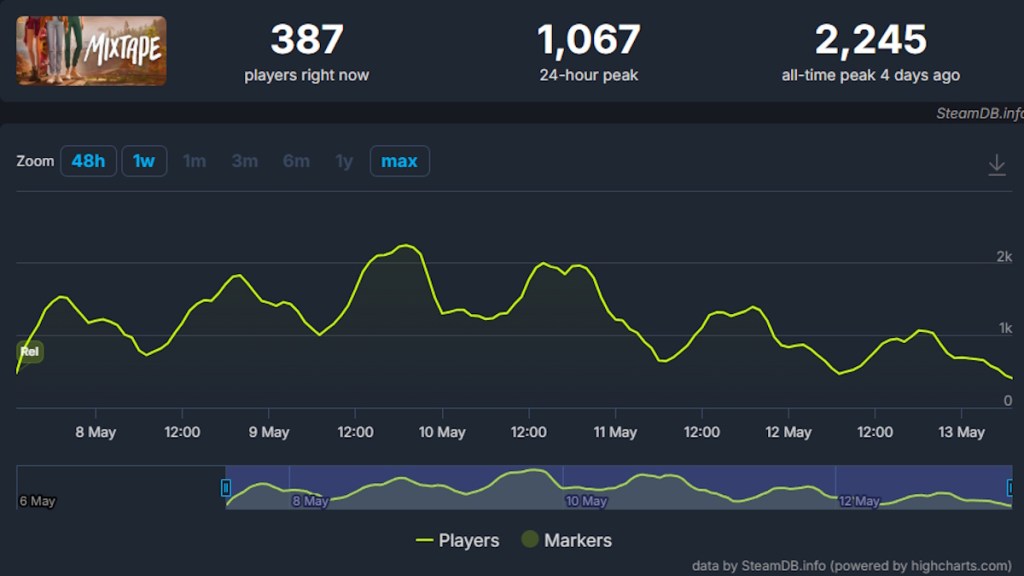
The massive disconnect between the prestigious 10/10 scores and the abysmal 2,000 concurrent player peak screams of an industry plant. It is impossible to ignore that this “scrappy indie” is published by Annapurna Interactive. That frustration goes beyond Mixtape itself.
More players are starting to feel like publishers are fabricating emotional experiences designed to push a very specific version of youth, nostalgia, and rebellion, even when those experiences never actually existed that way. Instead of capturing real memories, games like this often feel like corporations remixing secondhand internet aesthetics into something polished enough for critics to call “profound.”
It feels like a cynical attempt to rewrite cultural memory, neatly packaged for a modern audience that doesn’t know any better. Mixtape acts like the perfect Trojan horse for corporates where you just “skate around a sleepy 90’s town, cry about a mix tape, drive around.” Developers are less focused on making games that the community loves and more about pushing their narratives down our throats until we submit.
Maybe It’s Time to Bid Adieu to Walking Sims
If Mixtape is supposed to be the new standard for the narrative adventure genre, then the genre deserves to be left in the past. I hate feeling like my hard-earned dollars are spent on watching someone else’s Tumblr memories unfold for three hours. One player for sure had tears in their eyes, but for all the wrong reasons.


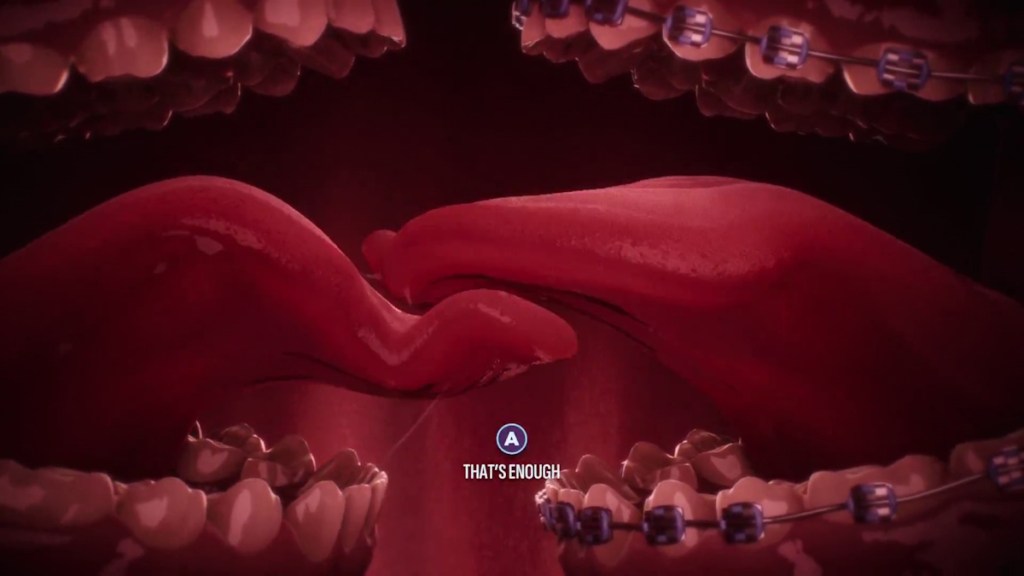
The game’s infamous “x-ray makeout” scene became the perfect symbol for everything wrong with it. You literally control two teenagers’ tongues during a kissing sequence, and one even has braces! Yup, you actually get to see the inside of their damn mouths. What makes the reaction even stranger is the inconsistency around how the industry handles these discussions.
Earlier this year, parts of the gaming press heavily criticized Pragmata over concerns that its presentation of Diana could invite uncomfortable fantasizing, despite the game itself not framing her that way. Meanwhile, Mixtape openly turns teenage intimacy into an interactive minigame, and much of the critical conversation brushes it aside as “awkward art” or coming-of-age authenticity. They can give this a 10/10, but I call it embarrassing and outright creepy.
What makes the backlash interesting is that players are finally pushing back against the idea that cinematic presentation automatically equals quality. For years, game criticism rewarded titles that felt “important” rather than mechanically engaging. Mixtape might be the moment a chunk of the audience finally stopped pretending to care.
Mixtape had government funding (of course), a fully licensed soundtrack despite being indie, and a budget to promote the game through creators. Yet, it could not present a video game at all. In the perfect words of Michael Does Life on X, “Mixtape is absolutely TERRIBLE. It isn’t even a video game. It literally plays itself. Do NOT buy.” If the industry can’t make a Detroit Become Human or The Walking Dead kind of ‘choices matter’ games, we should move on from mediocrity or as Reddit likes to call it, “woke”.
Because underneath the licensed soundtrack, soft lighting, and emotional monologues, many players simply saw a shallow interactive movie wearing an indie label, that too a cheap thrift shop knockoff. Mixtape wouldn’t even score a 10 in the ‘not a video game review’ category. At least Clair Obscur: Expedition 33 had a better story. Even the Gommage won’t eat this s**t.


![[OPINION] GTA 6’s Music Album Is Getting the Disc Treatment, Not the Game?](https://static.beebom.com/wp-content/uploads/2026/09/gta-6-album-has-the-physical-disc-i-wanted-featured-image.jpg?w=300&quality=75)





![[OPINION] GTA 6’s Ultimate Edition May Have Fans Reaching for the Upgrade Because of FOMO](https://static.beebom.com/wp-content/uploads/2026/06/gta6-lucia.jpg?w=300&quality=75)