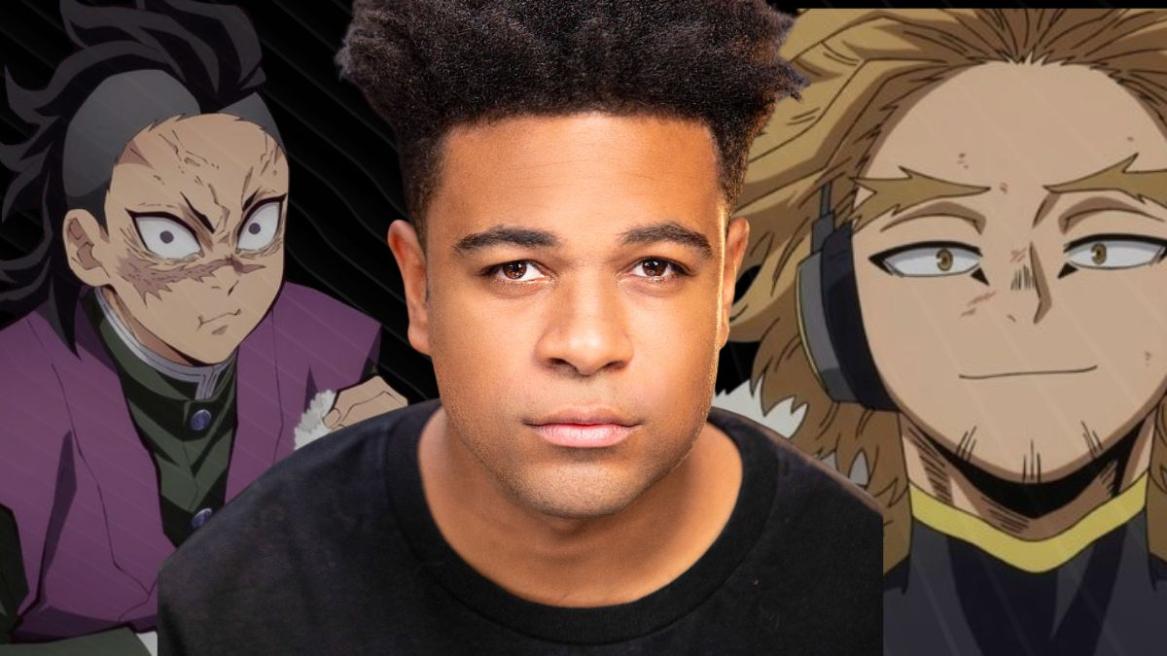
Zeno Robinson is an incredibly talented voice actor known for his roles in multiple popular projects. This includes Demon Slayer, where he gave voice to Genya. Apart from that, you can also hear the actor Hawks in My Hero Academia. The VA flexes an impressive portfolio, and recently, we’ve had an amazing opportunity to interview Zeno, and let’s just say that it was an insightful experience.
I am a big fan of Demon Slayer, and I was itching to ask Zeno about his experience working on the anime and giving voice to Genya. So that’s where I started off the interview.
Aparna: When you first read the script for Genya, what did you understand about the character?
Zeno: When I first got the email that I’d be playing Genya, I had already been reading the manga up to the Swordsmith Village arc. So I knew from the start that he had more depth and nuance than he initially showed. He comes off aggressive and abrasive at first, but I knew he had layers. That informed my approach. I wanted him to feel as unlikable as possible early on so that audiences could gradually warm up to him later.
When I asked whether Genya’s voice came naturally to him or took time to develop, Zeno explained that it was very much a collaborative process. He said the performance was shaped through sessions with the directors and the Aniplex of America team rather than discovered instantly.
He also shared that he studied the original Japanese portrayal by Nobuhiko Okamoto, paying close attention to the vocal texture and intensity, and then added his own spin to the role. According to him, growing up watching anime and playing Japanese RPGs helped a lot, since he was already familiar with this type of character archetype, which made it easier to settle into Genya’s vocal style.
When I asked whether Genya should be seen as an outsider since he can’t use breathing techniques like other Demon Slayers, or whether that actually makes him something special, Zeno said it’s really a mix of both.
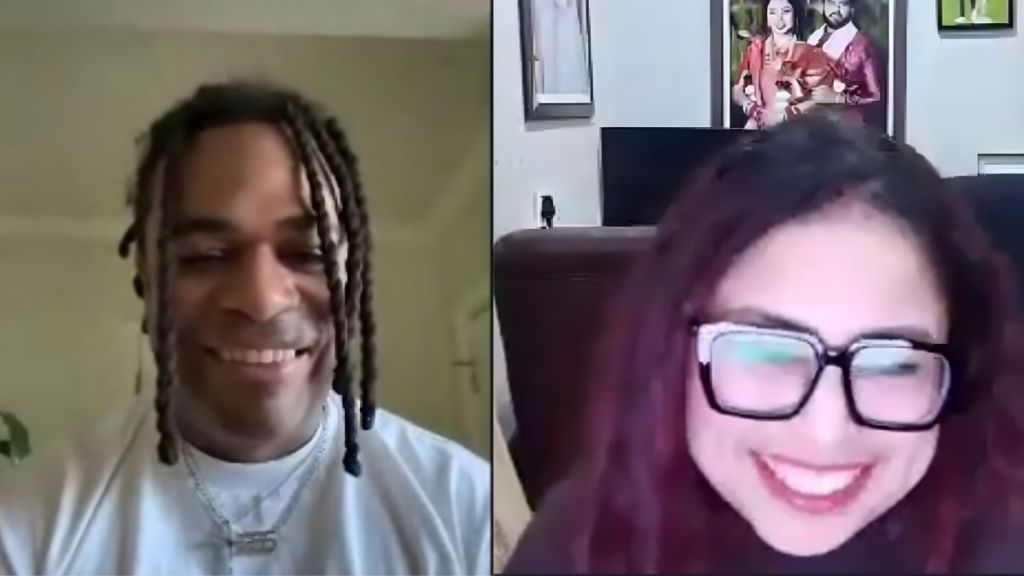
He then explained that while Genya cannot use these techniques, he possesses a rare ability that no other human character has. The power to take on demon attributes. He described this as a trade-off that makes Genya unique but also emotionally isolated. Since breathing techniques are considered the core identity of a Demon Slayer, being unable to use them naturally makes Genya feel like an outcast.
At the same time, Zeno pointed out that Genya compensates with an entirely different skill set, which is the unusual digestive ability that allows him to gain demonic traits. That difference, Zeno noted, may separate Genya from the rest of the Corps, but it also gives him a distinctive edge and a “different bag of tricks” that sets him apart.
Aparna: Was there any challenging moment for you in the booth while recording this character?
Zeno: Yes, especially when we reached the Hashira Training arc. By that point, Genya had gone through a major, traumatic battle and several near-death moments, and his personality begins to shift. Earlier on, particularly in the Swordsmith Village arc, he’s much more abrasive and angry, and I was doing a lot of yelling and high-intensity delivery.
The challenge came later when he started to soften and slowly warm up to Tanjiro and the others. I had to figure out who Genya is when he’s not operating from anger. What does a calmer, friendlier version of him sound like? Exploring that softer side was tricky because I was already so used to playing his harsher edge.
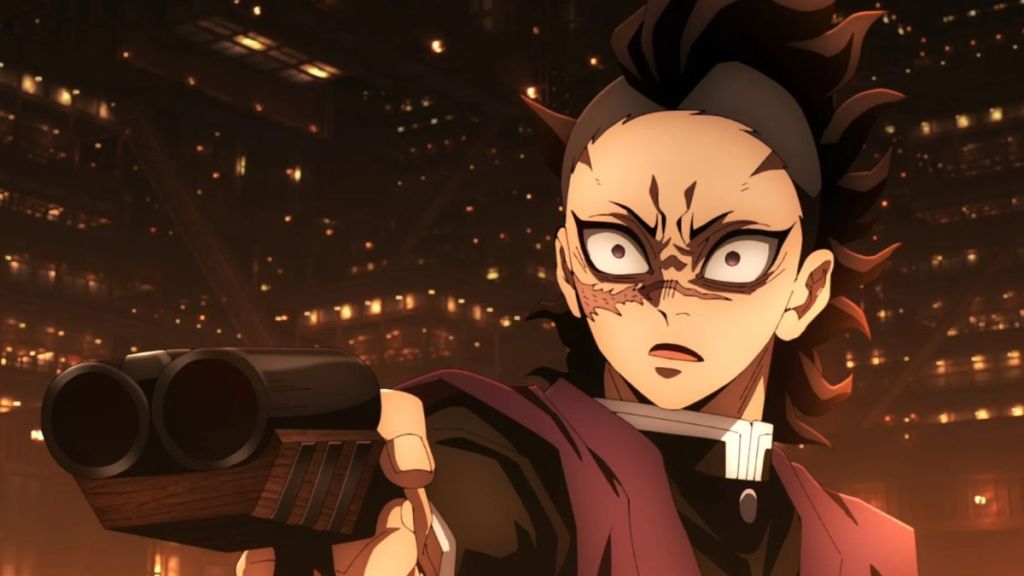
Aparna: Genya is a mix of many emotions, especially anger. Do you think his anger comes from hurt, or something else?
Zeno: A lot of it comes from hurt and trauma. He’s essentially alone in the world — his family was killed by demons, and the only connection he has left is his brother, and even that relationship is broken because of misunderstanding and shared trauma. He’s been carrying that loneliness and tragedy for years without really knowing how to process it.
On top of that, his biggest goal is tied to his brother. Genya wants to become a Hashira partly to earn his attention and apologize, to stand on equal ground with him. Add in the frustration of not being able to use breathing techniques and the inferiority complex that creates, and it builds a lot of internal anger.
Genya doesn’t really know how to form bonds or communicate his feelings because he’s been isolated for so long. So yes, he’s angry at himself and at the world. Much of that anger comes from confusion, grief, and not fully understanding how to deal with what he’s been through.
When the conversation turned to what Genya truly wants at his core, the answer wasn’t friendship; instead, it was acceptance. Zeno explained that if Genya was primarily looking for friends, he would have been more open to Tanjiro’s early attempts at bonding. Instead, the character keeps people at arm’s length for a long time.
In his view, Genya’s driving motivation is the need to be accepted, especially by his brother, who remains the most important person in his life. Much of Genya’s willingness to endure dangerous trials and brutal battles comes from a desire to prove himself, apologize, and be acknowledged. Friendship may come along the way, he noted, but acceptance is the emotional goal at the center of Genya’s journey, and achieving it would mean everything to him.
That emotional difference led me to bring up Hawks from My Hero Academia next. Unlike Genya’s outward anger, Hawks handles pressure with calm control, often appearing one step ahead of everyone else. I asked whether that maturity and composure come from being forced to grow up too quickly.
Zeno agreed immediately, saying Hawks was absolutely forced to grow up too fast. He pointed out that the character was recruited at a very young age by the Hero and Public Safety system, pulled out of a broken home, and trained almost immediately as an operational asset.
According to him, that kind of upbringing doesn’t just create a hero, it creates a tool. Instead of being allowed to think and grow like a child, Hawks was conditioned to think strategically, tactically, and mission-first. His work as an infiltrator and spy further reinforced that role, shaping him into someone designed to serve a purpose rather than live freely.
“Hawks was, you know, kind of indoctrinated into the Heroes Association and the Public Safety Association at a really, really young age, they sort of kind of recruited him and sort of plucked him from his broken home, and immediately began training him to sort of be like a weapon and tool for them. And I think that, in itself, would force him and anyone to grow up too fast to stop thinking as a child and begin thinking as a hero, which are two different things.”
Aparna: He almost never raises his voice but still gets his point across. Did you have to hold back a lot while playing him?
Zeno: Yes, usually I do have to hold back when playing him. Over time, though, I developed a solid understanding of how to approach all the different facets of the character, so the quieter, more controlled delivery became natural. The real challenge came during the war arc, when Hawks had to yell more than usual in battle scenes.
I was so used to voicing him as laid-back and contained that figuring out what he sounds like at full intensity, especially sustained yelling, took some adjustment. The nuances of his normal voice were already clear to me by then, but translating that same character identity into those heightened moments was the tricky part.
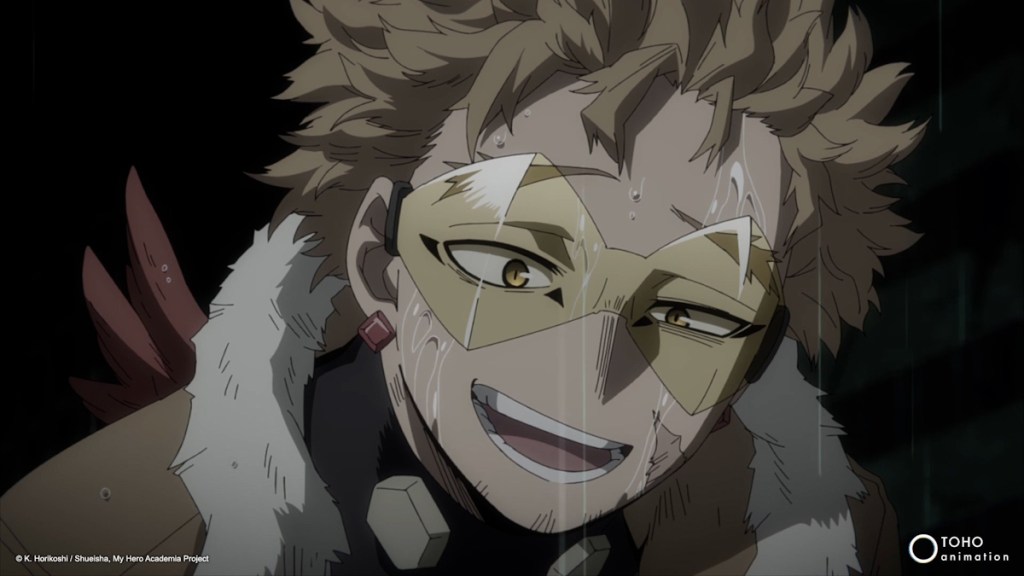
Aparna: Do you think Hawks is ever fully himself with anyone, or is he always acting a little?
Zeno: That’s a great question. What makes Hawks so complex is that I actually think he is fully himself most of the time. He just chooses which parts of himself to show. He presents real, honest pieces of his personality depending on what the moment requires and how he wants to connect with someone.
For example, with Twice, I believe many of the things Hawks said were genuinely sincere. Even when he jokes about being a good actor, the emotions underneath were real. He later admits he respected him and even felt they could have been friends. Hawks sees himself as someone trying to do good, and he’s drawn to people he believes are good at heart.
Aparna: He says he wants an easy life, but he’s almost always in action. Do you think he even knows how to relax?
Zeno: I don’t think so. That’s his dream, but not his reality. Because he grew up so fast and was shaped into a weapon for the system, he’s always thinking ahead and focusing on the bigger picture. He knows what he’s working toward and pushes himself relentlessly to achieve it.
He talks about making that dream happen at his trademark speed, and that mindset doesn’t really leave room for true rest. He can make things look easy, partly because of how his powers work, but internally, he’s always moving toward a goal. In the larger sense of what being a hero means, he’s not someone who can fully switch off. He’s too committed to the mission and has a very clear understanding of what being a hero requires.
When asked to imagine what Hawks’ long-promised “easy life” might actually look like, Zeno painted a vividly relaxed picture. If the character ever truly got a break, the VA believes Hawks would head somewhere tropical, possibly Hawaii, the Bahamas, or Jamaica, somewhere with open skies, warm water, and good food.
Aparna: You’ve played characters who handle emotions very differently; Junpei, for example, feels especially heavy. Did you have to pull yourself back more while playing him?
Zeno: Definitely. There were several moments where I dug very deep emotionally and had to take time to come back out of that space afterward. One major scene in particular, fans of the game know it well, hit me so hard that I was actually in tears in the booth by the end of the take.
After we finished, my director, Valerie, paused the session, came into the booth, and gave me a hug so I could settle myself before we continued. I gave a lot of myself to that role and fully stepped into those emotional moments, and sometimes that meant needing a short reset before moving on to the next scene.
When I asked whether knowing Junpei’s fate beforehand made the performance more difficult or more emotional, Zeno said it actually made the process more demanding. He explained that he had already experienced the original version of the story, so he went into recording fully aware of how the character’s arc would unfold.
He replied that this prior knowledge didn’t make things easier; instead, it raised his personal standards in the booth. As a self-described perfectionist, Zeno wanted the performance to leave a strong impression and resonate with both longtime fans and first-time viewers. Zeno’s goal was to make those key scenes feel emotionally fresh while still honoring what came before.
Because of that, he was especially careful during recording, often requesting extra takes and more time to refine the delivery until it matched the emotional impact he was aiming for.

Aparna: Who is your favorite character in Jujutsu Kaisen?
Zeno: Yuji is my favorite. I really love Yuji as a character. He and Junpei also had great chemistry before everything went wrong. They share a similar energy, playful and a bit aloof on the surface, but also strong and thoughtful underneath. Both of them develop a meaningful understanding of life and what it means to value it, and that really stands out to me.
After discussing some of his emotionally intense performances, the conversation shifted toward roles that balance heaviness with humor. I asked whether playing Akira in Zom 100: Bucket List of the Dead, a character with a more chaotic, energetic outlook, felt lighter than the darker roles he has taken on.
Zeno said the experience was more layered than it might seem at first glance. While Akira carries a natural lightness and comic energy, there’s also a deeper emotional weight tied to his place in the world. He pointed to the sharp contrast at the start of the story, the relief and excitement of escaping an exhausting work life, followed almost immediately by personal loss, as a key emotional anchor for the performance.
“He described the role as an exploration of finding joy in chaos, learning to laugh and live freely even when everything is falling apart. The themes also resonated with him personally, especially the ideas of burnout and overwork. Approaching those feelings through Akira’s journey, even in a zombie-apocalypse setting, made the role both fun and unexpectedly meaningful.”
Aparna: After voicing all these characters, is there one emotional trait, like anger, calm, or hope, that stays with you the longest when you leave the booth?
Zeno: Hope, definitely. After I finish playing a character, I try to understand them at a fundamental level, and many of the characters I play are ultimately holding onto hope for something. That tends to stay with me.
I also come away feeling a lot of gratitude for the people who give me opportunities and trust me with these roles, and for the chance to do what I love. These characters leave me with something meaningful each time. Whether it’s Junpei’s childlike joy, Akira’s ability to find joy under stress, Hawks’ optimism, or Genya’s determination, I try to carry those traits forward and apply them in my own life.
Aparna: Apart from the anime you’ve already been part of, what future anime or dream project would you love to work on?
Zeno: I’ve always said I’d love to play a character in Jujutsu Kaisen. Maybe it’ll happen, maybe it won’t, but that would be really cool. My ultimate dream role, though, is to play Static in some form. He’s a DC superhero, and I grew up watching Static Shock. It’s one of my favorite cartoons, created by writers I really admire, and Static is my favorite hero, so that would be an absolute dream come true. I’d also love to be part of Kingdom Hearts someday. They usually cast Disney stars, so I joke that when I become a Disney star, they should call me.
As the conversation began winding down, I shifted gears and moved into a quick, rapid-fire round.
Aparna: Genya or Hawks, who is the most favorite and why?
Zeno: Hawks. Mostly because I’ve spent the most time with him. Playing Hawks genuinely changed my life and the trajectory of my career, so he holds a very special place in my heart.
Aparna: Quiet roles or loud roles?
Zeno: Loud roles. I like yelling. I think everybody knows that by now.
Aparna: Harder to play, calm or anger?
Zeno: Calm
Aparna: One word for Genya?
Zeno: Complex.
Aparna: One word for Hawks?
Zeno: Freedom
Overall, Zeno shared some very interesting facts about the characters he played on screen. On top of that, it was exciting to hear his experience inside the booth. If you liked the interview, don’t forget to appreciate Zeno’s incredible work by hearing him in Demon Slayer, My Hero Academia, and several other popular projects.

 Ajith Kumar


![[Interview] Tanjiro Voice Actor Talks About One Scene He Would Like to Re-Record in Demon Slayer](https://static.beebom.com/wp-content/uploads/2026/02/Zach-Aguilar-Tanjiro-Voice-Actor.jpg?w=300&quality=75) Aparna Ukil
Aparna Ukil