
Besides the honeycomb structure and word creation loop, what makes the NYT Spelling Bee so engaging is its unique ranking system. Unlike other daily puzzles, Spelling Bee infuses every game with a sense of competition as your performance is assessed against specific thresholds. The puzzle’s most passionate players take great pride in preserving their “Genius,” or “Queen Bee” streaks. But have you ever wondered exactly how the Spelling Bee ranks system works?
Well, in this guide, we will explain all Spelling Bee ranks and how the scoring system works. We’ve been playing Spelling Bee for months, so don’t forget to read our tested strategies to achieve Queen Bee or Genius rank.
How the Spelling Bee Scoring System Works
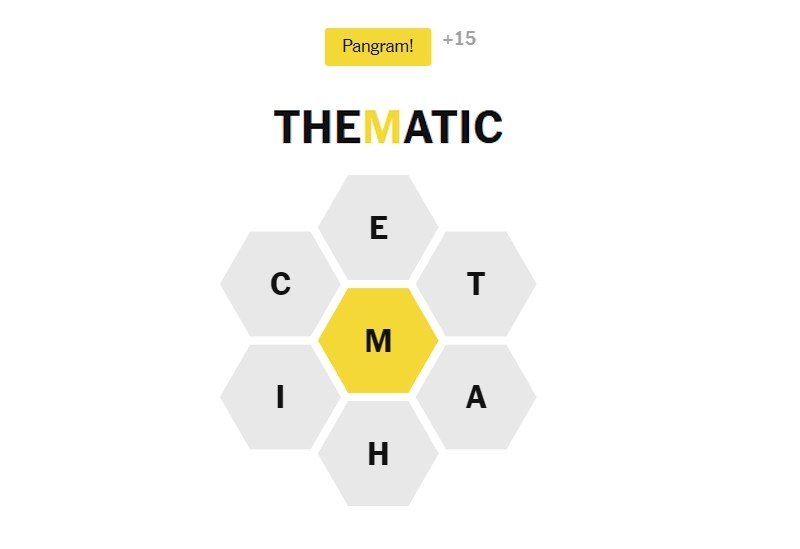
The NYT Spelling Bee scoring system is straightforward and rewards players for finding longer, more complex words. Understanding how points are distributed is the first step toward climbing the daily leaderboard and improving your rank. Here’s an overview of how it works:
- Every four-letter word earns you one point.
- You earn one point per letter if the word has more than four letters. For instance, a six-letter word will reward you with six points.
- The most valuable word in any puzzle is the Pangram, which is a word that uses all seven letters provided in the honeycomb. Finding a Pangram in Spelling Bee earns you a seven-point bonus.
We have a detailed Spelling Bee scoring system guide that you can follow to learn more about this system, as well as gameplay strategies.
Every Spelling Bee Rank in Order
Getting familiar with the ranks is a must if you’re trying to learn how to play Spelling Bee. There are a total of 10 ranks, starting with “Beginner” and rising as you accumulate more points every day.
While the points required for each rank can change daily based on the difficulty of the puzzle, the ranking order remains the same:
- Beginner: 0% of points
- Good Start: 2% of points
- Moving Up: 5% of points
- Good: 8% of points
- Solid: 15% of points
- Nice: 25% of points
- Great: 40% of points
- Amazing: 50% of points
- Genius: 70% of points
- Queen Bee: 100% of points
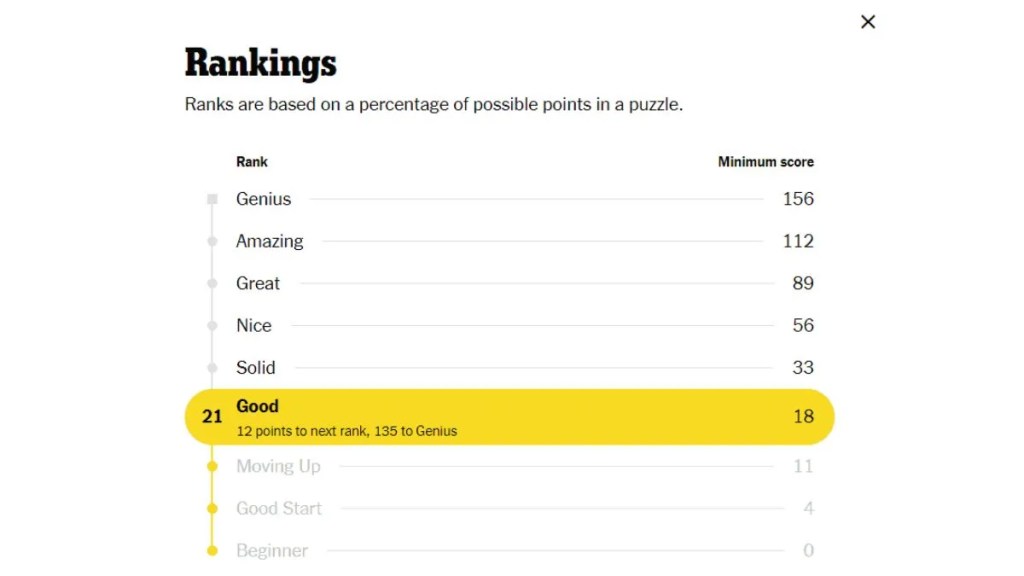
Reaching the highest “Queen Bee” rank means you have unearthed every possible word in today’s puzzle and can consider yourself a Spelling Bee winner – for that specific day, at least.
How are Spelling Bee Ranks Calculated
The rank thresholds in the NYT Spelling Bee are dynamic percentages based on the maximum score of that day’s specific puzzle. For example, if today’s Spelling Bee answers make for 400 points while yesterday’s total is a fraction of that figure, the score required for each rank will be slightly different.
That being said, the game uses a relative scale to ensure the difficulty of reaching each rank remains consistent every day.
The “Genius” rank is one such consistent benchmark, and you’ll typically need to earn 70% points to earn this rank. If we apply this logic to the relative scale, you might need 280 points to hit Genius in a tricky Spelling Bee, but on a simpler day, you might only need 120 points. Still, both point totals represent around 70% of that day’s points.
The only exception to this rule is the “Queen Bee” rank, which requires you to discover every secret word and earn 100% of the available points.
How to Reach Spelling Bee Genius or Queen Bee Rank Faster
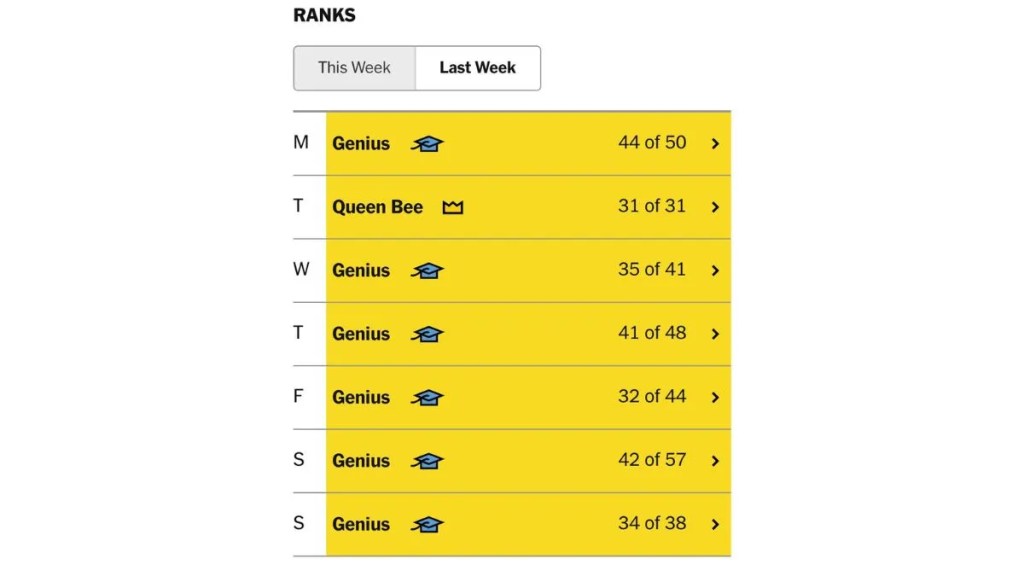
Consistently reaching the Genius or Queen Bee rank is the true sign of a Spelling Bee expert. To develop this consistency, you need to play the game every single day and learn the best strategies. But if you are already set on that front and need pointers on how to increase efficiency, here are some handy tips:
- Hunt for the Pangram first: Since the Pangram is worth a seven-point bonus on top of its letter count, finding it early is the fastest way to leapfrog through the lower ranks. Look for the most common letter combinations or suffixes that might use all the available letters at once. We also recommend using the Spelling Bee Buddy, which will tell you the exact number of Pangrams in that specific puzzle.
- Rotate the Honeycomb letters frequently: Using the “Rotate” button is one of the most effective ways to break a mental block. Changing the visual orientation of the letters can help your brain recognize patterns and common prefixes that were hidden in the previous layout.
- Look for word families and suffixes: Once you find one word, immediately look for its variations to stack points quickly. If you find “Play,” check for “Playing,” or “Played,” as these obvious words add up fast without requiring you to find a different combination of letters.
- Take a short break: This is an extremely useful but underrated strategy. If you’ve hit a rock and can’t make any new words, try stepping away for a bit. Take a brisk walk, have a nice cup of coffee, or simply engage in any other activity for 15 minutes. This will help take your mind off the puzzle temporarily and approach it with fresh energy once you’re back. It’s certainly better than banging your head against the hive to no avail.
That’s everything you need to know about the Spelling Bee ranks and how they’re calculated. To see the system in action, play today’s puzzle, and you will find that the percentage requirement for each rank is the same across both puzzles.
The highest rank in NYT Spelling Bee is “Queen Bee,” earned only by finding every possible word in the daily puzzle.
To reach the Genius rank in Spelling Bee, you’ll need to earn around 70% of the total possible points for that day. This threshold varies slightly daily depending on the number of words and their complexity.
When Does NYT Spelling Bee Reset?
 Daksha Gupta
All NYT Spelling Bee Badges and How to Earn Them (2026)
Daksha Gupta
NYT Spelling Bee Tips, Tricks, and Strategies to Win Every Day
 Ajith Kumar
How Spelling Bee and Wordle Compare: Differences, Difficulty, and Which to Play
 Pranav Maytray

Where to Play Spelling Bee Unlimited: 5 Best Websites and Apps
 Arnamoy Das

When Does Globle Reset? Find the Reset Time Here
Daksha Gupta

How Many Countries Are in Globle? A Full Globle Country List
Daksha Gupta

Globle Hints and Answer Today for October 14, 2026
Daksha Gupta

How to Play Globle: A Step-by-Step Guide for Beginners
Daksha Gupta

Wordle Bot: What It Is, How It Works, and How to Use the Tool to Get Better at Wordle
Daksha Gupta