Beebom Score
Video games in the 21st century love sticking to a blueprint. You go from Point A to Point B, face a few obstacles in the middle, unlock new skills, fight bigger and badder enemies, and you save the day and the credits roll. The same formula worked for decades.
But the games that actually stick with you are the ones that take that blueprint and shred it in pieces. Remedy’s entire studio lifeline is built on that formula. Max Payne turned a grieving cop into psychological noir, Alan Wake turned a novelist’s own writing against him, and Control turned a government building into a Kafkaesque fever dream that lived in my head for months after my first playthrough.
I played the original Control extensively and loved it. However, at the same time, I never once felt the urge to replay it from start to finish. So, when Remedy announced Control Resonant as an action-RPG and what they like to call an “open-ended modern world” game, I was curious where the Bureau could possibly go next.
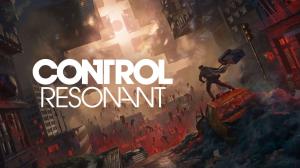
And now 25 hours later, I can confidently say it took me somewhere I did not see coming. Control Resonant is bigger, weirder, more ambitious, and more memorable than its predecessor. It takes the paranormal DNA of the first game and drops you into a warped Manhattan, hands you a new protagonist, reworks the combat from the ground up, and turns the entire city into one enormous puzzle. Somehow, it all resonates.
Story: The Faden Siblings Are Still The Bureau’s Biggest Problem
If you’ve played the original Control, you may be familiar with the name Jesse Faden, who was the protagonist of the title and walked into The Oldest House from an outside world. She’s an outsider stepping into the Federal Bureau of Control (FBC) and its broken world, hunting for her missing brother.

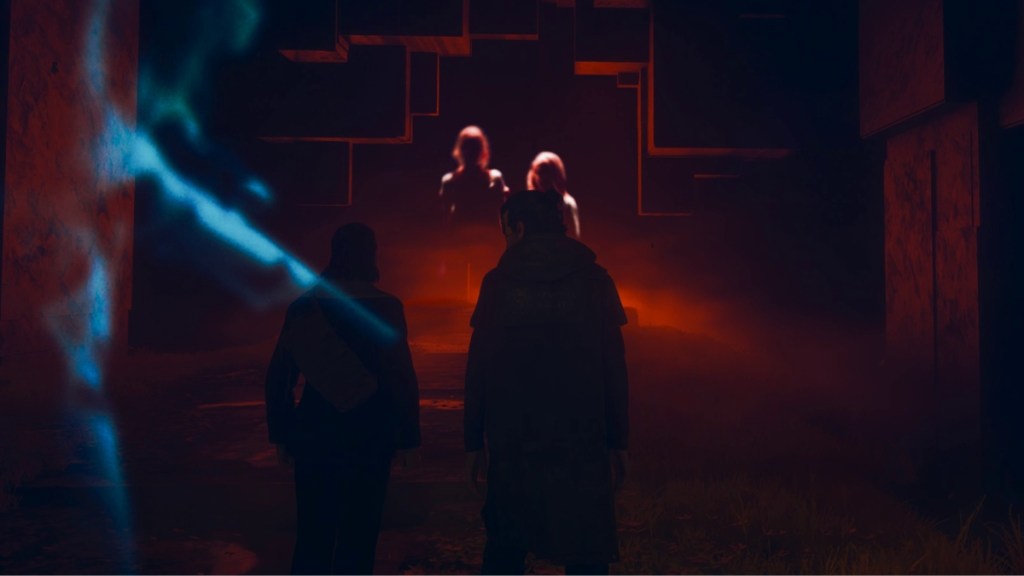
She finds the FBC director dead, inherits the role from The Board, and is handed a Service Weapon, which she uses in the entire game, cleansing the House of the Hiss while trying to save Dylan, who ends the story in a coma.
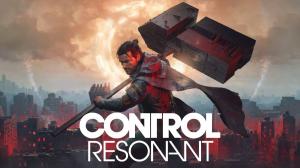
And this is where Control Resonant begins, where Dylan wakes up with an Aberrant stabbed into his chest. Resonant completely flips the script of Control, to say the least. In the first game, Jesse was the one who walked in from Ordinary into the FBC. Now it’s Dylan’s turn to walk out of the FBC into the corrupted world, while he was locked up as a lab rat named “P6”.
Manhattan is no longer the city anyone remembers. The Hiss, the Mold, and the return of an old paranatural entity have spilled past the Oldest House’s walls, fracturing the city into distinct zones, each full of its nightmarish environment. Dylan isn’t P6 anymore as he embraces his Dylan Faden personality as he finally gets to be the protagonist of his own life.
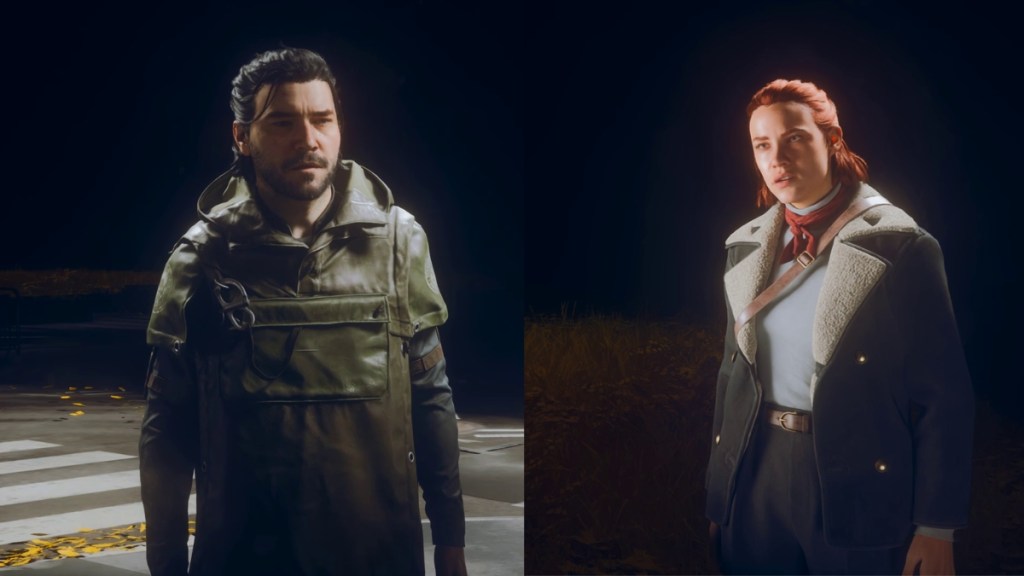
His mission is simple: find Jesse, deal with the Hiss that corrupted him for years. Getting there is anything but simple.
Resonant is built around five major zones – Downtown, Central, Park, Evacuation Zone, and the West Incursion Zone – plus a couple more I won’t spoil. Remedy markets the game as an “open-ended modern world.” However, I’d call it open-world, just a tightly curated one. Nothing here feels like padding for padding’s sake, as every space feels engineered to have something strange waiting around the corner.
Dylan reports to Emily Pope, now Director of Research, while Zoe is his handler who communicates with him throughout the game over radio and introduces him to music whenever he’s overwhelmed. While it does sound like a small character beat, it isn’t.
Dylan spent years imprisoned and experimented on by the Bureau, and the deeper you go, the more that damage makes sense. For this relationship, I’ll applaud Sean Durrie and Frankie Kevich, who breathe life into Dylan and Zoe’s conversations and dynamic, which makes you want to explore this friendship further as you progress.
Plus, Dylan’s relationship with Jesse is the emotional spine of the whole game, and Remedy has beautifully kept that sentiment intact, alongside flipping how the search-and-rescue dynamic works in mission-based games. Even the side content in Control Resonant stops feeling like filler and starts feeling like actual world texture: fetching a toy for a dog, planting antennas to expand zone coverage, defending a Bureau supply crate from a Hiss swarm- each of these gives you a purpose to explore.

While written down on paper, it sounds ridiculous, but they’re exactly the kind of detour I kept abandoning my main missions for. And that’s the difference between Resonant and the original Control. I’m not saying the first game was all that bad; it was a phenomenal shooter wrapped around an extraordinary setting. Resonant asks what happens when the setting itself becomes the progression system, and the answer is one of the most satisfying action RPGs Remedy has ever built.
But if you’re a fan of the wider Remedy Connected Universe, you’re eating good here. Dr. Darling is back, as charming as ever, but your relationship with him here takes a shift. In Control, his research videos were fascinating; you often wanted to listen more. But here in Resonant, once you learn what he did to Dylan and how he engineered the man Dylan became, that fascination curdles into resentment. And yet the second he’s on screen, you still lean in. That contradiction between your emotions are signal to a brilliant storytelling.
Ahti, the Bureau’s mysterious janitor, also returns in a form that’ll grab anyone who’s played Alan Wake 2. These cameos make Resonant feel like another load-bearing piece of the Remedyverse, even if it leaves plenty of unanswered questions. After all, that’s the most Remedy thing about it.
World: <MANHATTAN//RESONANCE DETECTED>
If Dylan is the protagonist of Control Resonant, then you’re wrong. It’s the corrupted city of Manhattan that is the main character that outshines Dylan at every step. While he’s the catalyst who is moving between zones, taking missions, fighting the Hiss, and hunting for his sister, the city is the one telling the story.
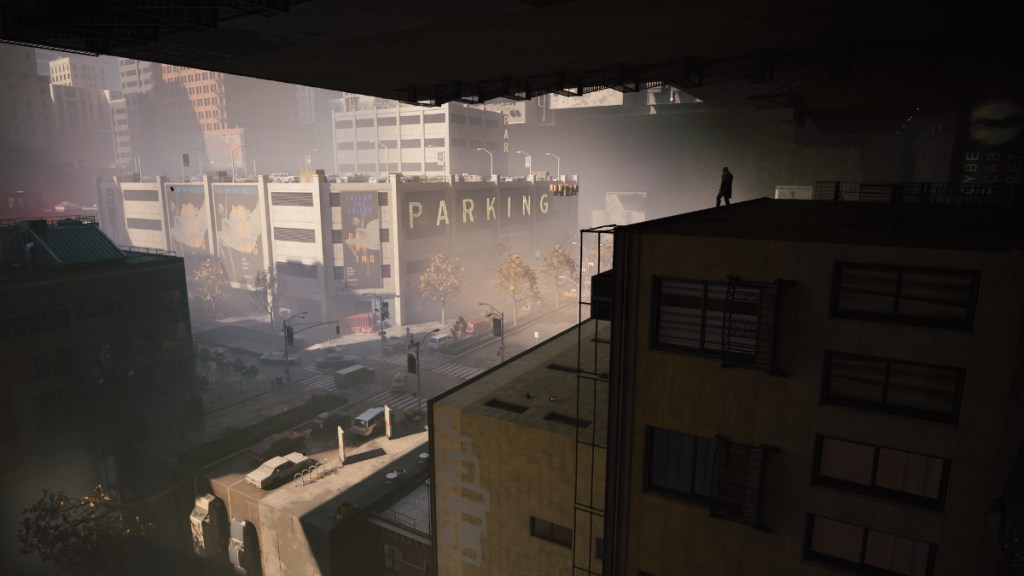
The original Control barely left the Oldest House. Resonant throws open the doors and shows you what the world looks like after everything that happened inside, and it’s not a good look (for Dylan). Each zone in Manhattan has its own visual language, enemy roster, and rules for how reality behaves.
Downtown houses the Oldest House itself; Central looks like recognizable Manhattan until you notice how thoroughly the Hiss has corrupted it. The Evacuation Zone houses the FBC building, which is bending, Park has been swallowed by the Mold, and the West Incursion Zone is where you stop trying to describe things and just start pointing at the screen.
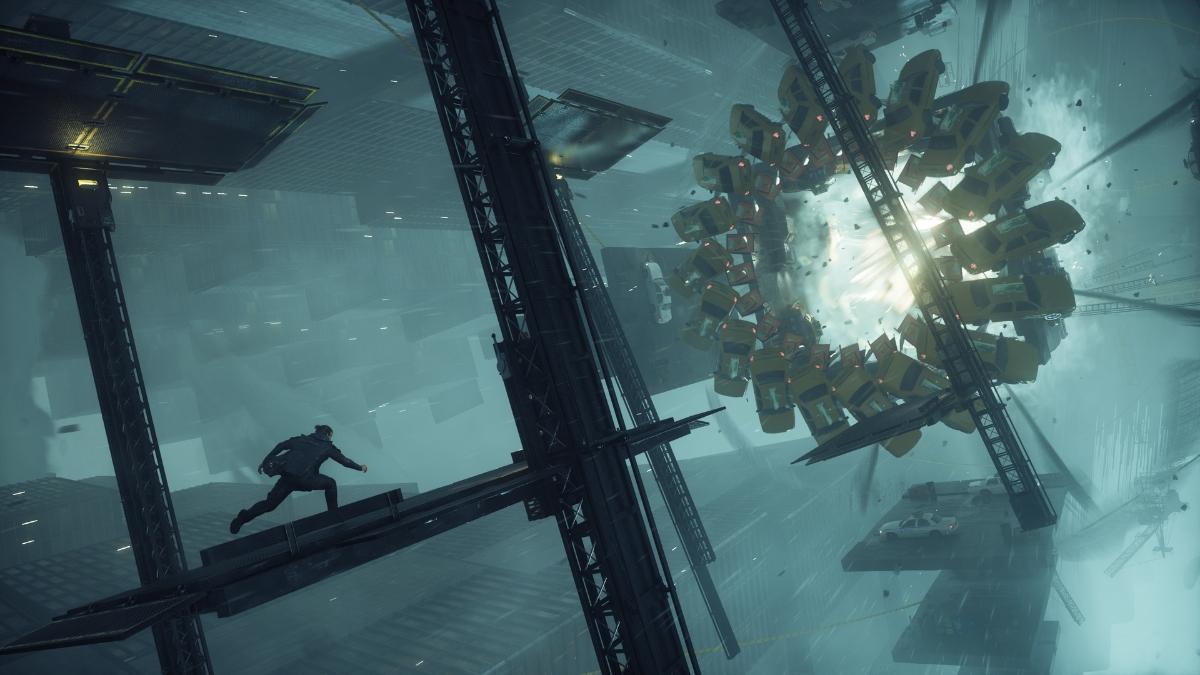
Gravity anomalies let Dylan walk on surfaces that shouldn’t be walkable, as he has four movement abilities to traverse Resonant’s world like it’s a platformer. Float keeps him airborne, Dash moves him forward, Reach yanks him like a magnet towards ledges and surfaces, and Shift realigns his gravity entirely, turning walls and ceilings into viable ground. These tools are proof of a brilliant level design by Remedy, and the entire map is built around the assumption that you’ll eventually break it.
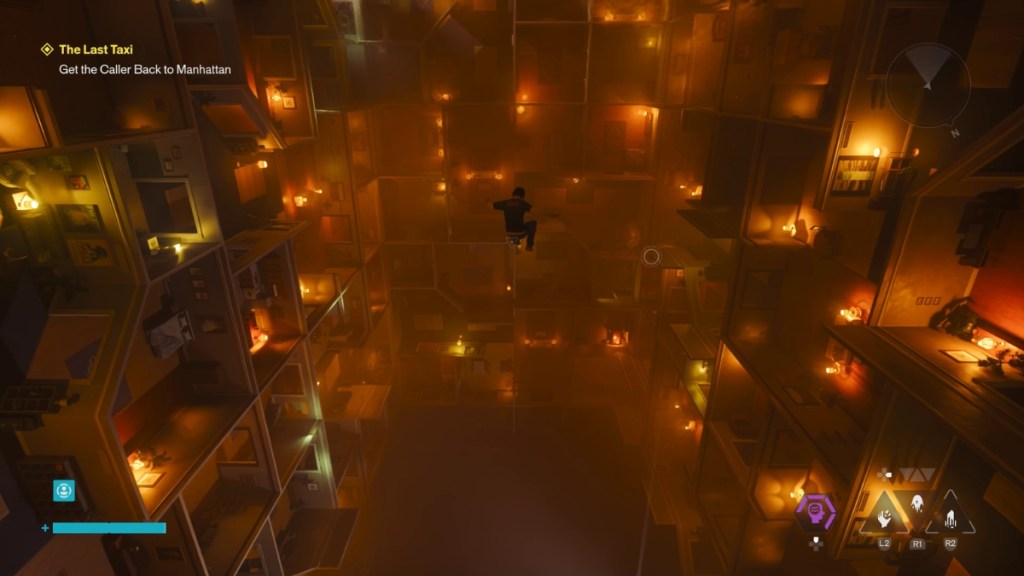
The Sinkhole beneath the Evacuation Zone is a standout example. Dylan takes a diving bell down to plant Signal Probes for the FBC. As he’s done installing them, the bell breaks, and he’s stranded in a descent and has to battle his way through a horde of corrupted Hiss. Once he starts climbing back up, he’s thrown into endless dollhouse-style apartments all around him with flickering light bulbs.
Dylan then navigates through these apartments by bending gravity with every move as he follows a trail of blue light and TVs playing music, on his way to the exit. I mean, it is absolutely mind-bending when you come to play it, and it’s clearly one of the best levels I’ve played in gaming all year.
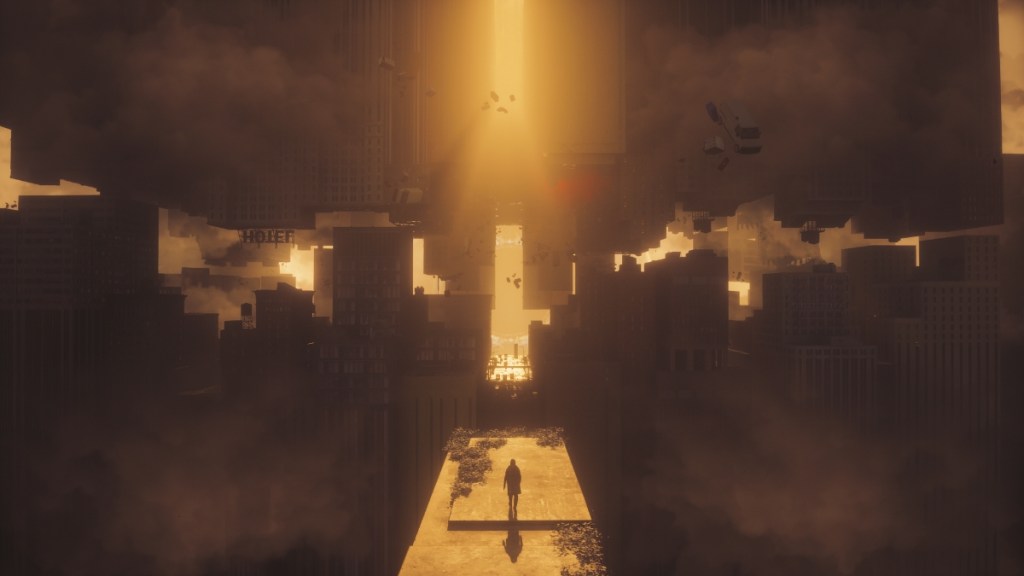
The West Incursion Zone doubles down on this illusion as well, where buildings duplicate, perspective folds in on itself, and architecture just, well, let’s say, stops behaving like architecture. I replayed several sections purely because I wanted to experience the same space again (the highest compliment you can pay a level designer).
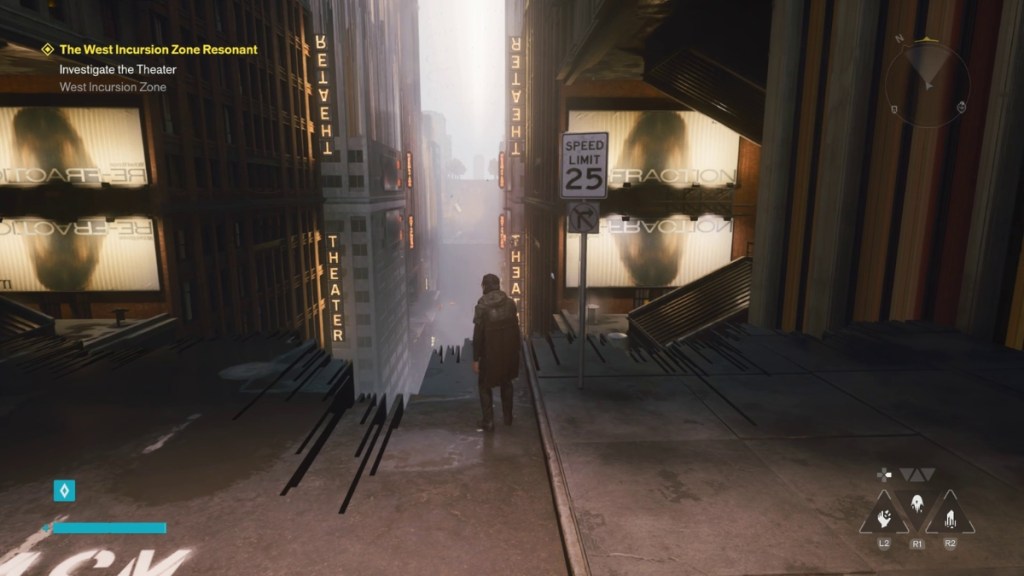
Then there’s an absurd light bulb side quest where Dylan is asked to repair corrupted bulbs for a cartoon maintenance worker who lives inside a projector slide. Once the bulbs are fixed, the character tricks Dylan into being trapped inside the projection as a cartoon, fighting his way back out. This is the design philosophy of Control Resonant in short – take an ordinary object, ask what happens if it’s completely, f***ing bizarre!
But that’s not where the world stops surprising you. There are arcade machines all around where you can interact with and play a game called Shumi, that Dylan and Jesse played as kids. When Dylan interacts with the machine now, he’s thrown into an arcade game mode where you need to survive waves of enemies as a Fortnite-style zone closes in around him, and your time gets logged on the machine.


Similarly, there are Ice Cream trucks scattered around Manhattan, another nod for Dylan to relive those small moments he missed as a kid. These trucks allow you to spend your collected resources and purchase items you need to craft Artifacts, unlock Aberrant forms, and upgrade skills. Together, these elements make the city feel lived-in rather than being essential to the main story.
I remember watching an interview with Control Resonant Creative Director Mikael Kasurinen, who acknowledged the visual overlap between its gravity-warped Manhattan and PRAGMATA’s New York, but in Resonant the concept never feels borrowed. Its warped architecture exists because, in the game, reality is genuinely breaking, not because it looks cool in a trailer.
I only wish there were more reasons to linger in Control Resonant’s Manhattan once the credits roll. After the main story wrapped, I spent an additional six hours wandering, fighting Hiss, chasing side content, and maxing out my build. The world is good enough that I wanted the game to let me squat in it a little longer.
Gameplay: The Board Has Authorized Excessive Violence
Control Resonant often felt like a subtle match between Devil May Cry and Doom. You’re always moving, dodging, swapping weapon forms, using your supernatural abilities around, and turning enemies against each other.
I hate the static cover-shooter combat and absolutely despise QTE-heavy set pieces even more, where the game essentially does the heavy lifting for you, and you just need to press a button for it to play out. I come from a school of thought that believes in “give me a sandbox and let me break it.”


Remedy hands you exactly that sandbox in Control Resonant. The studio widely advertises this as an action RPG, and for the most part that label fits. It gives you the good parts of an RPG (weapons, abilities, builds, progression) without boxing you into inventory Tetris or a skill tree that looks like a conspiracy board.
The Aberrant is Dylan’s weapon that he creates with the help of The Board when Jesse stabs him with it. The weapon itself is unique to the Control franchise as it shifts between six forms. The primary forms are Strike (dual blades, fast, big on crits – my go-to for the entire run), Glaive (a spear with wide AoE reach), and Cleave (balanced, strong back attacks). Secondary forms are Crush (a slow, hard-hitting hammer that also cancels your float into a ground slam), Drill (a motorized spear that charges the longer you hold it), and Extend (a whip that hits multiple targets and can be charged up).
Layer six combo finishers on top, and it becomes a lethal arsenal. Split Pivot – a spinning blade unleashed after four hits- was my finisher of choice. Concussive Beatdown and Spin Edge earn their keep against crowds, but none of it feels mandatory. You experiment with a new build each time, find what clicks, and build Dylan around how you actually want to play.
Jesse plays into Dylan’s growth too. As he moves through Manhattan, Dylan stumbles into Faults tied to Jesse’s visions – pocket spaces where he can interact with a television from the Faden siblings’ childhood bedroom and interact with Jesse. Clearing these Faults unlocks his movement kit.


However, there’s one memory in particular that shapes the precedent of the Control series: in Ordinary, Maine, young Dylan and Jesse discover the Slide Projector and Dylan gets captured by the FBC. This story in particular in Resonant turns into a 2D life-sim arcade-style game that alone deserves an award nomination. It’s proof that Remedy isn’t just thinking about how to tell a story; it’s thinking about how to make playing the story part of the story.
When it comes to abilities, Dylan earns six major ability types by taking down Resonant Entities: Barrage fires projectiles, Inferno stacks burn damage over time (I leaned on this so hard it felt mandatory), Astral Rebuke launches homing spikes to stun and juggle enemies, Push shoves enemies off ledges, Spore Burst fires infecting Mold rounds, and Volatile Anomaly summons a throwable detonatable ally that hits harder the lower its health drops.


You manage all of it inside The Gap – Dylan’s altered mental state where he communes with The Board and handles his character progression. Source is the currency that fuels progression in Control Resonant, and you can get it by clearing zones, taking down Resonant Entities, finishing side content, and generally doing the work yourself. There’s no unlimited free respec, and I actually like that.
When RPG games hand players everything, there’s less reason to explore, fight, and experiment. Resonant builds a loop instead where exploration feeds progression, progression feeds combat, and combat sends you back out to explore. A simple yet engaging loop that works each time if you play games on the daily.
One omission stings apart all this glory, which is the Photo Mode. Sadly, in Control Resonant there’s no Photo Mode at launch, which feels criminal given how good these environments look. Remedy has confirmed that Photo Mode is coming in a post-launch update, and I’m counting down the days.
I’d also kill for a Walkman-style in-world music player. Zoe’s Mixtape is great, but walking Manhattan with Dylan’s favorite tracks playing would’ve sealed the deal – blame Kojima for spoiling me on that front with Death Stranding 2, and I wanted the same rush here. Neither omission is a dealbreaker, but both would make an already excellent world even better to live in.
Bosses: <HISS//MOLD//DEFEAT//REPEAT>
Combat in Control Resonant is satisfying. The original Control gave you the Service Weapon, telekinesis, and the freedom to fling half the environment at enemies. Resonant takes that foundation and stacks melee, supernatural abilities, movement, and weapon forms on top of it. I rarely kept my distance – I wanted to get in close, and the game rewards that instinct constantly.
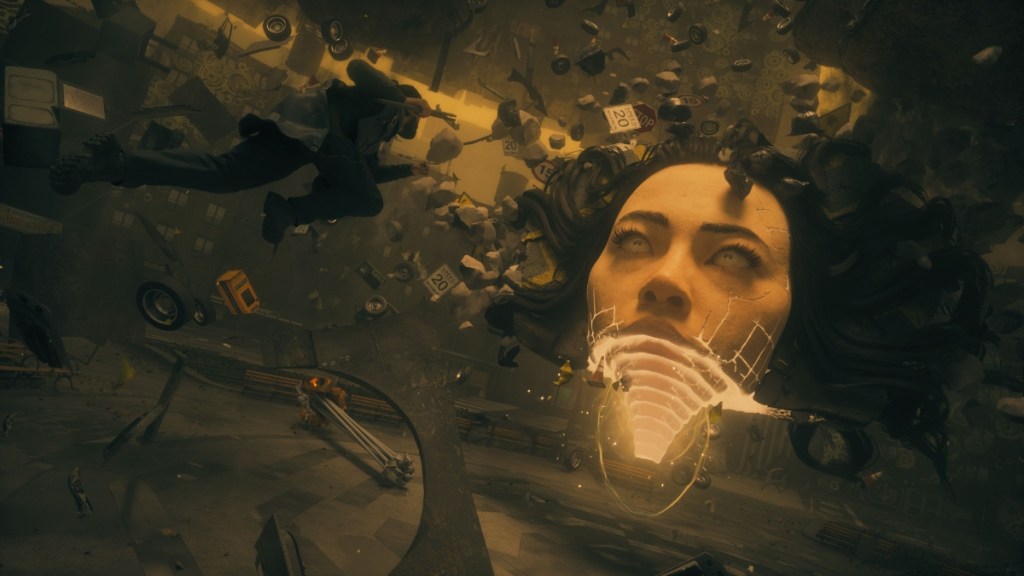
The first Resonance boss, The Artist, tells you exactly what Remedy is going for: dodge at range, stay airborne, play it careful – or ignore all of that and go straight in for the jugular, which is what I did every time. Combine abilities with Crush, dodge across floating platforms, hunt for crit windows. That became my approach to nearly every boss, and thankfully Resonant never repeats a fight.
There are 23 Hiss enemy types, 11 Hedron types, and 12 Mold types, each bringing its own problems. The Hiss Transporter is one of the most unique Hiss types, which is a corrupted bus that rams the ground and calls in reinforcements.


The Hiss Cluster is yet another enemy type, which is quite annoying, and is a floating orb that fires corrupted beams – dodge it right, and you trigger a slow-motion effect that feels ripped straight out of Max Payne. The Mold Spore Mother flies around, lobbing explosive spores across the arena. Learning enemy weaknesses matters in the game as well: Inferno wrecks Mold, while Drill and Crush do the heavy lifting against Hiss.
The six Resonant Entities are their own combat puzzles. The Factory Resonant in Central hands you Inferno and turns its arena into a lava field where aerial combat becomes essential. The Mold Resonant in Park is a different kind of nightmare – you have to enter a euphoric Mold-induced state before Zoe snaps Dylan out of it with music, then survive a boss built on spores and infection damage. I died to it more than I’d like to admit.
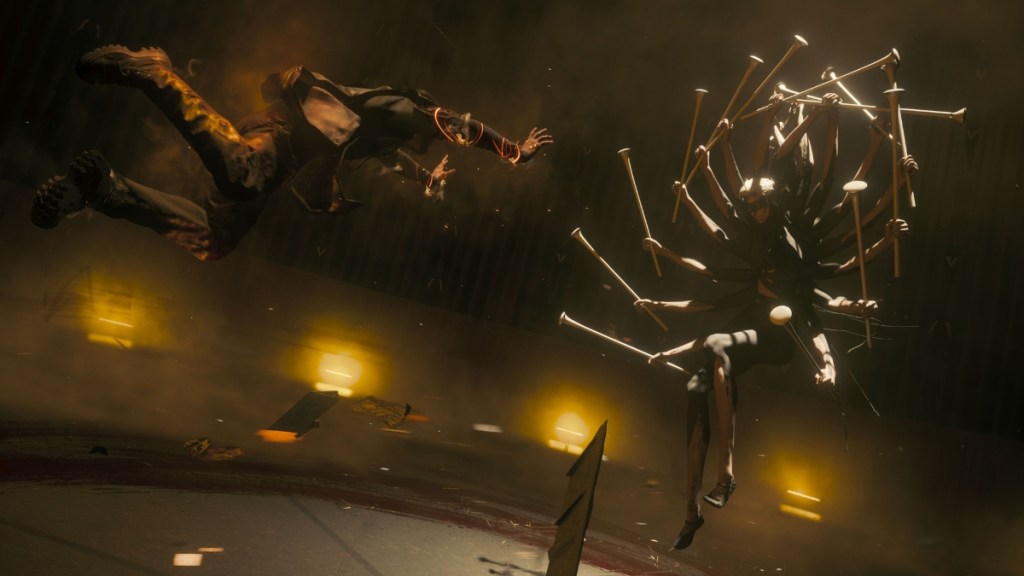
My favorite boss battle in the game is against The Dancer in the Theater. She moves like a contemporary dancer, attacking with sticks on a rhythm built around the Fibonacci sequence. Once you catch the pattern, the fight opens up, but watching the choreography, music, and combat lock into one thing is something else entirely. It’s genuinely beautiful.
I won’t spoil the rest of the Resonants for you because they are surely surprising. What matters is that Control Resonant doesn’t give you six versions of the same fight – every Resonant entity forces you to rethink your loadout and your approach. It hands you an RPG sandbox, and you decide how to break it apart.
Sound and Sight: A Resonance I’d Hear and Look For Each Time
Control Resonant is driven by its soundtrack in a way few games manage. Music was always Remedy’s signature, but here it’s woven into Dylan’s character. Zoe introduces him to music whenever he’s vulnerable or overwhelmed, and those scenes land harder than you’d expect because music is something Dylan lost as a kid and is only now rediscovering as an adult.
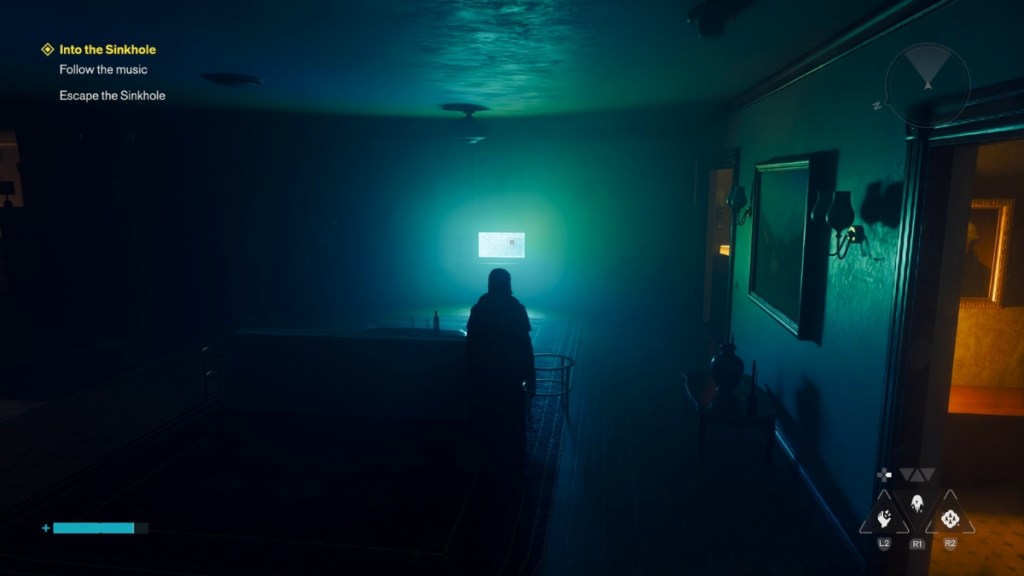
There are six original songs accessible through Zoe’s Mixtape menu, and as I mentioned earlier, I wish I could take them with me into the open world. Petri Alanko returns as composer, continuing his long run scoring Remedy’s games, and every zone, boss, and combat beat has its own distinct sound identity.
Then there’s Control Resonant’s graphical allure. I played on an Nvidia RTX 5080 Founders Edition with ray tracing and DLSS 4.5 enabled, and I have to say that this is one of the best-looking games I’ve touched this year.


Remedy is running its proprietary Northlight engine, substantially upgraded to handle the scale of an outdoor Manhattan instead of one contained building, and it shows. Car hoods reflect the city around them, light bounces off wet streets, buildings hold up under scrutiny, and the West Incursion Zone specifically produces genuinely gorgeous Tyndall effects where light leaks between gaps.
Color does a lot of storytelling in Resonant too: Hiss zones drenched in red, Mold environments leaning blue and yellow, and Hedron spaces exploding into kaleidoscopic colors that make the screen look like it’s being peeled apart. With all my settings maxed out, Resonant is Remedy’s most visually ambitious game to date, and nothing comes close to it. The tech makes the world feel physical, which makes it hit that much harder when the world starts bending past recognition.
Performance: The Board Would Like a Word With My GPU
For the most part, Control Resonant runs like it means business. I played at 1080p, everything on Ultra, including ray tracing with path tracing enabled, DLSS 4.5 on for most of the run, on that same RTX 5080. My 180Hz monitor couldn’t even keep up – I saw peaks near 320 FPS, generally hovering between 230 and 240, but the headroom is ridiculous.
My Setup: CPU: Intel i7 14700K 3.40 GHz
CPU Cooler: CORSAIR H150 RGB 360mm
Motherboard: MSI Z790 Pro Wifi
GPU: Nvidia RTX 5080 Founder’s Edition 16 GB
RAM: Crucial (2x16GB) 5200MHz DDR5
SSD: Kingston 3 TB NVMe SSD
Monitor: 1440p @ 160Hz
I hit a couple of crashes where my PC ran noticeably hot, but between the ambient heat and the settings I was pushing, I wouldn’t call those a pattern rather than a fluke. Outside of that, no meaningful stutter, no tearing, no frustrating frame drops.


Nvidia’s DLSS 4.5 comes with caveats, though. During combat and exploration, it’s close to a must-enable setting, where the neural rendering combined with ray tracing buys you the headroom to run everything maxed. But during cutscenes and character close-ups, the DLSS upscaled visuals occasionally look gimmicky. Emily Pope was the clearest offender, where her face read as overly processed, and hands and fingers occasionally looked like low-poly models.
Switching DLSS off for story beats gave me a cleaner, more intentional-looking image. Playing Control Resonant on PC with my DualSense controller felt like it wanted to use your hardware to the limit and give you the best gaming time you deserve from it.
Verdict: A Resonance That Has Corrupted Me For Other Games
If you’re a through-and-through RPG fan, this isn’t the game for you. But if you want a break from the grind of Onimusha: Way of the Sword or The Blood of Dawnwalker, Remedy has built something wonderfully different.
Resonant is an action RPG that lets you breath inside a strange, open-ended modern world. It’s core is anchored by an unforgettable story about two siblings separated by a Slide Projector, and driven by combat that never stops asking you to experiment. Most of all, it makes exploration feel like the reward, not the chore between rewards.
New to Remedy games? Then this is a great entry point for you, and you get the story, the spectacle, and the freedom without needing a security clearance for every classified document filed since the original Control was released. Returning players get enough familiar faces and unanswered questions to keep the red string board fully intact.
After 25 hours, I didn’t want to leave Manhattan, and that’s where the Resonance grabbed me. If Remedy announces DLC in the next two months, I already know where my free time is going. With GTA 6 looming over the rest of the year, Control Resonant somehow pulled my attention out of Rockstar’s gravitational field and dragged me back into The Gap.
The Board would probably call that a successful resonance. I call it a problem I’m happy to have.