Artificial Intelligence is no longer a future technology. We are witnessing the AI revolution right now, and it’s improving at a breakneck pace. So to understand this essential technology, we have compiled the best books on AI. We have included some critical books on AI’s current capabilities and limitations so you get a balanced view of the field. On that note, let’s check out the best AI books.
1. Supremacy by Parmy Olson
Supremacy by Parmy Olson is one of the best books on AI that discusses the current AI revolution. It’s written by Bloomberg journalist Parmy Olson and the book won the 2024 Financial Times Business Book of the Year Award. The book ‘Supremacy: AI, ChatGPT, and the Race That Will Change the World’ sheds light on the intense rivalry between OpenAI and Google DeepMind.

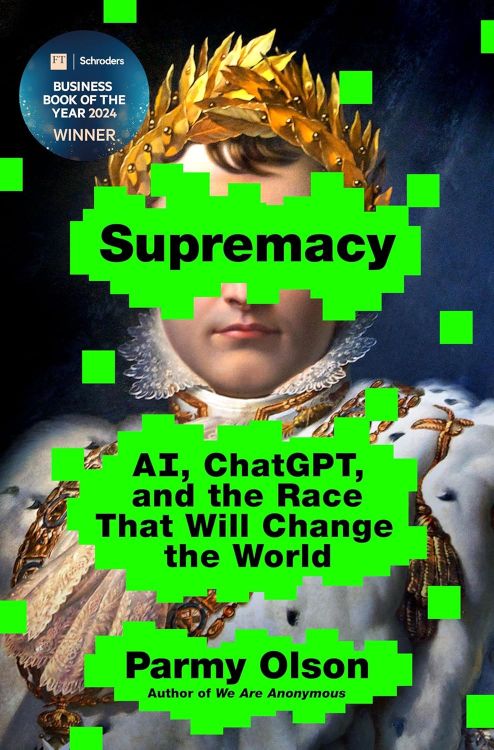
These two AI labs are racing to build Artificial General Intelligence (AGI). It focuses on the clash between OpenAI CEO Sam Altman and DeepMind CEO Demis Hassabis. The author had access to high-ranking sources which resulted in a book that covers the human and corporate drama in the race to build super intelligent machines.
What is notable about the book is that it focuses on the real risks of AI and showcases immediate threats emerging from today’s AI systems. It reveals the spread of biased information in many industries including education and media. The book reads like a thriller while giving you context about the current AI development.
2. Empire of AI by Karen Hao
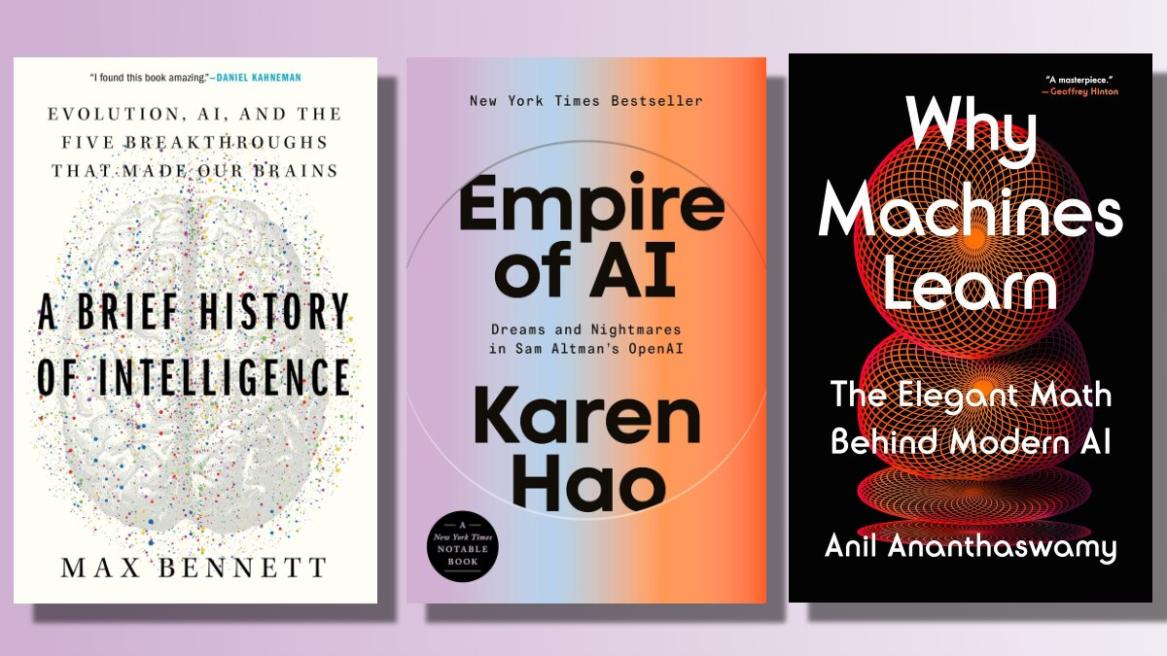
‘Empire of AI: Dreams and Nightmares in Sam Altman’s OpenAI’ by Karen Hao is one of the best books on AI that critically examines OpenAI and shows how the company functions internally. Karen Hao, a contributing writer at The Atlantic, had intimate access to OpenAI from 2019 and she traces the AI lab’s transformation from a research nonprofit to a multibillion-dollar powerhouse that started the AI race.
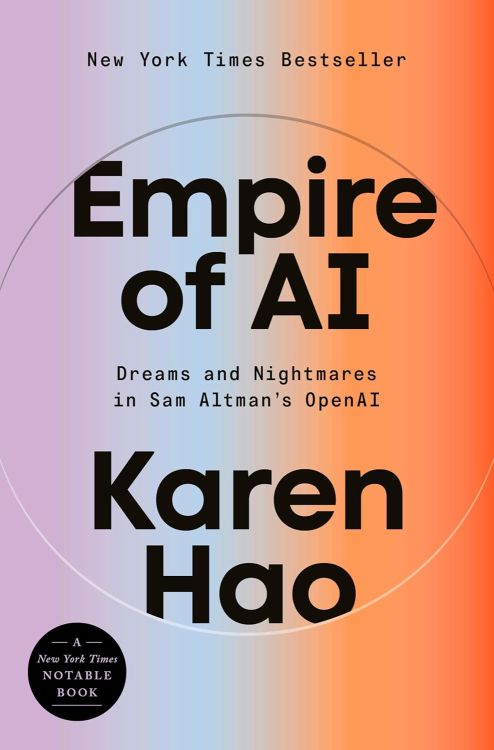
The book covers how OpenAI moved on from utopian ideals to a company that wants to grab power. The author frames AI companies like OpenAI as modern empires that take resources without permission to train their models. The book highlights how underpaid data workers in Kenya label traumatic content and AI labs use creative works without permissions.
Basically, the book showcases the full supply chain of AI, from water usage in AI data centers to the environmental damage caused by training large AI models. It also chronicles ChatGPT’s launch, Sam Altman’s brief ouster from OpenAI, and asks harder questions like who ultimately benefits from AI and who pays the cost.
Note that Hao recently issued corrections to specific water usage figures in the book due to a unit conversion error.
3. Why Machines Learn by Anil Ananthaswamy
‘Why Machines Learn: The Elegant Math Behind Modern AI’ by Anil Ananthaswamy is one of top books on AI that shows the underlying mathematical elegance that powers AI. The book has won the 2024 Artificiality Book Awards and it’s included in The Information’s best AI books of 2024. Why Machines Learn does something rare, it shows the actual math without scaring you off.

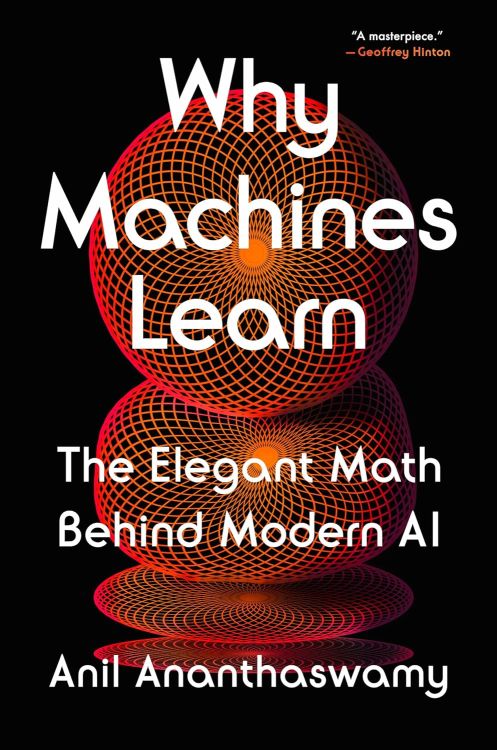
Anil Ananthaswamy makes the complex mathematics easy to understand by tracing the mathematical lineage of machine learning. He shows how ideas from linear algebra, calculus, and probability theory came together to create the neural networks powering today’s AI systems. Ananthaswamy succeeds in showcasing why machine learning works the way it does and why there are certain limitations.
4. Co-Intelligence by Ethan Mollick
Next, ‘Co-Intelligence: Living and Working with AI’ by Ethan Mollick is ranked among the best books on AI for general readers. It frames AI as a partner and creative collaborator rather than a tool. The book has been written by Ethan Mollick who is a professor at the Wharton School, and he uses rigorous research and practical experiments to back up his claims.


What is interesting about Co-Intelligence is that it doesn’t speculate about the distant future. Instead, Mollick shows how to work effectively with AI systems which are available today. He covers how you can use AI to improve your writing to using it for brainstorming and problem-solving. If you are a professional or a knowledge worker, this book on AI will help you a lot.
5. A Brief History of Intelligence by Max Bennett
While most AI books focus on technology, entrepreneur and neuroscientist Max Bennett takes a different path and asks what the biological intelligence can teach us about artificial intelligence (AI). The book ‘A Brief History of Intelligence: Evolution, AI, and the Five Breakthroughs That Made Our Brains’ is an interesting read that traces the five major evolutionary breakthroughs in the development of intelligence.

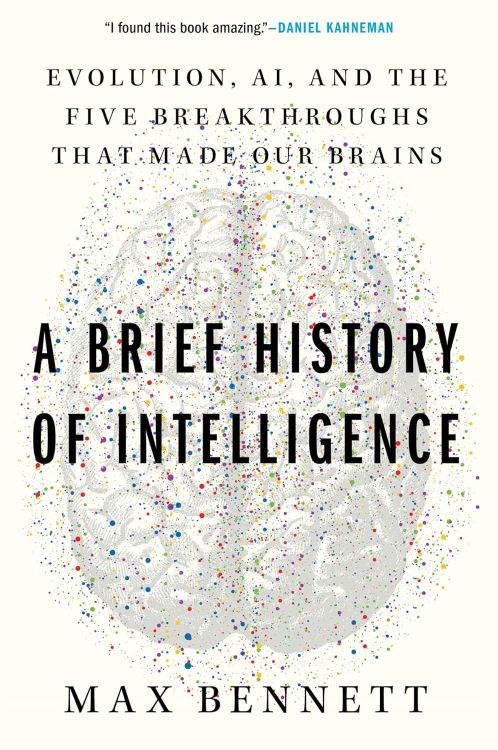
The book reveals learning in early organisms to language in modern humans, and relates each breakthrough with current AI capabilities and limitations. Basically, by understanding how biological intelligence evolved over millions of years, we understand what AI can do and what might be possible in the future. Put simply, if you want to understand what intelligence truly is, you should read this essential book on AI.
6. AI Snake Oil by Arvind Narayanan and Sayash Kapoor
Amid the AI hype, the book ‘AI Snake Oil: What Artificial Intelligence Can Do, What It Can’t, and How to Tell the Difference’ by computer scientists Arvind Narayanan and Sayash Kapoor gives you a reality check. The book helps you to understand the actual capabilities of today’s AI systems, their limitations and the marketing hype surrounding them.

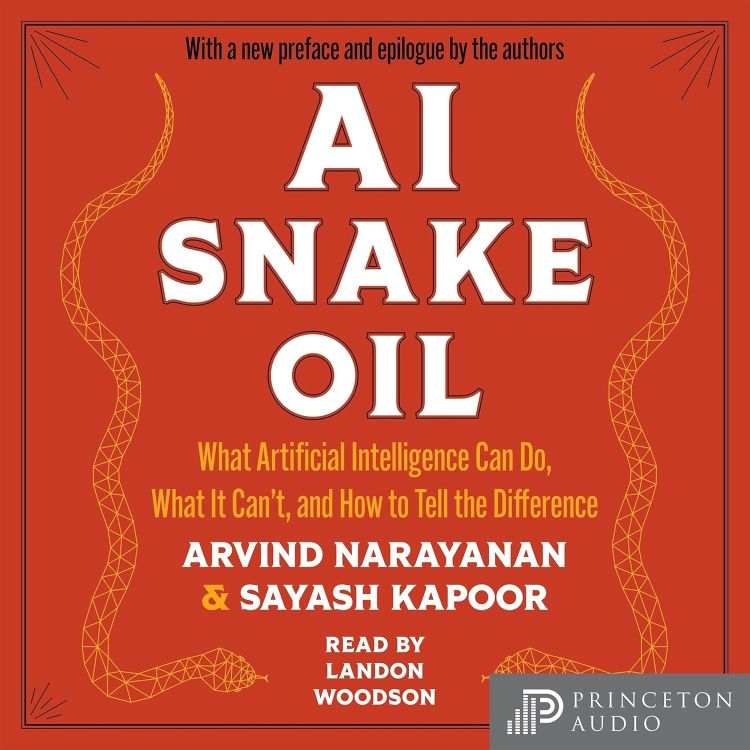
The book is particularly helpful for those who are business leaders, policymakers, and anyone making decisions about AI adoption. Both Narayanan and Kapoor explain how to test vendor claims, how to evaluate AI systems, and what applications of AI are actually useful, compared to those that are overhyped. While the book is critical, it’s not cynical about AI’s capabilities.
7. Artificial Intelligence: A Guide for Thinking Humans by Melanie Mitchell
‘Artificial Intelligence: A Guide for Thinking Humans’ by Melanie Mitchell is one of the best books on AI’s fundamental capabilities and limitations. It offers a critical view of AI’s history, current capabilities, limitations, and ethical implications. Melanie Mitchell, a computer scientist and professor, uses her experience to give a balanced perspective about AI hype.

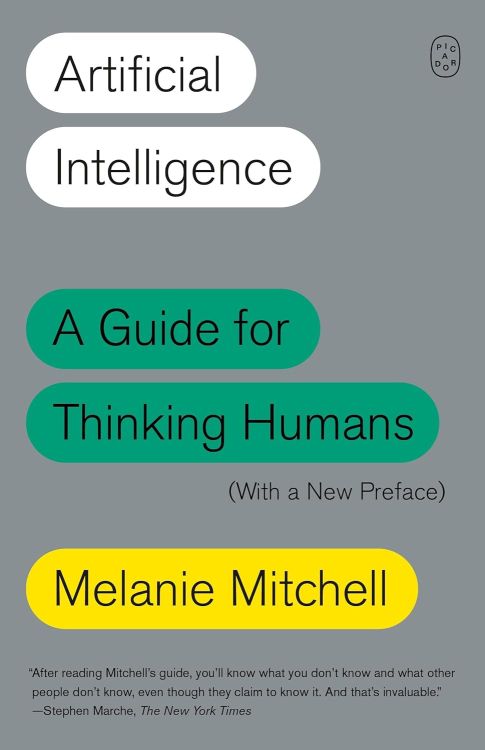
The book gives attention to something AI systems lack today and that is common sense. The author clearly shows what AI has accomplished and what remains to be solved. The book includes personal stories with some humor, and explains technical concepts in an accessible way without dumbing them down. If you want to cut through the AI hype, this book is an essential read.
These are some of the best books on AI you can read in 2026 to understand AI’s capabilities, history, and limitations. While some books offer a critical view, they are important to have a balanced perspective about the technology. If I have missed out on your favorite AI book, let me know in the comments below.