NYT Strands can look pretty straightforward at first. You get a grid of letters, a theme for the day, and a bunch of hidden words to find. But once the obvious words are gone, that same grid can start looking like a complete mess.
Thankfully, Strands has a built-in hint system for such moments. The catch? You have to work a little to unlock your hints. So, how do Strands hints work, and when can you use them? Here’s everything you need to know.
How Do Hints Work in NYT Strands?
Unlike other word games, Strands does not hand you hints whenever you get stuck while finding today’s Strands answer. To get the hints, you first need to find a few words that are not part of the day’s theme. Once you do, you can use these hints to get a push in the right direction. I know it sounds a little tricky. So, let me break down the whole process for you.
Find Three Non-Theme Words
The first step to get a hint is to find three words that are not among the NYT Strands theme words. To simplify, let’s just call them non-theme or random words. Now, remember that while your main goal is to find the themed words hidden in the grid, these non-theme words can help you get there.
There are a few rules to keep in mind: The words must be valid and must contain at least four letters.
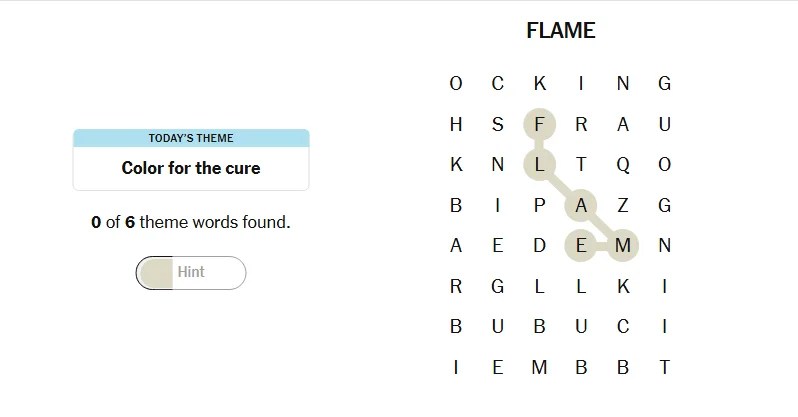
These words also do not need to have anything to do with the day’s theme. For example, if the theme is about types of desserts, you can still enter a completely unrelated word. If Strands accepts it, it counts towards your hint.
Unlock Hint
Every time you find a qualifying non-theme word, the hint meter moves forward. Find three of them, and the meter fills up, unlocking the hint.
You can then decide whether you want to use it immediately or keep looking around the grid yourself. Personally, I would keep searching if I feel I’m close. But if the grid has started to look like alphabet soup, there is no shame in taking the hint.
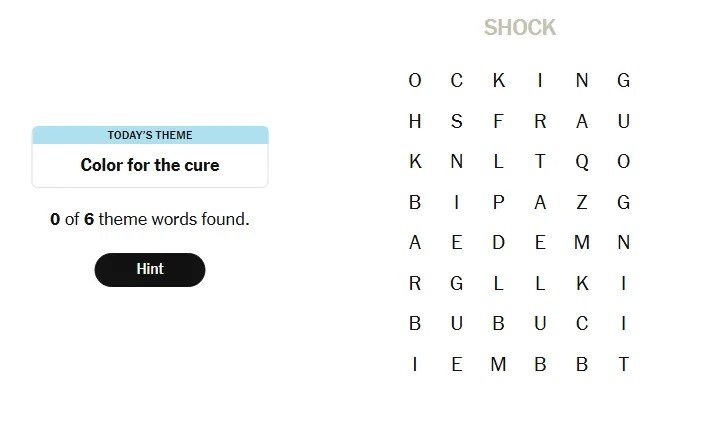
There is one thing to remember, though. Strands does not let you enter random words forever. The game has a limit of 100 non-theme words that you can submit. So, if you see the ‘Word Limit Reached‘ message, that means you have found 100 non-theme words and can no longer submit any more to keep filling the hint meter. Then, you’ll have to work with clues and words you’ve already found.
Use Hint Whenever Required
Once your hint is unlocked, you can use it whenever you get stuck. But don’t expect Strands to simply flash the answer on your screen. When you use a hint in Strands, the game highlights the letters that make up one of the undiscovered theme words. You still have to trace those letters and figure out the word yourself.
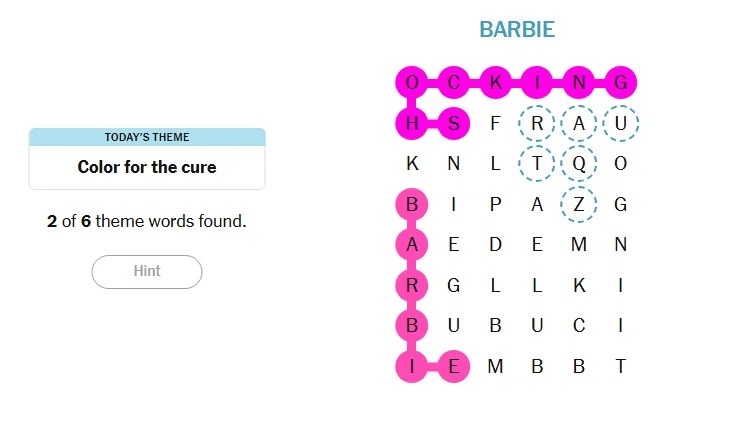
This makes the hint feel more like a gentle nudge than a full-blown spoiler. However, if you’re still stuck and can’t unscramble the highlighted letters, you can use another hint. Since you already have an active hint on the board, the next hint will reveal the correct order of the highlighted letters, making it much easier to solve.
How Many Hints Do You Get in Strands?
You can get up to 33 hints in a single Strands puzzle. The math is pretty simple: you get one hint for every three valid non-theme words, and Strands lets you submit up to 100 non-theme words in total. This gives you 33 complete sets of three.
Of course, you’re unlikely to need anywhere near that many hints. Once you have found 100 non-theme words, the game stops counting them toward additional hints, and you get the Word Limit Reached message in NYT Strands.
Don’t worry, though. This does not lock you out of the puzzle. You can still find the remaining theme words and Spangram in Strands; you just can’t earn more hints from random words.
On a side note, if you’re just throwing words onto the board just to collect hints, you might want to check out our guide to common Strands mistakes. Sometimes, a little more strategic thinking is better than trying to brute-force the hint meter.
Do Hints Affect Your Strands Streak?
Using a hint does not mean you’ve failed the puzzle, nor does it break your Strands streak. You can still complete the puzzle normally after using one. Remember that you only lose the streak if you haven’t finished the puzzle before the Strands reset time.
However, streak isn’t the only record that NYT Strands maintains. It also has a statistic for ‘Solved without Hints’. This shows the number of games you have played without using hints. So, when a puzzle is solved using an in-game hint, it won’t count towards this record.
Another interesting thing is that Strands has a ‘Solved Without Hints’ badge for players who complete a puzzle without using any hints. So, if you’re trying to collect all Strands badges, you have one more reason to resist that tempting Hint button.
With that being said, if you’re new, don’t worry too much about the stats or badges and use Strands hints to figure out the answers and how the game works. Once you know how to play Strands, you’ll have a much easier time figuring out when to use a hint and when to keep searching.
You need to find three valid non-theme words to unlock one hint in Strands. These words must contain at least four letters and cannot be a part of the day’s theme.
NYT Strands does not have unlimited hints. The game lets you submit 100 non-theme words, which means you can get up to 33 hints in a single Strands puzzle.
No, using a hint does not break your Strands streak. You can still complete the puzzle and maintain your streak. However, using a hint means the puzzle will not be counted in the ‘Solved Without Hints’ record.
You can earn multiple hints in a single Strands puzzle by finding more qualifying non-theme words. However, Strands has a limit on how many non-theme words you can enter, so you cannot generate hints indefinitely.
 Daksha Gupta
All NYT Strands Badges and How to Earn Them (2026)
Daksha Gupta
What Does 'Word Limit Reached' Mean in NYT Strands?
Daksha Gupta
10 Best Games Like NYT Strands
 Ajith Kumar
What Are the Common Challenges in NYT Strands? Explained with Solutions
 Anshuman Jain