If The New York Times Strands puzzle has become a part of your everyday routine, you are familiar with the satisfaction of watching those blue bubbles fill the grid. But every now and then, you land on a long string of bright yellow letters that light up the grid called the Spangram, and it is the single most important word in the entire puzzle.
While the regular theme words are the puzzle’s building blocks, the Spangram serves as its backbone and explains the “why” behind the puzzle. If you have been facing trouble understanding what the Spangram is in NYT Strands, keep reading as we break down this simple yet extremely crucial mechanic.
What is a Spangram in Strands?
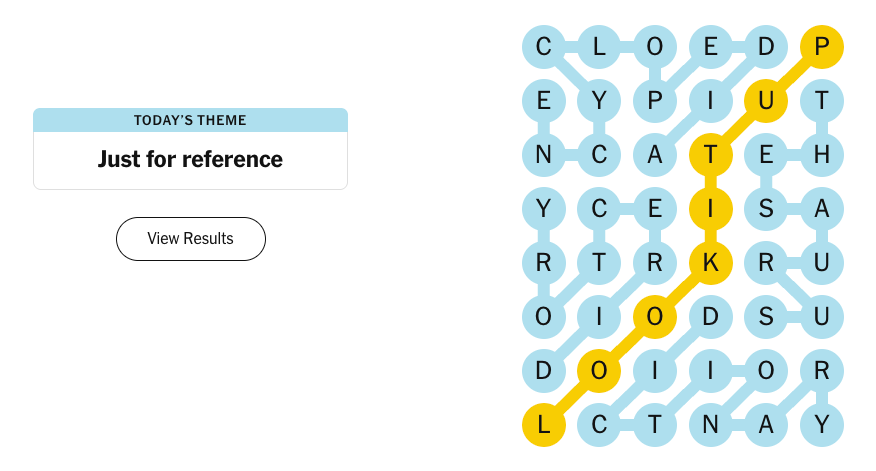
In the context of NYT Strands, the Spangram is a special word that describes the overall theme of that day’s puzzle. Once found, you will notice that it connects letters from opposite edges of the grid and is represented in yellow color. Think of it as the title or category name that connects all the other theme words.
For example, if the theme words in a puzzle are “CRAB, LOBSTER, SHRIMP, RIBEYE, SCALLOP, and SIRLOIN”, the Spangram might be “SURFANDTURF”, since that is the category all those words belong to. The Spangram is essentially the answer to the question: “What do all these words have in common?” Check out today’s NYT Strands answer to see the Spangram in action.
How is Spangram Different From Regular Theme Words?
The Spangram stands out from regular theme words in three important ways:
- It describes the theme: Regular theme words are members of a category. The Spangram is the category itself.
- It turns yellow: When you find a regular theme word, it lights up in blue. When you find the Spangram, it lights up in yellow. This is the only word in the puzzle that turns yellow.
- It spans the entire board: The Spangram must physically touch two opposite edges of the 6×8 grid. It might go from the left side to the right side, or from the top to the bottom. No other theme word has this requirement.
How to Spot the Spangram in Your Daily Puzzle

You will instantly know when you have found the Spangram in a Strands puzzle because it shows a different behaviour than any other you find on the grid. Here are the two dead giveaways:
Look for the “Edge-to-Edge” Rule
The “Spangram”, as its name suggests, spans across the entire Strands puzzle board. This means that it must touch two opposite sides of the grid, whether it be from left to right or top to bottom. The Spangram can wind, twist, and turn diagonally, but it must connect two opposing boundaries.
The Signature Yellow Highlight
While regular theme words in Strands puzzles are highlighted with blue when you find them, the Spangram turns yellow. This allows you to distinguish the Spangram from your other theme words, helping you identify the core theme of that day’s puzzle. If you’re still having trouble navigating the Spangram, check out how to play Strands to make things easier.
Why Finding the Spangram Makes Solving Strands Easier
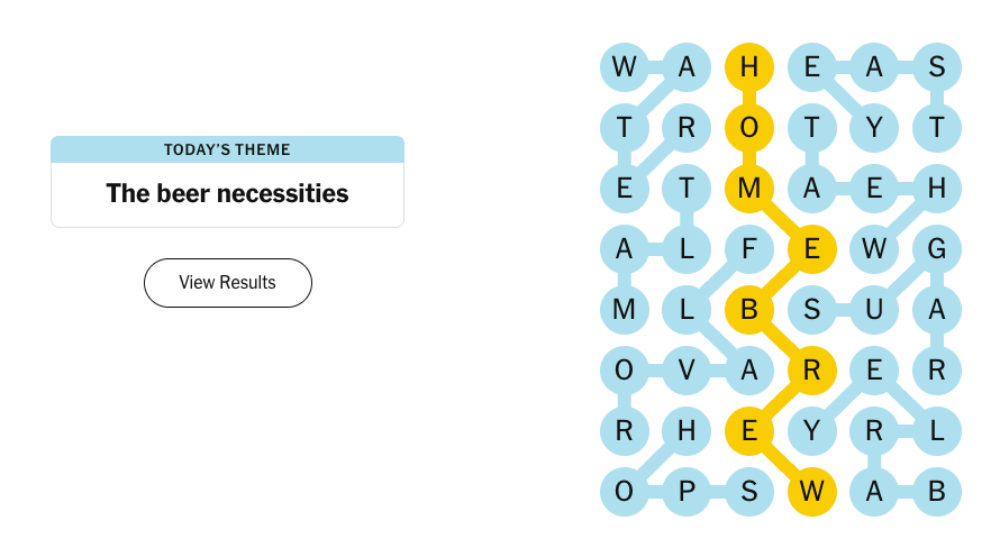
Each Strands puzzle starts with a short, often cryptic clue (like a pun or riddle). This can make it hard to figure out what category of words you are looking for. The Spangram removes that mystery.
Once you discover the Spangram, the theme becomes obvious, and you can focus your search on words that fit that category. For instance, if you are staring at the clue “Pricy pairing” and have no idea what it means, finding the Spangram SURFANDTURF suddenly makes every remaining word click into place. The Spangram also physically divides the grid into sections, which can help you visually narrow down where the remaining theme words are hiding. Check out yesterday’s Strands hints and answers to see how we used this technique to navigate the Spangram.
Tips for Finding the Spangram When You’re Stuck
If you find yourself stuck while trying to solve Strands, you can use these tips to help you find the Spangram:
- Identify the “Entry and Exit” Points: Since the Spangram is required to touch two opposite edges of the Strand grid, it can create a bottleneck at the boundaries. You can check the far left and far right columns or the top and bottom rows. If you find a few unused letters on an edge, one of them must be the start of your Spangram.
- Translate the Hints: If you see a daily hint and it makes no sense, try reducing it to a single, more generic word. For example, if the hint is “A real page-turner,” you might find yourself looking for book titles. Instead, you can try translating it into the most literal category, like “LITERATURE” or “READING.”
- Use the Hint Button: If all else fails, you can always use the in-game Hint button to help you out. However, you will have to find non-theme words to fill your Hint meter up. Once you do, you can use the Hint, and the game will highlight the letters of a theme word, which could be the Spangram if you get lucky.
So that’s everything you need to know about the Spangram in NYT Strands. Do you play Strands quite often? If you’re a fan of puzzles like this one, check out today’s Pips hints as well to get some mind workout in.
Yes, every single daily Strands puzzle contains exactly one Spangram.
Yes, a Spangram can be a compound word or a two-word phrase, but the letters will still form one continuous line on the board.
The Spangram is always highlighted in yellow.
No, you can find all the theme words first if you want, but finding the Spangram early can make the rest of the puzzle easier to solve.
No. A Spangram can be horizontal (left-to-right/right-to-left) or vertical (top-to-bottom/bottom-to-top).