
The NYT Games library expands beyond traditional crosswords and Wordle with innovative games like Letter Boxed and Strands. These two stand out for the unique word challenges they offer to the players. While both Letter Boxed and Strands revolve around creating words using a limited set of letters, there is a difference in their approach. So, here’s our in-depth NYT Letter Boxed vs Strands comparison, where we look at both games to understand their similarities and differences.
NYT Letter Boxed vs Strands In a Nutshell
While NYT Strands is free to play, you need to have an NYT Games or All Access subscription to play Letter Boxed daily. Here is a brief comparison between Letter Boxed vs Strands:
| Details | NYT Letter Boxed | NYT Strands |
|---|---|---|
| Editor | Sam Ezersky | Juliette Seive (Pitch) Tracy Bennett (Editor) |
| Release Date | February 1, 2019 | March 4, 2024 |
| Objective | Use all letters in as few chained words as possible | Find all theme-based words in the grid |
| Game Rules | Connect the letters on the edges of a square, except for those on the same edge, to form a word. Use the last letter of the previous word as the first letter for the next word. | In the 6×8 grid, connect letters to find theme words and the Spangram to fill the grid. Requires using all letters. |
| Game Modes | Daily puzzle | Daily puzzle and past archives |
| Paid or Free | Paid, requires NYT subscription | Free to play |
| Languages | English | English |
| Past Puzzle Archives | None | Paid, requires NYT subscription |
NYT Letter Boxed feels more like structured wordplay with a challenging environment, where you have to pre-plan before making a move. Whereas Strands is a word search game where you search for words related to the theme.
Letter Boxed vs Strands Compared
Both Letter Boxed and Strands test your vocabulary and pattern recognition skills. However, you’ll need separate strategies to approach the solution. Here, we do a deep dive into the core mechanics, error boundaries, difficulty, and other parameters of both puzzles.
Objective
| Feature | Letter Boxed | Strands |
|---|---|---|
| Goal | Use all 12 letters in making the fewest words possible | Find all the words related to the daily theme |
| Grid Structure | Square with 3 letters on each side | 6×8 grid of letters |
| Word Formation | Chain words together | Freely connect letters |
| Daily Release | One puzzle per day | One puzzle per day |
The ultimate goal of both games is to identify words using a limited set of letters. But here’s how they differ in their approach.
In Letter Boxed, you are given 12 letters arranged around a square – three on each side. Your task is to form words by connecting the letters while following a strict set of rules.
The main thing to remember is that you must use all letters at least once in as few words as possible. Plus, the last letter of the previous word must be the starting letter of the next word. If you’re unable to solve the puzzle in as few words as possible, bookmark our Letter Boxed answers page for some help.
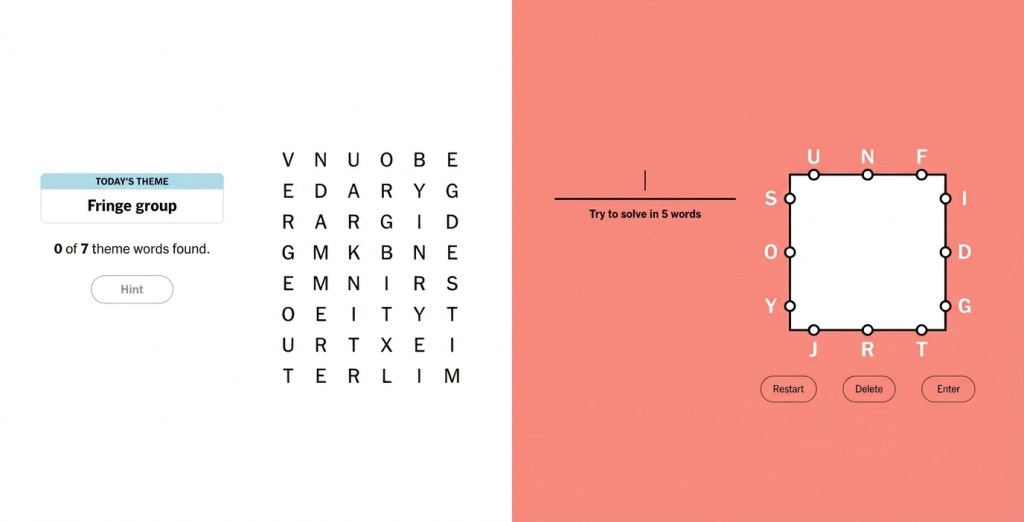
NYT Strands, on the other hand, presents a grid-based word puzzle with a new daily theme. The main objective of Strands is to use the letters in the 6 x 8 grid to form words based on that day’s theme.
To find words, you link adjacent letters and can move in any direction (more on this mechanic in the section below). To complete the puzzle, you need to use every letter in the grid to find theme words and the Spangram in Strands.
Game Mechanics
| Feature | Letter Boxed | Strands |
|---|---|---|
| Letter Usage Rule | Cannot use consecutive letters on the same side | Use a letter in the grid only once in a word |
| Word Connection | Each word must start with the last letter of the previous word | Words are independent but tied to a theme |
| Movement | Select letters from the square’s sides except for the same side | Can connect letters in any direction, vertical, horizontal, or diagonally |
| Hint Type | No clues or hints | Hint system available |
Learning how to play Letter Boxed is crucial before you take on this NYT puzzle. It is built around constraints, so you need to plan first before making a move.
The mechanics of Letter Boxed require you to form a chain of words. This means you have to think about what other words you can form using the remaining set of letters after your first move. So, it’s your early letter choices that matter the most. For example, if your first word ends in an X, then you are limiting your next word options. This way, you will need to create three or more words to solve the puzzle.
Another major Letter Boxed rule is that you cannot connect letters from the same side of the square, but repeat the same letter as many times as you like.
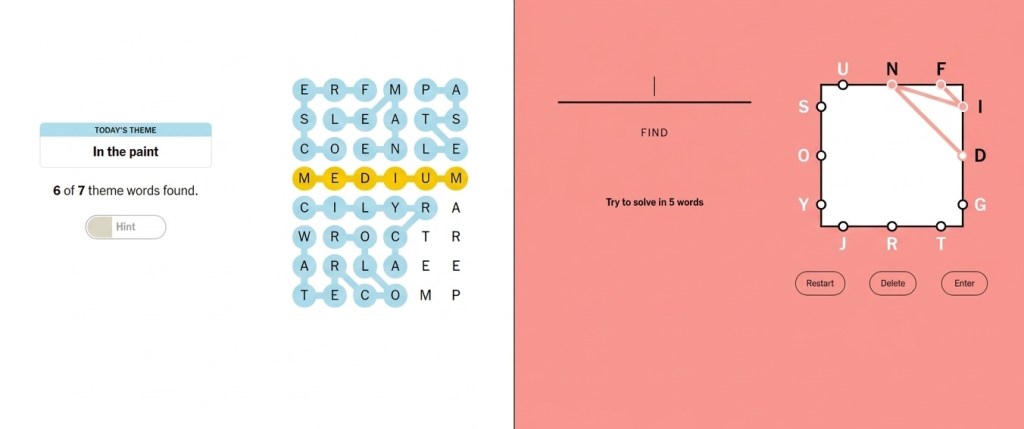
NYT Strands is far more flexible and simpler. You can connect letters in any direction, allowing you to get creative with the word discovery. One of the biggest helps in Strands is Spangram, the special word that stretches from one edge of the grid to the other, directly revealing the puzzle’s theme. The Spangram can be difficult to spot, but we help simplify the search by sharing the Strands hint today on Beebom Puzzle.
Unlike Letter Boxed, Strands also has a hint system that reveals the letters that form a theme word. But there’s a catch. The hints aren’t available by default; you need to find three non-theme words to get a single hint. This makes it easier for beginners and casual players to solve the puzzle and learn how to play Strands as they go.
Error Tolerance
| Metric | Letter Boxed | Strands |
|---|---|---|
| Guess Limit | Unlimited | Unlimited |
| Penalty | None | None |
| Fail Condition | None | None |
| Performance Metric | Fewest number of words used | Puzzle completion and hints usage |
Both games are forgiving when it comes to making mistakes. There are no strict penalties or guess limits, thereby allowing players to explore and experiment easily.
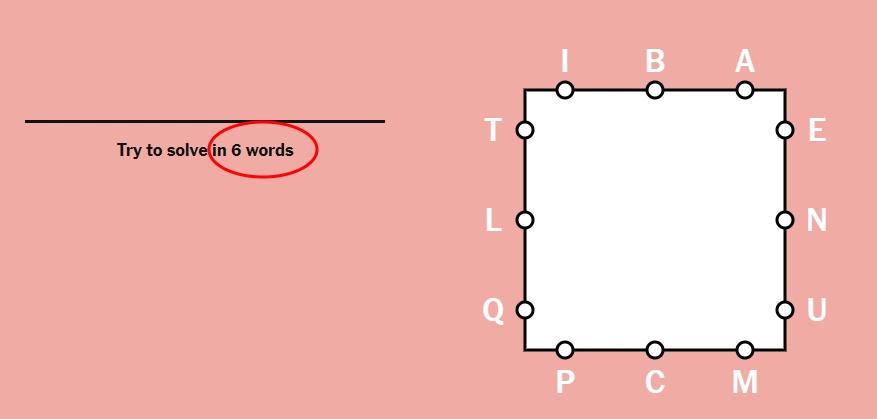
In Letter Boxed, the real challenge is how efficiently, aka in as few words as possible, you can solve the puzzle. Here, a two-word solution is the ideal answer. But you will always have a word number constraint every day that says try to solve in ‘N‘ number of words, where ‘N‘ is the maximum limit. For example, in the image below, the puzzle requires you to solve the puzzle in under 6 words.
In Strands, success is measured by completing the letter grid, finding both theme words and the Spangram. There is no hard restriction on moves or words here. You can always use the hints if you’re feeling stuck, but avoiding them means a perfect solve.
Difficulty
| Aspect | Letter Boxed | Strands |
|---|---|---|
| Difficulty Curve | Moderate to high | Moderate |
| Learning Curve | Steeper due to rules and word chaining | Easier because the theme hint is available |
| Strategy | Requires pre-planning and letter coverage | Recognize the patterns and interpret the daily theme |
| Vocabulary Demand | High | Moderate |
Letter Boxed may look simple because there is no specific grid structure; however, the constraints make it a challenging word game. You must follow a balanced letter usage, keep the word chaining mechanic in mind, and counter the side restrictions to win. Moreover, achieving the ideal two-word solution requires a strong vocabulary and efficient Letter Boxed strategies.
The Strands puzzle focuses on pattern recognition instead. The difficulty level is based on how quickly you can understand the daily theme to form words using the letters in the grid. The themes often have wordplay and use obscure hints to mislead players. The Spangram is the major hint that helps you avoid this trap, but it can only come in clutch when you find it early in your search.
Time Investment
| Factor | Letter Boxed | Strands |
|---|---|---|
| Session Length | 5-10 minutes | 5 minutes |
| Daily Commitment | One puzzle per day | One puzzle per day |
| Replayability | Low (No archive) | High (Can play previous games with NYT subscription) |
| Frustration Factor | Medium | Low |
The time you invest in both these games entirely depends on how good your vocabulary is. Letter Boxed sessions generally take 5-10 minutes to complete. However, you might need some extra time if you want to optimize and solve the puzzle in just two words.
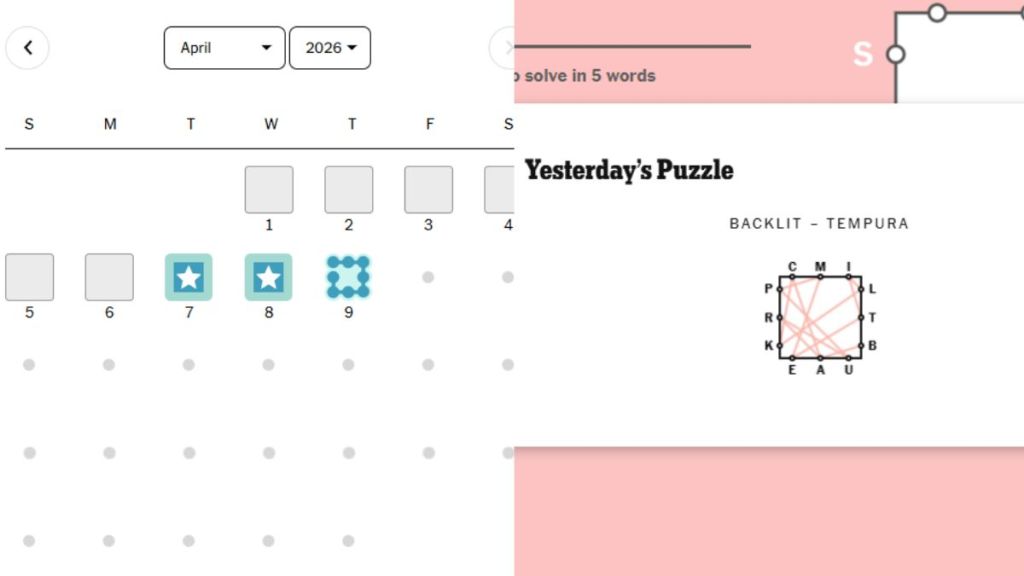
On the other hand, Strands takes 5 minutes on average to solve, as documented by my colleague and Strands expert Anshuman. Some users might even have a tough time solving it and take 20 minutes if they’re solving the puzzle for the first time. However, in this case, the hint system helps reduce the frustration and keeps the game moving.
Letter Boxed vs Strands: Which Game Should You Play?
The primary thing that you should keep in mind is that Letter Boxed requires careful planning and patience in preparing the perfect chain of words to solve it. So it’s perfect for players who have tried word puzzles before, including NYT Wordle or Connections. Letter Boxed is for experienced puzzle solvers who have a good knowledge of words and can spare the time to devote their full attention to this game.
On the other hand, Strands is the perfect choice for you if you have five minutes at hand and prefer word search games. The careful planning aspect of Letter Boxed is missing here, but you do need to interpret the theme and spot the words from the grid of letters to reach the solution.
At the end of the day, you don’t need to choose between Letter Boxed vs Strands because both are unique in their own way and offer good mental exercise.
Strands is free, but you must subscribe to NYT Games to officially play Letter Boxed.
Both NYT Letter Boxed and Strands do not limit the number of guesses or attempts you can make to solve the puzzle.
Letter Boxed is generally harder due to its chaining rules and efficiency-based goal. Strands is easier to solve for most because of the hints mechanic.
When Does NYT Letter Boxed Reset?
 Daksha Gupta
NYT Letter Boxed vs Wordle - Key Similarities and Differences Explained
 Pranav Maytray
The 8 Best Letter Boxed Alternatives
 Ishan Adhikary
Letter Boxed Strategies: Best Tips to Win Quickly
Ishan Adhikary
Today's Letter Boxed Answer for October 16
Ishan Adhikary

7 Best Globle Tips and Tricks to Find the Mystery Country Easily
Daksha Gupta
Connections Hints Today & Answers for October 16
 Sanmay Chakrabarti
Wordle Hint Today - October 16, 2026 (Puzzle #1945)
 Rishabh Sabarwal

When Does Globle Reset? Find the Reset Time Here
Daksha Gupta

How Many Countries Are in Globle? A Full Globle Country List
Daksha Gupta