Contexto can look simple at first glance because all you need to do is type in a word and guess the correct answer of the day. However, if you have already played a few rounds, or in simpler terms, guessed a couple of words, Contexto is going to humble you real quick.
It may happen that the moment you get the idea of the word’s context, the game slaps you with a bright red bar, or you may be stuck at the same rank. So, if you’re having the same problems, check out this guide to learn about common mistakes in Contexto and how to fix them faster and smarter.
How Does Contexto Work? Understanding Word Similarity
Before you start playing Contexto, you’ll need to understand what the game is actually about. Once you get a good grasp on the game’s instructions, it’ll be easier to figure out the answer.
Contexto uses a word embedding model that is trained on large amounts of text. Each word has a fixed position, and the game ranks your guesses based on how close they are to the target word. Two words rank close together when they frequently appear in similar topics and situations in real-world text. Therefore, it doesn’t depend on the dictionary meanings or literal definitions.
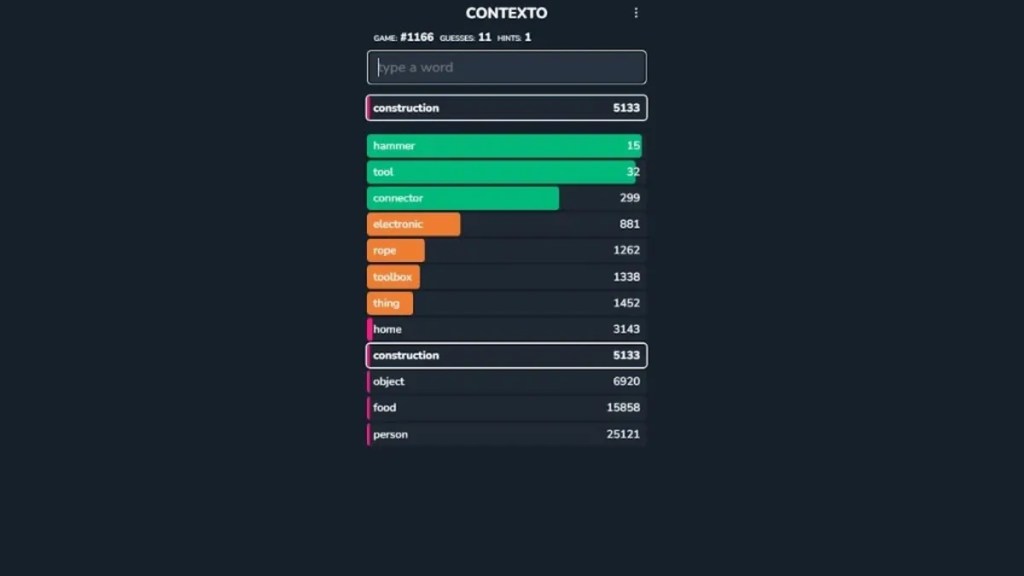
For instance, when a vehicle-related word, such as a car, can rank close to another vehicle, such as a bike, even if they’re both different objects. This is why Contexto often feels unreasonable at first. You may ask questions about how this word even shares the same context as the target word. To answer that, read the guide below to know more. Also check out how we targeted this in yesterday’s Contexto answer.
Why Some Words Feel Close But Rank Far Apart in Contexto?
A common trap is assuming the relation of words. The AI model, or rather the word embedding model behind Contexto does not understand meaning the way humans do. It captures patterns of how words are used together in text, so personal or emotional associations between words may not be reflected in the rankings. Instead, the model uses a semantic algorithm that measures the distance between two words in online texts or contexts. This means that:
- Common phrases do not always mean the words in them will rank close together, especially if those words are used very differently outside the phrase.
- Emotional or personal associations don’t matter in this game.
- How a word is used in context matters more than how common the word is or what it means in the dictionary.
Now that you know how to play Contexto, let’s get right to the mistakes you’re making and how to fix them.
Contexto Mistake #1: Guessing Random Words Without a Plan
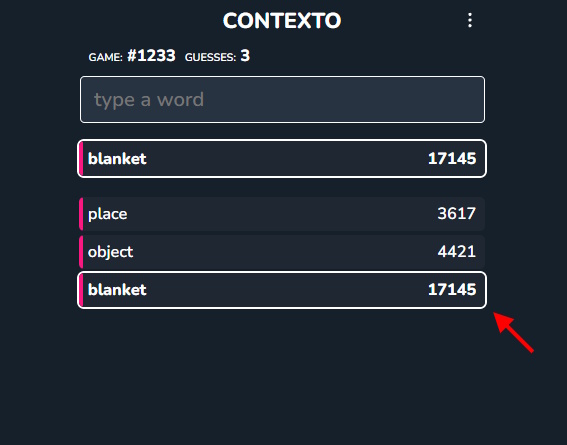
The very first mistake is randomly guessing words. You might think that this strategy might work, and it is the fastest way to get the feedback on your guesses, but it can quickly lead to a frustrating condition when you’re stuck with vague words that don’t lead anywhere. Here is how you can fix this mistake.
How to Fix It: Use Anchor Words to Find the Contexto Category
Instead of making random guesses, consider using the anchor word method. These are broad or vague words that can help you identify the context of the answer. Here are some great anchor-word examples:
- Object-based words, such as a tool, gadget, or any commodity.
- Action-based words such as play, climb, sing, and more.
- Abstract concepts such as emotion, ideas, grief, and more.
While starting the game Contexto, you must not be concerned about guessing the answer straight away. Rather, use these words to get an idea of the word’s neighbourhood. These anchor words will drop hints that will help you guess the answer fast.
Contexto Mistake #2: Ignoring the Color-Coded Rankings
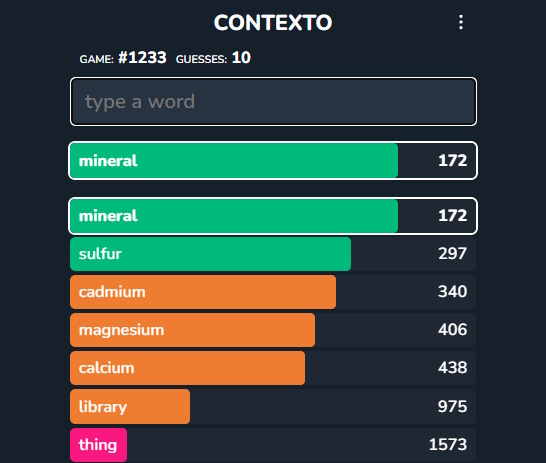
While playing Contexto, you will notice the random numbers, or as we call it, Contexto score or ranks, beside your guesses and the respective color feedback as well. There are three colors you’ll notice while playing Contexto: Green, Orange, and Red. Green typically appears for ranks under 300, orange for mid-range guesses, and red for ranks above 1,000, though the exact thresholds may vary.

How to Fix It: Understand The Color Coded Feedback
Each color in Contexto hints at how to plan your strategy for guessing words in Contexto. So, this is what the color-codes in Contexto tell you:
- Red: You are far off. Try a completely different word category.
- Orange: You are in the right area. Try related words in the same topic.
- Green: You are close. Try very specific words that are directly related to your best guess.
Contexto Mistake #3: Getting Stuck in Synonym Loops
Another common trap is for experienced players. You may get a green color guess and then continue typing the synonyms of the same word. At times, the scores can barely improve, and suddenly, you feel stuck. Well, this is how you can get out of the Synonym Tunnels trap in Contexto.
How to Fix It: Stop Using Synonyms in Contexto Guesses and Pivot Quickly
Synonyms share similar dictionary meanings, but Contexto ranks words based on how they are actually used in text, not what they mean. Two synonyms can rank very differently if they appear in different types of writing. Instead of finding another word for a closer guess, you need to find a word that relates to the real-world usage.
If you notice that the guesses are getting stalled, try pivoting the context. Try switching from a noun to a verb word or an object to an action word. This can often help you jump into the semantic cluster of the answer. This can boost your progress and help guessing the target word fast. You should also check how we boost our progress with unlimited guesses in today’s Letroso answer.
Contexto Mistake #4: Not Testing Common Contexto Answer Categories
Finally, another mistake is falling into the trap of guessing words from a repeating set of categories. Ignoring these hints will lead to a missed opportunity to get the answer fast.
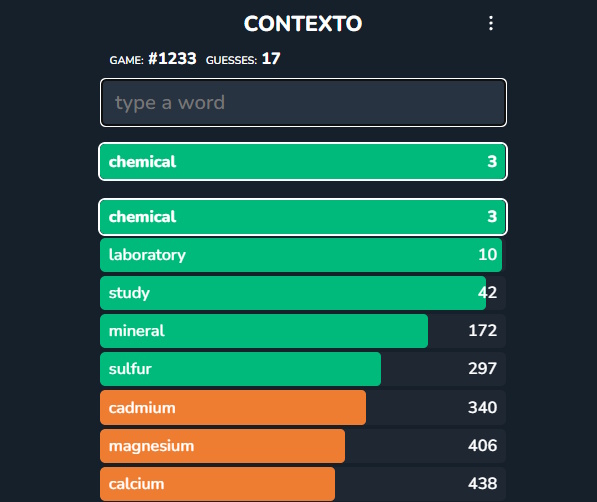
How to Fix It: Test These Top Categories Early (Abstract Concepts, Food, Locations)
From my experience of playing the puzzle daily, here are some common Contexto categories that appear often:
- Food and Everyday Items: Fruits, Meals, a Knife, and more.
- Abstract Concepts: Truth, Confidence, and more.
- Profession: Lawyer, Doctor, and more.
- Locations: House, Work, Industry, and more.
You can test words from these categories, and most of the time you will find something or other in common. If you’re a fan of word-guessing puzzle games like this one, do check out today’s Wordle hints to test your puzzle solving skills further.
Advanced Contexto Tips: How to Solve the Puzzle in Fewer Guesses
So, once you have avoided the big mistakes, it is time to refine your tactics and use these advanced tips and tricks to take your game to the next level. Contexto is not about getting faster, but you need to consider the feedback from your guesses and think differently.
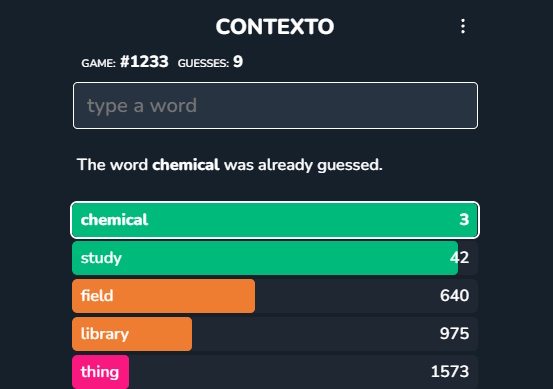
- Start your guess with broad category words like ‘food’, ‘work’, or ‘animal’ to figure out the general topic first. Once a broad word ranks well, narrow down your guesses toward more specific words within that category. For example, if ‘food’ lands in the green or orange zone, try ‘fruit,’ ‘bread,’ ‘snack,’ or ‘drink’ to zero in on the answer.
- Try guessing the opposite of a word you have already tried. If both a word and its antonym rank poorly, the entire topic area is likely wrong, and you should switch to a different category. If the antonym ranks significantly better than your original guess, explore that new direction instead. For example, if ‘light’ ranks at 900 but ‘dark’ drops to 350, shift your focus toward words related to ‘dark’ — like ‘night,’ ‘shadow,’ or ‘black.’
- Do not just look at the color of your guess; instead, pay close attention to the ranking number. Two guesses can both appear orange, but a jump from tank 1,300 to rank 800 means you are moving in the right direction. A drop in rank number always matters more than the color staying the same. Use the rank change between guesses to decide whether to keep going in the same direction or switch to a new one.
- Stop thinking about what a word means and start thinking about where it actually shows up in real writing. The AI model behind Contexto was trained on a large collection of text, so words that frequently appear in similar contexts — news articles, textbooks, everyday conversation — will rank close together, even if their dictionary definitions are unrelated. For example, ‘court’ could rank near ‘judge,’ ‘ball,’ or ‘king’ depending on which sense of the word the answer is closest to.
- If your guesses are stuck around the same rank, try switching the type of word you are guessing. If you have been trying nouns, switch to verbs or adjectives. For example, if ‘fire’ ranks well but related nouns like ‘flame’ and ‘smoke’ do not improve your rank, try action words like ‘burn,’ ‘heat,’ or ‘spread.’
With that, ends the list of common mistakes in Contexto. Once you understand how the algorithm of the puzzle works on concepts or contexts rather than the dictionary meanings, you will get today’s Contexto answer sooner than ever.
The Contexto algorithm calculates word similarity by comparing them with large text databases and ranks them based on context.
A good average guess count to solve a Contexto puzzle is within 15-20 guesses. But consistency matters more than speed here.
Your Contexto guess can become red even with the same meaning because they might have different contexts.
Start with broad, neutral anchor words like Food or Work to identify the category of the answer easily.
Yes, you can play the previous Contexto puzzles on the same site by pressing the three dots and selecting a particular date of the puzzle.