Beebom Score
Wolverine sits comfortably as my favorite Marvel hero right beside Spider-Man. I grew up with Hugh Jackman’s portrayal of Wolverine in the X-Men movies, along with Steve Blum and Cal Dodd’s masterful interpretation of the ol’ canucklehead across various Marvel media.
So, when Insomniac announced Marvel’s Wolverine back in September 2021 at the PlayStation Showcase, I was pumped. After countless hours swinging through the Marvel’s Spider-Man series with both Peter and Miles, I was eager to see their take on Logan, since he’s an incredibly complex character.
I expected Insomniac to take a similar approach to the 2009 X-Men Origins: Wolverine tie-in game with the combat. The story was messy, sure, but the combat was visceral, brutal, and perfectly showcased Wolverine’s violent power fantasy, which is exactly why I think it’s still an enjoyable game.
After spending 25 hours with it, I can confirm that Marvel’s Wolverine is a solid action game in my review. It’s nowhere near as bad as some of the criticism would have you believe, but it’s also far from the ultimate Wolverine game that many, including me, were hoping for. It has plenty going for it, but significant flaws keep it from reaching the heights of Insomniac’s Spider-Man series.
Wolverine’s Origin Gets More Complicated than It Needs to Be
Insomniac takes some big creative swings with the story in Marvel’s Wolverine, and not all of it lands. On the surface, Logan is dealing with amnesia, and he needs help to regain his memories and remember who he was before he became a weapon, while doing what he does best, a.k.a. tearing enemies to shreds.

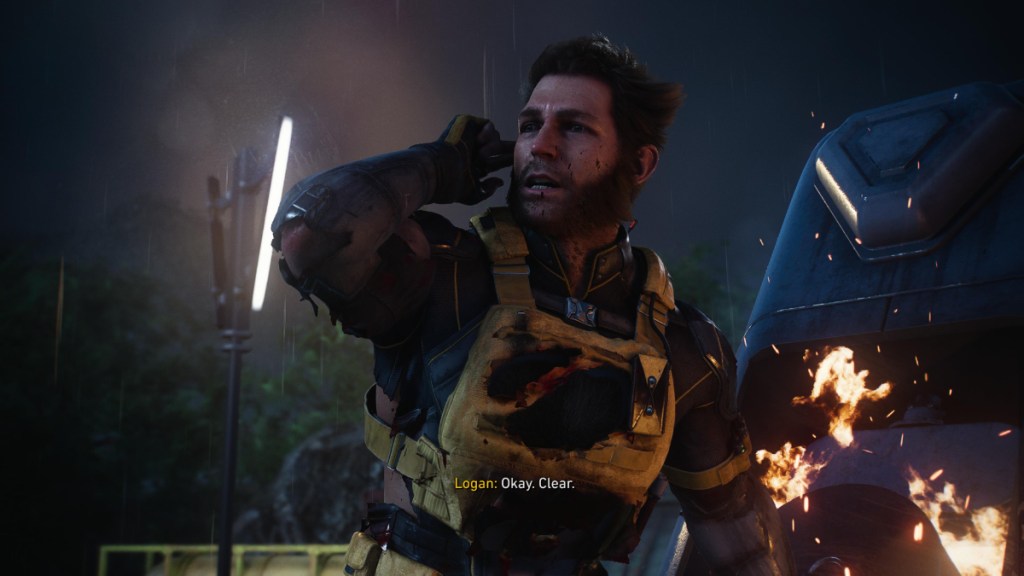
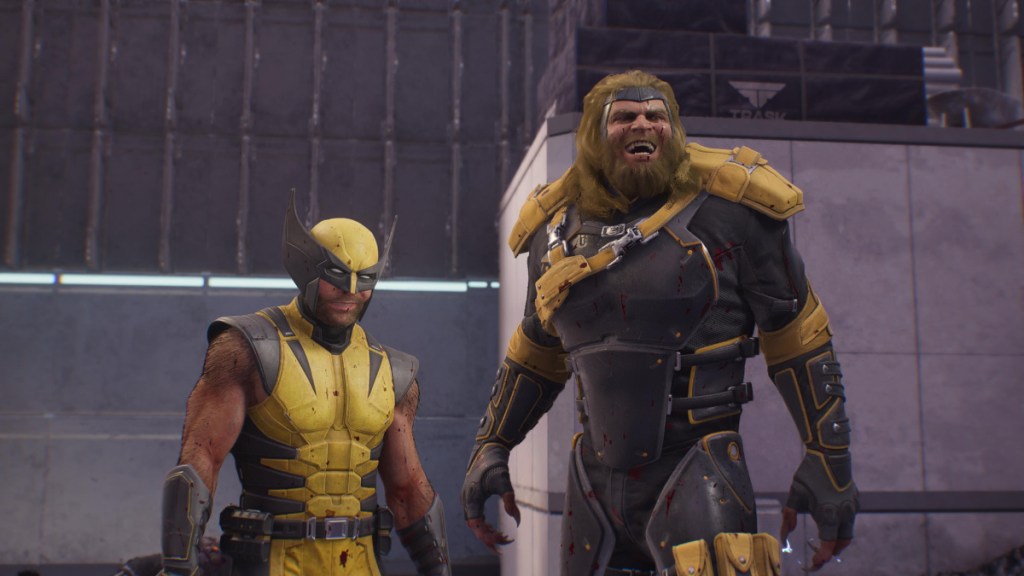
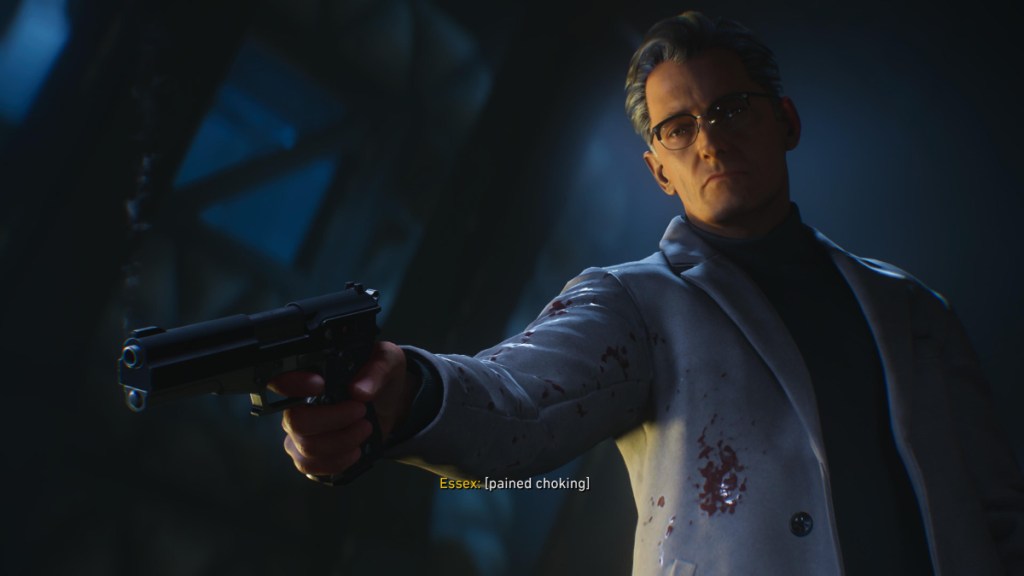
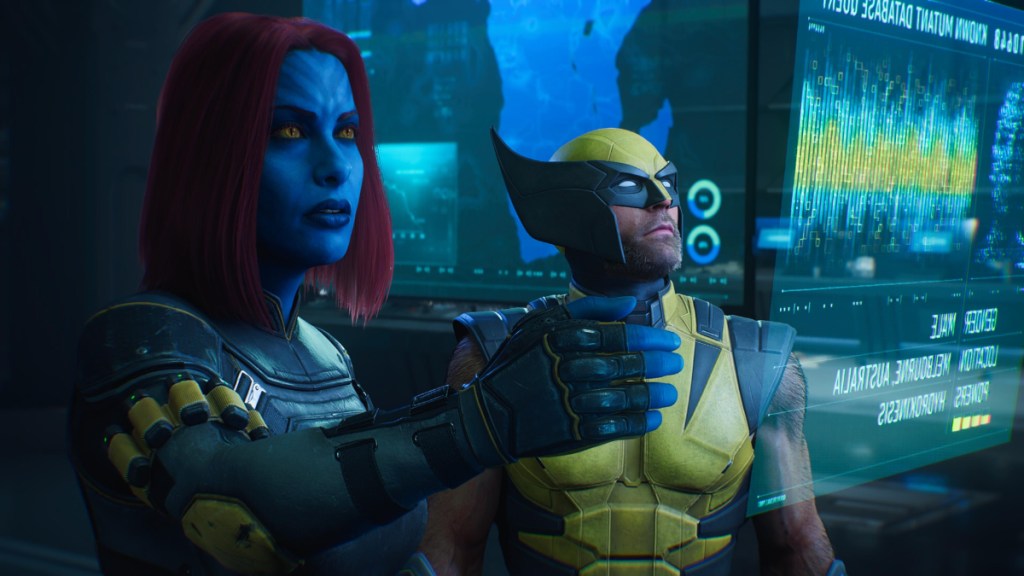
You have your usual Marvel MacGuffin, the Helix Engine, a device capable of activating dormant mutants. Nathaniel Essex wants the engine to grow the mutant population and build a better future for his own kind.
Of course, in the middle of it all, there’s Bolivar Trask, an anti-mutant figurehead, who kidnaps mutants with the Reavers, deploys Sentinels, and delivers the usual “the world isn’t big enough for the both of us” brand of villainy.
That’s what the first act of Marvel’s Wolverine deals with. In the second act, you start to uncover Logan’s true origins, and it’s a far cry from Barry Windsor-Smith’s Weapon X comic, changing how Wolverine becomes the killing machine. The Helix Engine becomes priority number one for endgame villains like Lady Deathstrike and Essex.


However, the final act takes a nosedive, turning a solo Wolverine outing into an X-Men setup game. I’ll slice into spoilers now: Insomniac draws inspiration from comic writer Chris Claremont’s unused idea, bringing popular X-Men villain Apocalypse into the fray and making him the mastermind behind Logan’s adamantium-infused origin.
It’s incredibly bold, but doesn’t quite land for a Wolverine-focused game. The writing falls flat when the game introduces these larger-than-life elements. By the end, the story is revealed to be built on a centuries-long conflict between the Phoenix Force, Jean’s ultimate avatar, and Apocalypse’s Horseman of Death, which in this case is Wolverine.
It’s anything but grounded, but rich in spectacle, which, to me, doesn’t quite fit for an introductory Wolverine story. As the narrative grows ambitious, it loses much of the personal charm and intimacy that made the first act so compelling.
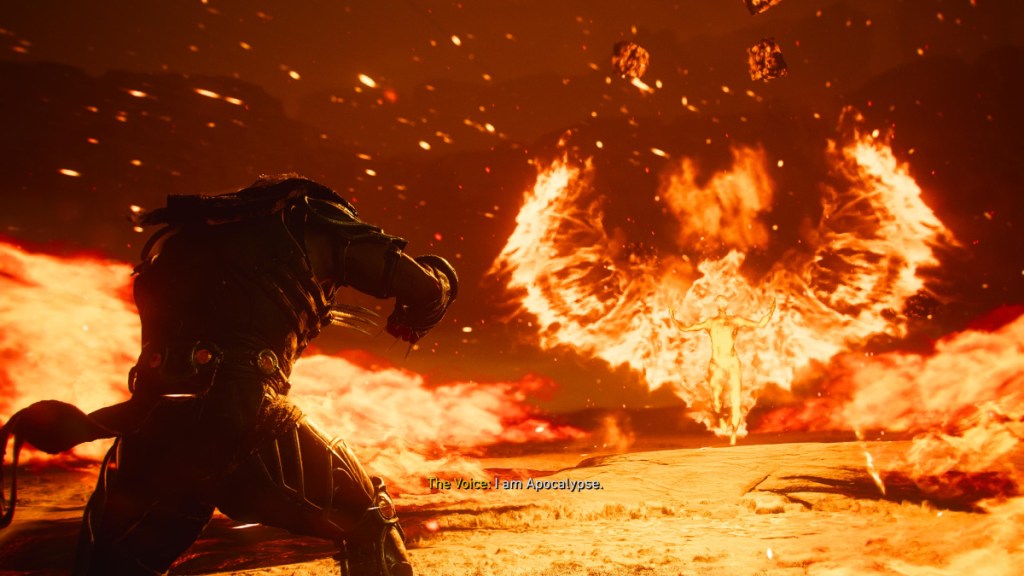
The balance between Logan’s personal stakes and the overarching X-Men story never quite comes together. But thanks to incredible performances from Liam McIntyre, Krizia Bajos, and Troy Baker, I remained hooked until the very end, even as I found myself conflicted by some of Insomniac’s narrative choices.
Had Insomniac taken a more grounded route like Larry Hama’s Wolverine stories in Madripoor, the story might have been better executed. I’m a sucker for character studies and less interested in a ‘jingling keys’ approach or endless fan service, so I was more invested in Logan’s personal journey before the bombastic spectacle took over.
However, I did appreciate that Insomniac didn’t play it safe with the story, even if its ambitious direction doesn’t always land.
Combat Is Where the Ol’ Canucklehead Gets Mean
What Insomniac misses with the story of Marvel’s Wolverine, they make up for in the combat. The combat system is ridiculously good, and very reminiscent of the X-Men Origins: Wolverine game. It’s brutal, fluid, responsive, and gives you multiple ways to slice through enemies.
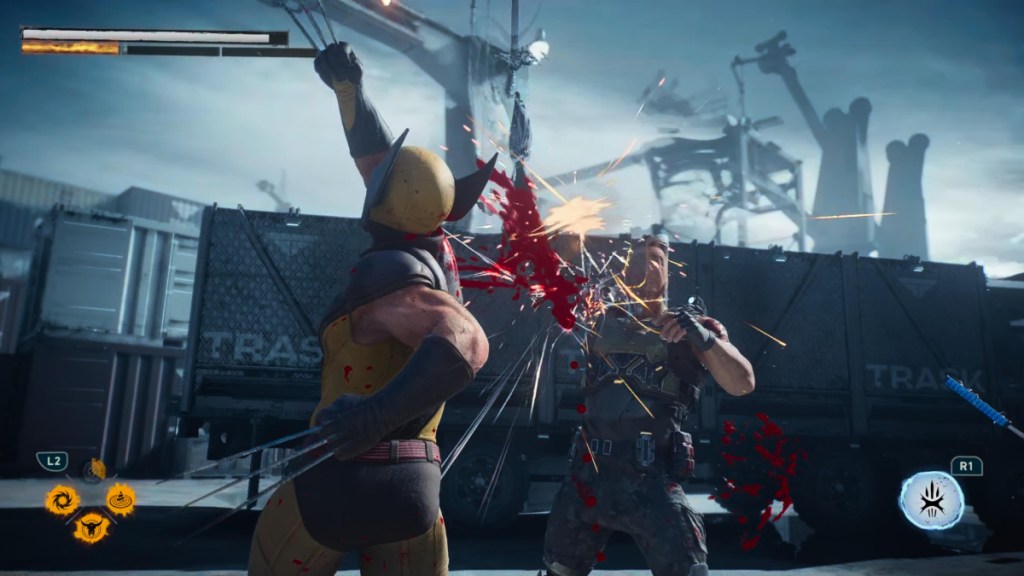
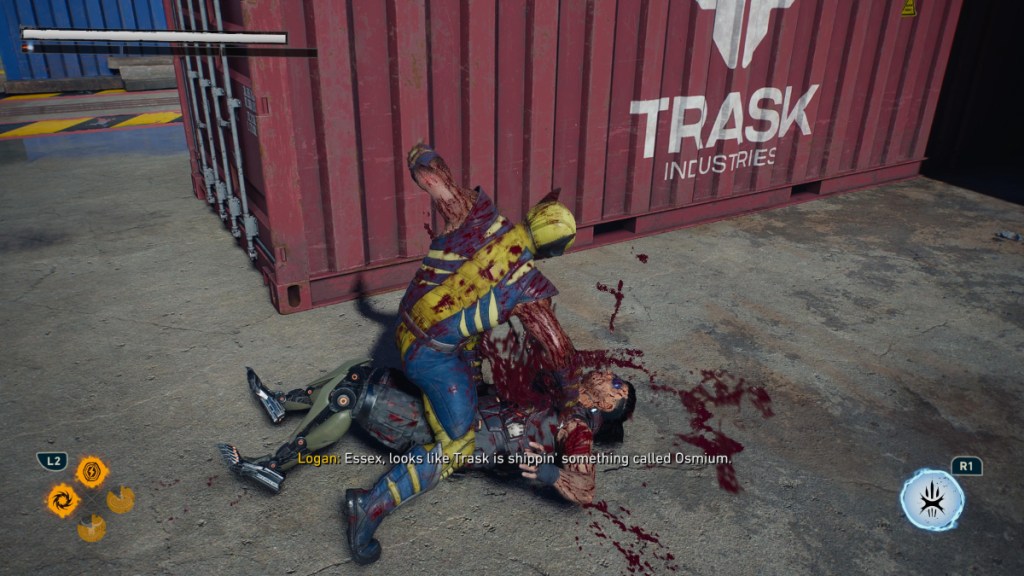
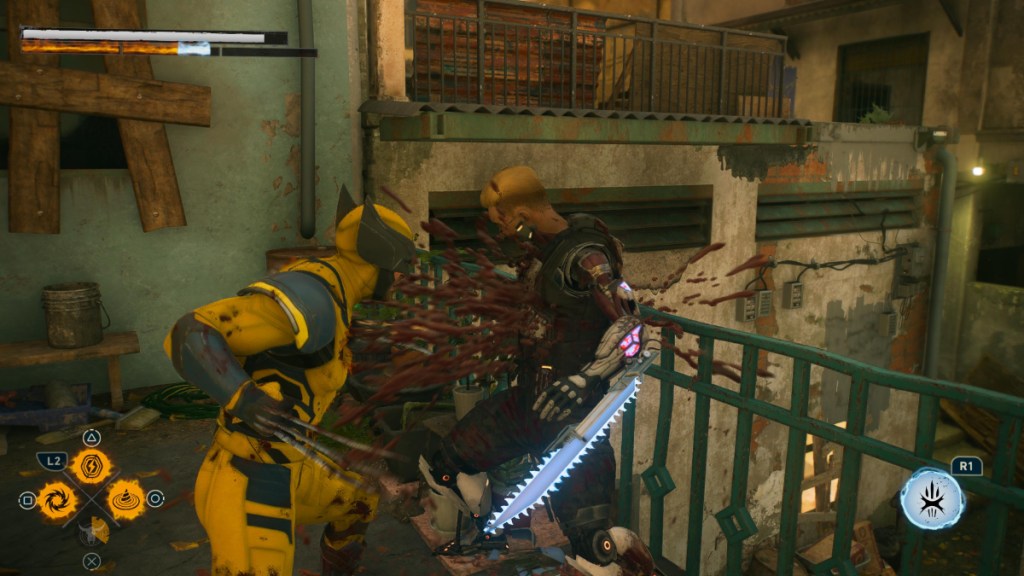
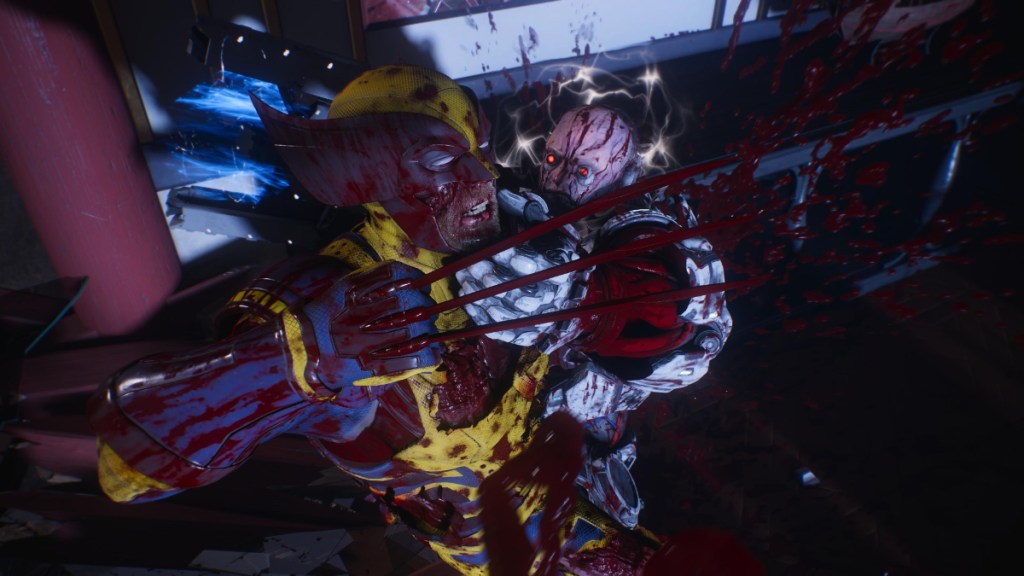
The primary attacks with Square and Triangle start a combo, while parrying staggers enemies to perform a satisfying Barrage, which you can use to build your Rage Tier or restore health, depending on the skills you have unlocked.
The Skill Tree, while not as extensive, still works wonders in combat, giving you opportunities to implement many Special Techniques. “Overwhelm” and “Tornado Spin” were by far my favorite Special Techniques, offering a quick way to isolate enemies while controlling entire crowds with adamantium-coated swirls.
The most enjoyable part of Wolverine’s combat is building up to Rage Tier 3, which bathes the screen in greyscale and lets Logan go completely feral, ripping the hands and legs off Reavers and the Hand with continuous Critical Strikes.


Seeing chunks of Logan get blown off with Insomniac’s new blood technology was genuinely impressive, especially when it feeds directly into his Last Stand ability at Rage Tier 2, allowing him to recover from a fatal blow in exchange for his Rage Tier bars.
Adaptations and passive buffs kept combat fresh, as I built Logan to generate and maintain his Rage mode longer, unlocking AP by completing Nightmare Trials and finding Whisky Bottles in Marvel’s Wolverine.
Playing on “The Best There Is” difficulty is no joke, especially when multiple enemies or mini-bosses gang up on you. But it also pushes the combat beyond run-of-the-mill button mashing, forcing you to use every shiny trick in Wolverine’s adamantium arsenal.
Madripoor and Japan Are Gorgeous Wastes of Space
Every location in Marvel’s Wolverine is stunning, from Madripoor to Japan and Canada. The problem is that these beautiful hubs feel strangely hollow when there’s so little opportunity to explore them. You’re largely confined to dense streets and the occasional rooftop, following a one-note linear path through environments that feel like they were built to be explored more freely.
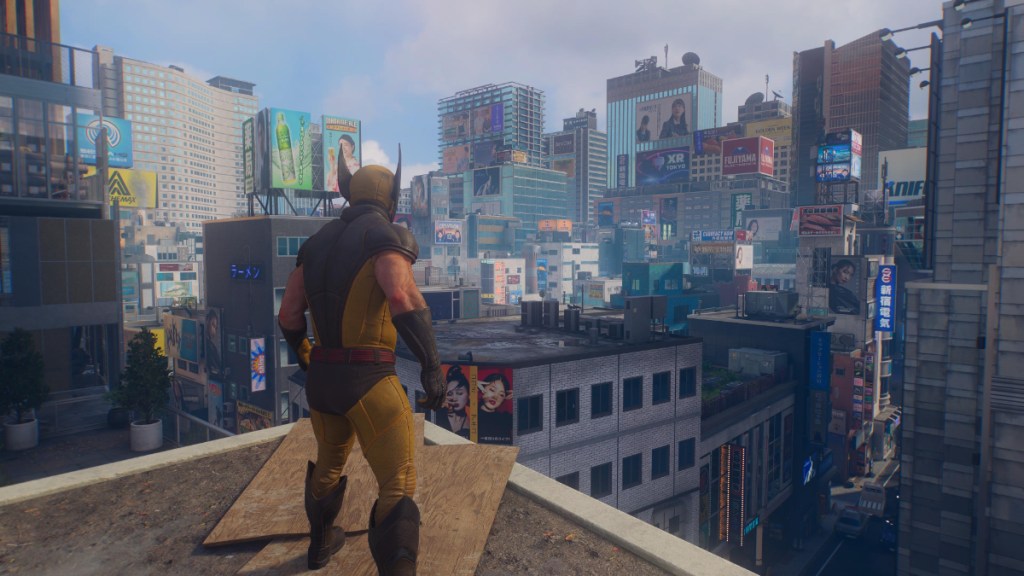
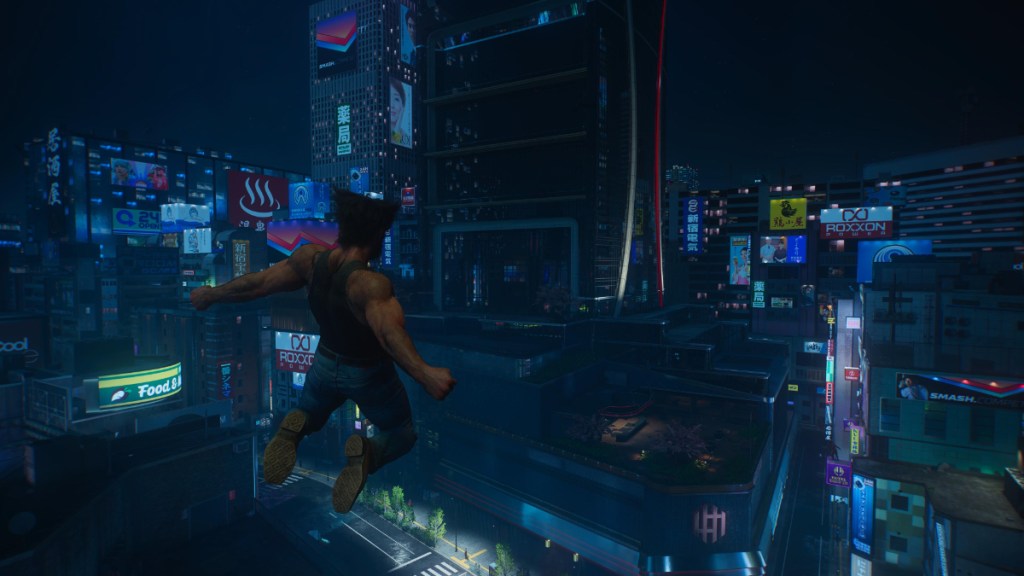
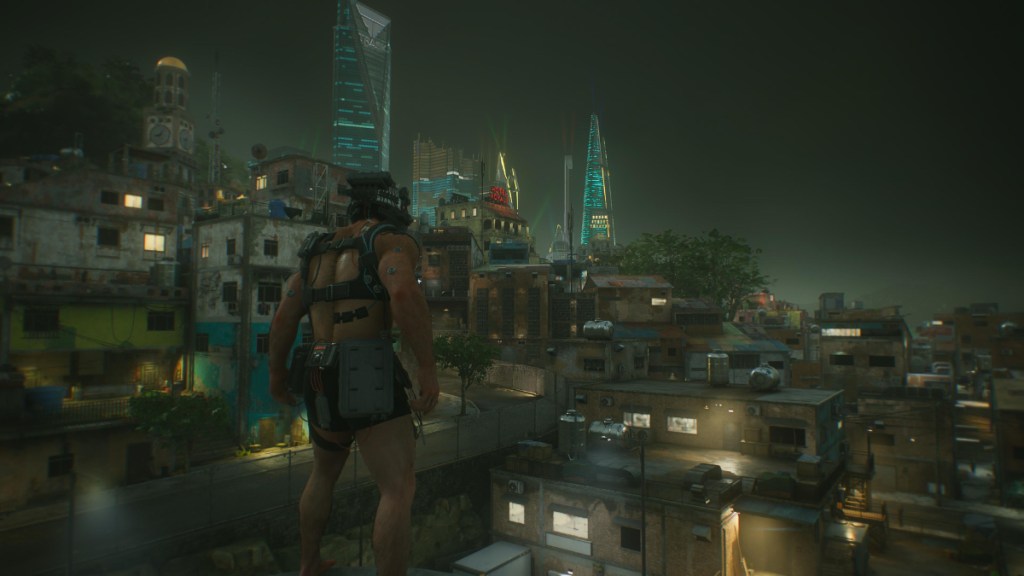
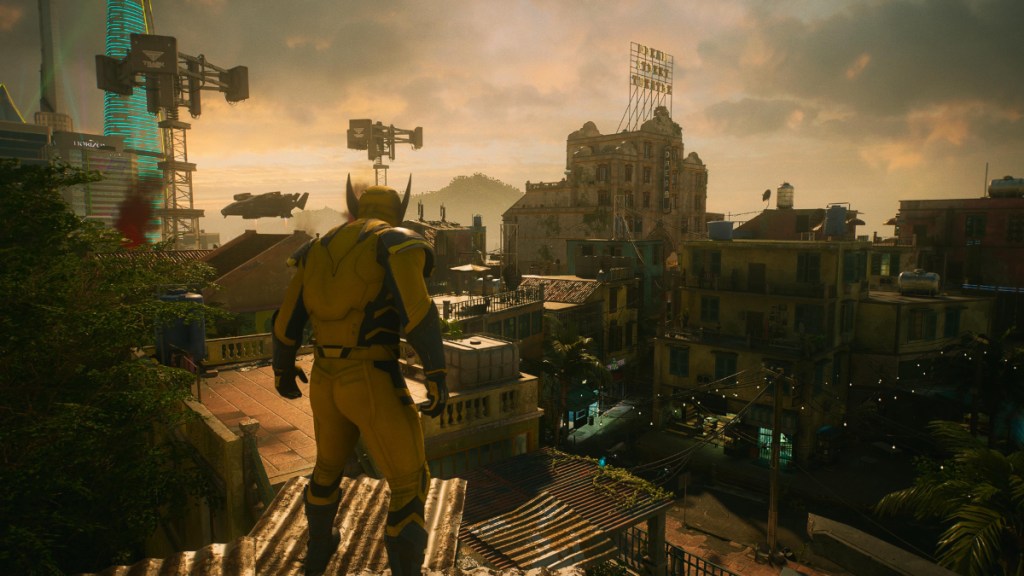
For the majority of my playthrough, I stopped to appreciate the world and capture clicks with Insomniac’s vastly updated Photo Mode, which only made me more frustrated that these locations weren’t explorable.
I’m not saying they should be as open as New York in the Marvel’s Spider-Man series. But given how Logan can jump, slide, and launch from one building to another, these hubs feel criminally wasted, with little to discover beyond Material Crates and Whisky Bottles.
This brings me to another problem with the Marvel’s Wolverine world design: Logan’s smooth traversal is extremely underutilized. You have Launch Points throughout Madripoor and Japan, yet you can’t use them because you have to stick to a one-note world design. Moreover, Logan can only climb certain surfaces with his claws, which makes the “exploration” all the more limited.
Sliding across rooftops, leaping from building to building via Launch Points, and using ziplines to traverse densely packed areas are some of Wolverine’s most enjoyable movement mechanics. But invisible walls and level boundaries will get in your way too often.
Just Follow the White Paint, Bub
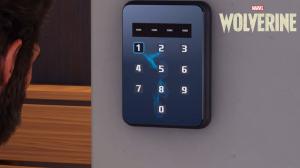
The most controversial element of Marvel’s Wolverine is how far it takes handholding players with white cloth/paint. What makes it even more egregious is that it’s a linear game with only a handful of exploration opportunities, which makes the white markers stick out like a sore thumb. Meanwhile, the blue scent trail isn’t nearly as bad.
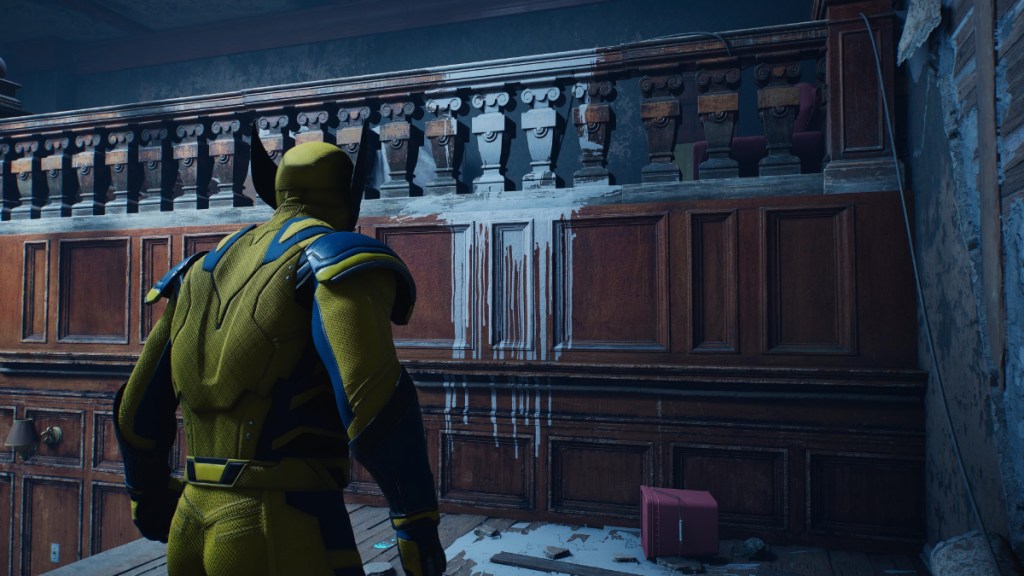
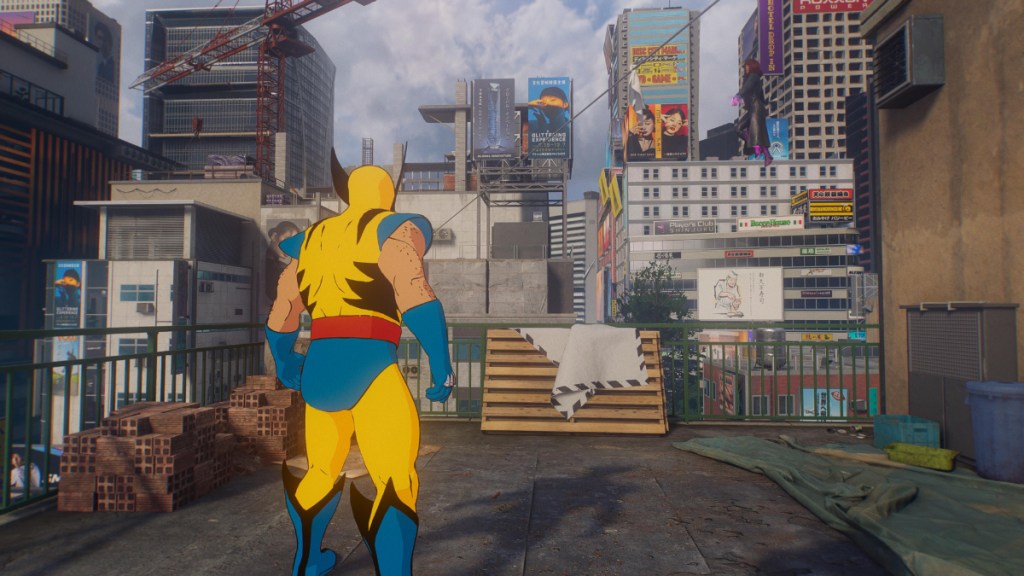
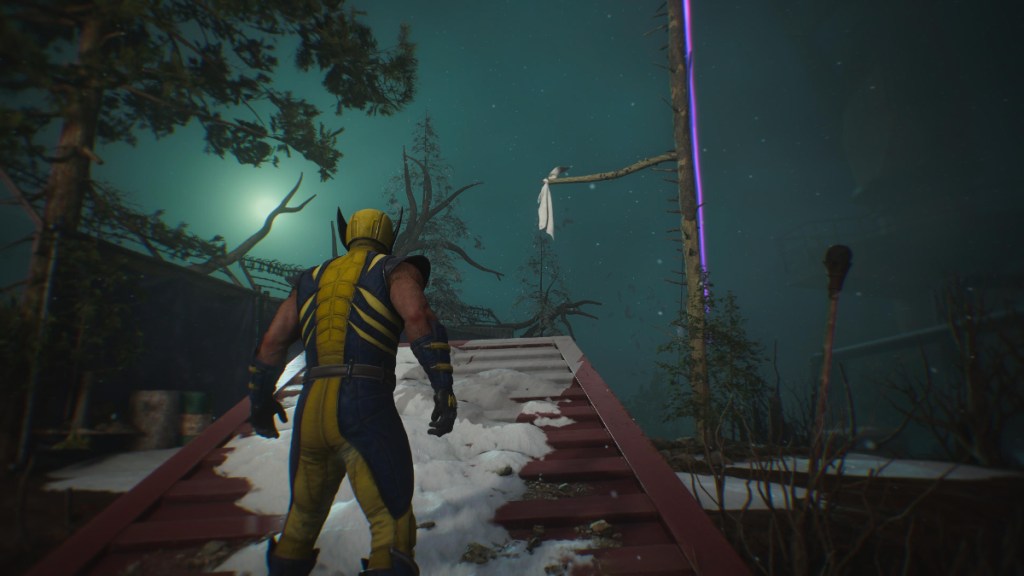
Sections with white paint/cloth markings where there’s nowhere to go but forward, especially during the traversal Nightmare Challenges, feel like Insomniac is afraid to let players off the hook. There’s a fine line between helpful guidance and excessive handholding, and Insomniac paints that line with white markings so you don’t lose track.
On the other hand, the blue scent trails or the Marvel’s Wolverine “fart gas trail” represent Logan’s feral senses, guiding him to characters during specific story sections or collectibles such as Whisky Bottles.
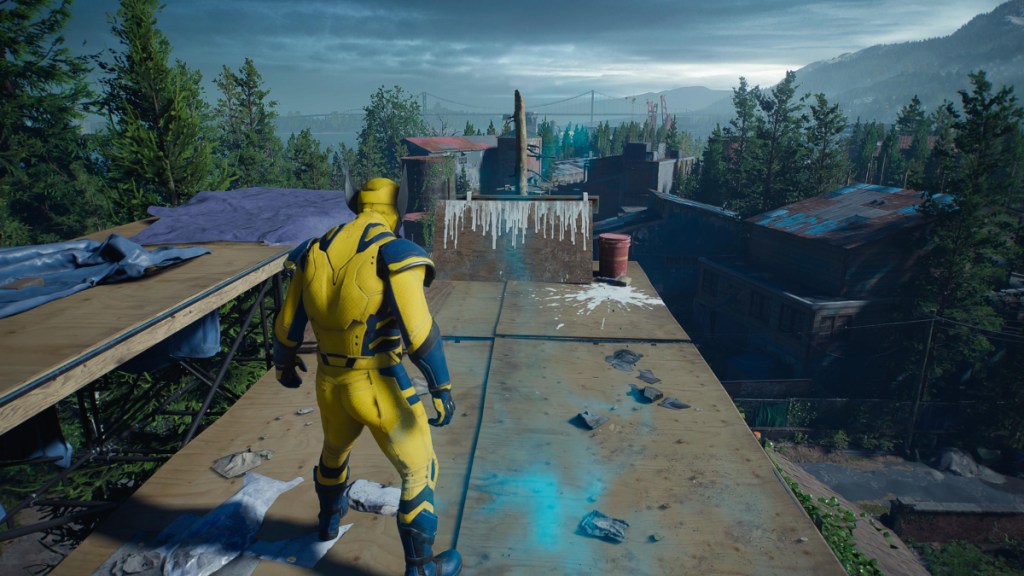
It’s still handholding, yes, but they aren’t as intrusive as the white paint/cloth markers, and only appear in a handful of sections. Thankfully, Insomniac reduced their opacity in a quick hotfix, and they now look the way they should have from launch.
Additionally, Marvel’s Wolverine is rated 18, so it’s targeted towards adults and mature audiences. Yet, the handholding made me feel like I wouldn’t know where to go without it. I’d have much preferred they remove the white markings and relegated Logan’s senses to R3 on the controller.
Despite everything, the blue scent trails didn’t bother me as much as the white cloth/paint, since it only appears when Logan’s picking up someone’s scent or a collectible is nearby. It’s a linear experience, yet the game feels the need to guide you every step of the way.
Liam McIntyre Carries Wolverine with a Standout Performance
Despite all the game’s faults, Liam McIntyre’s performance as Wolverine is nothing short of spectacular. Logan is an inherently complex character, balancing a deeply human vulnerability with the violence and rage that have defined him for decades, making him no easy character to portray.
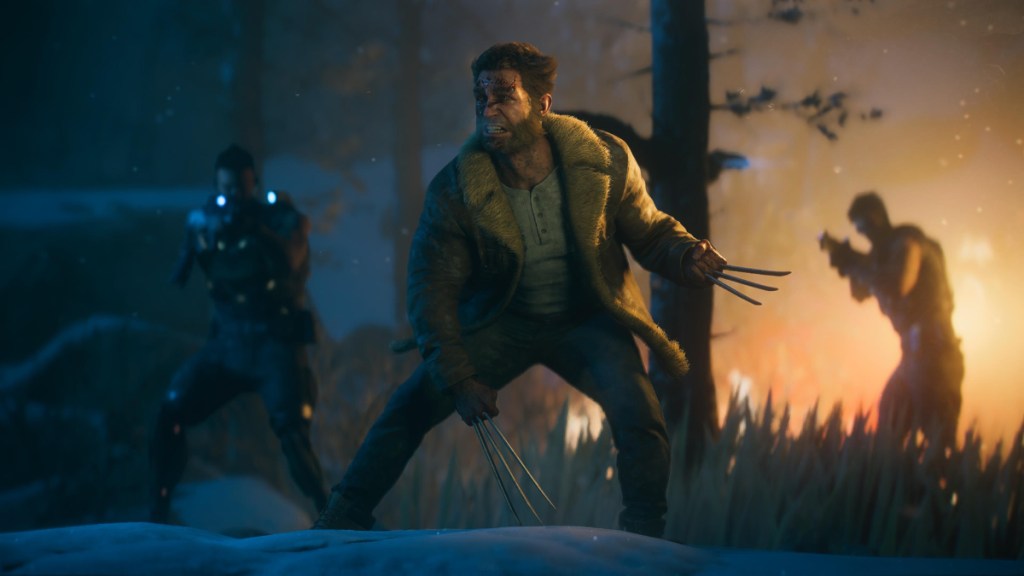
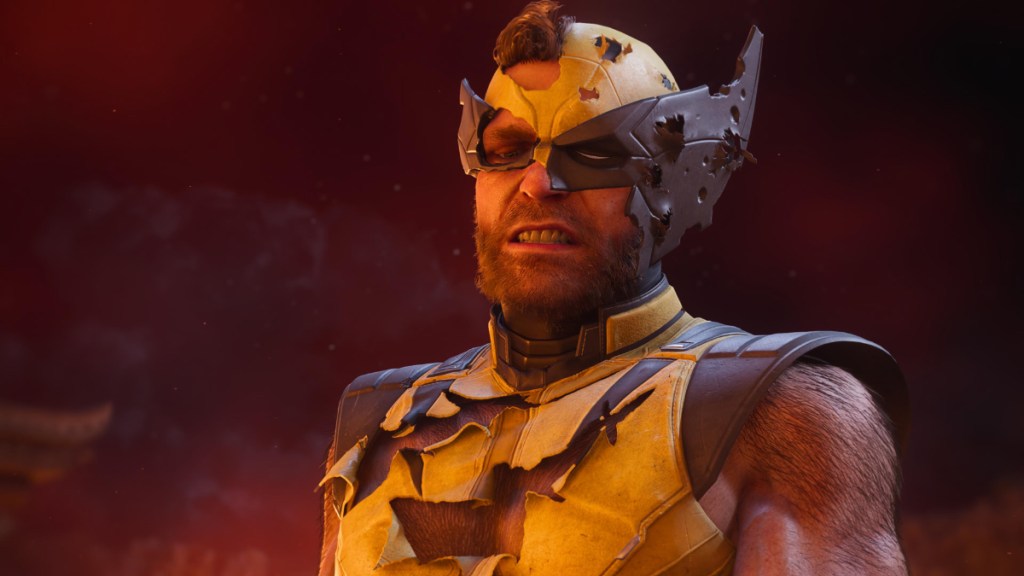
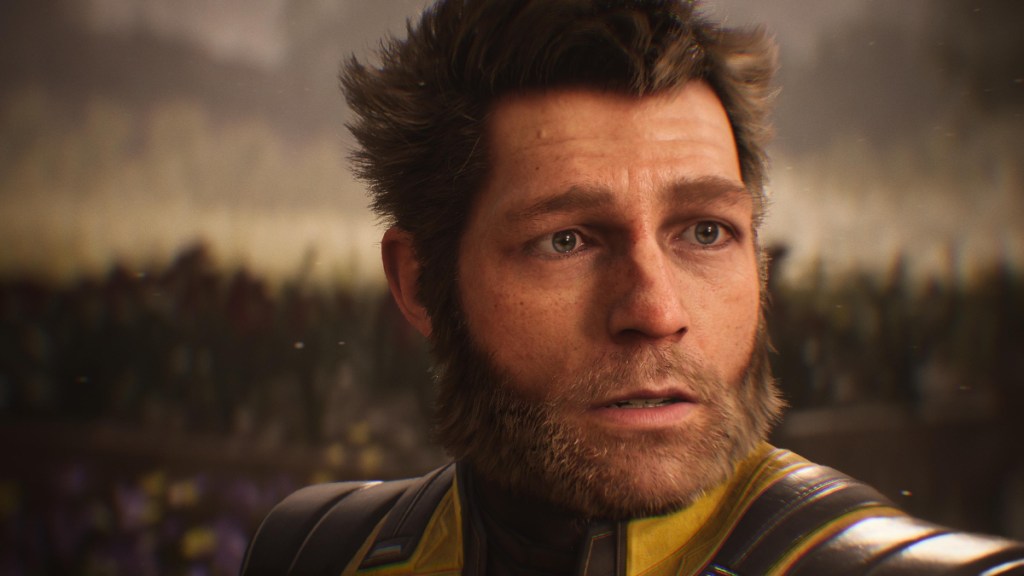
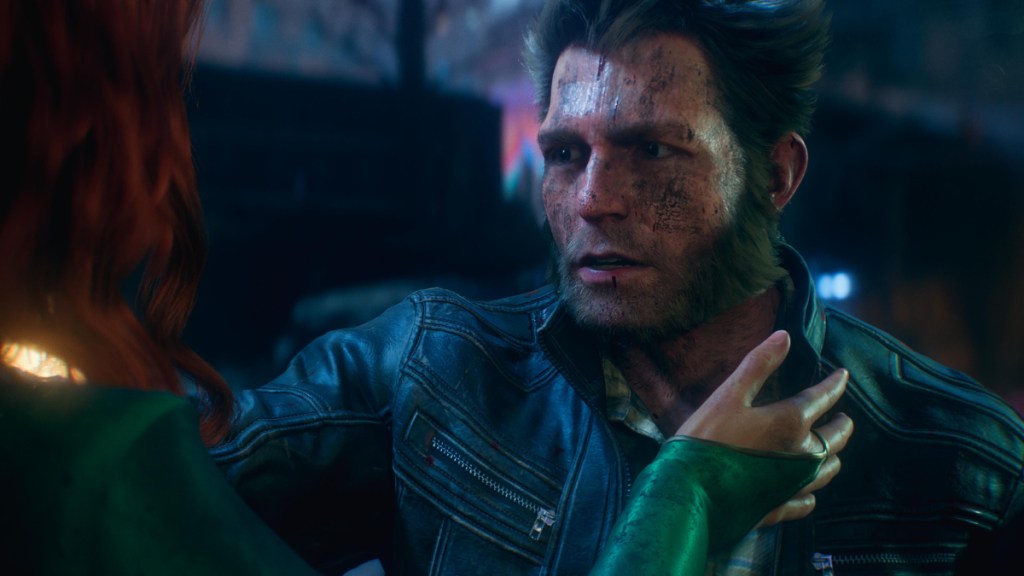
McIntyre handles that duality remarkably well, delivering a nuanced performance that captures Logan’s humanity and his yearning for belonging without ever losing sight of the monster lurking beneath the surface.
Even though I’m not a fan of Logan and Jean as a couple (I’m more of a Logan and Mariko shipper), McIntyre and Bajos have incredible chemistry from the moment they meet, making their relationship worth rooting for.
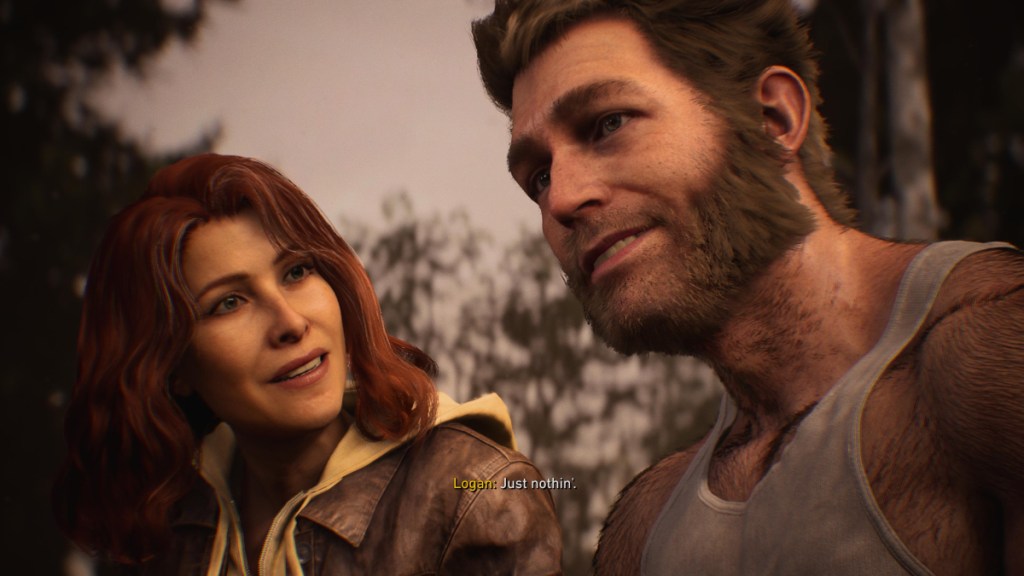
Not much needs to be said about Troy Baker’s performance as Mister Sinister; he’s incredible as always. However, Brett Gipson’s portrayal of Sabretooth surprised me. He’s so compelling, even while tearing Logan apart, that I’m excited to see him return in a Wolverine sequel, if there is one, or even the X-Men game.
For all my qualms with the game, its performances remain a standout, with Liam McIntyre’s portrayal of Wolverine ranking alongside Yuri Lowenthal’s iconic performance as Peter Parker in Insomniac’s Spider-Man series.
Performance: An Adamantium-Smooth Frame Rate on My Base PS5
Marvel’s Wolverine is easily Insomniac’s best-looking and best-performing game yet, and it runs like a mutant on a mission. Across my 22-hour playthrough on the base PS5 (disc edition), the game held a steady 60fps in its default “Performance” mode, complete with ray-traced reflections throughout all four unique areas.
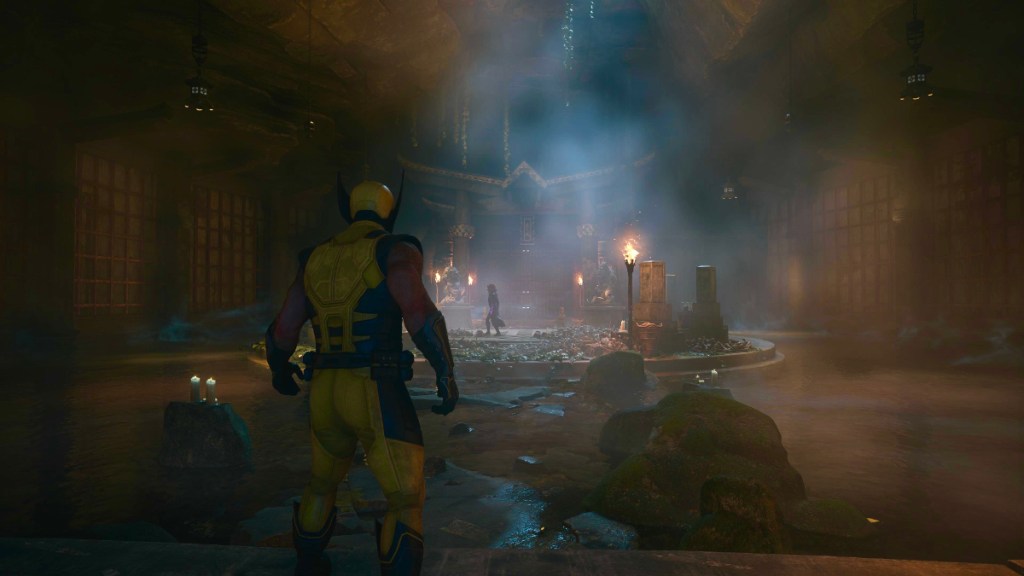
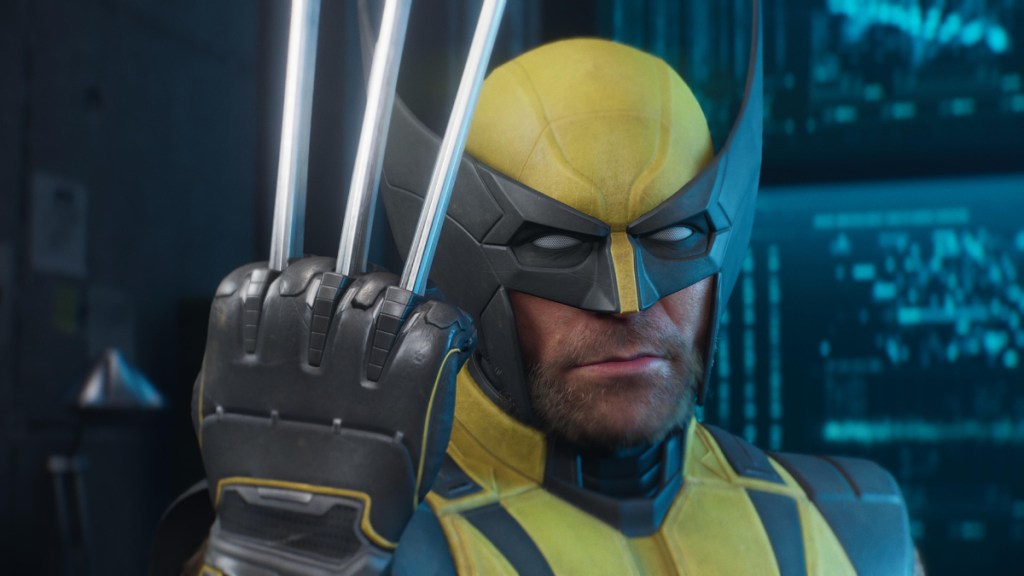
The game looks sharp, even on my 1080p TV, and I could see every pore on Logan’s face during close-up shots. Thanks to the PS5’s SSD, getting back into the bloody action took no longer than 2 seconds. Mission replays and Nightmare Challenges loaded as quickly as Wolverine unsheathes his claws, so the performance definitely doesn’t end up with the game’s woes.
However, I did run into one hilarious bug where Logan glitched out of the map while I opened Photo Mode to capture a shot of the Animated Suit. I’d hardly call it a performance issue. The blood and gore looked great on the base PS5, and I hope Insomniac brings the game’s detailed suit damage to Marvel’s Spider-Man 3.
Verdict: Bub, Even Your Healing Factor Can’t Fix This One
Marvel’s Wolverine isn’t a bad egg in Insomniac’s basket full of good eggs. It’s more of a cracked one. The developers still cooked a dish with it, but it fails to be as delicious as their previous web-filled offerings. The combat feels fluid and crunchy, Liam McIntyre and Krizia Bajos deliver phenomenal performances as Logan and Jean, the set pieces dazzle, and the game looks stunning on a base PS5.
However, the ambitious scale of the story, which is clearly a setup for the X-Men game, limited exploration opportunities within the gorgeous locations, and the egregious use of white paint and cloth, despite the mission design being linear, bog it down significantly. I had a good time with it, and I reckon most will, but maybe not at the premium $70 price point.
If you’re a fan of the character and want a brutal, visceral 15–20-hour standard action experience with excellent combat that feels surprisingly reminiscent of 2000s PC gaming, Marvel’s Wolverine will be right up your alley.
But if you’re looking for something that builds upon what Insomniac accomplished with Spider-Man, you might want to slice this one off your wishlist for now and wait for a sale. Wolverine has the adamantium skeleton of an incredible game; however, what we got is ultimately just “good”.