Beebom Score
Fallout is my favorite IP in all of entertainment. I’ve spent an embarrassing amount of hours drudging through its many wastelands, falling asleep to Oxhorn lore dumps, and theorizing about the instigator of the Great War. My fanaticism for this franchise has ballooned to the point that I instantly noted how Dinky the T-Rex is facing the wrong way in the teasers and how Hank is sporting a Pip-Boy 3000 Mark IV in the Season 2 trailer.
So you can trust me when I say that the first season of Amazon Prime’s Fallout was excellent. The themes were appropriately dark, the humor was devilish, the capitalist commentary was sublime, the authenticity was meticulous – every single frame felt like Fallout. Nothing felt ‘dumbed down’ for TV. It communicated the harsh realities of a post-apocalyptic nightmare expertly, and by the finale, it eclipsed the ‘good video-game adaptation’ moniker, leaping straight into compelling science-fiction territory.
Fallout Season 2 builds on its predecessor’s success, showcasing the same cogent understanding of the source material. It feels bigger, bolder, and more keen to expand on the Fallout: New Vegas canon in ways that are both brilliant and baffling. Its recreation of the Mojave wasteland and the vaunted Strip are pitch-perfect, with enough fan-service to leave you pointing at the screen repeatedly like that DiCaprio meme.
From Alaska to the Atomic Wrangler, I’ve seen elements of the Fallout universe I never expected to be captured in live-action. In fact, the show is almost insistent on showing you these deep cuts. But it always shies away from fully exploring them or delivering exposition in the areas that truly matter. It broadly tells you that the Courier’s actions (in FNV) were ultimately for naught and the New Vegas Strip was inevitably headed for ruin, but the reasons it provides feel ambiguous at best and razor-thin at worst.
This lack of deliberation can be chalked up to severe pacing issues and a general lack of finesse –finesse that Season 1 packed in spades. While every narrative thread displayed on-screen is intriguing enough to leave you wanting more, their culmination is rarely as cohesive or convincing as Fallout’s first merry-go-round. I could say the same for the themes and that all-important touch of nuance that the first season managed to nail.
That’s not to say that Fallout Season 2 doesn’t make for some good TV. Even in its worst moments, it’s a charming voyage to the wasteland, packed with interesting characters, absorbing mysteries, and some stellar acting performances. Ultimately, however, it pales in comparison to its predecessor and is a notch below what Fallout can, and should, be: compelling science fiction.
Main Quests, Side Quests, and Everything in Between
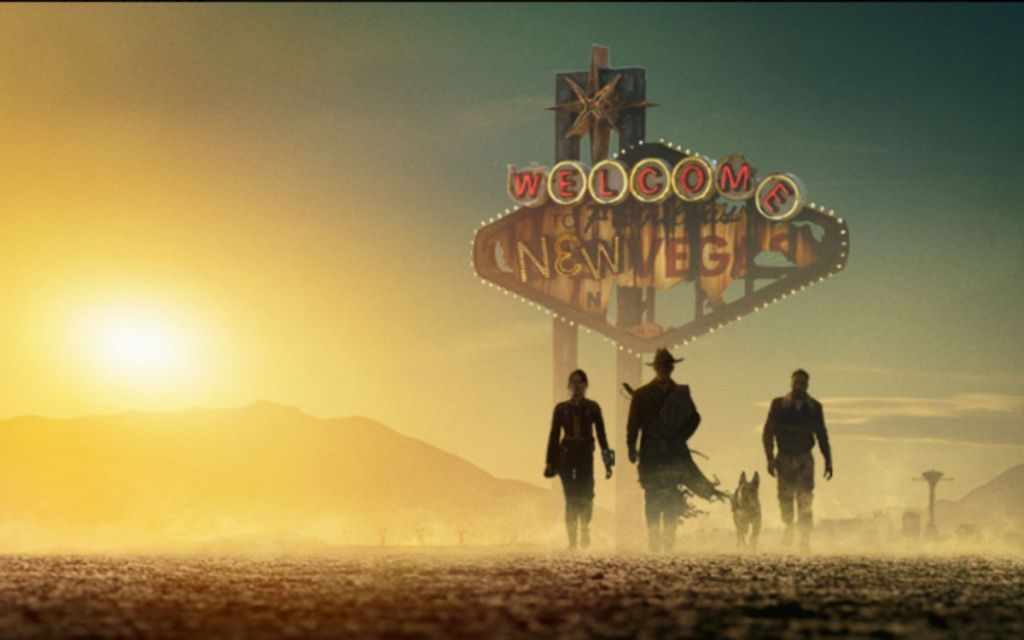
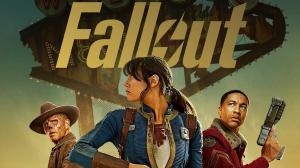
At the risk of stating the obvious, Fallout Season 2 is set in Las Vegas and the surrounding patch of desert known as the Mojave Wasteland. Once the solitary jewel in the war-ravaged ruins, its central Strip serves as the primary destination for the unlikely duo of Lucy MacLean (Ella Purnell) and The Ghoul/Cooper Howard (Walton Goggins). We find the pair on a road trip to the city of sin, traversing the treacherous terrain and discovering all sorts of dangers.
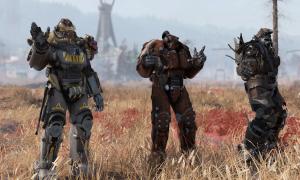
Meanwhile, Maximus (Aaron Moten), who completes our triumvirate of protagonists, is a newly minted Knight in the Brotherhood of Steel. In hopes of finding some good in the Order, he has set his disillusionment aside and committed to the faction’s ideals. Maximus has also developed a close relationship with the Mojave chapter’s leader, Elder Quintus, whose ambitions of uniting the Brotherhood have been emboldened by the Cold Fusion tech.
This forms the foundation of Season 2, accompanied by some vault-centric side stories. You’ve got Norm (Moisés Arias) and his misadventures in Vault 31, coupled with a look at how the remaining residents of Vault 32 and 33 are getting on. Of course, there’s also the pre-war intrigue – made up of glimpses at America before it turned into a cinderbox.
The most captivating narrative of the bunch is undoubtedly the search for Lucy’s father, Hank MacLean (Kyle MacLachlan), through which the Ghoul hopes to find his missing wife and daughter. The dynamic between both characters remains as tense as ever – a case of allies by circumstance and hostages to fortune. While they might be wandering together, their goals are individualistic, something that is made clear on multiple occasions.
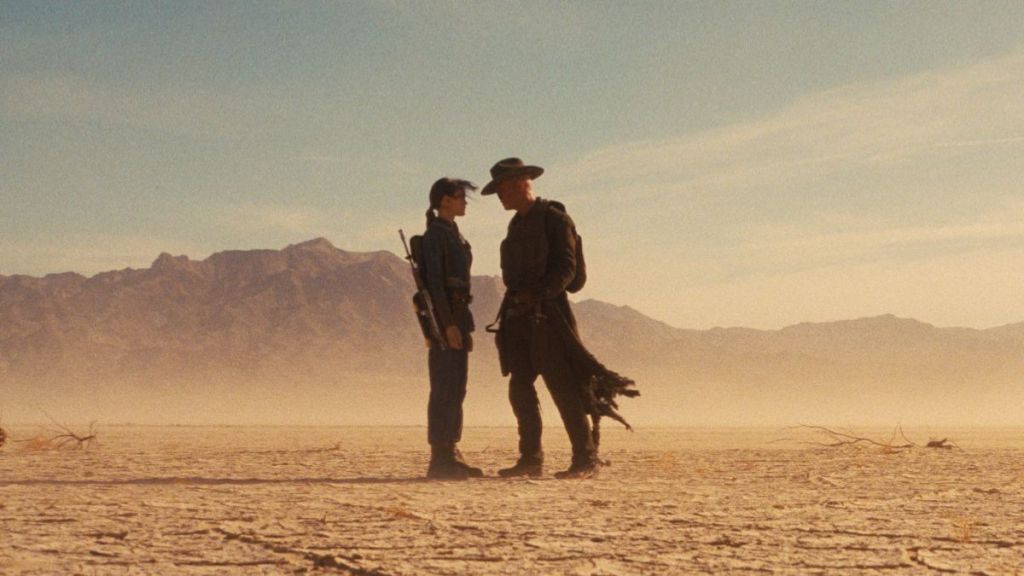
Lucy remains a naive “Vaultie,” despite being put through the wringer in Season 1. While she’s certainly better at combating the evils of the wasteland, she still hasn’t learned how to recognise them. Having grown up in the Norman Rockwell-esque comfort of Vault 33, she’s desperately clinging to the notion of civility and attempting speech checks that equate to saying “please.”
Things get to the point where she almost gleefully walks towards a fate worse than death before being handed an existential reality check by the merciless remnants of humanity. Her character develops in other interesting ways that are well within spoiler territory, but overall, it feels like the appropriate evolution for a Vault Dweller turned wasteland wanderer.
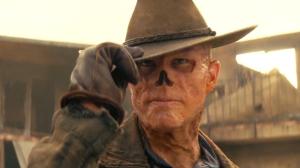
The Ghoul is yet again the best part of Amazon Prime’s Fallout. He serves as the expository vessel for events, both pre- and post-war, while embodying the grizzled swagger of an irradiated cowboy. His primary disposition continues to lean towards violence, but we do see a softer side of the Ghoul, particularly in his interactions with the omnipresent Dogmeat. To keep things brief: the Ghoul goes through a lot over the course of the show’s eight episodes. Cooper Howard doesn’t fare any better, and it’s these two characters that anchor the show from one episode to the next.
In contrast, Maximus’ arc starts off as promising, but it takes a backseat mid-way through Season 2. This correlates to my biggest problem with the show, which is its uneven pacing. With six different stories to shuffle between during eight episodes’ worth of screentime, I think it gets its priorities wrong at times. During a single episode, you’ll start with a look inside the Vaults, cut to Lucy’s struggles on the surface, pivot to Maximus’ storyline, drift into a pre-war flashback, and end on a check-in with the Ghoul.
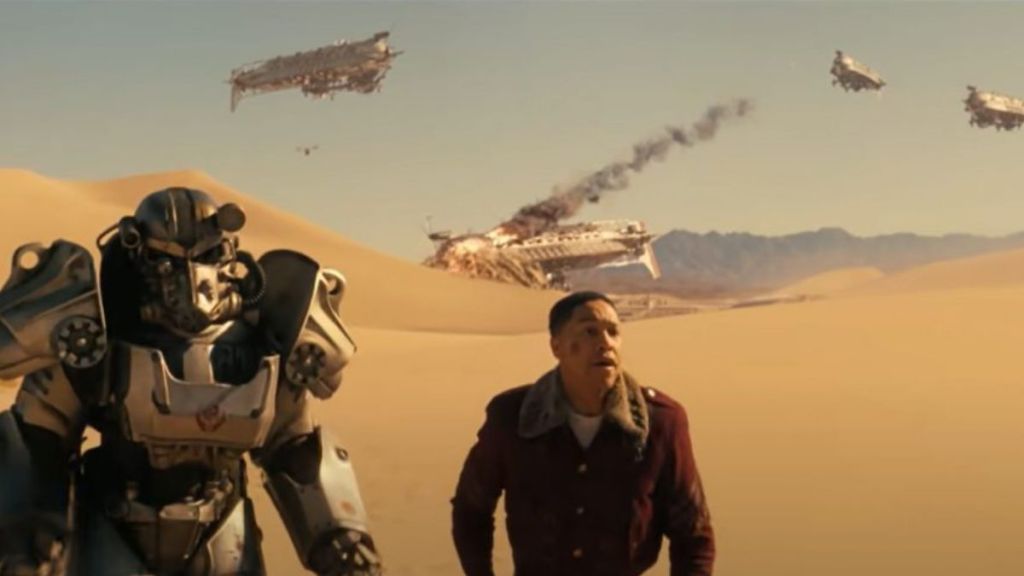
That’s too many individual threads to pull on, and it results in a disjointed experience. There were times when I was starting to sink my teeth into a specific set of events where the stakes felt genuine, only for an abrupt cut to something as milquetoast as the subject of Vault 33’s snack budget. The constant shuffling often slices through any tension or momentum that the show generates. And I think the screentime afforded to inter-vault events could’ve been better used to showcase more of Lucy and the Ghouls’ journey to Vegas.
A byproduct of this approach is pacing that feels too quick yet sluggish at the same time. Lucy and the Ghoul seemingly blitz their way to Vegas, facing sparingly few of the Mojave’s many distractions, while it takes a veritable age for any major developments with Maximus. His arc does arrive at a decent enough conclusion, but not without narrative shortcuts and plot conveniences that cheapen the impact.
If pacing wasn’t enough of a hurdle, the portrayal of the Mojave’s major factions adds another layer of unevenness. Depending on who you ask, Season 1’s representation of the Brotherhood of Steel and the NCR was either faithful or downright abysmal. I leaned toward the former and made peace with the Republic going seemingly extinct. My verdict on Season 2, however, is a mixed bag.
For starters, I think the Brotherhood is fleshed out in the right way. Their elitist, borderline fascist traits are on full display, with an unnamed character serving as the proxy. Unfortunately, said character is almost caricature-esque, inhabiting the worst of the Order in a manner that is more comedic than intimidating.
Caesar’s Legion is also depicted with a lack of sincerity. They certainly look the part and engage in all the barbaric practices you’d expect, but the writing paints them in a farcical light, as opposed to the self-serious savages we see in the game. Diehard fans have already said plenty about their characterization, and seeing as they were shortchanged in terms of screentime, I honestly wish that the Legion wasn’t present at all.
Even with its stop-start pacing and constant juggling of multiple storylines, Fallout Season 2 remained engaging enough to keep me coming back for more. The world, characters, and fan service hit all the right notes, but without a singular, driving narrative, the season can feel somewhat untethered.
There’s plenty to admire in each episode, yet without a central momentum propelling the story forward, the show occasionally meanders, making the journey through the Mojave as intriguing as it is uneven. Thankfully, the creators have planted some tantalizing seeds that leave me incredibly excited for Fallout Season 3. That said, Fallout cannot afford to rehash Season 2’s faults as its audience can only remain patient for so long.
The House Stands Tall, and The Ghoul Rides Shotgun
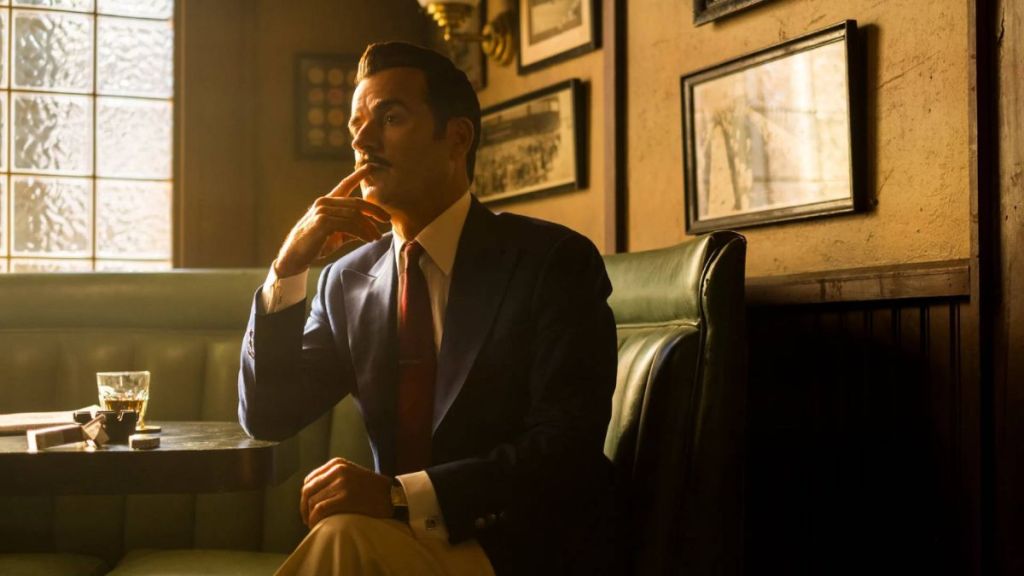
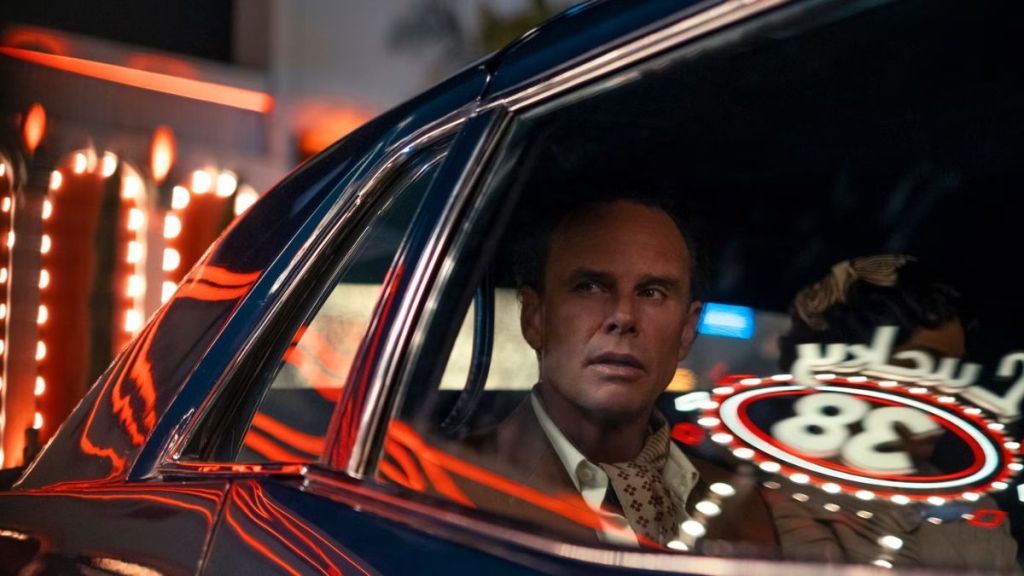
Fallout Season 2 kicks off with a look at the mercurial Robert House (Justin Theroux). And frankly, there isn’t enough praise that I could heap upon how masterful his portrayal of this iconic character is.
He’s got the demeanour down to a T and the voice down to the pitch. Theroux’s House is calculated, ambitious, rational, megalomaniacal, even emotive in the same vein as an enigmatic scientist. He delivers the character’s excessively formal diction with that distinct sense of superiority and corporate eloquence. Every remark feels like it’s laced with condescension or absolute assurance, making for a performance that René Auberjonois would’ve been proud of.
I can extend the same praise for Walton Goggins, who gracefully oscillates between the charming and suave Cooper Howard and the weathered and weary Ghoul. As the former, Goggins exhibits the unease of a man who feels disgusted and even threatened by his spouse, while he visibly wrestles with the likelihood of losing his family as the Ghoul. It’s a challenging duality to pull off, and the Hollywood veteran does so with finesse.
The father-daughter duo of Ella Purnell and Kyle MacLachlan is another standout. Due to the season’s off-kilter pacing, neither actor receives the chance to put on an exhibition until the final three episodes. But once the reins are off, Lucy and Hank steal the stage. Their intertwined arcs end on a somber note that gets progressively sadder the longer you think about it – all thanks to how brilliantly its potrayed by the acting talent.
The rest of the cast list puts in commendable performances, including Aaron Moten, whose character undergoes some awkward changes, and Annabel O’Hagan (Stephanie), who goes from mildly interesting to wickedly conniving over the course of a single episode. The implications of this switch-up are so bizarre, so perfectly Fallout, that the writers simply need to embrace it in Season 3.
Moving on to the new additions, Kumail Nanjiani and Macaulay Culkin, it’s disappointing that they receive so little screentime. Culkin, in particular, is underused –a reminder of why I wished the Legion had been absent altogether. The finale does provide him with more time to shine, and one can only hope that momentum carries into the next season.
Details That Hit Like a Dose of Jet
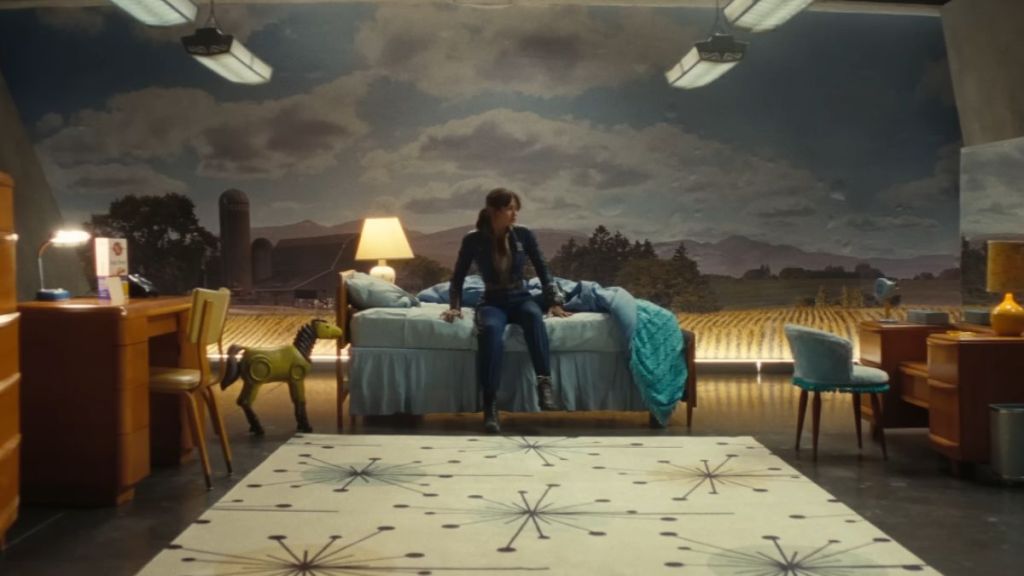
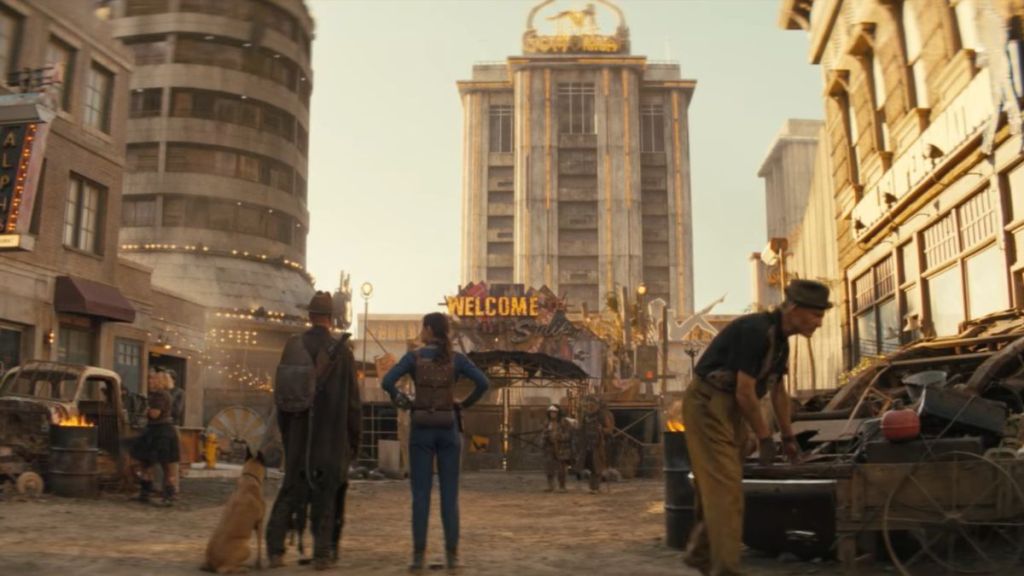
If there’s one department where Fallout Season 2 hits all the right notes, it’s the attention to detail. The show consistently exhibits genuine care for the source material, going out of its way to keep things as authentic as possible. This is reflected in cars that combust with a mushroom cloud due to the radioactive components inside them, down to the pristine sheen of a perfectly assembled Giddyup Buttercup.
The Vaults continue to look like they were plucked straight out of the games, and now you can add the Fallout 4-inspired pre-war suburbs to that list. You can also rest easy knowing that both the Strip and Freeside look immaculate. During scenes that featured these locations, barely a second went by without my eyes noticing a familiar store or my brain registering one of many, many clever easter eggs. Their visual recreation really is faultless.
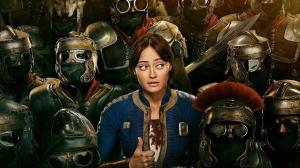
Costume design is another strong point, with the Legion’s unmatchable drip successfully making the live-action jump. Once again, the accuracy is top-tier, and I could easily differentiate between Legionaries, Centurions, the Legate, and, of course, Caesar Kaiser himself. In terms of creatures, we see both Deathclaws and Radscorpions, both of which are frightening and inch-perfect on the appearance front.
The last thing I simply need to highlight is the jukebox. Fallout Season 2 is stuffed with Atomic Age bangers that’ll have your spurs jingling and jangling. It frequently drops the needle on songs that fans hold sacred, and for the most part, it picks the right moments to do so. Episode one starts off exceptionally strong with a gunfighter ballad, and future episodes follow suit.
As a final note, make sure to stick around for the animated outros, some of which are gold mines for lore nerds (such as myself). Some foreshadow events to come, others confirm the fate of locations from FNV, and all of them are well-made.
Final Verdict: An Ambitious If Uneven Trip to the Mojave
Fallout Season 2 falters in some key areas, but ambition and authenticity aren’t among them. Adapting a game as hotly debated as Fallout: New Vegas is a bold move, and the creators pair that courage with a faithful recreation of the Mojave Wasteland. Unfortunately, the writing doesn’t measure up: it lacks finesse, dangles too many red herrings that are quickly shelved, and leans on fan service and off-screen hand-waving to reach the finish line.
The season’s fragmented structure and uneven pacing also undermine its momentum, leaving it without a clear narrative engine driving events forward. With so many threads competing for attention, the show occasionally struggles to maintain tension or focus, relying on its world-building and character work to carry it through quieter stretches.
Despite these shortcomings, it’s worth tuning in for the acting performances alone, with Justin Theroux and Walton Goggins leading the charge. Season 2 also manages to set up an enticing broader mystery that has the potential to transform the franchise as a whole, while establishing individual narratives that could anchor an entire season of TV by themselves.
While it pales in comparison to its predecessor, Fallout Season 2 still delivers some of the wackiest, most bizarre, and surprisingly charming television you can watch, and by that measure, the Amazon Prime production is ultimately a success.