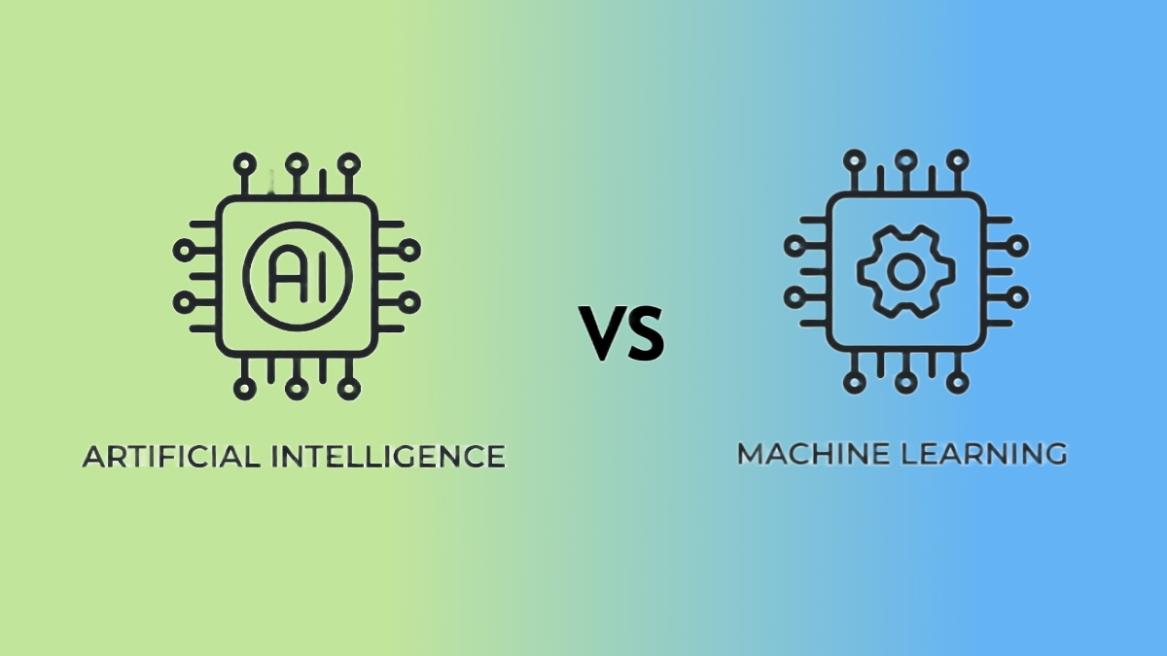
- AI is the broad goal of creating intelligent systems, no matter what technique is used.
- In comparison, Machine Learning is a specific technique to train intelligent systems by teaching models to learn from data.
- Basically, AI is the goal while Machine Learning is one of the methods to reach there.
You may have heard people using AI and machine learning interchangeably, but there are some distinct differences between the two concepts. From tech discussions to news headlines, AI and ML are used synonymously. While both are indeed closely related, we must remember that AI (Artificial Intelligence) and Machine Learning are different layers that power intelligent systems. On that note, let’s go through the comparison between AI vs Machine Learning.
What is Artificial Intelligence?
In my Artificial Intelligence (AI) explainer, I have mentioned that AI is a broad concept and its aim is to create machines or computer systems that can perform tasks that require human intelligence. The term “artificial intelligence” was coined in 1956 at Dartmouth College, where researchers gathered and explored whether machines could simulate human cognitive ability.
There are many types of AI including Narrow AI, which can perform specific tasks like translation or filter spam from your email inbox. Next, you have AGI (Artificial General Intelligence) that can match humans at cognitive tasks. And then ASI (Artificial Superintelligence) can exceed human capabilities, which is still a theoretical concept. The main aim of all these AI systems is to simulate the human mind.
To enable computer systems to mimic human behavior, AI systems can use one of the many techniques: pre-programmed rules, learning from data, predefined algorithms, decision trees, and more. There is no bar on how you achieve Artificial Intelligence.
What is Machine Learning?
Machine Learning (ML), on the other hand, is a subset of Artificial Intelligence. It’s one of the techniques that allow machines to learn patterns from data rather than being explicitly programmed with rules. Basically, while AI is a broad concept, ML is a specific approach that enables AI systems to automatically learn from data.
In machine learning, AI systems improve their performance through experience. First is Supervised learning which trains algorithms on labeled data, like teaching an email filter by showing it thousands of emails marked as “spam” or “not spam”. Next, Unsupervised learning means it’s trained on unlabeled data. The AI system automatically finds hidden patterns inside the data and learns from the experience.
More recent is Reinforcement learning which teaches AI systems through trial and error. When it gets the answer right, you reward the system and when it gets wrong, you put a penalty. This way, an AI system is developed through machine learning.
AI vs Machine Learning: Key Differences
If you are still unable to understand the difference between AI and Machine Learning, let me give you an example. Think of AI as the final destination whereas Machine Learning is one of the vehicles to reach there. Creating an intelligent AI system is the final goal, whereas Machine Learning is the approach through which you achieve that goal.
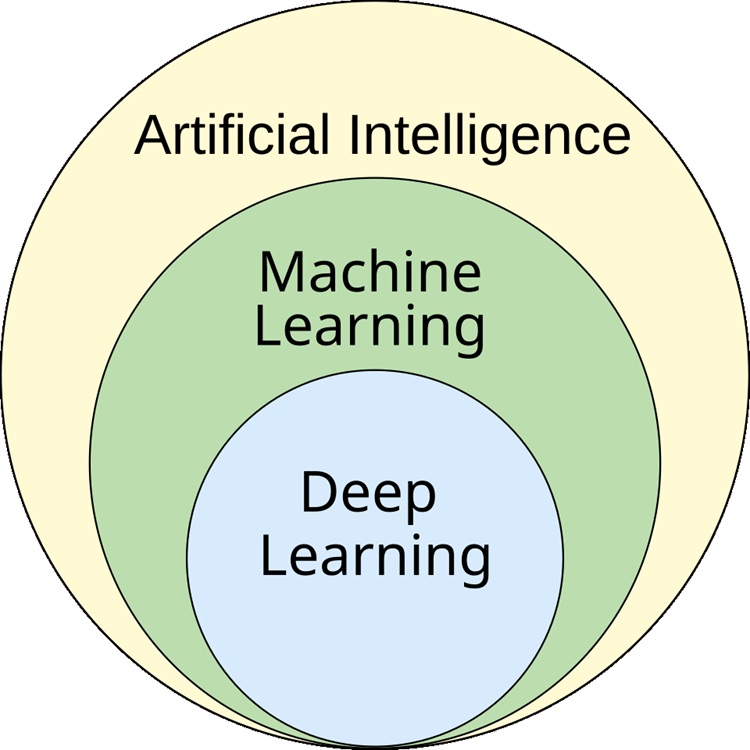
Currently, Machine Learning is the most successful way to create an intelligent AI system. Now, you might be wondering what is Deep Learning then? Well, Deep learning is the subset of Machine Learning where neural networks are used. It’s even more effective at training intelligent AI systems. AI chatbots like ChatGPT and Gemini are powered by Deep Learning algorithms and the Transformer architecture.
With that said, here is a comprehensive table, differentiating between AI and Machine learning.
| Artificial Intelligence (AI) | Machine Learning (ML) | |
|---|---|---|
| Definition | A broad concept whose goal is to create intelligent machines | A subset of AI that learns from data |
| Scope | Includes all techniques to create machine intelligence | ML is a specific approach within AI |
| Goal | Simulate human intelligence | Enable machines to learn from experience |
| Implementation | Can use rules, logic, ML, or any other method | Uses algorithms to find patterns in data |
| Data Requirement | Not always dependent on data | Heavily dependent on data for training |
| Flexibility | Can be rigid or adaptive | Adaptive and improves over time with experience |
The Distinction Between AI and Machine Learning
The distinction between AI and Machine Learning is important because AI encompasses all intelligent systems (whatever technique used) whereas Machine Learning uses a specific approach. A simple rule-based chatbot is an AI system, and so is ChatGPT.
However, it’s important to note that ChatGPT has been trained using machine learning, which means it has learnt to respond from the data. To sum up, all machine learning models are AI systems, but not all AI systems uses machine learning.





 Anshuman Jain