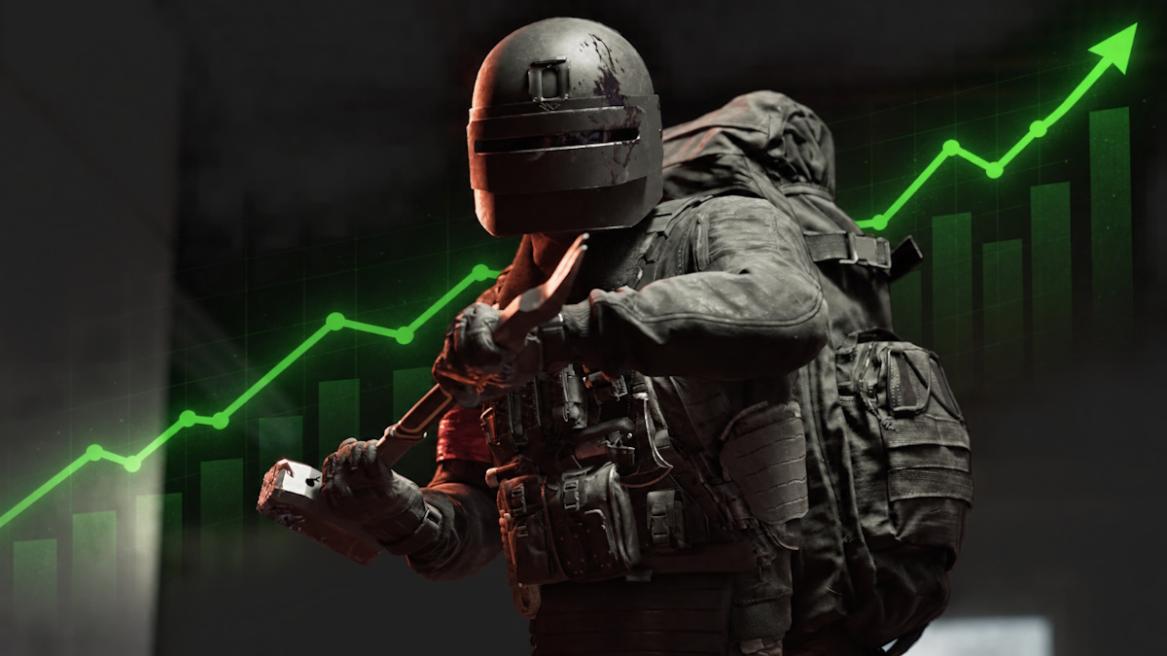
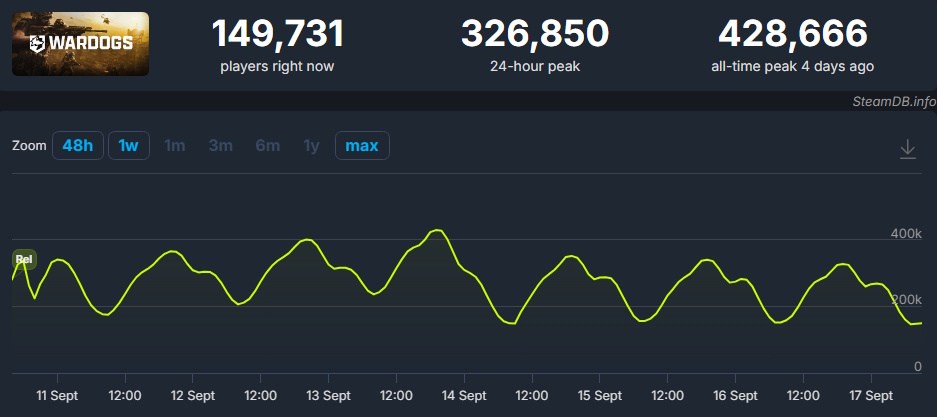
More than 150K players are playing WARDOGS every day, with the game reaching an all-time peak of 428,666 players just days after launch. That is no small feat for a shooter in 2026, especially when the game is pulling numbers that many AAA titles can only dream of. And mind you, WARDOGS is a complex game, but the early success signals something else.
So, what makes the game different? How did WARDOGS sell more than two million copies in less than five days, an absurd opening for a $39.99 Early Access shooter from a relatively small studio?
Well, I will admit something before going any further. I was skeptical about WARDOGS. When I first looked at the game, I saw a shooter that seemed determined to make things harder than they needed to be.
There are 100 players, three teams, huge maps, vehicles, logistics, forward operating bases, an economy, progression for different roles, and objectives that can change how a battle unfolds. I wondered if players would look at all of that, shrug, and go back to something they already understood.
Instead, millions of people bought it. That made me reconsider what I had been assuming about modern shooters.
I Thought WARDOGS Was Making a Mistake
My first instinct was that WARDOGS had too many systems competing for the player’s attention. Modern shooters have spent years making sure players can understand what to do within seconds, so throwing a giant military sandbox at them felt like a strange decision.
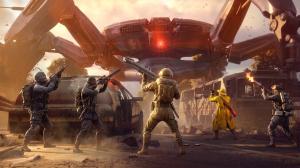
WARDOGS does have a simple foundation. Get into the zone, fight the other teams, and help your side score. Once you start peeling back the layers, however, the game becomes much more interesting. You can transport players, deliver supplies, build defenses, fly helicopters, revive teammates, destroy vehicles, or simply earn money by being useful.
That is where my skepticism started to fall apart. And I don’t mean just a single mechanic. It has depth.
The More I Learn WARDOGS, the More There Is to Do
The best example is the progression. I can start a match thinking I want to shoot people, then end up learning how to operate a vehicle. Maybe I discover that supplying a base is more useful than chasing kills. Maybe I spend several matches learning to fly before finally getting good enough to use a helicopter as an attack platform.
Shroud, in one of his videos, described that exact feeling while playing the game. After learning the helicopter and its rocket pods, he said, “I still have a lot to learn.”
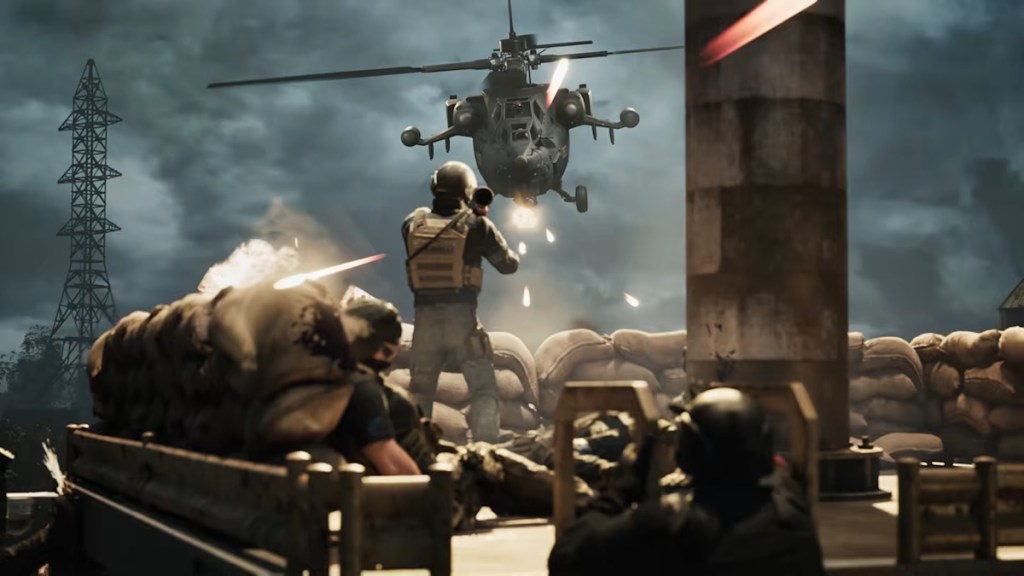
That is a surprisingly powerful hook. Especially when it comes from such a veteran in the shooting genre. I do not think every player wants to spend 20 hours learning how to fly a helicopter. I do think many players want a game where, 20 hours later, they can still discover something they could not do when they started.
Complexity Can Create the Moments I Remember
This is the part that really changed my mind. A complicated game has more ways for its systems to collide. And when that happens, we get moments that keep us going for another one for the memory book.
For the imagination, just think: a squad can pile into a helicopter, fly across the map, land behind enemy lines, destroy an artillery position, and barely escape. Someone else might spend the entire match driving supplies around and somehow become one of the most valuable players without firing a shot.
Those situations are difficult to manufacture in a tightly controlled shooter like VALORANT or Counter-Strike. They happen because WARDOGS gives players enough systems to create their own stories.
Even the quieter moments matter. You might spend several minutes repairing a base or waiting for supplies while gunfire erupts somewhere else on the map. Then suddenly the enemy arrives, and everything changes. These things matter to me because…
The 2026 Shooter Market Has Made Me Question Simplicity
The recent history of multiplayer shooters makes WARDOGS even more interesting. XDefiant had a much more familiar arcade shooter structure, yet Ubisoft eventually discontinued development after saying it could not retain enough players to compete in the free-to-play FPS market.
Concord couldn’t get any players as it went through an even more brutal launch. The game reached only 697 concurrent players on Steam before Sony took it offline two weeks after release.
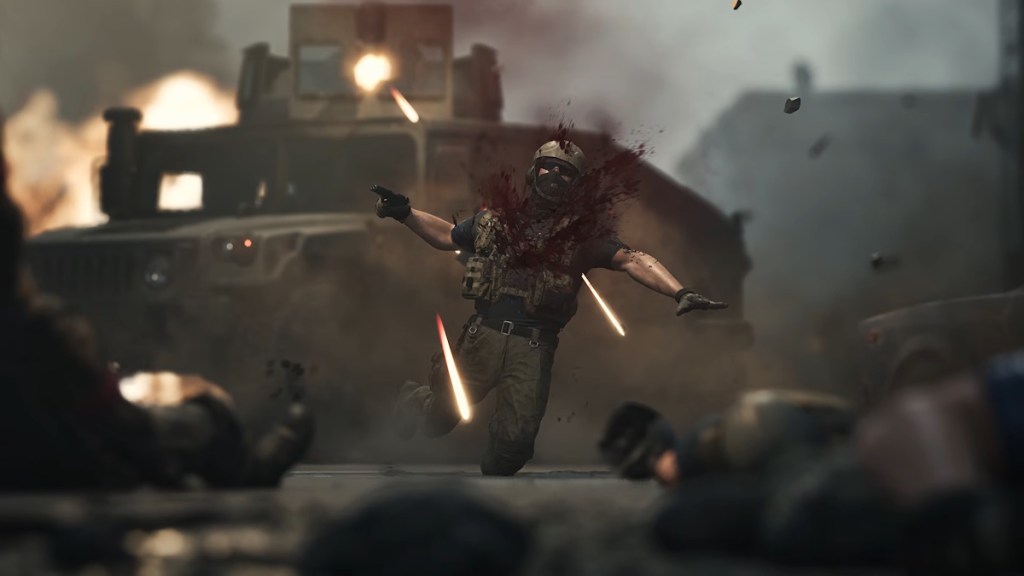
Neither example proves that simple shooters fail. There are too many other factors involved. What they do show is that familiarity alone is not enough.
WARDOGS has arrived with the opposite philosophy. It gives players more systems to understand, and somehow that has become part of the appeal.
WARDOGS Knew How to Sell Its Complexity
I cannot ignore the marketing either. Bulkhead did something I found genuinely clever. Instead of pretending WARDOGS was going to be another Call of Duty, the studio released a “10 Reasons NOT to Buy WARDOGS” video and openly showed potential players what kind of game they were getting.
That approach gave the game’s complexity a purpose. It was not something the developers were trying to disguise. And the devs were confident enough to even refund the game if players didn’t like it at all. But that’s not all.
The marketing also leaned heavily into creators and streamers, which helped expose the game’s ridiculous emergent moments to a much wider audience. The launch even became so large that server queues stretched into the hundreds of thousands. And let us not forget that WARDOGS put real cash on the line for best clips.
People did not just hear that WARDOGS was complicated. They got to see why that complication could be fun. All this makes me think…
Maybe Shooter Players Want More than I Think
I went into WARDOGS thinking complexity would be its biggest problem. Now I think it might be one of its biggest strengths.
That does not mean every complicated shooter will suddenly succeed. WARDOGS still has plenty to prove during Early Access, and its enormous launch does not guarantee that its audience will stay forever.
What it does prove is that players are willing to learn when there is something worth learning. Maybe I had been looking at complexity as a barrier when it can actually be the reason to keep playing. WARDOGS has reminded me that sometimes the best multiplayer stories begin when a game stops telling me exactly what to do.
What are your thoughts on the great early success of WARDOGS despite it being a complex game? Share your point of view with us in the comments below.


 Pranav Maytray

 Ishan Adhikary

![[OPINION] GTA 6’s Ultimate Edition May Have Fans Reaching for the Upgrade Because of FOMO](https://static.beebom.com/wp-content/uploads/2026/06/gta6-lucia.jpg?w=300&quality=75)
 Rishabh Sabarwal
 Ishan Adhikary