Ever since Wordle went viral with its iconic green and yellow tiles, word puzzles have become a staple for linguistic and brain-teaser enthusiasts. However, not every word game is about entering the correct letter in the right spot. This is where another word game, Contexto, shows up on the scene, focusing on the contextual meaning of words rather than spellings.
At first glance, Contexto and Wordle may seem similar — daily word-based challenges where both games want you to discover the hidden answer, and they reset within 24 hours. But the underlying logic behind both is fundamentally different. Here’s a complete breakdown of Contexto vs Wordle, so you can decide which word puzzle is better.
Contexto vs Wordle In a Nutshell
Contexto and Wordle are free-to-play browser-based word games that refresh daily. But the core mechanics of both games are different and require you to change your approach to solve them. Here is a brief tabular comparison of both word games:
| Details | Contexto | Wordle |
|---|---|---|
| Founder | Nildo Junior (Daydash) | Josh Wardle (The New York Times) |
| Release Date | February 2022 | October 2021 |
| Objective | Guess the secret word using semantic similarity | Guess a five-letter word in six attempts |
| Game Rules | Three color feedback with ranks as hints | Three color feedback and fixed grid length |
| Game Modes | Daily + Past Games | Daily + Hard Mode |
| Feedback Type | AI similarity ranking and color coding system | Positional color feedback |
| Languages | Portuguese, English, and Spanish | English |
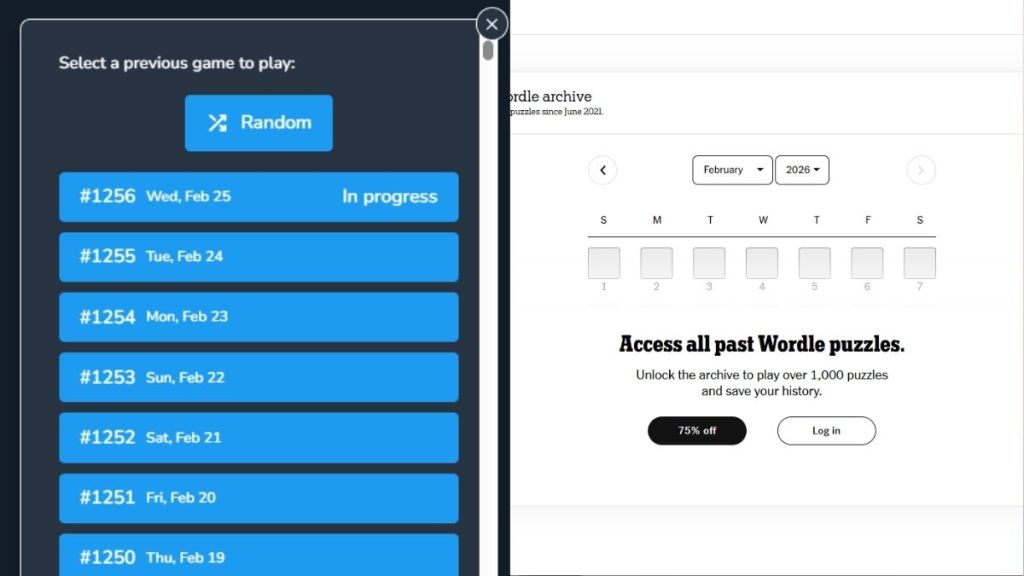
| Past Puzzle Archives | Free | Requires NYT Games subscription |
If you want a game about similar meanings, consider solving today’s Contexto answers. But if you want something with tight limits, solving today’s Wordle answers will give you a different kind of thrill.
Contexto vs Wordle Compared
Both Contexto and Wordle revolve around uncovering a hidden word, but the way you get there is different. Below, we compare both games based on their objective, game mechanics, error tolerance, difficulty, and more.
Objective
| Feature | Contexto | Wordle |
|---|---|---|
| Goal | Guess the secret word based on context | Guess a hidden five-letter word |
| Word Length | Unknown and varies every day | Fixed at five letters |
| Daily Puzzle | One new word daily + access to past games | One new word daily (can access past games if you have subscription) |
Wordle gives you a clear target first, which is a five-letter word. So, you know the length of the word from the start, which makes planning easier.
Whereas Contexto keeps you in the dark, as you don’t know the word length. Instead, as you guess, you learn more about the meaning of the answer. Contexto gives you hints, and it feels more like cracking a code rather than eliminating letters as in Wordle.
Game Mechanics
| Feature | Contexto | Wordle |
|---|---|---|
| Feedback System | AI-based ranking system | Green, Yellow, Grey tiles |
| Additional Clues | Semantic closeness score | Letter position accuracy |
| Grid Structure | No fixed grid | Fixed 5 x 6 grid |
| Clue Type | Meaning-based similarity | Positional letter clues |
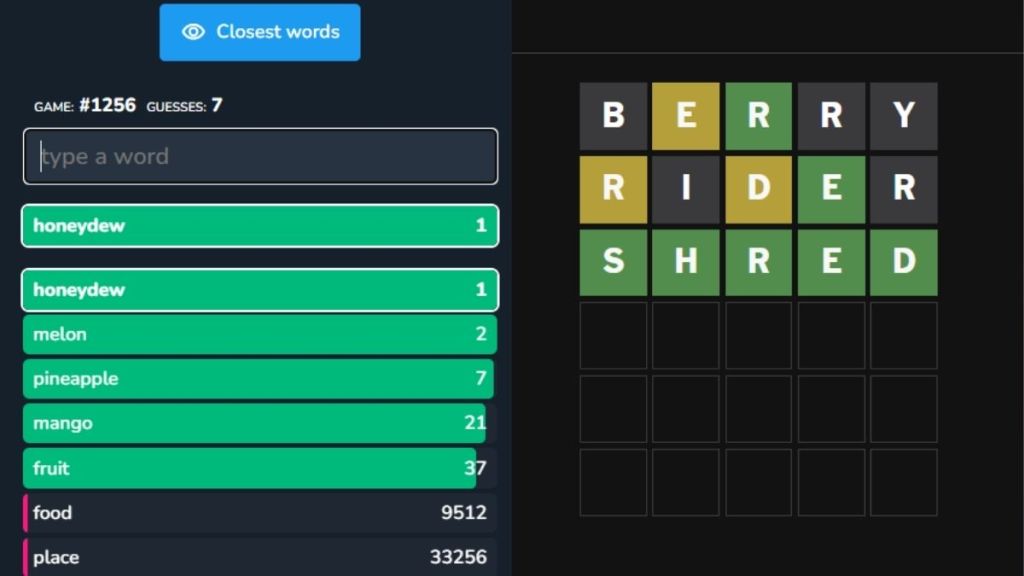
Contexto compares the answer with your guess based on its meaning. So, before you go ahead, you must know how to play Contexto and how the AI in this game works. This AI looks up millions of words online and checks how many times the answer and your guess appear together.
Based on this logic, the AI ranks your guess and gives it a score alongside a color. Green means that you’re close, orange means the guess is somewhat related, while red means you’re off topic.
Now, Wordle works entirely differently. When you enter a five-letter word, it displays three colors based on the letter’s position. Here, green means the letter and its position are both correct. Yellow means that the letter is correct, but is placed at the wrong spot.Whereas, grey means that the letter is not in the answer.
Error Tolerance
| Feature | Contexto | Wordle |
|---|---|---|
| Guess Limit | Unlimited | 6 attempts |
| Penalty for Wrong Guesses | None | Attempt consumed |
| Fail Condition | No hard fail | Fail after 6 tries |
| Performance Metric | Fewest guesses possible | Solving within 6 attempts + streak |
This is one of the biggest differences between Contexto and Wordle. Although every guess matters in both word games, you will fail after 6 attempts in Wordle. But this is not true for Contexto.
Contexto gives you the freedom to have an unlimited number of guesses, and there is no fail screen as such. But you can always limit the number of guesses by learning about the common mistakes in Contexto.
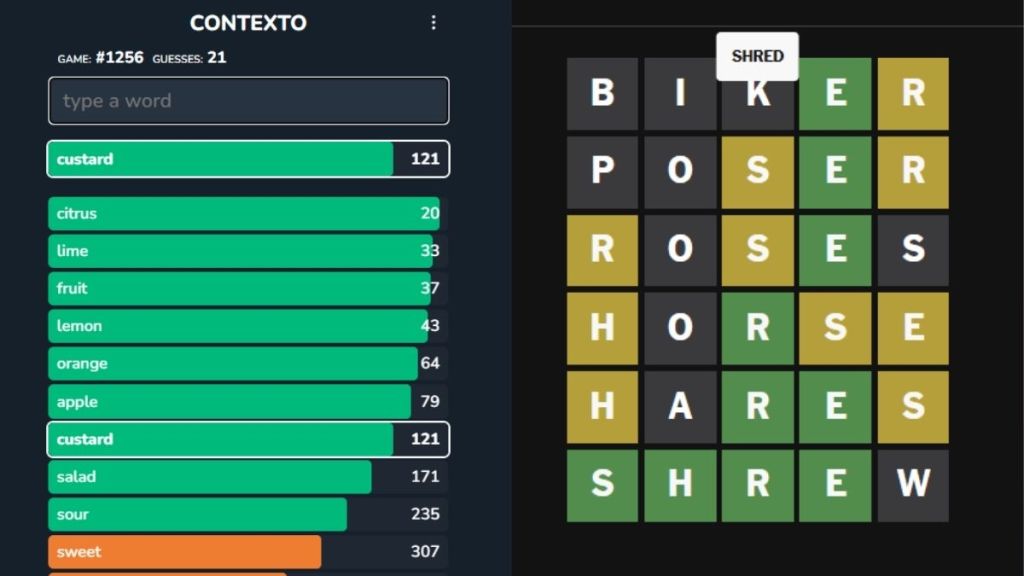
Now, if you really want to test the ability in Contexto, you can do that with your friend by counting the number of guesses required to get to the answer. While Wordle can feel tense at times, Contexto is about exploring and finding the trail to the right word.
Difficulty
| Feature | Contexto | Wordle |
|---|---|---|
| Difficulty Curve | Variable | Fairly consistent |
| Learning Curve | Steeper (need to understand how AI ranks words) | Beginner-friendly |
| Strategy | Concept narrowing and shifting contexts | Letter elimination |
| Vocabulary Demand | High and requires abstract thinking | Moderate because you get 5 letter words only |
The difficulty in Wordle is steady. Once you’ve learned about strong Wordle starting words and the strategy to eliminate the letters that are not in the word, the game becomes predictable. However, by predictable it doesn’t mean it will get boring. If you’re a daily solver, you’ll know how interesting Wordle puzzles can be.
In contrast, Contexto difficulty fluctuates. Some days, you get basic words like strawberry, eclipse, or fisherman, while other days, you discover new words that you might never have known existed.
It also happens that Contexto answers are sometimes abstract, like perjury, justice, or growth. This is when you’d realize the need to understand the Contexto scoring system to learn how the AI ranks words and assigns colors to them.
Time Investment
| Feature | Contexto | Wordle |
|---|---|---|
| Average Session Length | 5-20 minutes | 2-5 mintues |
| Daily Commitment | One daily + unlimited archive | One daily puzzle |
| Replayability | High (free past puzzles) | Limited (archive behind paywall) |
| Frustation Factor | Low pressure, but can drag on | High if stuck at guess 5 |
Wordle feels like a quick morning ritual. Most players finish it within 5 minutes, but don’t worry if you take a bit more. It can always happen that you are unable to quickly find 5-letter words with the leftover letters.
However, Contexto is very different in this situation. Since there is no guess limit, the chase for the right context can sometimes take more than 15 minutes. And soon, without realizing it, you might be going ahead with the wrong category unless you press the hint button.
Contexto vs Wordle: Which Game Should You Be Playing?
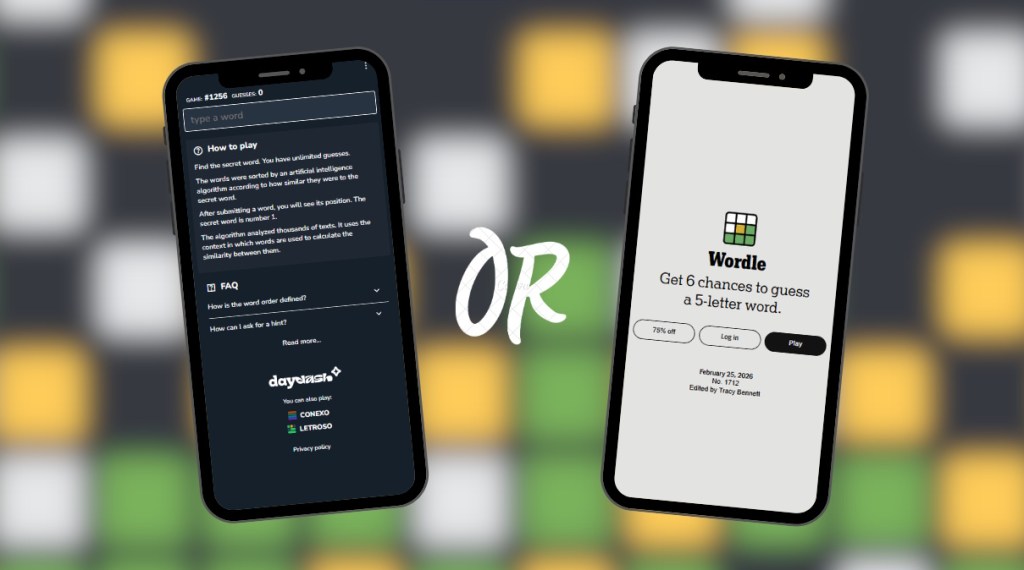
You honestly don’t need to choose just one game to play every day, when both are free-to-play and good for a short mental workout. Since both require different approaches, it might divide the daily puzzle solvers based on the following features:
- You can choose Wordle if you enjoy structured puzzles, clear rules, limits, and are a fan of consistent strategies.
- While you can play Contexto if you like abstract thinking, want to chase meanings, and do not want to be restricted by limited guesses.
The fixed structure in Wordle feels like a clean and predictable routine and gives you opportunities to develop more opening words. You can refine your approach over time, and words with more vowels and unique letters help give you hints.
Contexto flips this formula as no word length is revealed, and there is no colored grid. However, the advantage here is that there is no limit on the number of guesses. You get ranks based on the guess’s closeness to the answer. This helps you get closer to the answer if you have played the game often.
While Wordle can feel more like cracking a lock, Contexto is more like finding a buried treasure.
Since you’re here, you might also check out the key differences between Letroso vs Wordle and learn more about word puzzles. So, which game do you like the most?
Yes, both Contexto and Wordle are entirely free to play in a web browser. Contexto offers a free past puzzle archive for extra practice beyond the daily puzzle, whereas Wordle requires you to get the NYT Games subscription to unlock the past puzzle archive.
Wordle gives you exactly six attempts, while Contexto allows unlimited guesses. So, in Contexto, the performance is measured by how efficiently you solve it.
Well, mostly it’s a yes. Wordle has a five-letter format that keeps the difficulty consistent. But in Contexto, a few wrong guesses can drag your thinking into an entirely different context.