NYT Strands is a word search game, but veteran players know that it has more to do with pattern recognition than finding words. The game starts with a theme, and the key to quickly solving the entire grid is understanding it. So, if you often struggle with understanding the daily theme, then here’s a breakdown of what are the common themes in the NYT Strands puzzle and how to crack them with ease.
How Does NYT Strands Theme Work?
Every game of NYT Times Strands revolves around a single theme that the rest of the words in the grid are related to. All the words in the grid will be either synonyms or somehow related to that centralized theme. Even the Spangram is associated with it and further clarifies the intention of the puzzle theme.
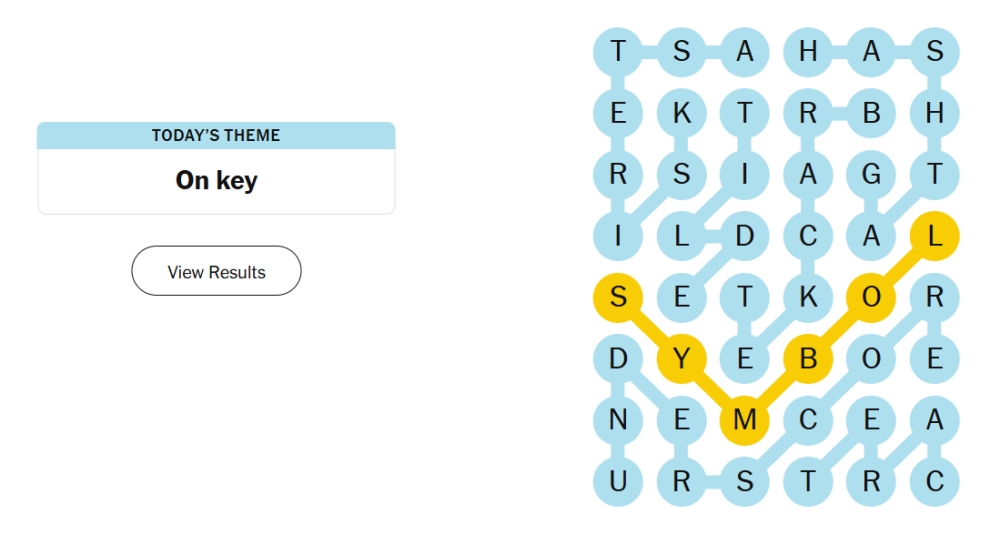
Sometimes, the theme is pretty obvious. You understand what it wants you to look for in the grid right away. Other times, it might throw you completely, having you look for words that are totally unrelated to today’s Strands puzzle. However, even after being derailed, you can get back on track by finding one word. This is why the goal isn’t to find words; it is to understand the theme in general.
Understanding the Spangram
The Spangram in Strands is a word or phrase that connects two opposite edges of the 6×8 grid and defines the theme of the puzzle. It is the second clue you can get while solving the grid. For example, if the hidden words in NYT Strands are related to cooking tools, the Spangram might be something like “KITCHENWARE.”
Once you find the Spangram, everything else becomes easier. This is why finding it early can make a huge difference between a five-minute game or a fifty-minute head scratcher.
Relationship Between the Daily Clue and Hidden Words
The daily clue or “Today’s Theme” in the NYT Strands game is often ambiguous. It does not give away the answer; it only points towards a concept, reference, or a lesser-known term. So, you have to do the guessing and figure out what connection it has with the hidden words.
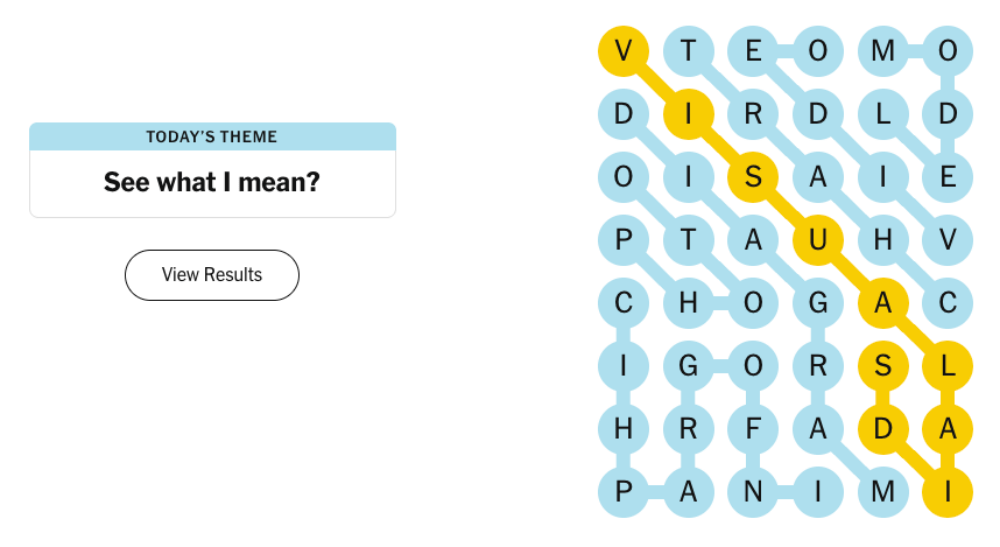
As shown in the example above, the theme is “See what I mean?“, but the answers are related to different visual media to show data. There is no direct connection between the two, except for the word “See.” The Strands editor expects lateral thinking. You need to think of the bigger picture to figure out the theme.
Most Popular Theme Categories in NYT Strands
Since I play the NYT Strands daily, I have noticed some common themes and patterns that repeat themselves. Understanding them can make the puzzle easier to solve.
Vocabulary and Synonym Sets
Most Strands themes reward strong vocabulary in the English language. The theme might describe a word or a meaning, and you need to find synonyms for it. For example:
- Synonyms for “happy.”
- Words that describe movement
- Types of kitchenware

Pop Culture and Trivia Knowledge
It goes without saying that some of the themes are deeply embedded in American pop culture. So a strong command of their TV shows, movies, pop culture, slang, and other widely used terms goes a long way in helping you solve the Strands grid. For example:
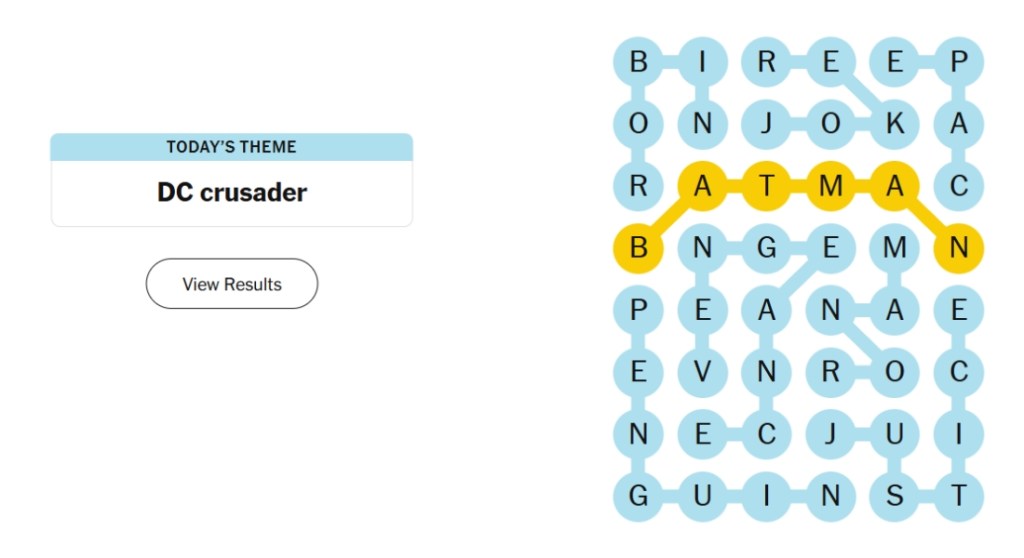
- Movie character references: “DC crusader”
- Sports positions: “On the court”
- Celebrities or dialogues: “To infinity, and beyond!”
“Fill-in-the-Blank” Phrases and Idioms
On rare occasions, you might also encounter a “Fill-in-the-blank” theme where a single word is absent from an idiom or a popular phrase. Again, recognition is the key, since the hidden words on the grid will be related to the overall theme, not just the missing letter.
- Words that complete a popular expression: “piece of ____”
- Commonly known idioms: “costs an ___ and a leg”
Homophones and Wordplay
The NYT Strands editor often uses clever wordplay to confuse players and stray them off the right path. This is one of the most common trends in NY Times Strands themes. This is why you need to give it some thought before attempting to solve the puzzle. Here are some examples:
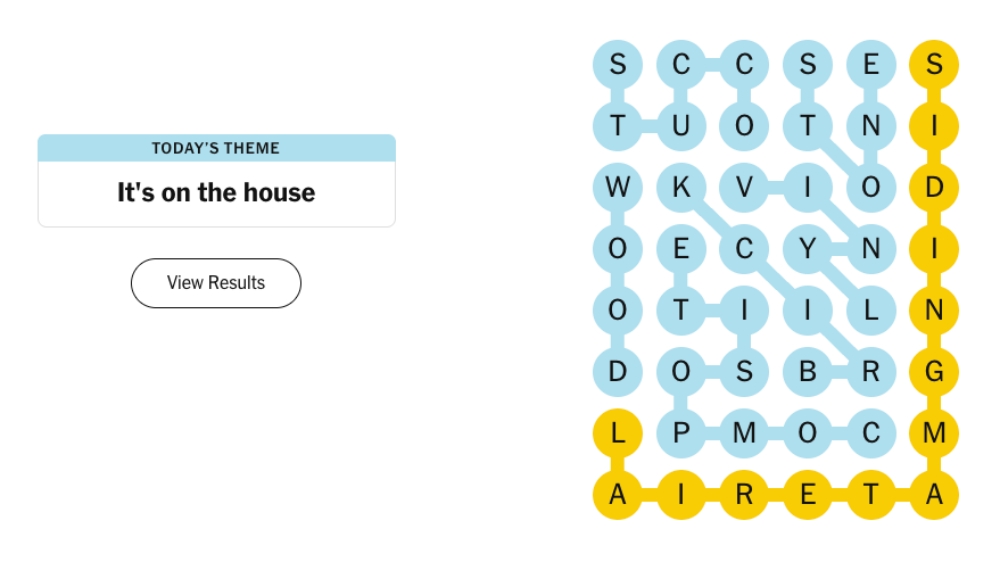
- “It’s on the house” is about building materials
- “All the trimmings” is about Christmas tree decorations
- “Feeling peckish” is about the types of restaurants
Strategies for Solving Tricky NYT Strands Themes
If a particular NYT Strands theme feels confusing, then here are some of the ways that you can use to crack it:
- Give the theme a thought: Think about what the theme could mean beyond its surface-level meaning.
- Look for certain words: Check for standout words that don’t fit in properly or could hint in a certain direction.
- Use hints: Never shy away from finding random words to collect hints and using them. It can help you find the keyword necessary to solve the puzzle.
- Eliminate bad guesses: If one word doesn’t fit naturally, rethink the category.
Analysing Past NYT Strands Puzzles: Difficult vs Easy Themes
Having played hundreds of NYT Strands puzzles, there are some common things that I have come to notice between easy and difficult themes. Easier ones are more straightforward, less confusing, and could even be a synonym for the hidden words. While the difficult themes sound random, they don’t give off a hint right away. Here are some other common theme characteristics.
From my experience, easy themes usually have:
- Simpe categories
- Use normal vocabulary
- Provides a direct clue
On the other hand, harder themes tend to involve:
- Abstract concepts
- Layered wordplay
- Indirect or misleading clues
- Cultural or niche references
Once you have figured out these common points between the themes, the rest of the grid becomes a quick solve. And understanding these concepts can turn you into an NYT Strands genius in no time. Remember, the NYT Strands game is less about finding words and more about recognizing similar threads and guesswork. I hope this guide helped you understand these key aspects of the game.
There are multiple ways to understand the NYT Strands theme. These are mostly rooted in American culture, and will be a reference to its pop culture, common sayings, and other popular references.
To solve any Strands grid, you need to understand what today’s theme is hinting you to look for. Once you grasp the gist of the theme, any puzzle becomes a piece of cake. Other than that, you can check for corners to spot potential words and take hints to help you further.
The Spangram theme is the word that encompasses the entire grid of the puzzle. It is typically a more common phrase or the noun for the group of words mentioned in the puzzle.