NYT Strands is a word search game where the objective is to find words related to a daily theme. But anyone who has played the game knows that it is more challenging than that. Understanding how to navigate the grid can make a significant difference in how quickly you solve the puzzle. So, here are some of the most common challenges faced by NYT Strands players and how to overcome them.
1. Deciphering Vague or Misleading Themes
In every new game of NYT Strands, the players have “Today’s Theme.” This is what the rest of the hidden words in the grid are based on. It also happens to be one of the biggest challenges, too, as some days it could be too vague or broad. Sometimes the theme feels literal, and other times, it seems too abstract.
When the “Theme” is a Pun or Wordplay
The Strands hints might appear straightforward at first, but it actually hinges on a pun or double meaning.
For example, a clue about “Sneak-ing around” might not relate to spying but to parts of a shoe. Or something like “See you around” might connect to round objects. This wordplay is intentional to trick you into going the wrong direction. We’ve discussed this in detail when talking about the most common Strands themes, including synonyms, pop culture references, and more, that we’ve seen in the puzzle to date.
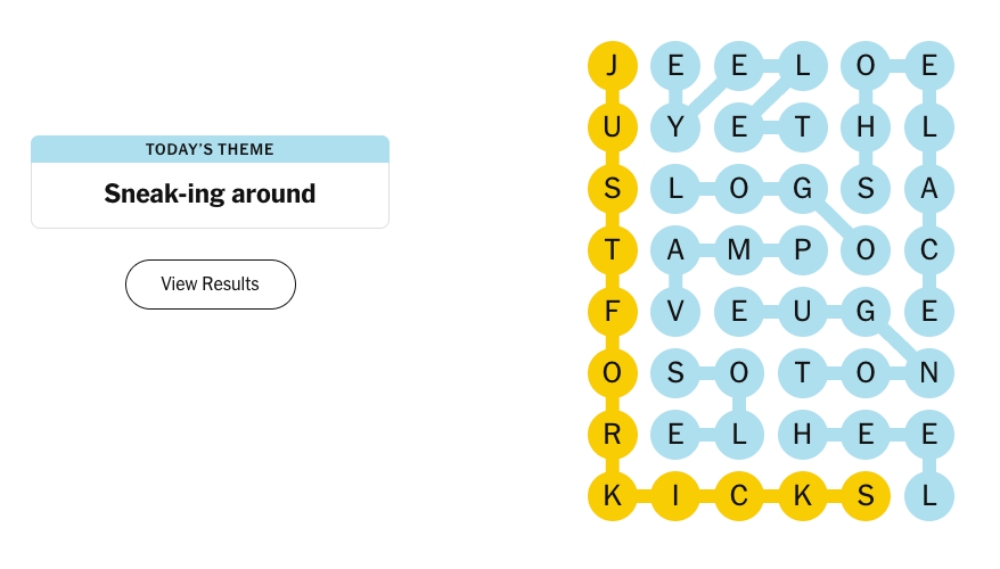
Solution: Thinking Laterally vs Literally
The theme for NYT Strands puzzles rewards lateral thinking. Sure, there can be instances when the right answer is the easiest one. But that is not the case most of the time. So if you can’t find the right words on the grid, ask yourself the following questions and change your approach:
- Could this clue mean something metaphorical?
- Is there a phrase or idiom hiding here?
- Am I interpreting this too narrowly?
2. The “Spangram” Struggle
There is always one Spangram in Strands puzzles, and finding it early can be the key to solving the entire grid. But it is easier said than done. Here are the common challenges faced while finding the Spangram.
Why You Can’t Find the Spangram First
Many Strands players make the mistake of thinking too much and spending too much time to find the spangram. The problem is that the Spangram relies on your understanding of the theme.
So, without context, it can be a headscratcher, and you are less likely to find the Spangram till the late game. Trying to force it usually leads to frustration.
Solution: Look for Edge-to-Edge Connections
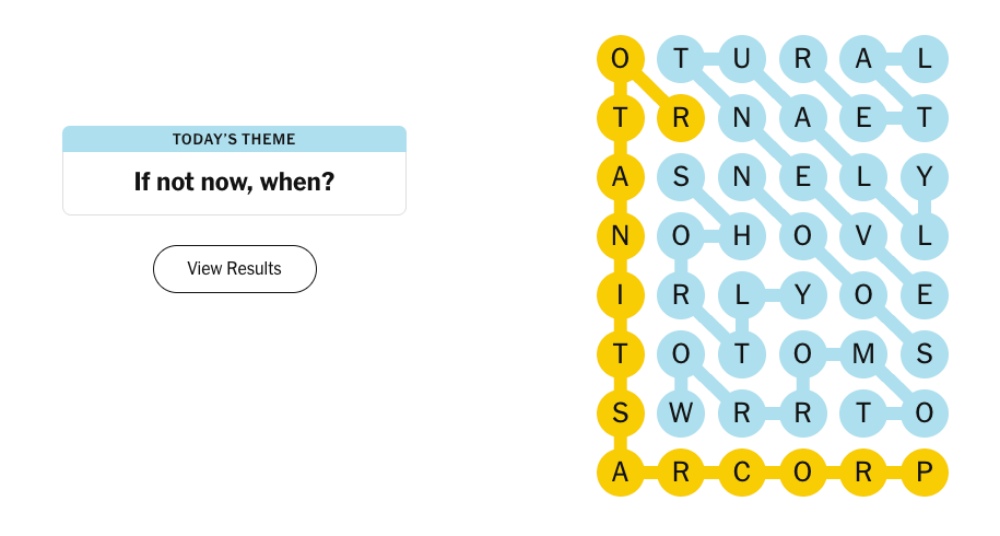
Instead of guessing blindly, scan the edges of the grid for a long stretch of letters from one side to the other. The Spangram (almost) always connects the opposite sides of the grid. Here’s what you need to focus on:
- Long uninterrupted chains of words
- Clear pathways spanning from one edge to another
- Words that feel like a phrase or describe a category
3. Finding Words That Don’t Fit the Theme
Another challenge occurs when you spot a perfectly valid English word, and yet the game ignores it as the answer. This is one of the most confusing parts of NYT Strands.
Why Common Words Get Rejected
Strands isn’t a basic word-guessing game. Its words are always related to the theme itself. If the word doesn’t properly connect, it won’t be counted, even if you feel it should. This often makes players second-guess themselves. You spot an obvious word, trace it confidently, and nothing happens. But you can still use those words to your advantage.
Solution: Use “Non-Theme” Words to Earn Hints
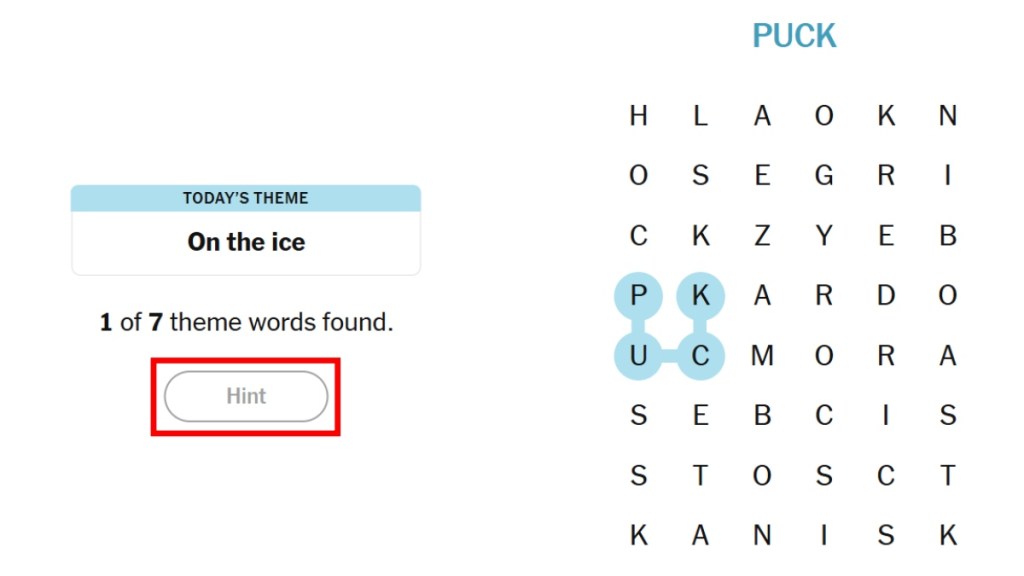
Non-theme-related words that contain 4 or more letters go towards filling your “Hint” bar. This reveals letters for the actual theme-related answer. Here’s how it works:
- Scan for short words and trace them to fill up the Hint bar
- You need to find three such words to use the Hint option
- Use hints strategically when you are having trouble spotting the words
4. Navigating Complex Board Layouts
Not every Strands puzzle is cleanly arranged. Some boards may have a weird arrangement of letters and Spangram, which leads to confusion. This is yet another common challenge for Strands players.
Dealing with Zig-Zag and Looping Words
Words don’t always run straight in NYT Strands. They can:
- Zig-zag diagonally
- Turn around the corners
- Form loops and break them too
- Follow the edge of other letters or Spangram

So, if your strategy is only scanning the grid vertically or horizontally, then you will need to change that practice. Train your eyes to trace flexible paths rather than rigid lines. This goes a long way in helping you spot Spangram early, as well as the rest of the words in the grid.
Solution: Isolating Corners and “Islands” of Letters
After playing more than hundreds of Strands grids, here is one effective strategy that I have come up with. You need to mentally divide the puzzle into different sections and focus on the following:
- Corners and edges of the grid
- Dense clusters of unused letters
- Isolated patches which haven’t been touched
Often, harder words are tucked into these “islands” while easier ones sit more centrally. Breaking the grid into smaller zones reduces overwhelm and makes patterns easier to see.