Beebom Score
Being a millennial gamer, the concept of roguelites rarely surprises me. They mostly mix up the same ingredients, shuffle formulas, and hope the gameplay loop carries the burden of repetitiveness. However, that idea of mine shatters every time a game like Morbid Metal appears and reminds me that a little tinkering with the same old formula can make it feel completely different.
Yes, when I first played the Morbid Metal demo almost a year ago, I got a feel for it. And, well, the Early Access release did not disappoint at all. This isn’t just another run-based grinder. It’s a character action game wearing a roguelite shell, and it mostly pulls it off. So, here is my unfiltered Morbid Metal review after slicing up mech monsters for a full week.
All Gas, No Brakes, and Zero Patience for Anything Else
If there is one thing Morbid Metal gets right from the get-go, it is the feel of combat. You can tell within minutes that this is where the effort went. The game leans hard into that Devil May Cry energy, with fast inputs, clean animations, and a strong sense of control.
I found myself doing things like opening with Flux, tagging enemies with abilities, then switching to other characters to finish the job. Choose a character and land a few hits, then instantly swap to Ekku to slam enemies with a sword that looks borderline impractical. The game rewards that behavior with a style rank system. Play clean, avoid damage, mix your moves, and your rank climbs. Drop the ball, and it falls just as fast.
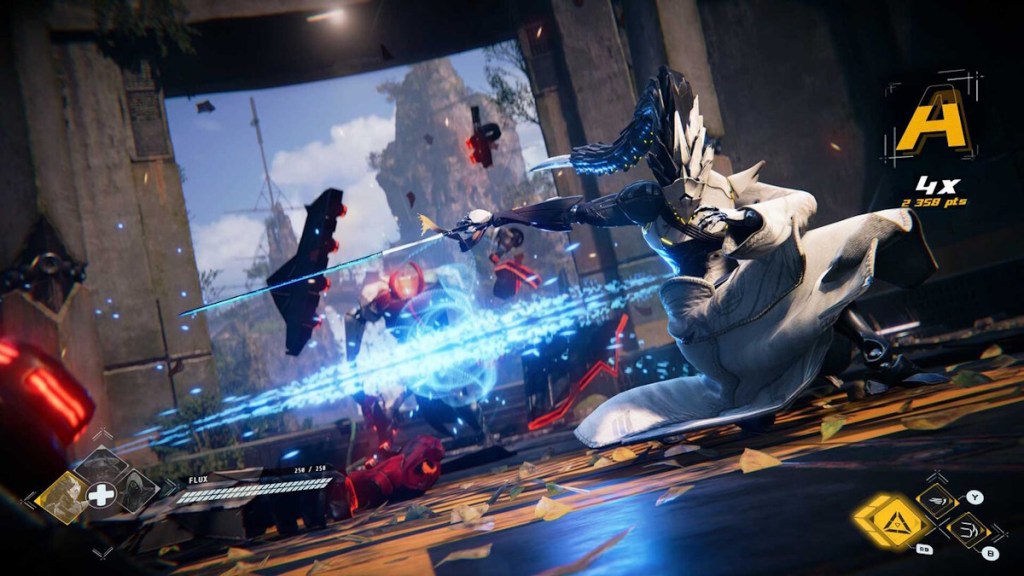
The responsiveness deserves a mention. Inputs register immediately, and it is as noticeable as a high-tier hack-and-slash game. There is no friction. No awkward delay. When you mess up, it feels like a fumble instead of slow pacing. And that pace comes from…
The Swap Mechanic Works Like Pure Caffeine
If you are a fan of roguelites or have played enough, you will notice that most of them have the option to switch weapons or items to create variety in the run. Morbid Metal is way beyond that. Yes, the abilities, upgrades, and all are there. However, the main carry of the game is the swap mechanic.
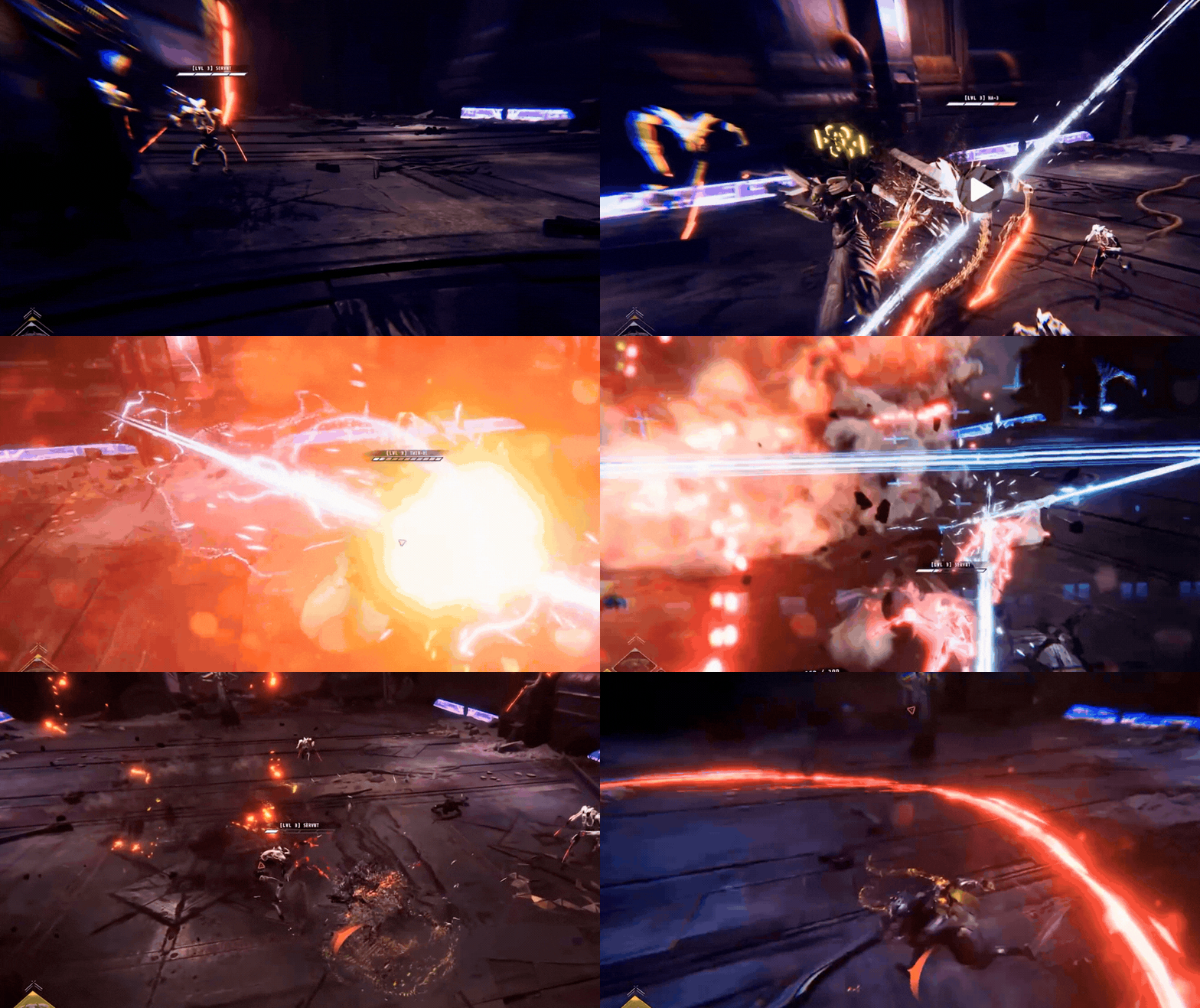
Instead of making it an afterthought, SCREEN JUICE makes you switch characters in the middle of the run for both efficient kills and swag points. There are three in the current build. Flux handles speed and mobility. Ekku is the heavy hitter. Vekta leans into control and ranged pressure. They share a health bar, so careless switching will get you killed, but smart rotations can carry entire fights.
SCREEN JUICE makes you switch characters in the middle of the run for both efficient kills and swag points.
Just like in my original demo run, I played around with juggles by switching characters mid-air. While it can get slightly overwhelming at times, any action game lover would die for the chaos, especially when your movement is also dictated by how you switch up characters in Morbid Metal.
Too Fast, Too Angry, and Absolutely Not Slowing Down
Movement is just as important as combat in the game. The game is fast, so you are dashing, double-jumping, and repositioning constantly. I noticed this most during longer fights. Standing still is a mistake. The game pushes you to stay active, and it feels better for it. Even basic traversal between rooms has a rhythm to it.
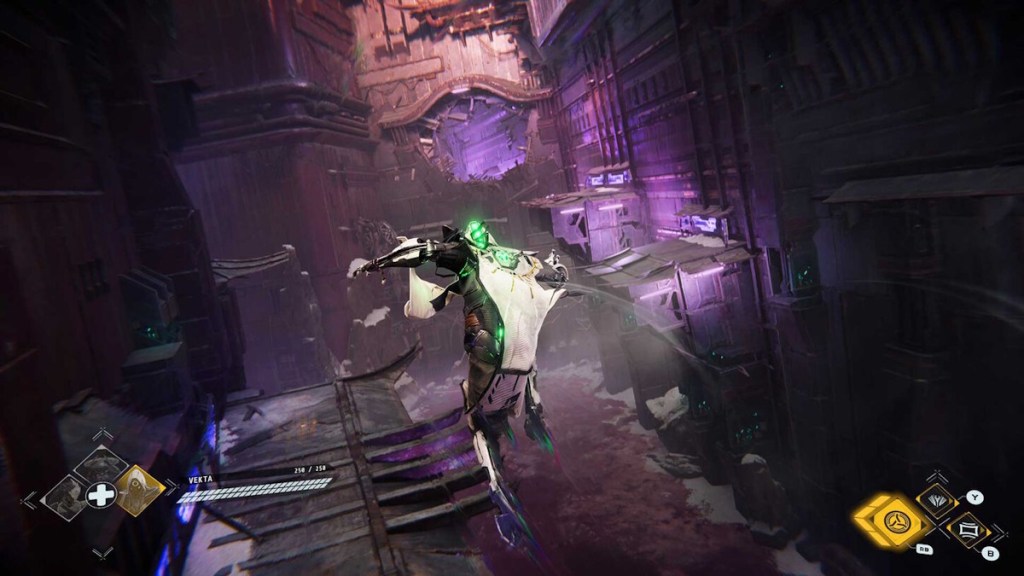
That said, pacing is uneven in Morbid Metal. Yes, some sections drag way longer than you would expect. I would clear a tough encounter, then run through an empty hallway with nothing happening. Of course, the aesthetics look nice, but it breaks the flow of the high-intensity gameplay. This is one area that could use refinement. More encounters, more branching paths, or even small events would help fill those gaps.
…some sections drag way longer than you would expect. I would clear a tough encounter, then run through an empty hallway with nothing happening.
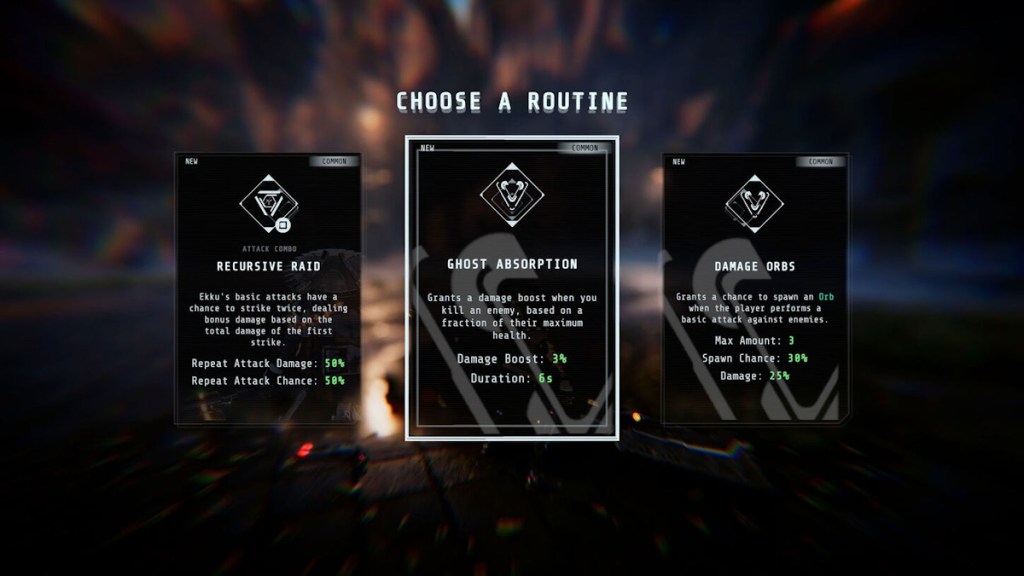
But that isn’t the only issue the game faces. It’s the same old skills and upgrades. They feel just like any other roguelite. While I wouldn’t expect it to lean into something completely different, it would have been more exciting if the devs had also focused on the upgrade loop just like they did with the combat and movement. One thing they do nail down still is…
Boss Fights and Challenge Rooms Make You Work for It
Bosses are where the game tests you. They have multiple phases and require quick reactions. I had one fight where I thought I had control, only to get clipped by a late-phase attack and lose the run.
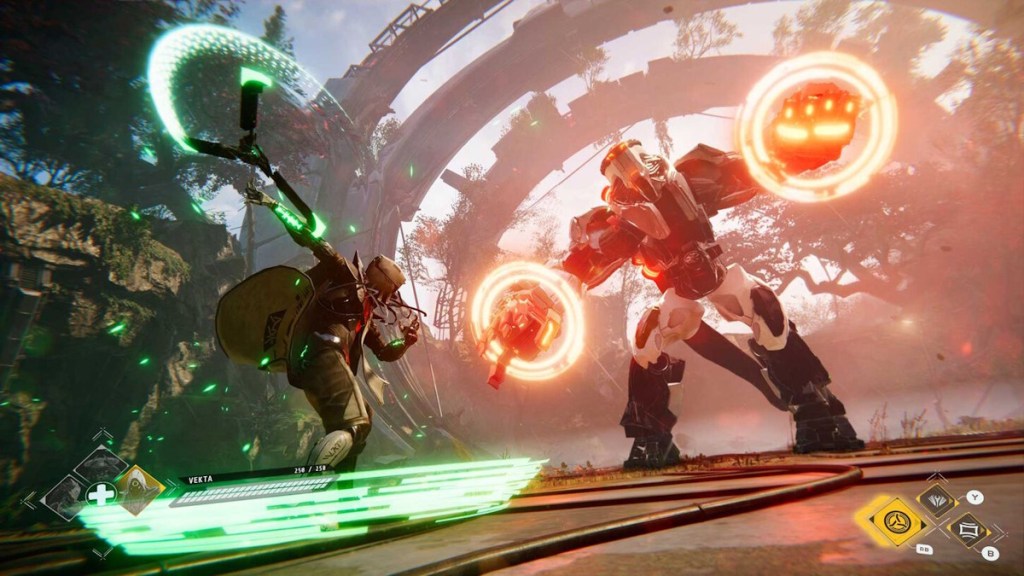
The good thing is, it never feels unfair. Most of the mechanics are readable if you pay attention. For the gamers who prefer counterattack action, Morbid Metal offers plenty of it. You need to execute.
There are also optional challenges scattered through levels. Survival arenas, timed fights, and other trials offer extra rewards. I took a few of these early on and got punished. Later runs felt more manageable once I understood the systems better. These side activities help break the routine, even if they are not always as varied as they could be.
Visuals and Performance: Smooth Dystopian Surrealism
Morbid Metal leans into a clean dystopian look, mixing cold machinery with light traces of nature to keep environments from feeling sterile. The contrast works without drawing attention to itself. Characters are easy to read in motion, even during crowded fights. I never lost track of Flux or my position on screen, which matters in a game built around fast reactions and tight spacing.
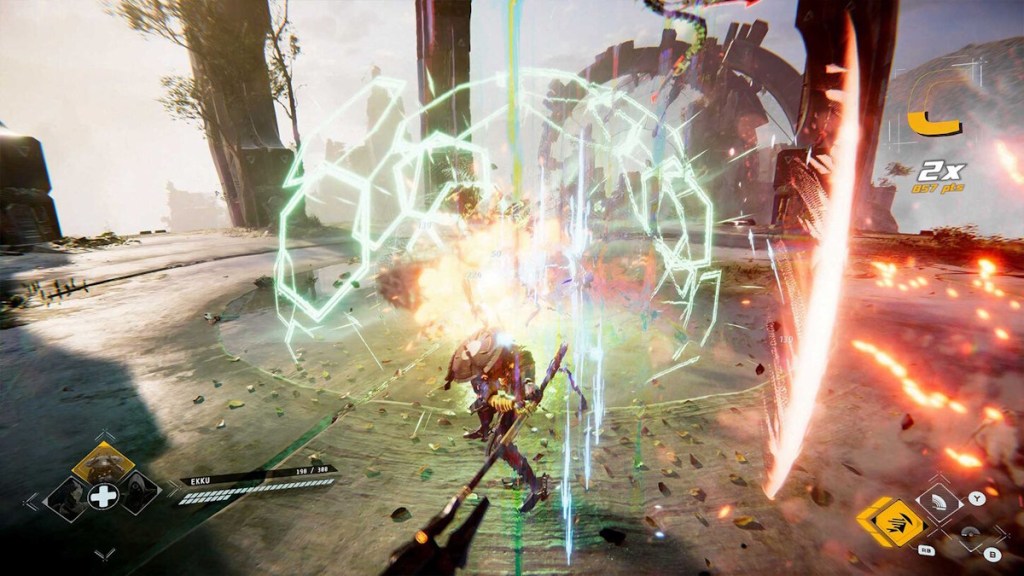
Animations do most of the heavy lifting. Attacks connect smoothly, and transitions between moves feel natural when swapping mid-combo. Sound design adds enough weight to each hit as well. However, some quieter sections between fights make the world feel less active than it looks.
But one thing that works flawlessly is the frames and smoothness of the gameplay. To match the speed of the combat, the devs optimized Morbid Metal effortlessly. While I played the game on PC with a controller, it is exceptional on the Steam Deck as well.
My Setup:
CPU: AMD RYZEN 7 5800x
GPU: ASUS GEFORCE RTX4060 8GB DUAL OC
RAM: DDR4 32GB 3200 MHZ
Power Supply: AEROCOOL CYLON 600W
Motherboard: MSI B550M PRO-VDH
SSD: M.2 2280 500GB SAMSUNG
As you can see, I used a decent setup to play the game. On the Ultra settings, the game was around 75 FPS on average. This was perfect, given the exceptional visuals of the game. The numbers slightly improved with the DLSS on. I did get better FPS when the settings were on low, but the game looked terrible.
Overall, I suggest you play on Ultra settings as the FPS differences are not that different. But if you have a Steam Deck OLED, Morbid Metal can be your next go-to game.
Final Verdict: Morbid Metal Is Still Cooking, Shame It Forgot the Seasoning
Morbid Metal is not a complete package yet, but it does not need to be to make an impression. Despite being on early access, it brings many features from both roguelite and hack-and-slash worlds. The combat carries it. The character swap system gives it identity. The roguelite structure supports it without dragging it down.
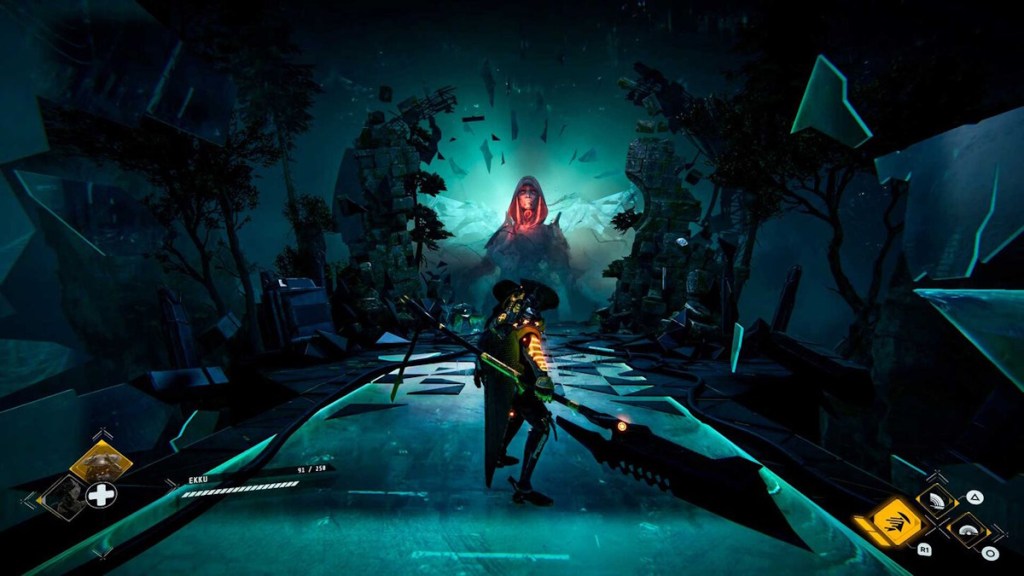
I played it expecting a decent action game. I left thinking this could become something special if it keeps building on what already works. Right now, it is a strong foundation with clear gaps. Fix the in-between level pacing. Expand the content. Balance the builds. If those pieces fall into place, this could sit comfortably alongside the best in the genre.
Until then, Morbid Metal is an easy recommendation with one condition. Go in knowing what it is today, not what it might become tomorrow.


 Rishabh Sabarwal
 Rishabh Sabarwal