

In today’s time, breathing clean air has become a privilege. Not only that, even indoor air has become more polluted than the outside air and we spend 90% of our time breathing it. From pet dander and wildfire smoke to dust, smoke and pollen, these pollutants can take a toll on your health. That’s why getting an air purifier is the best decision you can make to improve and maintain your health. To help you, we have ranked the eight best air purifiers so let’s go ahead and check them out.
Overview of Best Air Purifiers in 2026
The Coway Airmega AP-1512HH “Mighty” is the top air purifier as it’s affordable, comes with a four-stage filtration process, and proven to be reliable over the years. You can also check out Levoit Core 300S which delivers CADR of 126 cfm. Other than that, the Blueair Blue Pure 211i Max is perfect for large spaces.
Air Purifiers CADR Filter Life Price Coway Airmega AP-1512HH Mighty 233 cfm 6-12 months $154.99 Levoit Core 300S 126 cfm 6-8 months $199 Blueair Blue Pure 211i Max 410 cfm 6-9 months $279.99 AiDot WELOV P200 Pro 205 cfm 3-6 months $169.99 Mi Air Purifier 4 Compact 230 cfm 6-12 months $117.99 Winix 5510 253 cfm 12 months $179.99 Coway Airmega 400 328 cfm 12 months $349 Levoit EverestAir 360 cfm 12-15 months $399
How We Tested the Best Air Purifiers?
To find the best air purifiers, we started with real-world CADR (clean air delivery rate) performance. We looked at AHAM-certified lab results, and noise levels at every fan speed. While manufacturers claim higher CADR, we cross-checked with AHAM results to verify the authenticity of the data. In addition, we checked smart features, cost of long-term ownership, cost of filters, and energy cost.
After all, for long-term usability, a purifier must be affordable. Moreover, we checked the filtration quality and the number of layers which are provided to capture even the tiniest particles. After considering all these points, we selected the eight best air purifiers across different use cases.
Best Air Purifiers in 2026 Reviewed
We have selected the Coway Airmega AP-1512HH Mighty as the best overall air purifier simply because it’s trustworthy and affordable. The Levoit Core 300S is also a great air purifier for small rooms, and the Blueair Blue Pure 211i Max is the best pick for large rooms.
Coway Airmega AP-1512HH Mighty — Best Overall Air Purifier
The Coway Airmega AP-1512HH “Mighty” is simply the best air purifier out there. For many years, it has been selected as the top performing air purifier by various labs. Its four-stage filtration system uses a mesh pre-filter, activated carbon deodorization filter, True HEPA filter, and an ionizer to capture particles down to 0.3 microns. It can capture pollen, smoke, and pet dander.

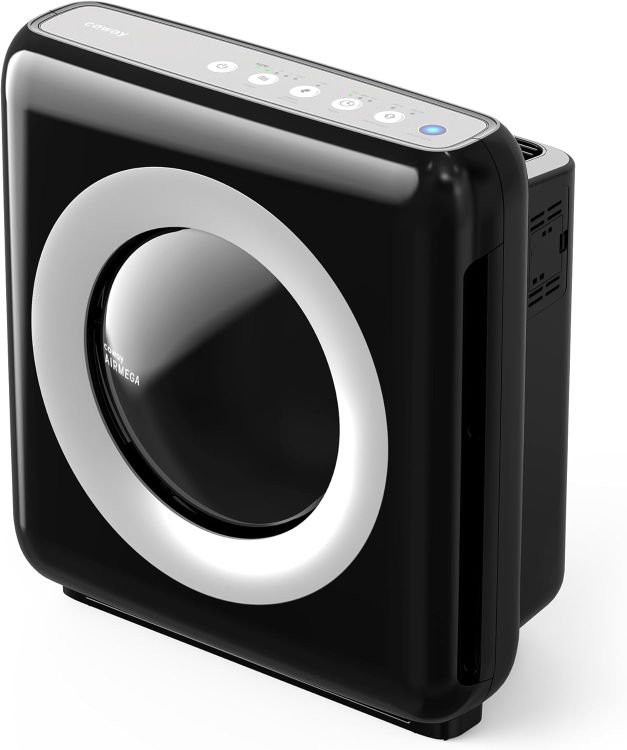
With CADR ratings of 246 for dust, 240 for pollen and 233 for smoke, this Coway air purifier changes air five times in an hour. There is an Auto mode that adjusts fan speed in real time and the indicator shows blue for clean, purple for moderate, and red for poor. And the Eco mode automatically shuts off the fan when the air is cleaned for 30 minutes. Overall, the Coway Airmega AP-1512HH is the best air purifier you can buy in 2026.
Why It’s Still the Champion in 2026?
There are many air purifiers in the market with app support and smart features, but the Coway Airmega AP-1512HH Mighty wins for its reliability. It doesn’t offer flashy features, but delivers what it promises. At just $155, you get an affordable and trustworthy air purifier that maintains indoor air quality with a proven track record.
Pros Cons Reliable, affordable, and trustworthy air purifier No Wi-Fi or app control Four-stage filtration Real-time air quality LED indicator
Pricing: $154.99
Levoit Core 300S — Best Value for Small Rooms
The Levoit Core 300S is one of the top-selling air purifiers on Amazon and for good reason. It delivers a CADR of 126 cfm through a three-stage cylindrical filtration process. It features a nylon mesh pre-filter, a HEPA-grade particle filter that captures nearly all 0.3 microns particles, and an active carbon layer that absorb VOCs, household chemicals and cooking smell.

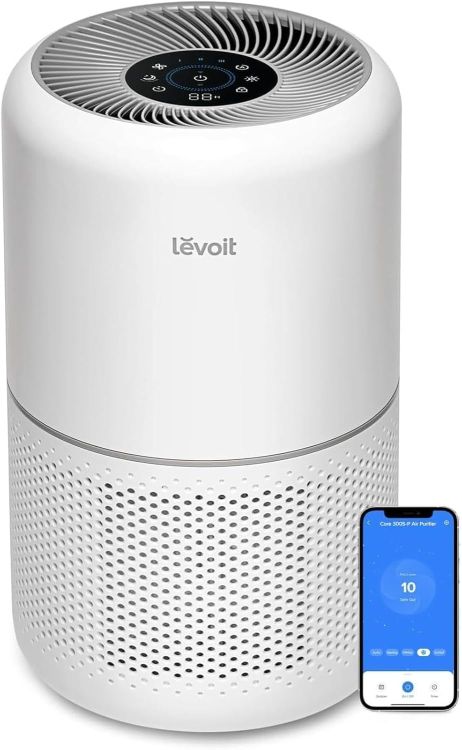
It also uses less power which brings down the electricity cost. Since this air purifier is meant for a small room, you can place it on your desk, shelf or nightstand. And if you like having app support, you can use the VeSync app to view historical air quality data, set custom schedules, and trigger voice commands via Amazon Alexa or Google Assistant. Finally, the Sleep mode automatically reduces the fan speed so you get a quiet experience at night.
Pros Cons PM2.5 laser sensor with real-time adjustment Not suitable for large rooms Three-stage cylindrical filtration No display App support and voice assistant integration
Pricing: $199
Blueair Blue Pure 211i Max — Best for Wildfire Smoke & Large Spaces
Blueair is a Sweden-based company and its Blue Pure 211i Max is ranked among the best air purifiers for wildfire smoke and large spaces. It comes with the proprietary HEPASilent technology that brings together mechanical filtration with a mild electrostatic charge. As a result, the air purifier captures 99.97% of airborne particles down to 0.1 microns.

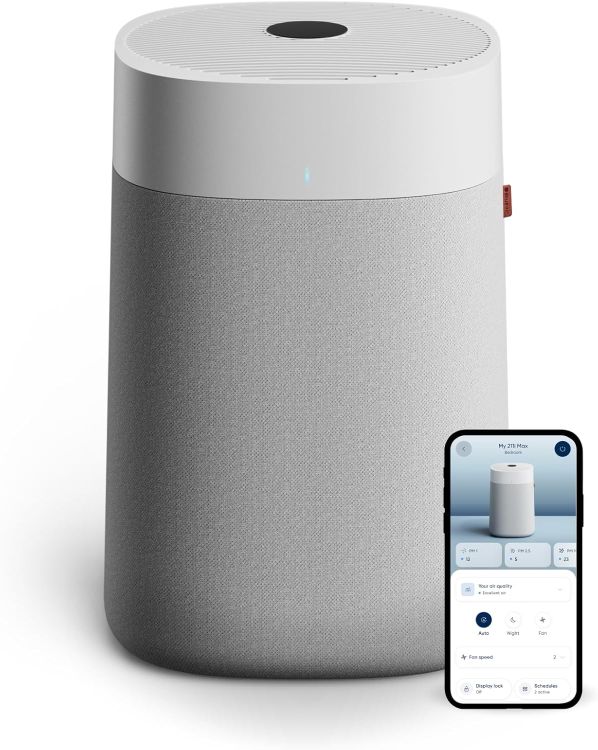
It includes PM2.5, pollen, pet dander, mold spores, and wildfire smoke. At the same time, it maintains low noise and consumes less energy. Not to mention, it has one of the highest CADRs, coming at 410 cfm to clean large rooms and spaces. Finally, the integrated display shows the real-time AQI and you can also use the Blueair app to use smart features.
Pros Cons Highest 410cfm CADR Slightly expensive filter replacement costs Captures 0.1 micron particles Bulky Smart home integration
Pricing: $279.99
AiDot WELOV P200 Pro — Best for Smart Features (Matter-Certified)
The AiDot WELOV P200 Pro was announced at CES 2024 with Matter 1.2-certification. It means that the air purifier is compatible with Apple Home, Google Home, Amazon Alexa, and Samsung SmartThings. So, in terms of smart features, you are well sorted with the WELOV P200 Pro. It comes with a medical-grade HEPA filter that can capture particles down to 0.1 microns.

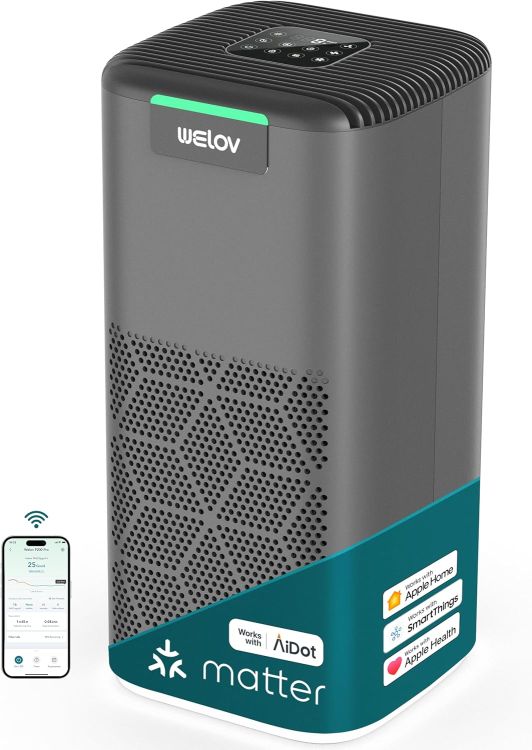
In addition, it can clean a 315 sq ft room in 12 minutes. There are also three filter variants including standard HEPA, Pet Care, and Smoke Absorber. Apart from all that, it has one of the most unique smart features. It connects to your Apple Health data and adjusts the fan speed at night using your sleep cycle data. While you are sleeping, it operates at just 23 dB, offering a quiet experience.
Pros Cons Best air purifier for smart features, Matter 1.2 certified No sensor for PM1 or PM10 data Syncs with Apple Health sleep cycle True H13 HEPA filter
Pricing: $169.99
Mi Air Purifier 4 Compact — Best Ultra-Portable Pick
The Mi Air Purifier 4 Compact is one of the most portable air purifiers out there, and it costs just $117. Its filtration process uses Xiaomi’s proprietary dual-mode system. You get melt-blown polypropylene fibres with an embedded electrostatic charge to capture 0.3 and 0.1 micron particles. With a CADR of 230 cfm, it can cover rooms up to 290 sq ft and use just 0.7 kWh energy for 24 hours of continuous use.

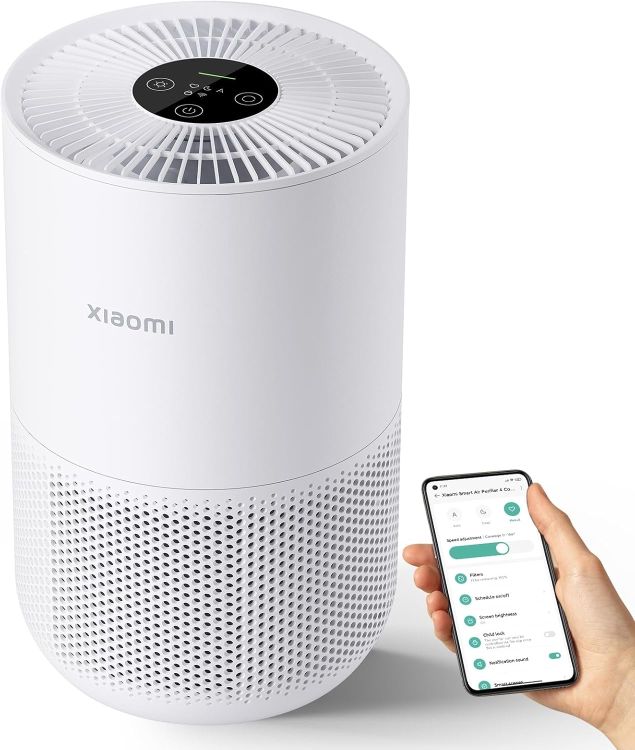
There is also a built-in PM2.5 laser sensor that shows air quality through an LED indicator. And if you wish to use an app, you can try the Mi Home app where you can set schedules, enable Auto mode, and trigger voice commands via Alexa or Google Assistant. Finally, it’s also very silent when sleep mode is turned on, so you can use it in your bedroom without any issues.
| Pros | Cons |
|---|---|
| Lightweight, and easy to carry | Not meant for large rooms |
| 20 dB sleep mode | Filter availability can be limited in the US |
| Mi Home app integration |
Pricing: $117.99
Winix 5510 — Best HEPA Air Purifier for Allergies & Pets
If you are looking for the best HEPA air purifier for allergies and pets, take a look at the Winix 5510. It’s a successor to the much popular Winix 5500-2 with Wi-Fi enabled smart features and a slimmer profile. Just like the Comway air purifier, the Winix 5510 comes with a four-stage filtration, and it’s designed specifically for pet households. There is a washable fine-mesh pre-filter that captures pet hair and large debris easily.

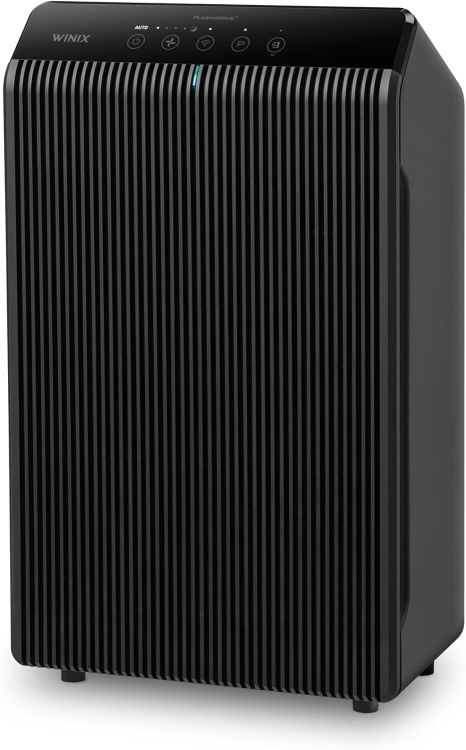
Next, it features an activated carbon filter that removes pet smells, smoke and VOCs. Following that, a True HEPA filter captures dust mites, pollen, and pet dander as small as 0.1 microns. And now with the Winix smart app, you can remotely control the air purifier, monitor air quality, and set custom schedules as well. By the way, there is also a Sleep mode that activates ambient light and reduces the fan speed automatically.
Pros Cons Best carbon filter to clean pet odors and cooking smells Louder on max speed Washable pre-filter Higher filter replacement cost Capture particles down to 0.01 microns
Pricing: $179.99
Coway Airmega 400 — Best Air Purifier for Large Open Floor Plans
As the name suggests, the Coway Airmega 400 is designed for large open floor plans. It houses two symmetric Max2 filter sets which combines an activated carbon layer with Green True HEPA H13 filter. It allows the air purifier to draw air from all four directions. As a result, it can deliver CADR of 328 cfm, covering rooms up to 1,560 sq ft. In simulated tests, it has been found that it can clear smoke particles in 45 minutes.

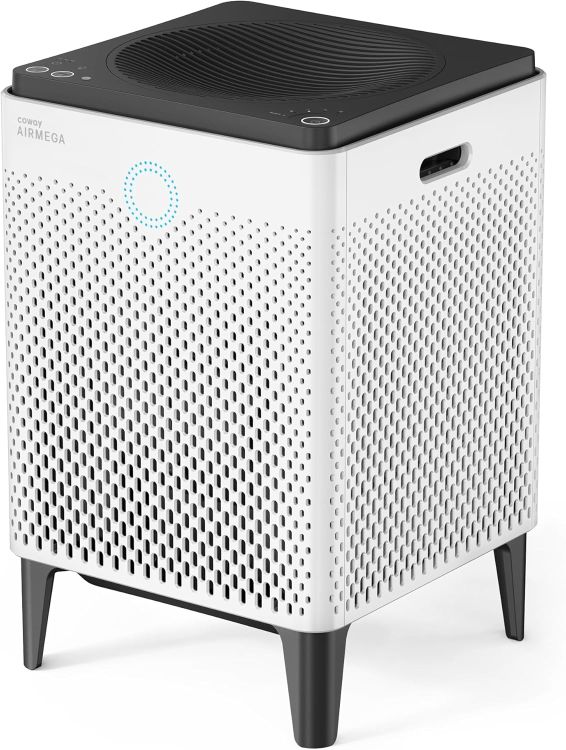
Despite its high throughput, the Coway Airmega 400 goes up to 52 dB at maximum and around 22 dB on sleep. Compared to other large air purifiers, it’s much more quieter even when operating at full power. If you have an open-plan kitchen, large living room, or commercial spaces, the Coway Airmega 400 is an apt choice.
Pros Cons Best for large room, dual filter support Heavy True H13 HEPA filter Higher maintenance cost CADR 328 cfm
Pricing: $349
Levoit EverestAir — Quiet Air Purifier for Bedroom
The Levoit EverestAir is one of the quietest air purifiers while offering great performance and efficiency. It has a tall and console-like design with adjustable vent angles that lets you change the airflow. The air purifier comes with a 3-stage filter stack including a washable mesh pre-filter, H13 True HEPA layer, and an activated carbon filter. It’s one of the fastest air purifiers to clear smoke in just 16 minutes.

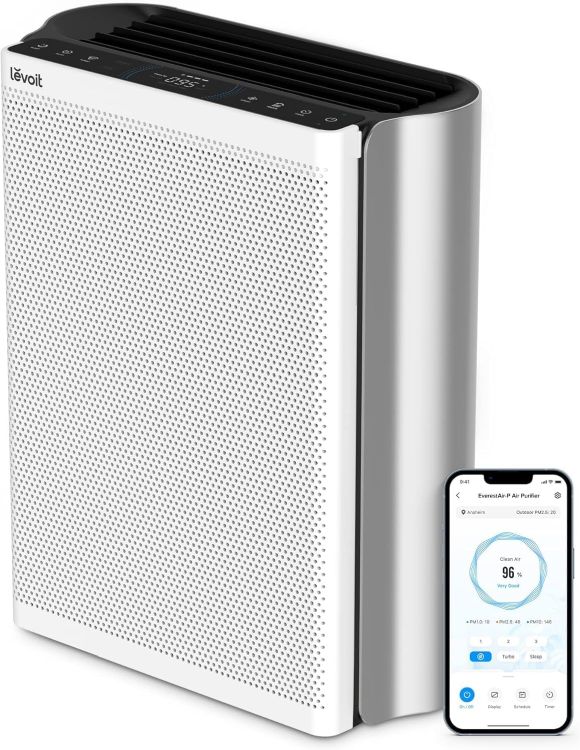
And the three-channel laser system monitors PM1.0, PM2.5 and PM10 particles. You can also use the VeSync app to check historical charts, and set up automated schedules. As for voice assistant support, you can use it with Alexa and Google Assistant without any issues. Finally, the Sleep mode reduces the fan noise to 24 dB, which is quiet enough for sleeping.
Pros Cons PM1/2.5/10 laser sensor More expensive than the competition Quietest operation Clean air in 16 minutes
Pricing: $399
Buyer’s Guide: What US Homeowners Should Know?
Here, we are going to explain important factors that you should know before buying an air purifier that lasts long and doesn’t burn a hole in your pocket. Let’s start with CADR and room size.
Understanding CADR and Room Sizing
First of all, before buying an air purifier, start with your room size. Most manufacturers offer coverage area, but you should always trust AHAM-certified CADR numbers. Marketing claims can vary depending on the manufacturer. CADR measures how quickly a purifier removes smoke, dust, and pollen from the air. Its unit is cubic feet per minute (cfm).
As a general rule, your CADR number should be at least 2/3rd of your room’s area. Basically, if your room area is 300 sq ft, the air purifier must have a minimum CADR of 200 cfm. This way, you can easily pick an air purifier based on your room size.
True HEPA vs. HEPA-Type: Don’t Get Fooled
When we say True HEPA, it’s not a marketing claim, but a defined standard. A True HEPA filter must capture 99.97% of airborne particles at 0.3 microns. This is the hardest particle size to capture. On the other hand, “HEPA-type” or “HEPA-like” filters are found on cheaper units, and they capture around 85 to 95% of particles. This kind of filters are not certified for capturing microscopic particles. So, while buying an air purifier, always look for “True HEPA” or “H13 HEPA”.
Ongoing Costs: Filter Replacements and Energy Star Ratings
What you pay for the air purifier is only the beginning, and you must consider the filter replacement cost and ENERGY STAR ratings if you want to use the product for long. On an average, a purifier running 24/7 costs around $15 to $35 in electricity. Those air purifiers which are ENERGY STAR certified cost less around $15 so consider buying certified products to save on your energy bill.
As for the filter replacement cost, most air purifiers offer 6 to 12 months of lifespan and filter replacement costs around $40 to $80 per year. You should always pick an air purifier which has low maintenance cost and offer washable filters. This way, you can reduce how often you are buying filter replacements.
Maintenance Tips for Longevity
To extend HEPA filter life, it’s recommended to vacuum or rinse your pre-filter every two to four weeks. This can dramatically improve the life of your main HEPA filter. Generally, large particles clog the filter so periodically cleaning improves the overall performance. That said, do not wash a True HEPA filter as it can destroy the fiber structure.
You can only wash pre-filters and carbon mesh layers, but do check the manual for more information. Apart from that, you should keep your purifier at least 18 inches away from walls and corners for optimal airflow. Next, continuously run the air purifier on Auto mode to clean the air rather than using it for short time. Maintaining clean air is more effective and cheaper than recovering after the air quality drops.
The Coway Airmega 400 is one of the best air purifiers for large rooms. It comes with two Max2 filter sets which draws air from all sides and quickly cleans the room.
Successor of Winix 5500-2, the new Winix 5510 is the best air purifier for allergies. It comes with a fine-mesh pre-filter that captures pet hair and an activated carbon filter.
You can take a look at the Levoit EverestAir if you want a quiet air purifier. It operates below 24 dB on sleep mode and doesn’t make any sound.

